

dwelling

The phone rang at 9:52 this morning. Unknown number. I didn’t pick up.
At 9:53, a voice message appeared. I listened.
It was “Fabiola from the District Court victim advocacy office,” informing me that the case against the woman who stole my wallet and fraudulently used my debit card last summer was being heard today. It was a short message, which ended by asking me to return the call if there was anything I wanted to add to the case before it went before the judge.
At 9:55, I called back. No answer. I left a message explaining that the local police detective in charge of the case had assured me I’d receive an invitation to appear in court when the woman was tried, but that I’d received no such letter or call. I requested that the case be continued until such an invitation were issued, to allow me to be there, and asked that Fabiola call me back.
I continued to call back every 5 or 10 minutes. Answering machine. Answering machine. I left a couple of other messages with details pertinent to the case:
- I’d learned that this woman had 19 prior counts of theft and fraud before mine, and yet had never received jail time.
- I’d lost not only days of my life trying to rectify the stolen funds with my bank and piece back together the contents of the stolen wallet, but actual money by way of lost work hours and having to order a replacement license.
- The woman had committed these thefts with a child of under four years of age in tow, using the boy as part of the con, involving the child in the crimes and modeling to this child that theft was an acceptable way of life.
Do you think me heartless? Did you imagine that I’d have more compassion, given my lifelong role as a mentor to youth, many of them having made poor choices along the way?
Please know that my first response was compassion. Had I learned that the woman had used my bank card to buy formula, diapers of food staples, I would have shown up to court and advocated for leniency, even offering her my own help where possible.
But it quickly became clear the day of the incident that she was not stealing out of indigence or need. No, she was rushing down my own street (a mark of a seasoned criminal, knowing that purchases near the residence of the victim are less likely to be flagged immediately as fraud), buying cartons of cigarettes here, magazines there, donut gift cards at the next place.
At close to 11:00, Fabiola called back. The case had gone to trial at 10:00 she told me. She was upstairs at the hearing when I’d called back.
I could feel my blood pressure going up.
“Fabiola,” I said, “so what you’re telling me is that you called me eight minutes before the hearing and immediately hung up the phone and went upstairs … meaning you had no intention of hearing my feedback before the case was tried.”
Awkward silence on the phone.
Then the excuses began.
“Well, we sent a letter to you in February.”
“I didn’t receive any letter. What address do you have?”
“8 Meadow Lane …”
“No, I haven’t lived there in over six years. And it’s not the address I listed on the police report.”
“Oh, well, I’m sorry you didn’t receive the letter, but we did send it.”
“Yes, you sent it to the wrong address … which wasn’t the one I provided on my victim statement. Are you telling me that the police didn’t give you my victim statement? It’s not in your case file? Because if that’s the case, I need to hang up with you and go right down to the police department to file a complaint against the detective in charge. Gee, and he seemed so competent …”
“Well,” Fabiola hemmed and hawed, “I didn’t say we didn’t get the report. I just know that we sent a letter to 8 Meadow Lane and didn’t hear from you.”
“And that is because … I don’t live there. Are you telling me you didn’t receive it back from the post office then? Because after I get done at the police station, it sounds like you’re telling me that I need to stop in at the post office and ask why they also screwed up. But what I’m sure of is that you had my phone number, because you called me this morning … eight minutes before the trial.”
More awkward silence.
“I was only just able to find your phone number this morning, sir. But good news. The defendant plead guilty and received probation.”
I drew in a long, slow breath and let it out.
“Fabiola … so, you didn’t use the address on the police report … which also had my phone number printed clearly on it … and you just happened to find my number minutes before trial … after which you left me exactly zero time to even call you back to voice my concerns and requests for reimbursement? And after nineteen priors and involving a young child in her con, the woman received … probation. What can I do at this point to have a say in the matter?”
“Well, sir, I’m sorry you didn’t respond to the letter, but …”
I cut her off. “Fabiola, I’m not going to accept that. I didn’t respond to a letter which may or may not have been sent to an address I haven’t lived at in six years and that did not match the address written on my police report or currently listed for me with the DMV.”
“Yes, well … no, there really isn’t anything that can be done now, because we didn’t hear back from you …”
I cut in again. “… because you didn’t send the letter to the correct address, and then called at a time you knew would not allow me to respond.”
“Again, sir, the case has been heard.”
“Can it be re-opened, so that I, the victim, can be heard?”
“No, it can’t. The judge doesn’t like to keep cases like this sitting around. He wants to just move them through. So once judgment is passed, there’s nothing you can do. But if she breaks her probation, she’ll be in a lot of trouble and maybe get jail time.”
“She hasn’t been ‘in a lot of trouble’ after twenty priors,” I said. “And were separate charges filed for involving a young child in the crimes? This is not in debate. She was caught on camera at three places with the child.”
“I don’t really know, sir. That’s not our field. That would be family court. Maybe one of the employees at one of the merchant locations filed a 51A.”
sigh
I was over it. As politely as I could muster, I ended the call with Fabiola.
*****
In my first post of 2018, I told you that my theme for the year would be further exploration of the advice contained in my book The Best Advice So Far, whether by way of different stories, new perspectives or additional thoughts. Here are a few ideas I was planning to revisit in this post:
Misery is a choice.
Worry serves no purpose but to ruin the present.
The sooner you accept that life is not fair, the happier you will be.
And I had originally intended to use a conversation I’d had with a friend a few weeks back as the central anecdote for this post. Little did I know that before it was all over, I’d wind up being my own object lesson for this particular “deep dive.”
I write quite a bit about topics like how to navigate regret, banish worry, and let go of anger before it turns into bitterness. But there’s some related ground that doesn’t get much air time.
I call it dwelling.
Dwelling is a bit different from regret, worry or anger. And yet it can involve elements of all of these. It’s a sort of nebulous in-betweener. It’s good at hiding—which is why it tends to go unnoticed so long.
When dwelling sets in, we tend to find ourselves saying things like:
“I can’t focus. I’m distracted.”
“I just feel exhausted all the time.”
“I feel depressed, but I don’t know why.”
But these sentiments speak only about effects, not the underlying cause—the roots that lie hidden below the surface, leeching the vitality from the soil of the soul.
I told you that it was originally my intent to use a recent conversation with a friend (we’ll call him “Ray”) as the central anecdote for this post. Ray and I were talking on the phone and he expressed that he’d been feeling tired and empty for a while. “But,” he added, “there’s really no reason for it that I can see. Work is fine. The family’s good. It just doesn’t make sense.”
For the next few minutes, we brainstormed together, considering everything from certain vitamin deficiencies to seasonal affect disorder. But I’ve seen the insidious strangle hold of dwelling enough times by now to at least pose the question: “Ray, is there any one thought you find your mind returning to frequently—one that makes you feel upset, but that you keep pushing away or minimizing because you don’t know what to do with it?”
No sooner had I asked than Ray offered, “Well, yeah … sort of.” He told me exactly what it was.
And sure enough … it was a case of dwelling.
Like regret, my friend wondered whether things might have turned out differently if he’d somehow known or said or done something he hadn’t seen then.
Like worry, he went round in circles about whether he might have some sort of responsibility remaining, to do something that might prevent a similar situation from happening to others in the future.
Like anger, he felt his life had been made more difficult by the incompetence and mistreatment of others; but those others were not people he knew personally, and they were only small cogs in the machinery of a much larger broken system.
And so he tucked the situation away until a perennial “next time,” when maybe it would play out differently, or he’d see whatever he’d been missing that would vindicate himself while finally making sure the wrong-doers got their comeuppance.
Only thing is, for all the mental expenditure, not a thing had changed in the year between.
I realize I’ve explained a bit about what dwelling isn’t, or what it’s like, or what it does to us; but I haven’t quite spelled out what it is.
As best I can describe it, dwelling is replaying the details of a difficult situation—often one we identify as “unfair”—with the intention of somehow making it fair eventually (even if we don’t immediately recognize that that’s what we’re doing).
We have “that conversation” again and again, wishing we’d said something smarter. Or that someone in authority had stood up for us. Or that we hadn’t felt so helpless.
Somewhere in the back of our consciousness, we imagine that our feelings of being wronged will matter “this time” when we rerun the scene, or even that revisiting it again and again will have some kind of cumulative effect.
Dwelling often has a generic, distanced or vague object:
the situation
the system
the government
people / the world
life
… which is why it tends to slip under the radar for so long: because anger feels like it should have a clear object for us to get mad at. In fact, we may have thought we worked through anger toward a specific person, while continuing to dwell on the situation (e.g., the time we lost, why we didn't see it sooner, how this could have happened to me, etc.).
At other times, dwelling centers on an encounter where a stranger or person we’ll never see again mistreated us.
And so we don’t know what to do with it. No matter how many times we rewrite the script—to rework the characters, plot or lines—it always returns to the same program that aired the first time around.
The good news is that the solution for moving on from dwelling is fairly simple, at least as I’ve come to practice it. And that solution is the same one I use for just about any of the look-alikes such as regret, worry or anger (adapted here from Chapter 33 of The Best Advice So Far):
1. I ask myself, “Is there anything I can do about this right now?”
If there is, I do it right away, however small a thing it may be. Yet what I’ve realized with dwelling—which differs from its cousins regret, worry and anger—is that often, all you can do is identify and accept that you are dwelling and that it isn’t getting you anywhere.
2. If I determine that there is nothing I can do about the issue right now (beyond, perhaps, that acceptance that I’ve been dwelling), I ask myself, “Is there anything I can do about this at a later time?”
Often, this turns up a different result from asking whether there is anything I can do immediately. One of the most common times dwelling rears up is in the middle of the night.
So let’s say I find myself dwelling again on court thing at 3:00 in the morning. And I decide that, while I could get out of bed and write a letter, it’s probably not wise, seeing that I’ve got to get up in a few hours. If I find there is something such as this that I can do at a later time, I write down what I can do and when.
You may think this seems like a silly step. But I've found that physically writing down that next step does something in the way of symbolically taking the situation out of my head and making it external. To have the thing I’ve been dwelling on—and its next possible action point—written safely down and folded up on the bedside table assures my subconscious mind that I won't forget.
And so if that dwelling tries to persist, I just focus my thoughts: “It's OK. I wrote it down. I will do something about it at that time.” Strangely enough, this allows me to sleep in those wee-hours dwell-spells (or to keep from being distracted during any interim, such as work, where I can’t address an action point immediately).
3. If, however, I've answered that there is nothing I can do at the moment and nothing I can do at any time in the future about what I’ve been dwelling on—and this is the most important step—I make a deliberate and active choice to let it go.
I reiterate to myself that I have done all I can do, and that continuing to give this thing any more brain space and energy is only wrecking perfectly good moments in the present. If I find the scene trying to play itself out again in my head down the road, I shut the thoughts down immediately, reminding myself that I've put the issue to the test and determined that it is 100% out of my control.
So I don't try to control it.
*****
I should note a couple more important things about dwelling.
First, dwelling can happen throughout the course of a day. Or it can last for weeks, months—even years. The sooner we can identify it for what it is and start shutting it down, the better. Without taking measures to lift the needle from the record, it will play indefinitely, scratching away at our happiness.
In the case of the woman who’d stolen my wallet, and the subsequent failures of the court system, I found myself feeling the weight of the unfairness. I replayed the details as I drove. I felt the tightness in my jaw as I worked with the kids I mentor, distracting me from giving them my full attention.
A few hours in, I realized I was at the beginning stages of dwelling. And as soon as I recognized it, I put it to my three-step test:
Could I do anything to change the situation right now?
I decided I could not.
Could I do anything about it later?
I considered that I could write a letter to the judge in the case, explaining my experience and the shortcomings of the victim advocacy office; but I decided this would not really change the system or the outcome of the case. And while I could contact the probation officer and follow up each and every month, waiting for the wallet thief to miss a check-in so that I could drag her back into court, I finally determined that this would also not change the woman or the broken system. All it would do is allow the woman’s actions to continue to take up more of my free time with negativity.
Having decided that there was nothing I could do now, and nothing of value I could do later—I just didn’t give it any more airplay.
And every time vapors of it tried to coalesce in the hours and days that followed—to gain momentum through words, images or emotions—I scattered them decisively, stating matter-of-factly, “No, I’ve already put this one into the ‘can-not-control’ chute. Done.”
I’m here to tell you that being consistent and disciplined with this strategy really works.
That said, I need to mention that there are certain scenarios where you may not want to go it alone in getting past dwelling:
- You realize that you’ve been dwelling on the same thing for years—even a lifetime.
- You honestly aren’t sure about whether you can do anything about the situations now or later.
- There are many different circumstances that come back to haunt you, rather than one or two.
- You suspect that incidents from your past have contributed to persistent and detrimental mindsets or patterns of behavior in the present.
If any of these special cases sounds like you, the process I’ve suggested in this post still applies. However, you may want to invite help from a counselor in working through the steps and getting to a place where lingering hurt no longer has a hold on you.
Remember, dwelling (i.e., replaying situations over and over without any change) is 100% wasted energy. It does not even out the cosmic scales in our favor. And not only is it wasted time and energy, it steals from our one source of time and energy, leaving us depleted in other areas that do matter and that we could do something about.
Perhaps worst of all, dwelling gives negative experiences a prolonged lifespan, well after the events themselves are over and done with.
The wonderful reality is that the past has no more power over us than what we choose to give it.





traffic

You’re a contestant on an episode of Family Feud. You’re starting the round, facing off against your opponent, your palm hovering tensely above the buzzer. The host presents the next challenge:
“One hundred people surveyed, top five answers on the board … Name something that causes people to feel angry or impatient.”
:: BZZZT! ::
What’d you guess?
I have a strong suspicion as to the Number 1 answer on the board.
Despite the host of major issues happening across the globe at any given time, it seems few things in life routinely get people worked up quite like traffic.
In fact, this is so much the case that I wonder if we’ve conditioned ourselves at this point to start seeing red once the brake lights ahead of us get to glowing.
Likewise, in becoming comfortable with viewing frustration on the road as “normal,” we justify the bad behavior that so frequently accompanies it.
I’ve seen some of the most mild-mannered people I know get Manson eyes (Charles or Marilyn; both apply) in traffic…

…hands flying off the wheel in all sorts of interesting gestures as they [yell / screech / curse] at all the other people who dare use the same roadway and make “me” to have to sit in this @*$#! mess.
Which reminds me of one particular meme I saw recently that made me laugh due to its pithy delivery of the truth:

The central theme of my writing is “You always have a choice.” Yet while traffic itself is one of those things that, in many cases, falls beyond the realm of immediate choice, it does not negate the fact that we do have choices nonetheless — even in gridlock.
Sure, sure. That’s easy to say, I know. But how do you change the reality of things when your blood pressure begins to spike on the highway? How do you start exercising patience that has atrophied due to lack of use?
Today, I’m going to share a few practical ideas with you — things I find myself doing routinely as soon as I realize I’m not going to be getting anywhere fast.
Shift (Your Focus, that is)
I make a bold claim in Chapter 6 of The Best Advice So Far (“Happiness”):
No one can make you mad.
Yep. You may not be able to control the flow of traffic, but you do have control over your attitude and state of mind. I won’t delve too deeply into the root causes of anger here in this post, or how much of what we call anger is based on situation versus biology. What I’m confident of is that, while we may debate the origin of the initial spark, from the second right after that spark forward, we have choices to make. Rolling down the window and flipping the bird is most definitely a choice, as is taking a few slow, intentional breaths. One choice fuels the fire; one throws a blanket on it.
The first step when anger and frustration begin to build is to remind yourself as quickly as possible that you do have choices. Make it a habit. This one simple “reset” really does have the power to change your state of mind.
Maximize the Moment
Here’s another excerpt from Chapter 15 (“Patience”) of The Best Advice So Far :
We've gained the world at our fingertips.
And we've lost the virtue of patience.
Patience, by definition, is the ability to graciously wait. It stands to reason, then, that if I no longer have to wait, I will no longer have opportunities to build patience. And that leaves me being impatient.
Impatient with stoplights that aren't turning when I will them to.
Impatient with stepping through the options on the automated help system.
Impatient with learning a new skill or sticking with a new undertaking.
Impatient when others do not get out what they are saying fast enough for my liking.
Impatient with the natural foibles and learning curves of my children.
As patience wanes, other things expand to fill the void. Stress. Irritation. Headaches. High blood pressure. Anger.
With this in mind, try viewing traffic as a valuable opportunity instead of merely a roadblock. It’s referred to as “exercising patience,” right? Why not try thinking of it as a sort of workout, right there in your car — your chance to build patience that will serve you well in every area of life.
Keep in mind that fanning the flames of anger is also a workout, an expenditure of both mental and physical energy. Thing is, for all that effort, it doesn’t actually accomplish anything. Traffic doesn’t suddenly break as other drivers flee from your ire. Your car isn’t frightened into spontaneous transmutation to a hovercraft. Put your energies to good use, rather than wasting them on things you cannot change.
I’m not just doling out motivational hype and hokum here. While I’m not known for road rage, I’m also not immune to feeling my teeth clench and my lungs get tight when there’s nothing but a stagnant see of bumpers in front of me. And so I know that I have the potential within me for that to escalate. But I really do remind myself that I always have a choice and that “patience is a virtue” as soon as I’m aware that negative feelings and reactions are on the rise. So I’m telling you from years of first-hand experience — it works.
Put Things in Perspective
One of my favorite strategies when less-than-snazzy stuff happens is to immediately ask myself a simple question: “Will this matter in a year?” So where traffic is concerned, this would sound something like, “Am I still going to care about this particular traffic jam a year from now?”
If the answer is an honest “No,” then I know I get over it at some point in the future. And if I’m just going to get over it anyway, I might as well make the choice to get over it right now, because any time between now and the eventual “over it” moment … is just time wasted.
If you can grab onto the logic of this and put it into regular practice, it’s pure gold.
Remember the People
It occurs to me that getting angry in traffic is often an indicator that we’ve forgotten to treat people as people and not as props, background noise, obstacles in our way or means to an end.
It’s easy to see traffic as vehicles — or at best, robots driving vehicles — rather than as people just like you, driving their own cars with places to go and people to see, many of them likely as frustrated as you are.
Often, when I’m in traffic, I look at the people in nearby cars and try to imagine stories for them. Where are they coming from? Where are they going? Who is waiting for them (if anyone)? Are they fretful that they’ll miss their flight? Late for a funeral? Hoping to see their kids before they’re asleep? Trying to get to the hospital to see a friend before visiting hours end? Maybe. Maybe not. But I’ve discovered that there’s a certain magical power in imagining the best instead of the worst.

Believe it or not, you can even go beyond making up stories to creating them, being part of them.
Thanks to hands-free technology, I can use time stuck in a traffic jam to send encouraging texts to kids I mentor, or to catch up on returning calls to friends and family.
I also find ways of positively interacting with the other people right there in traffic around me. For instance, you’d be surprised how many scowls turn to smiles when people look over and see me looking back at them wearing the bright red CNC clown nose I keep in my backpack. In one of the pockets, I also have a pack of note cards and a marker; holding one up to my window has turned many a frown upside down.
 I fully realize that not everyone is cut out for this kind of engagement, nor should they be. I’m merely trying to show that introducing humanity to a situation encourages empathy. And empathy has a way of diffusing me-centered irritation. (And in the case of traffic, it also helps remarkably well in making the time seem to go by more quickly.)
Play a Game
Singing “The Wheels on the Bus” or the full version of “Ninety-Nine Bottles of Beer on the Wall” might have officially reached their retirement date. And it’s not much fun playing “License Plates” when you’re stuck in your own state and going no more than 2 mph. But there are still plenty of boredom-busting games I play to keep things positive when traffic is at a standstill. I’ll share just a few that I believe anyone can do quite easily if they have a mind to.
How Many Songs
A standard radio song is about three-and-a-half minutes long. Make a bet with yourself about how many full songs will play before you reach your turnoff, or pass a certain exit, or get 5 miles according to your odometer. This is not only fun, it can have a reverse-psychology effect where you actually want one more song to play before you get to the checkpoint, just so you can win.
Word Collecting
Make a list of three fairly common words, then listen to a talk radio station, tuning your ear to “find” all three words before a certain checkpoint (see above). Or choose one really common word (like “the” or “so” or “like”) and set a number of times (25? 50?) to “find” it being said on the station before the checkpoint.
Crypto-Stories
This is a new one to me, one I just made up a few weeks ago. Create a cohesive story (real or fictional) from the letters and numbers on the plate in front of you. For instance:
731YS2
When I saw this one, I came up with this story: “My mom is 73. It has been 1 Year Since she was 72.”
Here’s another:
7954BW
My story: “In 1979, my grandmother (who is 93) was 54 (older than I am now!), and I’ve seen many Black-and-White photos of her from those early days (even though they had color film by then).
It doesn’t really matter what you see in the numbers and letters. The sky is the limit. This one passes the time, strengthens creativity, and often brings positive thoughts and realizations about things you’d not have considered otherwise.
Learn Something
Audiobooks (and audio language lessons) are surefire ways to make any commute seem to whiz by, and if chosen wisely, are time well spent. If you need a suggestion for your next listen (or your first), I've got just the thing:

Exit
I hope you found today’s post not just entertaining or even thought provoking, but rather that it provides some meaningful maneuvers for avoiding aggravation the next time you’re trapped in traffic. So before you lay on that horn, try taking these strategies for a spin. If you do, I believe you’ll find patience coming along for the ride more and more often.

fear: two

The previous post wound up being a sort of flight of ideas on fear. I had no intention of taking it further than that when I hit “Publish” last week. But the theme of fear has continued to rear its … well … rather common head in the time since then. So it seems worthwhile to take another walk on the dark side.
*****
I wound up getting to the gym quite late last night — 4:15AM to be exact. (Yes, that was late, not early, considering my usual arrival is between midnight and 2:00.) As you might imagine, the place was pretty empty. Other than myself, there were only two people working out.
One of them was a woman. We were busy at opposite ends of the gym, but I noticed her. She was quite thin, perhaps in her mid to late fifties. Her gait was unsteady, hinting at a neuromuscular disease. And she was tearing the place up (in the best of ways). She moved non-stop between machines, taking only minimal breaks between sets before she was back at it.
By the time I moved that way to use the cables, she was on the mats doing bicycles (an ab workout) for durations that would make me cry. I thought about wandering over, introducing myself and telling her that she was putting me to shame. But she was wearing headphones; and so I kept my admiration to myself for the time being.
We both finished up about the same time. The sky was still black with just a hint of cobalt on the horizon as I headed out to the parking lot, only a few yards behind the woman. I walked a bit faster, thinking now might be a good time to introduce myself. Perhaps hearing my footsteps on the pavement, she cast a wide-eyed glance over her shoulder and then turned abruptly, quickening her own pace.
I decided to let the moment pass, heading for my car instead. By the time I got my things inside and was finally situated, the woman was in her own vehicle and slowly rounding the corner in front of me. Just then, she hit the Caution: Pedestrians crosswalk sign. There was a * thunk * as the plastic yellow tower tipped to the side and scraped along her rear fender before righting itself. She stopped, her face worried. She craned around backward but still couldn’t see what she’d hit.
I knew that getting out of the car and back in would be no mean feat for her. So I hopped out to tell her there was nothing to worry about, that there was no damage to the sign or her car. Our eyes met in her rearview mirror. Her brow furrowed more deeply, so I smiled and waved, moving toward the side of her car where she might be able to see me more clearly.
She gunned the gas, tires chirping, and hightailed it out of there.
As I stood there holding my good intentions, it felt odd to consider that anyone would see me as a threat — that I could ever strike fear into someone.
On the drive home, an interesting thought occurred to me. I wasn’t offended at the revelation. In fact, it made sense when I put myself into the woman’s shoes. But all the same, there it was, as plain as day…
I’d been stereotyped.
That is to say, muscled guys who approach woman after dark are up to no good.
In Logic, this belief is what’s called a universal categorical proposition. Here’s the For-Dummies version:
It’s all or nothing.
All muscled guys who approach women after dark have ill intent.
No muscled guys who approach women after dark have good intentions.
*****
Some parental axioms never seem to go out of style:
If you keep making that face, it’ll freeze that way.
As long as you live under my roof, you’ll abide by my rules.
Nothing good ever happens after midnight.
In the case of the latter, we find another all-or-nothing belief that’s somehow embedded itself into society. And yet when I subject this statement to even the most rudimentary of consideration, it falls apart pretty quickly.
As I mentioned, I work out after midnight, and that seems pretty good. Some of the best conversations I remember from across a lifetime have happened after midnight. Nearly every good song of mine was written after midnight. In fact, it’s fair to say that virtually all of my book The Best Advice So Far was also written after midnight. I’ve walked on the beach, planned surprise parties and dropped off items for charity all after midnight.
And yet, consider…
The terrorist attacks of 9/11. The Boston Marathon bombing. The recent Las Vegas killing spree, NYC rush-hour incident and Texas church massacre. Every school shooting. They all happened before midnight.
So, if they aren’t true, where do universal categorizations like “Nothing good ever happens after midnight” come from? How do they start? And why do they persist?
I’d like to proffer that the underlying cause of such unfounded beliefs and negative stereotypes is the same.
Fear.
Moreover, unpredictability appears to be a major ingredient in fear. You see, if something is unpredictable, then I can’t control it. And I need to feel like I’m in control. So I begin placing people and situations into black-and-white categories that at least allow me the illusion of predictability and control.

I cannot allow for “some” to exist outside the bounds of my categories, or even that “most” exist within them, because either would reintroduce that dreaded unpredictability.
And so, rather than face that uncertainty in life, we adhere strictly to “All” or “None.” It’s just easier that way.
If I can convince myself and others to buy into my system, I can be at peace again. So I tell my teens that “Nothing good ever happens after midnight,” because it feels like I now have a definitive line in the sand that will allow me to protect them and not to worry. As long as they are in before the carriage turns back into a pumpkin, nothing bad will ever happen to them. I can sleep. It’s simple.
It’s not true, mind you. But it’s simple.
*****
I mentioned Logic earlier in the post. It's probably on my mind more than usual because I’m helping a young friend of mine get through his college Logic class this semester.
The field of Logic is funny. It’s clearly stated that whether a premise is true or false is irrelevant. All that matters is the form of the argument. That is to say, if my premises were all true, and if that would make it impossible that my conclusion were false, then my argument is valid.
As such, the following is considered a valid argument by the rules of Logic:
All bankers are swindlers.
All swindlers are aliens.
Therefore, all bankers are aliens.
Oddly enough, if the premises contradict one another, the argument is considered valid by virtue of the loophole that since it’s impossible for me to make all the premises true, I can’t rule out that the conclusion might be true:
All dogs are pigs.
Some dogs are not pigs.
Therefore, dogs are human.
Yup, that’s considered a valid argument.
Before you label it all crazy talk, consider how often we take this approach when we construct our arguments about people and situations in real life.
Nothing good happens after midnight.
It is after midnight.
Therefore, whatever is happening is not good.
Or…
All muscled guys who approach women after dark are dangerous.
A muscled guy is approaching me, a woman, after dark.
Therefore, the guy is dangerous.
Likewise…
All white people, including police officers, are prejudiced against people of color.
All black people are lazy, out to steal jobs without hard work or merit.
All [Democrates/Republicans] are stupid.
All Muslims are radicals plotting to harm Americans.
All gay men are pedophiles.
All highly attractive people are shallow and self-absorbed.
None of this is true, of course. Not even close. But it’s simple.
And so, like those logicians, we convince ourselves that truth is irrelevant, as long as our premises validate the conclusion that will keep our sense of control intact.
You see, if I label it and categorize it, I can avoid it. I can stay on this side of the boundary, with them all on the other side. And I can feel safe. Protected. Justified. I can control it.
Please note, however, that Logic does go on to differentiate between arguments that are merely valid and those that are sound. That is, in order to be considered sound, an argument must both be valid and actually have true premises.
Well, given this new insight, none of the arguments above is sound.
Don’t get me wrong. I’ve had “vibes” about certain people or situations, a feeling that something wasn’t quite right. Often, I’ve trusted that hunch. And though I’ll never really know whether it was accurate, I do support trusting your gut — if and only if you’re sure that there are no underlying stereotypes already in place before such an encounter, ideas stemming from categorical fear or lack of understanding.
I guess what I’m inviting each of us to do today is to consider where we might be building walls that keep out people or opportunities in our life, and then to ask ourselves whether the arguments we make in defense of those walls are rooted in fear — or in truth.

For some real-life stories of stereotype-smashing encounters, check out the following posts:



umbrella

Singin’ in the Rain just may be my favorite movie of all time.
I watch the film at least once a year, and I reference lines or scenes from it often. It still gives me the same feeling it did the very first time I saw it. I laugh just as hard. My eyes still get wide at some of the dance numbers. And, of course, I sing along through the whole thing.
I dare you to watch it and not at least smile.
In Gene Kelly’s big number, his character, Don Lockwood, is feeling giddy with new love; and so, despite the torrential rain, he waves his driver on and walks home, using his umbrella as a dance prop rather than as any sort of protection. Soaked and smiling broadly as the scene ends, he hands his umbrella off to a shrug-shouldered and miserable-looking man passing the other direction.
Between gorgeous sunny streaks, we’ve also had our share of heavy rain here in Florida, where I’m spending the month of August. In fact, within my first 24 hours here, I was caught driving in the most blinding storm I can recall — the sky, road and crushing downpour all blending into one continuous sheet of gray.
And I hadn’t brought an umbrella.
Thing is, I could easily have bought one. But — call me crazy — I just figured, why bother? So I get a little wet. I’m getting wet in the ocean and pools and hot tubs anyway, right?

During one such storm, I ventured out to get a few things at the nearby grocery store. I hadn’t quite stopped dripping by the time I got in line at the register. Yet there in front of me, right in the store, an even bigger storm was brewing, lashing out at everyone nearby.
Being quite late at night, there were only two check-out lanes open: a standard lane and a 10-items-or-less lane. I was in the latter. A family of four was currently being rung and occupied the short space between the cashier and the bagging station.
The middle-aged woman between that family and me was in full rage, shouting loudly, throwing her hands this way and that to further emphasize her tirade:
“Yeah, I know you saw the g*#d@* sign! Don’t pretend that you don’t speak #$%&* English either! Yeah, you speak English plenty fine when you want something, don’t you. 10 ITEMS OR LESS! What, you need @$&*% help counting to 10? Lemme help you! ONE … TWO … THREE …
She jabbed a rigid finger at remaining items on the belt with each count.
The screaming woman continued:
“… NINE … TEN! That’s right! Not 12! Not 15! Not @#$&* whatever you want! You @#$&* IMMIGRANTS come over here thinking you can do whatever the @#&% you want, while the people who LIVE HERE are supposed to just sit back and take it! Go back to wherever you came from! Maybe they’ll teach you how to COUNT!”
The family stood there red-faced. The children looked visibly shaken, cowering away from the outburst and pressing half-faces into their parents.
The belligerent woman didn’t let up. Next, she lit into the mortified cashier, a woman of about 70:
“You should’ve told them to go to the end of the other line! It’s people like you who let these @#$&*% people walk all over us! Any other store, you’d be fired for no following the rules and making them leave! I’ve been standing here all night with my five items — yeah, that’s right,” she turned to the family again, “five! Not @#$%& FIFTY! G$*d#* IMMIGRANTS!”
Now, in my estimation, the family had approximately 20 items. And “standing here all night” was approximately two minutes.
Throughout this, I was not more than three feet behind this woman, watching all of this. Many things crossed my mind. I wondered if I should intervene, say something, defend the family or the cashier. I was embarrassed at the behavior of someone who was treating others this way in the name of “America.” I wanted to somehow let the attacked family know that this woman didn’t represent most people. But something told me that engaging with her would only have prolonged the episode for all involved.
The cashier, Joan, kept her attention squarely on the family, somehow managing to ignore the invective that was underway. In what was surely her best effort to make the family feel welcomed and safe, she smiled encouragingly and apologetically at them, moving their remaining items through as quickly as possible. Payment complete, she bid them “Have a nice day” as they grabbed their few bags and made a bee-line for the door without looking back.
Joan took a slow, deep breath, then began to ring the items of the irate customer. With her best attempt at cheer, asked the woman, “Did you find everything you needed today?”
The woman was still proclaiming her outrage, “You should’ve made them move. It’s not fair that you make everyone else wait …”
Joan spoke in a light tone, “I understand how frustrating that must be. We don’t always see into the cart to know exactly how many items someone has until after we’ve begun ringing. I’ll be sure to keep an extra careful eye out next time.”
Despite Joan’s choice to exercise humility and even bear the burden of fault (instead of immediately having called for management or security, which would have been the reasonable choice), the angry woman continued to murmur her complaints until her order was completed and she stormed out.
Though the entire ordeal had lasted only minutes, Joan looked pale and harried. The storm had taken its toll. Still, she gave me the brightest smile she could manage. “How are you tonight, sir?”
I put my hand on the conveyor belt to stop its movement. I caught Joan’s eyes and smiled. I don’t believe I could have turned the tide with the previous woman’s diatribe. But this was a moment I could make the choice to do something about.
“Joan, that was an awful situation. I’m sorry you got caught in the middle of that. I can’t believe how well you handled it, focusing your attention on that family and making them feel like valued customers, and then treating that angry person with respect and dignity as well. Not many people could have held up with grace if faced with the same thing. Good job.”
Joan’s small smile broadened and her eyes moistened in true appreciation (and, I hope, pride).
I took my hand off the conveyor and she began scanning my few items.
Blip. Blip. Blip.
“I’d also like to speak to your manager," I added, "to let them know how impressed I am with you, Joan.”
Joan looked around as if she were being filmed by news crews and cameras were flashing her way. She clearly was not accustomed to compliments.
The attendant at the nearby customer-service desk, who’d been watching the whole thing, spoke up: “I’ll call a manager right now for you.”
Joan finished ringing my items and, as I paid, thanked me profusely for my kindness. Meanwhile, the manager had arrived. I stepped out of the lane so Joan could ring the next customer, but spoke loudly enough so that she could hear me. I told the manager about the incident and how extraordinarily Joan had dealt with all involved.
A smile crept across the manager’s face and he spoke even more loudly than I had. “Great job, Joan! I’m buying you lunch tomorrow!” Then to me but just as loudly, “Joan is one of my very best employees.”
A small round of applause broke out, led by another cashier but including all nearby workers and even customers.
Joan blushed, grinning broadly.
On my way out, I caught her eye one more time and smiled affectionately.
As the exit doors slid open, I felt just as I imagine Gene Kelly had giving away his umbrella — then singing and dancing out into the rain.

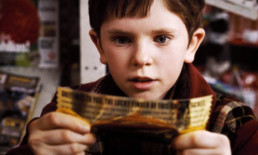
golden ticket

I've got a golden ticket
I've got a golden chance to make my way
And with a golden ticket, it's a golden day ...
OK, so the ticket wasn’t golden. It was orange.
And it wasn’t a free ride to the Chocolate Factory. It was a $40 ride to the poorhouse.
I drove up to Boston recently, to take part in a celebration dinner for a graduating class of opticians I’d taught as a guest lecturer back in the fall.
Driving in the city doesn’t bother me in the least. It’s the parking that gets me. I’d only ever been to the location with my best friend, Dib, who drove each time. And even with her knowledge of the area, parking had never been easy. So I’d set out two hours before the event, to give myself more than adequate time to find street parking or a nearby garage.
To my surprise, I found an open spot by a meter, not even a block from the school.
The digital message on the meter informed me that operational hours were 6:00AM to 6:00PM. It was 6:05. Kismet!
Still, ever the conscientious sort, I inquired of a passerby who said he lived in the area. “This meter says it’s only operational until 6:00. Is there any reason you can think of that I shouldn’t park here?” The man assured me that I was good to go.
However, when I returned to the car after the event, there it was: the bright orange ticket, placed under a wiper.
I was aware of my pulse rising, feeling it in my throat, just under my Adam’s apple. I unfolded the citation: Resident Parking Only. $40.
Resident Parking Only? With furrowed brow, I looked both ways along the sidewalk. Nothing to the rear. Ahead, perhaps 30 feet or so, was the metallic back of some kind of sign. I walked to it and read the other side: Metered parking 6:00AM – 6:00PM. Resident Parking Only 6:00PM – 6:00AM.
I’d done my due diligence. I’d even asked a resident. How could I have guessed that a back-to sign way up the sidewalk applied to a metered area … or that the metered parking became resident parking after a certain hour?
Here, I faced a choice.
I could give in to negativity, ruminating on the unfairness of it all until my mood soured. I could get angry, decrying the City of Boston as thieves who think nothing of deception and robbing people to make a buck. I could picture that rotten police officer smirking while glibly writing out my ticket — just like every other person in authority, getting high on their own sense of self-importance. They know that people aren’t going to appeal these things, because of the time and inconvenience of driving back into the city and spending all day in court, only to have them stick you with it anyway. And all so they can pad the tills to overpay some fat, lazy cop to stand around on construction detail eating donuts …
Isn’t this how things go if we let them?
In other words, I could play the part of the victim, the oppressed.
Or …
I could start by telling myself, “You always have a choice.”
I could choose to remain positive.
I could choose to see this as an opportunity to practice patience.
I could choose go through my worry checklist, making note of what I could do about the situation if anything, and when I could do it.
I could choose to view the unseen people involved as people and not as problems.
These choices combined into a decision to visit the website listed on the ticket. That led to learning there was an online appeal process, which surprised me, having believed that live appeals were the only option.
The appeal form only allowed 500 characters — not words — with which to explain why you felt the ticket had been given in error — a fact which certainly put my skills as a writer (and problem solver) to the test. But I finally managed it and sent it off, with the promise that I’d receive an answer within 10 business days.
Let me point out that appealing the ticket could still have been done with victim mentality, assuming that the police department only offers such appeals as a technicality, and that the whole thing was just an automated process that churns out GUILTY with an email bot. Or that any actual person would be no better, not even reading what anyone has to say, just clicking “No … no … no … no …”
Honestly, I went in picturing that a reasonable person would be on the other end, or I’d never have bothered.
Sure enough, about two weeks later, I got the email reply. A decision had been made: the ticket had been repealed.
Even at this point, choices existed. Would I feel entitled, thinking, Darned right, you appealed it, ‘cause your whole stupid ticket was a scam in the first place! (You know this to be true about human nature.)
Or …
After a little digging, I was able to find a contact email address for the appeals office. I sent them a quick email:
THU 5/18/17 3:04PM
Hello,
Today, I received a letter from your office informing me that, in response to my appeal, you have administratively dismissed my ticket. I just wanted to say thank you. I'm sure much of your day is spent ameliorating tense situations and receiving negative feedback. I felt it was in order to acknowledge appreciation as well.
Enjoy our early summer!
Erik Tyler
Within a half-hour, I received a reply from a real person — Jacquelynne — who expressed her thanks and appreciation for the email, confessing that, yes, it can get wearing with all the negative, while they seldom hear the positive.
I know what you’re thinking: Yes, well, that’s all fine and dandy. But what if they hadn’t decided to repeal the ticket? Then what would you have done?
And the truth is that then … I’d have had yet more choices to make.
Appeal in person, claiming that 500 characters hadn’t been enough to adequately state my case? I could have. Likely, I would have returned to my worry checklist, paired with my go-to stress question: “Will this matter in a year?” And I would have quickly come to the conclusion (rightly so) that, no, it won’t matter in a year, and so it’s not worth another moment’s thought or happiness.
We seem to think that the course of life is determined by the big decisions we make. And I suppose to some degree, that’s true. But how can we expect to handle weightier decisions well, if we’ve made a habit of giving in to negativity and self-indulgence with regard to the hundreds of choices that came before?
The little choices we make each day have a cumulative and exponential effect. Positivity becomes easier with practice. Unfortunately, so does negativity.
For better or worse, the past is the past. We can learn from it, but we can’t change it.
The future, however, begins with one choice — the next one.



the grumbles: part 2

Today’s post is a continuation of last week’s discussion on complaining.
If you’re coming in late to the game, I highly recommend reading the previous post first, since it lays some groundwork about what constitutes complaining and what does not. However, I’ll sum up the gist of it.
My friend Chad shared something with me that had resonated with him recently:
“Complaining is a waste of time
unless you’re telling someone
who can do something about it.”
And that got me thinking. It occurred to me that not only does this statement warrant some self-reflection, it also allows us to redefine terms this way:
Complaining: sharing negative information, thoughts or emotions with someone who cannot do anything about the situation
I’m a firm believer that virtually everything we do in life is done because of some perceived gain. In other words, there are reasons behind most of what we do. This says nothing of the existence of ideas like altruism, which would simply be doing something based on a perceived gain for another person. My point is that we tend to believe “If I do this, then that should happen — or at least there’s a high enough likelihood to make it worth my while.”
Quid pro quo.
The problem with perceived gains, however … is that “perceived” part. You see, perception offers no guarantee of aligning itself with reality. Yet, since most of our perceived gain system becomes automatic, even subconscious, we lose track of asking ourselves, “Is what I’m doing here actually working?”

With these ideas as a springboard, let’s take a closer look at why we complain. Then, for those who are suspecting that complaining isn’t getting us where we had hoped it might — and in keeping with the theme of The Best Advice So Far, that “You always have a choice” — I’ll offer some thoughts about breaking free of the “grumbles” and trading them for greater overall peace and happiness.
Before you even continue reading, however, I want to pose a challenge. Enter a place of honest self-reflection and adopt this mindset: if your immediate reaction to any of what you read below isn’t “Nope, that’s definitely not me,” be willing to consider that the particular reason is, at least to some degree, likely one of your own perceived gains behind complaining.
This list is by no means exhaustive, nor is it in any particular order of importance.
ACCEPTANCE
Complaining in hopes of the perceived gain of being in some way accepted by others covers a lot of ground.
If we really think about it, perhaps we are hoping that our complaining will bring us some attention from others. We’re not sure how to gain positive attention; so attention centered on the negative in life will have to do. What we’re really craving is love and friendship — but pity has somehow wound up being the closest we ever get.
On the same lines, maybe we didn’t used to be a complainer. But we became part of a group of friends or coworkers who do complain a lot. And so, in order to be included, we took on chameleon-like behavior and followed suit.
Suggestion for positive change: First, acknowledge that complaining isn’t bringing you positive attention. While complaining may become a least common denominator that gets people talking together, it’s ultimately a drain on the soul and not a fulfilling pursuit. However, most people are attracted to a person who brings lightness and joy to a situation. Decide to be that person. Not only will you stand a better chance at forming true friendships, you just might change the culture of the other people around you.
OPPOSITION
I know many people who complain as a way of distancing themselves from something of which they strongly disapprove or with which they disagree. I often see this in the areas of religion, politics and other policy. If we complain about a thing, the perceived gain is that everyone will know I had nothing to do with this [ridiculous/awful/shoddy/wrong] thing.
Sometimes, this can also be a form of acceptance-seeking. If people think I might have had something to do with the stupid thing, person or situation, they might not like me. I want them to like me, so I’d better make it clear that I’m not in favor.
At still other times, our complaining may be about something that we, for whatever reasons, are involved with — something which is currently a big, fat mess. And though we are technically “part of it,” we feel the need to make sure others know that we aren’t as [disorganized / unprofessional / lame] as the [committee / project / school play] we got roped into.
Suggestions for positive change: I am all for being outspoken about such things as injustice, abuse of power or the perpetration of misinformation. However, going back to the original premise here, if our words aren’t being spoken to someone that can do something about it, they really are a waste of time and energy. Try redirecting your energies into activism. To rephrase a time-tested truth, action speaks louder than words.
And for those who feel trapped by a BEAST (i.e., Big Energy-Absorbing Stupid Thing), please visit this post. Again — you always have a choice!
ANGER
Often, complaining is anger — even deep, long-term anger — working its way out at the wrong things.
So we complain about the meal we’re served at a restaurant … when we’re really angry about our dead-end job and our condescending boss.
Or we complain about the color of the wall paint … when we’re really angry about a marriage on the rocks.
Maybe we’ve even lost track of why we’re angry. We’re just angry, all the time.
Suggestion for positive change: Directing our anger at things that are smaller or safer than the big, scary thing we’re really angry about involves a perceived gain that will never be achieved. What we want is to feel respected and valued at our job or in that marriage. And a hotter meal or a different color paint on the wall stands no chance of bringing about those deeper desires.
If you suspect that anger is behind your tendency to complain, I’d encourage you to read the post entitled “drain.” It takes true courage to face the thing we’re actually angry about, and to make the choices necessary to make a first step toward change. I know I’ve said this an awful lot here, but keep at the forefront of your mind that you always have a choice. It can be terrifying speaking up to a bully, leaving a long-term job to enter the unknown and search for a new one, acknowledging aloud to your spouse that your marriage is in need of some long-overdue work — or seeking counseling for a lifetime of mounting anger. But new choices are the only road to change. And the freedom that comes with that kind of foundational change far outweighs the relatively short discomfort that may be required to set things on a new path.
HURT
It’s possible that you complain because you’ve been hurt, disappointed or let down so many times in the past that you’ve forgotten what hope feels like. It’s become easier to expect the worst than to believe the best about any person or situation. The problem is … negativity only ever invites more negativity.
Suggestion for positive change: Let me direct you to a few prior posts — “runes,” “déjà vu” and the series “why we do: part 1 and part 2.” If further reading isn’t possible just now, please … bookmark this page and come back when you do have more time to read and reflect on those previous posts. I truly believe they may give you some new perspective and, if you’re willing, a starting point for hope to bloom again.
CONTROL
Habitual complaining may be an indication of control issues.
We find ourselves growling, swearing or laying on the horn in traffic. When it’s really just a different language that says, “How dare you be in my way!” We’re used to having control, and it’s been taken from us with no recourse to regain it.
Of course traffic isn’t the only place this attempt at exerting control rears its head. Maybe it comes out when you get to thinking you’re smarter than your boss who’s making calls you’d make differently on a project. Or maybe you’re one member of a larger team or committee, and you nitpick or filibuster any decision that didn’t reflect your own input.
In this way, along with control issues, I’d suggest that complaining may be a mark of self-centeredness. Anything that doesn’t go my way, when and how I want it, is met with complaining — the “adultified” version of a tantrum.
Suggestion for positive change: Making changes in this area takes a big person. After all, if you’re someone who feels the need to control situations, and it’s suggested that you give up that control, it can feel a lot like taking away oxygen.
I’d first invite you to think about whether your perceived gain is actually being met. Are your complaints getting traffic to move any faster? Is your boss giving you control of that project or decision in the end? Is everyone on that committee suddenly inviting more of your input? Or are you just finding yourself continually at odds with people?
Realizing that your attempts to gain control aren’t working is the first step to deciding to try something else.
As for what that “something else” might be, I’ll throw out a couple of ideas.
First, consider whether the problem is deep-rooted enough to warrant counseling in order to help you relinquish some of that need for control.
Or try exchanging external control for the challenge of greater self-control. You may find that, if done in healthy ways, this keeps you feeling more at peace with life. Throw yourself into a positive hobby or activity the outcome of which is entirely up to you. Hit the gym. Write a book. Prepare for and run a marathon. Be demanding of yourself, and you may find yourself feeling less of a need to do so with others.
DEFLECTION
Lastly for now, complaining may be an attempt at shirking personal responsibility. If I complain loudly and often enough, it feels like I can convince myself and others that a problem in my own life is really someone else’s fault. And that means, I don’t actually have to do anything to change my circumstances.
Suggestion for positive change: I’ll quote some of the best advice so far (the topic of an entire chapter in my book), which was passed to me by my friend Carlotta, who, having suffered through cancer, had more reason to complain than most — and yet who never did:
“Life is not fair. The sooner you accept this, the happier you will be.”
Complaining may shift the blame in words. But it does absolutely nothing to change the fact that your life is largely determined by your own choices. And so, if you remain content to gripe and point fingers at the boss, or your spouse, or your parents, or "the system," or God, or life in general — you’ll continue to be unhappy.
This isn’t to say that every negative circumstance in your life was of your own making. But waiting for someone else to take responsibility for your problems and to solve them will leave you in exactly the same place tomorrow, in a year — and in twenty — unless you decide to get up and do something differently with the many, many choices that lie completely within your control.
*****
Again, the above list wasn’t meant to be exhaustive. But if an honest look revealed something you know to be true about yourself, do something about it. Commit right now to implementing positive change, however small.
To quote my best friend Dib (Carlotta’s daughter, in fact): “The only prize for having the worst life is … [wait for it] … CONGRATULATIONS! You have the worst life!”
I think you’ll agree that happiness and inner peace are far better rewards than complaining.


the grumbles: part 1

I’m a little embarrassed to admit it, but I found myself growling out loud this afternoon.
We got another 14-or-so inches of snow yesterday, which in and of itself was quite spectacular. Not only did the blizzard cause whiteout conditions where I could not even see the trees at the back of my yard, it was also accompanied by booming thunder and lightning that, in moments, lit the world in white fire.
Unlike last time, I was actually prepared for this one. The night before, I’d tucked my car parallel to the back of the house, quite close to the wall, so that the plow would have maximum access to the rest of the lot the next day. I then pulled the car cover on; and to assure that the winds — predicted to be 20-30 mph with gusts up to 50 mph — didn’t sweep up underneath and parachute the cover clear off, I’d even though to open the trunk and hood, and then close each on portions of the car cover, securing it firmly in place.
As the storm raged outside, I congratulated myself on how clever I’d been and took comfort in knowing that, as soon as it subsided, I’d be able to just walk outside and slide that snow-laden cover off, leaving my car gleaming and untouched while the poor schmucks around me labored at brushing and scraping their own buried vehicles out from under the piles.
Friday, I slept in a bit. There would be no need to get out early to clear the car off, thanks to my brilliant planning the day before. So I finally headed out at noon to remove the cover and snow, and to get out and about my day.
Upon stepping out onto the porch, it was immediately clear that this storm was worse than the last. The snow was the heavy, wet kind that was going to be hard to shovel or move at all. It was equally clear that the new plowman had done a shoddy job, leaving about a third of the lot piled in snow that should have been pushed much farther back, and thereby eating up one of the four parking spaces. I felt bad for the landlord.
I turned the corner and … wow, the snow sure was piled high on the car. It might take a few tugs to get that cover to slide off.
I pulled. It didn’t budge. I braced one shoe, already sodden, against a tire and pulled again. Nothing moved. Not so much as a centimeter.
I took a different approach, lifting the elastic edge from under the rear of the car and trying to fold it up and over the snow on the trunk, thinking this would perhaps make it easier to pull the whole thing off from the other side.
However, I quickly realized that the underside of the car cover was completely frozen to the vehicle.
This may have been the first time I growled.
Over the next 30 minutes, I pushed. I pulled. I shoveled snow off the car (yes, with a shovel). I stood on the hood for leverage. I wedged myself into the foot of space between the house and the car, hip-deep in snow, and pulled some more.
Nothing.
What’s more, the keys were inside the car. Normally, this is intentional, since entry to the car is gained from a keypad on the driver’s door. Only now, the snow was halfway up the door and there was too much snow in a tight space to allow me to open the door anyway, even if the car were clear.
I pushed against the doubled-over car cover with the edge of the snow shovel — which ripped clear through the tarp-like material, pouring snow out onto the only clean part of the car I’d managed to expose.
I believe this was the second time I gollared, not unlike a stuck boar, I imagine.
Finally, I dug a tunnel beside the driver’s door, down on my hands and knees, and reached up under the tarp, feeling my way around the keypad to enter the code that unlocked the doors. Then I backed out, soaked through and with my fingers throbbing with prickling pain, and entered the car through the passenger side. Driving blind, with the car still three-quarters covered with tarp and snow, I edged the car forward six feet or so. Then, with no thought for saving what remained of the tarp, I expended the rest of my waning energies on using the open space to heave that cover, inch by stubborn inch, off the car at last.
The whole ordeal had taken a full hour — much longer than simply using a brush and scraper would have taken. I was freezing. I could already feel my back and knees paying the price.
And yet … I have to say, that was the end of the inner grumbling over it. In actuality, even during the worst of it, despite the growls, my brain was feeding me my own advice:
“Will this matter in a year?”
I’m not exaggerating when I say that I formed a mental picture of the car, already cleaned off and parked in its usual place. I knew that this was an inevitability; it would not simply stay snow-encrusted until spring. And so I was able to push forward, the “future truth” urging me on. It gets done. You know this. So every minute here is one minute closer to that eventuality.
And that eventuality … did become a reality. The car is cleared and parked in its usual spot.
Still, my choices weren’t over. My back, knees and shoulders are still sore. My fingertips are still not quite right, even as I type, feeling like low-level electricity is circulating through them, trying to get out. It would be the easiest thing in the world …
… to complain.
*****
Perhaps ironically, I had just been talking with my friend Chad the day before, while the storm was in full force. He’d shared with me something that had struck him in a new way recently, something he wanted to pass along to me, even suggesting that I might find it good fodder for an upcoming blog post.
But when he shared it, though I assented to its being true, and I understood why it had stood out to him, it just wasn’t something I connected with in that moment.
Little did I know that, less than 24 hours later, his words would feel up close and personal.
Here’s what he told me:
“Complaining is a waste of time
unless you’re telling someone
who can do something about it.”
Now, at first glance, this may seem like a repeat of the central theme from my last post:
“Anger is nothing but a big, fat drain.”
[Please read the post for important qualifiers on that statement.]
However, while it does share some things in common with anger, I view complaining (a.k.a. grumbling, griping, whining, kvetching, carping, grousing) as something … else … something I decided was worthy of its own post.
*****
It might be best to outline quickly what complaining is and is not before continuing too much further with the discussion.
Life isn’t always roses and sunshine. Difficult things happen. And discussing those things with select people is not only acceptable, it’s often necessary.
Telling your doctor about a physical ailment is not generally what I’d consider complaining. And keeping such things to yourself can actually cause even worse problems down the line.
Likewise, sharing with your counselor or a trusted friend that you’re feeling depressed or negative isn’t complaining.
Nor is telling your spouse or a close friend about difficulty at work that’s causing you to consider finding a new job, if you believe that person to be both a source of comfort and counsel toward helping you process and make a wise decision.
I’d add that it’s not always necessary that the “select person” be someone you know or someone close to you.
Just two days ago, a passenger van carrying disabled school children was weaving erratically through traffic on the highway, catching my eye in the rear-view mirror. Finally, the driver wound up behind me, racing up and falling back, warning me to get out of his way. I pulled into the center lane and, as the van blew by, I quickly made note of the number on the “How is my driving?” bumper sticker. I voice-dialed the number immediately, but the van was going so fast, I hadn’t had time to also get the vehicle number or plate number. When the representative answered the line, I told her about the speeding van. My heart in my throat, and still speaking with the woman, I drove 75 … 80 … 85 miles an hour, before I finally got close enough to the vehicle to read the information. Holding at 89 mph, I was finally able to report the vehicle before dropping back to a safe speed.
Was I complaining? In a certain use of the word, I was “filing a complaint,” yes. But I don’t see this as complaining. Nor would I see speaking to your human resources department about sexual harassment as complaining.
Let’s revisit what Chad shared with me:
“Complaining is a waste of time
unless you’re telling someone
who can do something about it.”
What do all of the examples I’ve given above have in common? Well, in each instance, the concerns or thoughts or emotions are being shared with “someone who can do something about it.”
In this way, it seems a solid working definition to say that complaining is sharing negative information, thoughts or emotions with someone who cannot do anything about the situation.
To accept that definition of “complaining” seems it would be a life-changer, wouldn’t it?
Keep in mind, speaking negative thoughts or opinions may, by this definition, still constitute complaining when shared with a doctor, counselor, spouse or friend, if that person is not able to do anything about it — either because of the nature of what we’ve shared … or because we aren’t open to their help in “doing something about it.”
Complaining can even be internal dialog — speaking negatively to yourself about a person, situation or life in general — if you have no intention of making the choice to do anything to resolve the situation, or if resolving the situation is an impossibility.
Lastly, for now, I think it’s important to draw a line between complaining and venting. This one can be tough to discern. There are certainly times when we just need to get something off our chest with a safe person, without the expectation (or even the desire) that the person directly try to solve the problem or offer suggestions on how we might.
So how do we know if what we’re doing along these lines constitutes complaining or not? I think the definitions provided above, along with a willingness on our part to be honest with ourselves, can help in making the distinction clear. If our sharing a difficult situation or internal struggle with someone is truly a means of getting it out of our head, so that we can stop ruminating and work toward finding better ground, then this would still constitute “telling someone who can do something about it” — even if all they are doing in that moment is listening attentively. If we choose such a person carefully, they can very much help us sort things out, if only by allowing us to hear our own thoughts clearly.
Back to my snow woes, should my grumbles and growling be considered complaining? In and of themselves, I’d have to say — yes. Though a growl isn’t exactly words, it was a voicing of my dissatisfaction and frustration with … whom, really? God? The Universe? The snow itself? Was there a chance that my growling would fall upon the ears of someone who was going to help get me out of the situation any faster, even by way of moral support?
And if my grumblings were only for myself, did they help me help myself solve the problem in any way? To all of the above, I can only answer “No.”
As I mentioned, I did wind up turning things around with some positive self-talk, which did help me with the task at hand. But in isolation, I would have to say that the moments of growling still fell under the category of complaining. Those utterances were something I had to work against, not anything that was working for me as I faced my difficult situation.
So … based on the discussion here, how much complaining would you say you tend to do?
Be sure to check back next week for Part 2, where I intend to further explore several reasons why we tend to complain — what we perhaps hope to achieve by it, whether successful or not — along with offering some suggestions for using that insight to make new choices where complaining is concerned.

drain

Growing up, I went to a dysfunctional parochial school.
The school was characterized by excessive, unfounded and often absurd rules — all alleged to have been formulated in the name of God.
No dancing at any time. Dancing of any kind at any time — even at a wedding — was grounds for punishment or expulsion.
Girls could not wear pants or shorts. Even for sports. In the case of the latter, they were required to wear shin-length polyester culottes. And that was considered a “liberal” concession.
Denim was decried as “the devil’s material” and forbidden to be worn at any time, in or out of school. If someone reported that they’d seen you wearing jeans on a Saturday, you’d be hauled into the principal’s office come Monday morning .
Girls could not color or style their hair according to modern fashions. And boys’ hair was required to be what we called “white-walled”: a half-inch minimum off the ear, shirt collar and eyebrows. In eighth grade, I entered a music competition between like-minded parochial schools. After months of arduous practice, I took the stage and played Rachmaninoff’s Prelude Op. 3 No. 2 in C# Minor nearly flawlessly. The judges awarded me an overall score of zero and disqualified me — because my hair touched my eyebrow.
What’s more, parents were required to sign over unrestricted rights of corporal punishment (meaning, teachers had free reign to physically strike students whenever they wanted with no recourse … a situation of which many took full advantage).
The general “rule” of corporal punishment (when teachers abided by one at all) was that the offending party would be brought to the principal’s office to be paddled. The paddle was a square wooden board with a handle, which hung on a hook by the glass-topped desk when not in use, a reminder to all that it could just as easily be taken down at any time. The student was required to assume “the position”: toes and heels together, bent over with hands braced on knees. The adult would then administer 10 strikes with the paddle — hard. If, however, the student at any time broke “the position” by taking a hand off a knee or stepping forward the slightest bit to maintain balance, then the ritual would begin again with the count reset to 1. As you might imagine, most students didn’t escape with the minimum 10.
I’m only able to give you a glimpse of the reality, which was more horrifying than I’m able to capture in short order. Yet this warped and sadistic environment was the norm for us. And within this system, I was a model student.
I was a perfectionist. So getting the highest marks, and remembering and keeping all rules, was no great challenge.
In sixth grade, I received my first and only paddling. The reason was that I had forgotten my lunch at home, and was, therefore, allegedly trying to draw attention to myself, which was prideful (I kid you not).
I did not flinch.
I did not step.
I did not cry.
That teacher could hit me, but she was not going to break me. I was not giving her the satisfaction.
Thirty years later, I ran into that teacher in a store. I had not seen her in the interim. Even three decades later, she sneered at me with derision and said, “Well, well, well … it looks like at least one of the Tyler kids managed to make it to adulthood.”
I turned to look her square in the eye and replied, calling her by her first name (changed here): “Winifred, do you know what I remember about you as my teacher? I don’t remember a single thing you taught me. I only remember that you paddled me when I was 11 … for forgetting my lunch.”
She arched an eyebrow. “I didn’t paddle you for forgetting your lunch.”
“Yes … you did,” I countered, my face a stone. “It was the only time I was ever paddled in that place. I remember it well.”
“Oh, I paddled you,” she retorted smugly. “I remember it just as well. But it wasn’t for forgetting your lunch. That’s just what I told you it was for. I really paddled you because I didn’t want you going around thinking you were so perfect.”
*****
Those of you with empathy intact may have just felt something akin to anger. And that’s merely vicarious. Imagine being me and the other students who attended that school at the time (keeping in mind that I fared much better than most).
Sadly, many of those erstwhile students — all of whom are now approaching 50 — are still angry. For many, their entire lives since then have been tethered to bitterness and anger that accumulated during those years, so many decades ago.
If I’m being honest, that was me until sometime in my early twenties. I was angry. All the time. It wasn’t the kind of anger that flares up when someone cuts you off in traffic. It was a deep anger that crept like briars through my stomach. I often missed consecutive meals without realizing it (once for about 10 days in college, landing me in the hospital in serious condition), because the gnawing pangs of perpetual bitterness overshadowed even the natural feeling of hunger.
*****
I was on the phone with my best friend, Dib, the other day, and she said something that I knew would wind up being the topic of this week’s post as soon as it left her lips:
“Anger is nothing but a big, fat drain.”
She continued, “I could easily allow myself to get wrapped up and angry. But why? It’s like [that person] already caused an upset, and … what? … now I’m going to give them my peace and happiness, too? No way.”
Wise words. Stellar realization and application of the truth that “You always have a choice.”
*****
I remember when that idea — that, in every circumstance, I had a choice — first became real to me. I was 21. It was the middle of the night. I couldn’t sleep. The hooks of anger were pulling taut inside. My mind was doing what it had done so many times before: replaying on loop the ever-lengthening movie of a lifetime of offenses and hurts.
But somewhere in my dark reverie, another “voice” cut in. It almost seemed to be coming from outside of myself, being in such contrast to the seething rancor that held me like a straitjacket:
“Your anger isn’t changing anything. It’s not making anyone pay. It’s not making anyone sorry. They’re sound asleep right now while you lie awake, a wreck. Yes, those people took years of your childhood. That was not your choice. But those years are over. Now, you’re choosing to give them more hours, more nights, more months, more years — beyond the ones they stole. Those people are no longer able to take your peace and happiness. You’re choosing to give it away now.”
And that voice only further fueled my anger. Or was it panic? Hopelessness?
If I didn’t remain angry, I was giving up the fight against people who were 100% in the wrong. And it felt like moving on and choosing to be happy … was letting bad people get away with it.
But somewhere during those next few hours of turmoil, reason won out. I saw it clearly for the first time. My freedom and happiness had been taken from me in the past. But now, I was choosing to continue to give it away.
Anger is nothing but a big, fat drain.
It doesn’t matter what you’re angry about. From a horrible boss to a sexual abuser to a president, you always have a choice. Other people have their choices. And you have yours. Knowing where their choices end and where yours begin is the foundation of peace, of happiness.

Sometimes, you have the choice to remove yourself from the other person’s influence. It might be hard. Really hard. But often, it’s a choice within our power all the same. Find a different job. Move out and get a new roommate. Turn off the TV.
The past and the hurtful people in it hold no power over you. Other than some microscopic neurons in your cerebral cortex, you literally aren’t the same person you were years ago — not even by one cell. So the only power a person from your past has over you is the power you give them in your mind.
Still other things that have the potential to drive us to anger are current and unavoidable to some degree. For these, I often think about something else my friend Dib says: “If I were forced to be in a six-by-six prison with dirt floors, I’d find a way to make it good. I’d wait for the seed to blow in through the window and I’d plant it and water it with my spit and make a garden.” Don’t let the ugly interaction use up even one minute of the next perfectly good one that follows. Close the door. Don’t look back.
There are certainly times when anger can serve to drive specific and empowering action. Outing the perpetrator. Speaking the truth. Becoming politically active. Defending the defenseless.
But where anger does not lead to action, it serves no purpose.
Today, I’m a happy person. My past hasn’t changed, nor can it. The world is, in many ways, much the same as it was, with potential for hurt just as present. Still, I am happy — by choice.
Don’t let another day or hour — or moment — of your happiness go down the drain.
NOTE: For those who are processing current anger due to abuse, mistreatment or sudden loss, please take the time to read this brief comment exchange below; I believe you'll find it helpful.

digging out

Last Saturday, we were told to expect the first “real snow” of the winter season here in New England. Meteorologists predicted 4 – 8 inches. Though not exactly fun, we’ve had worse. Much worse. As the sky turned slate gray and the first flakes began to fall, I settled in to finish writing last week’s post, read a bit … and, of course, nap.
I had plenty of food to get me through until the next day when I’d head out and re-up my stores. In fact, I thought, I might even be able to manage a late-night workout, once this thing fizzles out.
Well, about midnight, I did venture down to brush off the car and head out to the gym.
Only the door didn’t open.
Moonlight shone blue across the surface of deep, deep snow. (We were later to find that the official reading was 16 inches.)
Crap.
Still, determined, I tromped back up the stairs, got out of my workout clothes, slid some old jeans on over sweatpants and donned a hoodie under my overcoat. Then I headed out to show that snow who was boss.
Things had wound down to little more than brittle flurries. That was thanks to the fact that, as my phone alerted me, it was now 2°F — too cold for much new snow to form.
I grabbed the shovel and became aware as I looked around that the drifts on the porch weren’t the worst of it by a long shot. I cleared the porch but couldn’t tell where the platform I was standing on ended and where the steps began. As I shuffled toward the invisible edge, I had that feeling of wading out too far into the ocean and taking that first step that drops into the abyss.
I plunged downward and was suddenly knee-deep in the stuff. It was abundantly clear that I’d be going nowhere tonight.
I slogged toward the car. As the frigid wind howled, I assessed. There’d be no place to shovel the snow other than into the hedgerow. Just too deep to throw it anywhere else.
I’ll be honest: the “hearty New Englander” in me began to crack. We were barraged the winter before last with a freak series of unrelenting blizzards that lasted months and dumped a total of over 11 feet of snow, and I felt the edges of PTSD tapping on the frosted glass of my resolve. Despite the gloves I wore, pain was already shooting through freezing fingers. And no amount of sniffling was now enough to stem the flow of snot from my nose.
It was not only deep, it was heavy. The snow brush bowed as I ran it across the hood of the car, sending vibrations up my arm (my hand itself being numb) that I knew meant beneath the smothering snow, the car was also encased in ice. Then that first swipe was interrupted as the Lincoln ornament snapped off and catapulted somewhere into the bushes, lost (sorry, Mom).
I’m not sure if I started crying at that point, since my eyes were already stinging and watering furiously.
*****
Whether an unexpected situational disaster or something more heavy and pervasive in our lives, it can be hard digging out of the places our minds can take us, and finding our way back to a place of peace and happiness.
But right there, half-buried in the snow, I began to implement my own strategies. And for some reason, it occurred to me that, though I myself think these things often and even include many of them in my book, The Best Advice So Far, I don’t write about them on my blog as often as might be helpful to readers.
So today, I’d like to share with you four totally doable strategies that really work if you’re serious about digging out of a funk:
1. Remember: “You always have a choice.”
This one is at the heart of my book, this blog, every discussion I facilitate, every talk I give. Really, it’s at the heart of everything. If you don’t settle within yourself that you are an agent of choice, then you won’t seek to change anything. You’ll hold onto victim mentality and negativity, accepting the (faulty) notion that you are stuck. Frowned upon by the Universe. Doomed to be miserable.
Sure, the amount of snow came as an unpleasant surprise. But the fact is that there was no need for me to be out at midnight trying to deal with it. There was no emergency. At any time during the goings-on, I could have headed back inside to the warmth, made myself some peppermint tea, taken a hot shower or chosen any number of other leisurely options. In fact, I have complete freedom to move permanently to a warmer region anytime I choose. There’s no one to say I can’t. And no matter how bad things could ever get in any circumstance, it is I alone who have control over choosing my attitude.
Because I’ve practiced consistently for a good while now, I’m getting fairly good at stopping myself early on whenever I start to mentally grumble, reframing the situation by saying, You always have a choice. Misery is a choice. If you allow yourself to become miserable right now, you’re choosing it; it’s not happening to you.
This small habit sets me to looking through my positivity toolbox for the best approach. (Some of my favorites are included below.)
[For more on the power of choice in reframing life, click HERE to read Chapters 1 and 2 of The Best Advice So Far, absolutely FREE.]
2. Start from where you are, not from where you wish you were.
This was one of three pieces of advice found in the book and which were instilled in me by my friend Carlotta, who has since passed away. And it’s among those I find myself quoting most often (aloud and in my own head). Wishing things were different is a notorious time waster. It keeps us frozen in a tundra of guilt, regret, depression and overall negativity. It accomplishes nothing that moves us out of our current predicament or mental mess. Dwelling on where we wish we were instead of where we are is a trap: it causes us to focus on the choices we don’t have rather than ones we do.
Using my blizzard experience as an example, no amount of wishing was going to move an ounce of snow, nor would it bring the warmth of spring any sooner. Wishing I could get out of the driveway and hit the gym would not get me there. Wishing my hood ornament hadn’t snapped off wouldn’t somehow put it back on. Starting were I am meant making choices about what I could control.
I could choose to head inside and grab some wads of toilet paper to stuff up my nostrils for the rest of the job. (Some of you may think I'm kidding; but those of you who have endured Northern winters know I'm not.)
I could choose to leave it until morning.
I could choose to set small goals for myself, rewarding myself along the way with a few minutes in the hallway to warm my hands and take the chill out of my bones before continuing. In fact, that is what I did choose. And in moving forward, bit by bit, win by win, I got the job done.
[Read Chapter 4 of The Best Advice So Far for lots more on this advice.]
3. Find the silver linings.
There’s this part of us that believes, for some strange reason, that if a piece of advice has been around a while, it’s probably not as good anymore. But some things become part of the body of enduring wisdom because they’re based in truth. And that means they don’t just change like clothing fads or hairstyles.
“Find the silver lining” is one such time-tested axiom — just as effective today as the first time it was spoken.
If you’re out of practice, a good place to start is gratitude. And I find that gratitude is best expressed in terms of what you do have rather than what others don’t. So while it’s a start to think, “There are lots of people who would love to be physically able to walk down stairs or shovel snow,” you’ll get even more benefit out of phrasing that realization this way: “I’m grateful that I have the physical ability and strength to walk up and down stairs and shovel heavy snow if I choose to.”
Here are some others:
“Good thing I still have plenty of food upstairs to last until I can get to a store.”
“A nice hot shower is going to feel even better after this.”
“The broken hood ornament is a good opportunity for me to check how much I really care about material things.”
“How fortunate I am to even have a car that needs shoveling out. This car gives me a lot of freedom.”
Again, focus on the things you can do, the freedom you have, the choices you can make. The more you practice, the easier it will become to see silver linings everywhere, regardless of circumstances.
[For more on finding silver linings and practicing positivity, click HERE to read Chapter 3 of The Best Advice So Far, FREE.]
4. Ask yourself, “Will this matter in a year?”
I can’t say for sure, but this might be the best mental question I ever ask myself. It makes things instantly very simple. And, more important — it really works.
Here’s the gist of the thinking behind this one.
When something unpleasant, irritating or unexpected drops into my lap, I ask myself, “Will this matter in a year? Will I still care about it?” Now, if the answer is an honest yes — and there are certainly times it will be — then you need a different set of strategies (I offer many in The Best Advice So Far). But in the vast majority of situations, the honest answer will be “No, it won’t matter in a year.”
And if I assess that I won’t care about whatever it is in a year (or even a week, or tomorrow, or five minutes after it’s over), then conversely, it must be true that sometime between right now and a year from now … I get over it. And if I know that I am, in fact, going to get over it at some time in the future … that time might as well be right now. After all, why pour more energy and negativity into something I know is going to vanish?
I know — seems too simple. But work out the logic of it for yourself and then give it a whirl. I’ve found that the best strategies for maintaining positivity are the simplest ones.
This is a different take on the tried-and-true "This too shall pass." And, in fact … it did. Every bit of that snow is long gone, and we're in the middle of a stretch of sunny 50° days. So I'll add a bonus tip: when you're in the middle of the funk, remember all the times before now that you've gotten through.
[Read my previous post entitled “in a year” for more on this strategy.]
*****
This list is by no means exhaustive. And there are plenty more tools included in my book and throughout five years of blog posts here. But tuck today's strategies in your pocket for whenever you find yourself faced with the temptation to spiral into destructive thinking.
They're simple. They're effective. And they'll help you follow through on your choice to be a more peaceful and positive person.

after the vote

Let me start by making this clear: just as I have never told anyone how I’ve voted, I am not going to talk politics here. But I do have something I believe is vital to say to each of us today (including myself).
*****
I played soccer for eight years in high school and college. I usually played fullback and was a grass-in-the-teeth kind of player. I remember once being pulled from a game after my leg got mangled. I needed help to even get up and hobble off the field. More than the considerable pain, though, I felt anger. I shouted over and over at the coach, “Don’t you pull me from this game! I can play!”
I loved soccer. But, as contradictory as it may seem, I hated (and still do hate) competition. You see, in every competition, there are winners and losers. And that was always a conflict for me, being the highly empathetic sort.
After each game, it was more or less required that each team line up facing one another in single file and then walk by each member of the other team. Typically, you’d low-five, saying, “Good game, good game, good game…” in rapid succession. But most of the time, you knew neither team meant it. It’s what passed for “good sportsmanship” and was supposed to teach some lesson or other.
For me, on the other hand, it was never quite that easy.
If we lost, I took it personally. I should’ve done better. At the same time, I wanted to encourage every downtrodden member of my team, or help talk others down from their adrenaline-fueled rage. And yet, I also truly wanted to congratulate individual members of the other team who had played well and won.
If we won, we would jump up and down in the close-knit huddle cheering, or smack one another on the back harder than we knew was necessary. However, I also felt keenly aware of the losing team members and knew how dejected and disappointed they felt. So I’d pull myself from the next teammate’s growling embrace and head on over to specific players on the other team, telling them what I admired about their game or a particular play they’d made.
*****
Last night, an important decision was made.
Upon learning the result of that decision, half of the people I love and care about began celebrating, filled with a sense of relief and hope for the future.
The other half of the people I love and care about were shocked, mourning, fearful — even visibly and uncontrollably shaking and weeping in panic.
Statistically, the above scenario more or less sums up our country today. About 50% are celebrating, and 50% are terrified.
Had the race gone the other way, we’d have exactly the same split and scenario. Half and half.
That means that, whichever camp you fall into, half of the people around you right now feel exactly the way you would have had the “swings” swung the other direction by mere percentage points.
*****
The central idea of The Best Advice So Far is this: “You always have a choice.” Yet I’m careful to immediately follow in Chapter One by saying this:
I'm not saying that we get to choose everything that happens to us in life … and we can at no time choose to undo those things which have happened to us in life …. We do, however, have the choice of how we will respond in every situation, even the hurtful ones. Instead, so often, we pour our frustration and anger into those things we cannot change, rather than investing that energy into the many choices that we can make from that point forward.
This is not just rhetoric for me. It’s my lifeline, my tether to peacefulness. Putting it into disciplined practice is the reason I’m able to stay focused and hopeful and positive when the surrounding circumstances are anything but.
Up through yesterday, we each had certain choices.
To be politically active for our candidate or not.
To vote or not.
And if you chose to vote, you also exercised your right to choose a candidate.
Today, those choices no longer exist. But new choices have moved in to take their place.
I think back to my soccer days, to that dilemma I faced every game between how to celebrate and yet encourage and empathize with the other team, or how to mourn a loss while still being kind to my opponent.
Here today, after the most embroiled and contentious election in my lifetime thus far, the choices feel much the same for me. But there are other choices we each must make, as well.
Will we gloat at the expense of others who are hurting — or be respectful and treat others as we would like to have been treated had the margin moved a hair the other way?
Will we live in fear and dread — or decide to live out our ideals on a personal level in renewed ways, rekindling our passion and our stand for what we believe in?
Will we magnify our differences — or seek to understand one another and build upon our commonalities?
What I’m sure of — regardless of how we each decided to cast our vote — is that hate is never right. And choosing to love is never wrong.
Let's choose to love each other with grass-in-the-teeth commitment today and in the days ahead.