
sketchy

Last night, on my way out the door to grab a late snack with my young friend Ben, I noticed that trash had accumulated in the kitchen. Two full bags sat beside the garbage can, along with a couple of empty cardboard boxes. Time for a dumpster run. So, using every one of my fingers, I held and hung and balanced the trash along with my phone, keys and backpack, maneuvering sideways through doorways down the three flights of stairs and out to the lot.
It stunk outside. It often does here. Unfortunately, what they don't tell you when you move in is that there is a sewage treatment plant just behind our community, which does night work. On warm and humid summer nights, it can be powerful. But I've learned to live with it.
The lot was very dark, especially in the far back corner of it, where the woods press in around the dumpster. As I made the trek there to dispose of the trash, I noticed a character in the shadows. He was not dumping anything. He was just sitting there beside the wooden picket fence that surrounds the rubbish bin, elbows on knees, looking down. He wore a hat, pulled low. I couldn't see his face as he looked down at what appeared to be some sort of large, shallow container. It looked like something from a chemistry set. I saw a small ember of light begin to glow in his hand. Was he … doing crack? Setting up a makeshift meth lab right here in my parking lot? As I got closer, he cast a Godfather glance up at me without raising his head.
In yesterday's post, entitled "what's in a name," I ended with this:
Using people’s names is just one more way to stay outward focused, instead of being all about me. Whether it is your neighbors, co-workers, gas attendants or people on the train, each has a real life. An important life. Struggles. Goals. Dreams. Families. At core, I believe we each want to connect. To matter.
We each have a name. Look for opportunities to really see people. Interact. Be vulnerable. Be genuine. Before long, what may have once seemed daunting will become a natural, full and enjoyable way of life.
And this really is a way of life for me. That doesn't mean that I stop and talk to every person along my path. But, having just written yesterday's blog post, the idea was fresh in my mind that even sketchy guys who sit out by dumpsters in the middle of the night doing God-knows-what … are real people.
I also encourage readers to be vulnerable and to take risks. And while I'm comfortable with people from all walks of life, the unknown factors presented here made this about as big of a social risk as I might face.
So I did.

As I began to hoist the trash in my hands, ready to toss it in through the sliding door of the dumpster, I smiled and used the sewage smell to my advantage. "Hey, what's up! Did you come out to the dumpster to escape the smell of the rest of the place?" I threw the garbage, which landed with clunks and rattles.
The stranger looked up at me, smiling. "Ha-ha, yeah! What is that smell anyway?" He was a young guy. I could see now that the glowing ember of light was coming from a standard cigarette. He sat in a swivel chair, the kind someone might have in an office. I still didn't know what the plastic tubs at his feet were for.
"It's the sewage treatment plant. It's right behind the woods there," I pointed, "and they tend to do their dirty work at night."
"OK. I thought it was a sewage leak. I didn't know if I should call maintenance or the town," he replied.
"Oh, so you must live here," I said. "I live in Building 8 over there. My name's Erik."
He smiled even more broadly. "Hey, I'm also Eric! I just moved into Building 1." He gestured to his right with the cigarette hand.
"Well, your name should be easy to remember then!" I said. "Do you spell it with a 'C' or a 'K'?"
"Just a 'C', nothing fancy" he said, almost apologetically.
"Mine's with a 'K'," I replied, feeling guilty.
"Oh, man. You're lucky. The Nordic version. I always wished I'd gotten that one." This guy wasn't stupid.
"So … I have to ask," I half-laughed with a raised eyebrow. "Why are you sitting in a swivel chair, smoking out by a dumpster in the middle of the night?"
"Sketchy, right?" He laughed. "I came out here to empty the cat boxes" [mystery of the plastic containers solved!] "and saw this swivel chair that someone threw out. I was testing it to see if it was broken, because I need a chair for my desk. Seems to be in pretty good condition. Not dirty. I always loved spinning around in these when I was a kid. So, I just decided to have a cigarette and spin around in it for a while." He laughed again sheepishly. "I stopped when I saw you coming."
OK, so he wasn't sketchy. He wasn't the Godfather. He wasn't a druggie. He was just a real guy like me. A nice guy.
His cigarette was finished. He plopped the cat boxes on top of the chair and began to drag it toward his building. I walked with him a little ways. "Well, I'm sure I'll see you around then. Nice to meet you, Eric." I extended my hand.
He shook it firmly. "Nice to meet you, as well."
As well!
My eyes got a bit wider in surprise. Hands still locked, I replied, "We seem to have a lot in common, Eric! You say 'as well'! It's not often that I find someone else who prefers 'as well' over the more common 'too'!"
He replied modestly, "I read a lot."
"I do, as well!" I returned. We both laughed.
"Then we have a lot in common, indeed," he replied.
"'Indeed'? You say 'indeed,' as well?" I was almost giddy. "OK, OK. We need to stop now or we'll be standing here all night…"
We laughed one more time, said our goodbyes, and headed for our separate destinations.
Now, you may be thinking, "Well, you didn't know how it would turn out. He could have been a drug addict!" That's true. He could have. That's why it's called a "risk." I suppose it's possible that he could have leaped up erratically and assaulted me with his red hot crack spoon. It's unlikely, but possible. But what I know to be true is that he would still have been a valuable person, with a name and a story. I was willing to take a chance on that basis.
As I walked toward my car, hearing the scrape of the swivel chair wheels on the sidewalk behind me, I smiled at the cool interaction I'd had with Eric: former crack addict turned erudite, cat-loving, swivel chair spinner.
Another risk well taken.
I'm curious to know: Would YOU have stopped to talk to this "sketchy guy"? Drop your thoughts in the Comments section below!




what's in a name

Choosing a name for a baby is no mean feat. In fact, today it's got its own market. Considerations include the meaning of a name, its country of origin, how it sounds with a certain middle name, whether a beloved family member past or present held the name, which famous (or infamous) people may have shared the name, and what possible nicknames (both kind and unkind) may be. Even how easy the name will be to learn to spell in Kindergarten, or how it will look on a future business card, are included in the process. It's a wonder anyone winds up with a name at all.
Then there are the sensation stories, where someone tries to name their baby a naughty or controversial word as some expression of their freedom of speech. Or they try to get away with using "∏²/Picasso" as a name, in order to seem edgy and avant garde.
As adults, some just find their name unappealing, and go to court to trade "Lucy" for "Sunshine," or "Mehitabel" for the more unassuming "Mary."
Once names are assigned or chosen, they become commodities, exchanged or denied in their own sort of economy. We marry and change last names. Or hyphenate them. Or don't take a spouse's new name at all. Some choose to drop a last name in favor of resuming a former name upon divorce, or to dissociate from parents. Still others adopt an entirely new name upon blending established families.
Those parents who labored in love to find just the right combination for their little one's name later use it to strike fear into misbehaving children: "Jonathan Percival Carter, you leave your sister alone this instant!" I'm unsure as to whether this occurs as a reminder of original ownership rights, or as a means of filling the mouth long enough not to swear.
Then, of course, titles and nicknames and pet names get thrown into the mix, and you'd darn-well better know which combination to choose depending on relationship, setting, and intangible emotional factors. A female child named Jane Francis Smith may be called many things in her lifetime.
She is simply "Jane" to her girlfriends in grade school, but perhaps "Janie Brainy" to the taunting boys.
However, when she receives her Ph.D. in astrophysics, her closest friends rarely call her "Jane" anymore, but rather have re-adopted "Janie Brainy" or just "Brainy," which is now a term of endearment. Her TA calls her "Jane" in private, but "Doctor Smith" at school functions or in front of students. The students call her "Doctor Smith," as well, except those few whom she has invited to call her "Doc."
Her sister still calls her "Jan-Fran," but she is the only one allowed to do so.
Mom calls her "Janie" or "Baby Doll," the latter of which her husband tried to get away with calling her once and was met with a warning glare stern enough to end that particular pet name. He calls her "Janie" or "Sweetheart." Sometimes late at night, he calls her "Doctor" in a low and sultry tone of voice, but that is certainly none of our business.
Her daughter calls her "Mom" and her son calls her "Ma." That is, of course, unless they need to butter her up for something, in which case they call her "Mumsy" or "Mumsicle." When they really want to tick her off, they call her "Jane." When they no longer value their freedom or their lives, they brave "Francis."
Her nieces and nephews called her "Auntie Jane" when they were younger, but have taken to calling her "Aunt Jane" in recent years, much to her dismay. Whenever they do so, she cuts them off with "... that's Auntie Jane, please."
The children at church call her "Mrs. Smith," or, as they get to know her, "Miss Janie."
And this is all over a girl named "Jane Smith," no less.
Imagine how confusing it might all have gotten had she been named "Elizabeth." The childhood taunt of "Janie Brainy" might have become "Booksy Betsy," but now we'd have to contend with "Lisa, Liza, Liz, Betty, Betsy, Beth," and a host of others. One reference lists nearly 100 possible nicknames for "Elizabeth"!
In the end, what does it matter? It's just an arbitrary label, isn't it?
All of the hullabaloo over it would seem to suggest otherwise.
A name is not just a word. It is an identity. Many have heard our name through flesh and amniotic fluid since before we were born. It is comfort. Whether spoken in love, lust, respect or anger, it says, "I see you" rather than "I see past you." It is an acknowledgment that we are.
I've noticed that when someone calls me "Erik," it sounds different to me than when they talk to or about another person by the same name. A name is infused with – something – when we speak it with intention to its owner.
Why is it, then, that we go about life ignoring the names of most people around us, denying each other of that important piece of our central identity?
"But I don't know those people's names," you may protest. True. And it would be impossible to know the name of every passer-by. But for hundreds of people around us daily, it is possible to break the cycle of isolation that we tend to fall into, and to connect with others by knowing – and using – their names.
Let's start easy. Most service workers wear a name tag:
The drive-thru worker at the coffee shop.
The pool maintenance man.
The receptionist at the doctor's office.
The bank teller.
The mai·tre d', waitstaff, bartenders and bussers at restaurants.
The cashiers, baggers and runners at the grocery store.
The guy who works in the electronics department at WalMart.
Such name tags are all around us. And for what purpose do you imagine that they exist? Someone somewhere thought it might be a good customer service relations move. But if we are completely honest, if we acknowledge the names of these people (people, PEOPLE!) at all, it is when we are dissatisfied with their performance or have some other bone to pick with the establishment. How terrible it must be, to only hear your name spoken in anger and irritation, eight or more hours a day, five days a week.
But imagine simply saying, "Hi, Charlene, how's your day going?" to that teller. Or "Thank you, Mark. You've been a big help" to the kid who helped you with your bags at the grocer.
I'm going to go out on a limb and make a bold claim here. That is, ignoring names in such everyday cases is an indicator that we are treating people as props – machines that exist solely for our comfort and benefit – rather than as the human beings they are. Conversely, when I notice and use someone's name, I am treating them as I would like to be treated – with care and kindness, as a real person.
What's more, I can usually offer my own name. It's simple really, though it may take a jump start for you to get into the habit. So imagine. I'm at a restaurant. My server comes over and says, "Hi, my name is Julian and I'll be your server. Can I start you off with something to drink today?" (Note: the interaction thus far is scripted, and does not constitute "real communication" merely because Julian has provided his name.) I reply, "Hi, Julian, my name is Erik. Nice to meet you. Yes, I think I'll have a Diet Coke, thanks." Aha! Now, the invisible wall has been shattered. I've used his name and given my own. Small niceties were included, but real connection with another human being happened, because of my choice to use our names. And I can all but guarantee that Julian's next reply will not continue on-script with, "One Diet Coke. I'll be right back to take your order."
Was this difficult? For some, it might be a slight challenge. But it is not difficult in the mechanics of it.
So, what about all those people who don't go around making it easy for us by wearing name tags? News flash: they've invented this handy new strategy called … asking.
Let's go back to the restaurant. My server is not wearing a name tag. He says, "Hi, can I start you off with something to drink today?" I reply, "Hi, I'm Erik. What's your name?" He says, "Oh, hi, Erik. I'm Julian."
It's almost magical, I tell you. Works every time.
I have a heart for the homeless. Shaking their cups and cans for money doesn't really bother me. But I've found, from Providence to Paris, that a bigger gift than money is asking someone's name, telling them mine, and then talking with them for a moment or two, using their name often. I recall asking one such homeless woman for her name. She hesitated. She couldn't remember. She'd been called many things over the years, but it had been so long since she'd heard her own name spoken that she'd nearly forgotten it. Speaking someone's name gives them dignity. Equality. It restores their humanity, if only for those moments.
Moving around your day with the intention of interacting -- knowing people and being known – changes everything. It results in more smiles. More surprises. More reminders that you are alive and on a planet with billions of unique and fascinating individuals.
I'd just gotten back from my second trip to North Carolina. Road trips do you in. You eat junk food from whichever chain restaurants and convenience stores present the fastest off-and-on to the highway. In this case, I'd done so for sixteen hours. Leaves you feeling not so fresh and sunny the next day. So, for lunch this past Sunday, I stopped at a sit-down restaurant and ordered just a Diet Coke and a salad.
Despite my paltry order and its promise of a pittance of a tip, my server, Marcella, treated me as if I were a party of four ordering up a storm. She was friendly and accommodating, and checked on me often.
While I waited, I noticed a particular bus boy, a tall kid with glasses who smiled even when no one was looking. I watched him as he looked for people to help. As servers came by with empties, he would step out and say, "Let me take that for you." If someone ran out of bread, he offered to refill it. When I removed my straw wrapper and placed it off to the side of the table, he came over with a smile: "Let me get that." He was not wearing a name tag. I asked Marcella. She said his name was Brandon, and that he was new. I told her how remarkable I'd found him, how he stood out for his pleasant nature and work ethic.
I then asked another server passing by if she might get the manager for me. The manager was a smartly-dressed young man named Shawn. I told him that I wanted to "reverse complain" about Marcella and Brandon. He smiled broadly, not sure if this was a joke. I told him how much I had appreciated Marcella's service and attentiveness, in spite of my small order. I told him all I had noticed about the hard-working Brandon, adding, "You'd better keep that one around!"
Shawn shook his head. "That's really cool! When people call for me, it's nearly always to complain. You have no idea how infrequently we hear what we are doing right." We shook hands and off he went.
When Marcella returned, she told me that Shawn had given me my lunch on the house. This was entirely unnecessary, but very appreciated. I tipped Marcella anyway, and left.
Once home, I looked up the address for the restaurant. I took note of Shawn's last name, which was posted online. This took all of one minute. I then wrote a quick thank-you card for his kindness, expressing what an enjoyable lunch I'd had all around, and popped it in the mail. This was not my way of hoping for another free lunch. It was just taking some time and simple measures to treat people as people -- to live with them, instead of merely living around them.
I shared this story with Chad and told him that I might write about it. He thought it was very cool, indeed, but wondered if some people might be disappointed when they try to repeat the experiment, and don't wind up with free lunch or some other personal benefit as a result. My thought to him was that, if you are engaging with people for what you can get out of it, that is manipulation. And manipulation doesn't always work. But if you are doing it because you want to value people and have genuine interactions with them, you will always come out of it feeling rewarded.
Using people's names is just one more way to stay outward focused, instead of being all about me. Whether it is your neighbors, co-workers, gas attendants or people on the train, each has a real life. An important life. Struggles. Goals. Dreams. Families. At core, I believe we each want to connect. To matter.
We each have a name. Look for opportunities to really see people. Interact. Be vulnerable. Be genuine. Before long, what may have once seemed daunting will become a natural, full and enjoyable way of life.

pickles

A brother and sister I know had been having some issues with one another. They had found each other particularly irritating as of late. They argued more. They just weren't communicating. Each of them had dissolved to tears over it one day while I was there, having had yet another blow out the night before. The brother retreated sullenly to the basement, so I used the opportunity to talk with his sister for a while. After hearing her perspective on things, I went to the basement to round things out. Having heard them both, I could see where each of them was coming from. And I could also see why they weren't seeing eye to eye. As they'd gotten older and continued to form their individual personalities, those personalities could hardly have been more different.
I brought them together and helped them talk things through. They were both already pretty worn out mentally and emotionally, but they were troopers. After some honest dialog, the biggest problem seemed to be that things that were an 8 of importance and emotional upset on her scale were a 2 on his scale, and vice versa. And this seemed to be quite a revelation to them.
What they clearly held in common was that they loved one another. So they were willing to work on understanding each other better and treading with more care in areas of individual sensitivity. In the end, it was a fruitful though hard-earned conversation.
Have you ever had this kind of breakthrough conversation with someone in your own life? After struggling for days or weeks – even longer – you knew you had no choice but to just sit down face to face and hash it out until you got somewhere. Hearts raced. Words flew. One of you got up, ready to storm out, but then took a deep breath and sat down again. You tried one more time to explain. Or to listen.
Somewhere along the line, lights began to go on and you saw each other in a different way. Maybe you laughed over some old memory that you had intended to prove a point. Or silent, unexpected tears gave you compassion again where you'd almost forgotten it. But you didn't quit. And it paid off. Things ended with a hug and decisions to try harder. And you both meant every word.
Wouldn't it be nice if you could bottle those conversations? If the next time a similar issue arose, you could just pull the cork and pour out the peaceful ending right up front, rather than starting all over at the bitter beginning?
There just might be a way.
I've found that you can use a key word as a place marker when you have those conversations that cover good ground. It doesn't really matter what the word is, as long as you both agree to it. In the case of the brother and sister, I suggested using the word "pickles." The idea is that, the next time they found themselves repeating old patterns or feeling hurt by one another, they could remind each other of all the positive ground they'd gained by simply saying, "Hey... pickles." That one word now held all the meaning: "I love you. I know you love me. We promised to be careful. I understand what's going on here. Let's not do this." All of it.
Not only did "pickles" work like a charm on future occasions, it actually bonded these siblings together even more. They now shared a secret. And when tensions mounted, they could laugh about it. Now, it's actually more of an expression of endearment between them than an avoidance of catastrophe.
As silly as it may sound, if you're open to some creativity and taking yourself a little less seriously,"pickles" can hold real power.
>
ducking
You could have the patience of Job. You could be helpful, kind and polite. You could be a good listener. You could be the nicest person in the world. And there are still going to be people you'd rather avoid.
You know what I'm talking about. You're halfway down the aisle at the supermarket, and there they are. They've just rounded the corner and haven't seen you yet. Or maybe they have. What do you do?
You leave, of course. You hold your breath, turn your shopping cart around, murmur apologetically to a clerk something about not feeling well. And you hightail it out of there.
Maybe for you, it's perpetually ignoring calls, texts or emails from someone. Or maybe you don't attend a party or family gathering because this person will be there.
Putting on the shades. Pulling up the hood. Hanging your hair in front of your face. Flat out bolting. I refer to all of these tactics as ducking. I know them well, because I used to do them a lot. And why not, really? If it's going to save you some stress, isn't it worth avoiding certain people? Preferring flight over fight, and all that?
Sounds good. I used to tell myself the same thing. But I've found that ducking as a lifestyle actually creates its own stress, even when you're not ducking in the moment.
When it comes to people we duck from, they don't just cease to exist when they are not in our immediate space. We either think about them too much – replaying that last argument, imagining what we should have said, ruminating on the audacity of how they treated us – or we expend considerable effort trying not to think of them. And that is a whole lot like trying not to think of the red fox (go ahead and try it: whatever you do, don't think about a red fox). Or trying to win "The Game." You can't. And all of this is using up mental and emotional space.
Now, there are certainly people that we'd like to avoid and whom we don't think about in between. The relative who corners victims at family picnics and talks their ear off, prattling on about nothing. The too-loud laugher. The guy whose face is pinned up at the post office. I'm not talking about these people. I'm talking about people with whom we have a history. The estranged brother. The friend who betrayed you. The boss who fired you or the co-worker who spread lies about you. The ex. Or the ex's new love interest.
I've come to the conclusion that there are essentially three reasons why we might duck from someone:
1. We did something wrong to them (or someone they love) and have not made it right.
2. They did something wrong to us (or someone we love) and have not made it right.
3. Something about our history together just makes it awkward to see them.
Let's take a look at each.
If we are ducking because we've wronged or hurt someone, there's a fairly straightforward solution: make it right. Apologize without equivocation or excuse. While this may make you sweat to even think about it, it's fairly simple to do, at least in the mechanics of it. Think about it like getting a shot at the doctor's. It's a few moments of pain. Then you're all better. You can even go buy yourself a lollipop afterward, if you like. But do it.
Unloading this kind of baggage is completely within your control. It's a choice. And the benefits to your peace of mind – not to mention your character – are astounding. Imagine that sleeping in an 80-degree room in the summer time is the coolest you've ever known. You've adapted. But then you suddenly experience bedtime at 70 degrees. Ahhh. You never want to go back to the 80-degrees you thought was the best it gets.
While you have 100% control over the choice to apologize, you have 0% control over the reaction you will get. So don't let it be about that. Keep it simple and sincere. Then let the cards fall where they may. Most often, people will accept a sincere apology. Some may pontificate about how you darn-well ought to be apologizing. A few may greet your apology with open disdain and tell you that it just isn't good enough. Whatever the case, stand there and take it. Say little beyond what you came to say. Of course, if there is some actual damage you've done, do your best to right it. And that's it. There is no more need to duck from this person. If you see them in the future, hold your head high, smile pleasantly and say hi, then go about your business, knowing you've set things right as far as was within your power.
In the case of the person who has hurt you or someone you love, they took control in the past when they hurt you. But every time you avoid them – and even in holding onto the bitterness you feel toward them – you are giving them the power. Over and over. Take it back. There's no need to have a conversation. You don't need to stare them down, mentally reminding them of what a dirty so-and-so they were. By all appearances, passing this person in the aisle at the supermarket should appear much like passing your bank teller. Hold your head high. Nod politely. And move on.
Obviously, there is more to dealing with hurt and pain from the past than can be covered here. But I highly recommend taking measures to free yourself from it. Again, every day that the pain continues to be part of your life is another day you give away. A counselor could be helpful, or talking openly with a trusted friend. I know one brave young woman who wrote a letter to her sexually abusive step brother, telling him in her own words how much he hurt her. She ended the letter telling him, at least in words for the time being, "I forgive you. And now I'm moving on." But in live situations, don't duck. If you have done nothing wrong, remind yourself of that and decide that you will not allow this person to alter your life in the present.
Where a history with someone is simply awkward, and not a matter of right and wrong, I am a big fan of just putting the awkwardness out there on the table: "Hi. It's a little weird running into you, but hey, whatever, right?" While this may seem counterintuitive, simply mentioning that a situation is awkward takes most of the awkwardness out of it immediately.
I decided many years back that I would no longer duck around corners in life. I really do practice what I preach here. It's not always easy. But I stick to it, almost formulaically. And the rewards in terms of freedom and peace of mind have been enormous.
tell me more
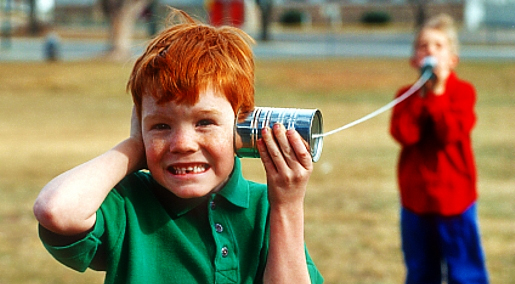
So maybe you're feeling challenged lately to be a better listener – shining the spotlight a bit more on others and a bit less on yourself. Great! But what do you do when other people just aren't the talkative type?
:: cue the crickets ::
Certainly that is the right time to fill the empty space with your own words, right? You can. Or, you could try out some spiffy, new communication skills that might just come in handy.
ASKING QUESTIONS:
Knowing how to ask the right kind of questions is one of the most important interpersonal skills you can have. Here are a couple of guidelines for asking great questions:
1. Ask open questions as opposed to closed questions.
A closed question is one that has a limited set of possible responses. A few examples of closed questions:
"What's your name?"
"Have you eaten here before?"
"How's your meal?"
The first of these has essentially one answer with two varieties (the person's first name, or first and last). The second invites essentially two possible answers (yes or no). And the last also has a limited set of expected replies (good, not good and so-so).
"How are you doing today?" may also wind up being a closed question, since typical acceptable answers basically hail from the same set as the previous question.
Closed questioning is fine with communication partners who are inclined to share more information on their own. But with the reticent type, questions like these leave you back in silence after a word or two.
An open question is phrased to naturally require more from the response:
"What are your favorite things about summer?"
"How did you become interested in photography / motocross / design?"
"What's your week ahead looking like?"
The answers to these questions could be nearly anything. It's possible that any question can be greeted with "I don't know" or "same old same old"; but we'll address handling this type of response a little later.
By the way, for communication purposes, a question need not end in a question mark, but can also be a polite request for information: "So, tell me more about your job / semester / family."
One of my favorite open questions of this type is "Tell me three things you like about yourself." I usually follow this with, "… and then I'll tell you three things I like about you. But you have to tell me yours first."
2. Use extension questions.
Where it fits, the addition of "… and why" can help turn a closed question into an open one, or extend an open question even further. For example, "What's your favorite movie?" requires only a short answer, while "What's your favorite movie, and why?" invites a bit more insight:
"What was your favorite class this semester, and why did you like it so much?"
"If you could go anywhere in the world right now, all expenses paid, where would you go, and why?"
Other extension questions are basically re-phrasings of "Tell me more":
"I heard you won an award this week. What's that all about?"
"I saw a dent on your car. How'd that happen?"
"So, you've got a new job. How's that going?"
OBSERVING OUT LOUD:
A good deal of being an effective communicator is learning to be in the moment rather than letting your thoughts drift, and then truly focusing on the other person rather than on yourself. If you are worried about how your hair looks, or silently pondering the Discovery show you saw about how ostrich kicks can be deadly, you are not likely to connect deeply in current conversation.
A great strategy for keeping yourself in the moment, and for encouraging more input from your communication partner, is to actively observe and comment out loud on what you are noticing about them.
Recently, I was giving a voice lesson to a teen boy. I opened the lesson by previewing what we would be working on that day. Meanwhile, I jotted notes for him in his voice journal, which was on the piano in front of us. He seemed very focus on me indeed, as I spoke and wrote. When I finished my explanation, I turned to him. "OK, so do you understand our goals for today?"
He paused, and then replied with wide-eyed sincerity, "You have really clean ears!"
Now, while he was being observant, I'm not sure this is quite where we want to go with things. Aside from being somewhat awkward, albeit in an endearing fashion, this observation didn't lead anywhere. The best I could have said is, "Er … thanks." (In fact, I burst out laughing, as did he, and for quite some time.)
Instead, think of it this way. A good observation to share is one to which you could reasonably append "Tell me more."
Let's put my young friend's comment about the fastidiousness of my ear hygiene to the test:
"You have really clean ears! Tell me more."
Doesn't quite work, does it.
But, consider something more like this:
"That's a pretty nasty black eye."
"You're unusually quiet tonight."
"You aren't wearing your glasses."
"You made an interesting face when I mentioned your mom."
"You seem like you're in a really good space today."
In each case here, you could easily add "Tell me more." And, in fact, that is exactly what these observations encourage the other person to do. (Again, you may be met with "yup" or "nope" or "I guess so." More on such short replies later.)
REFLECTING:
Chad was commenting to me a few days ago that, when I spoke out at Penn State last fall, he was surprised at how many in attendance had never heard of reflection as a communication tool. Reflecting is essentially saying back all or part of what someone else has just said to you. Often, people hear their own words differently when spoken back to them by someone else. Reflection also keys in on personal word choice that may have slipped out, but which holds deeper meaning.
A few examples (reflections bolded):
A: How's your day going?
B: All right, I guess.
A: You guess?
*****
A: How's your day going?
B: All right, I guess.
A: Just all right?
*****
A: So how did that conversation with your mom go?
B: *uggh* The worst!
A: Really? The worst?
*****
A: Tell me about the play you're in.
B: I don't know. No one listens to the director.
A: No one?
Here again with reflection, you see that an implied "Tell me more" could follow.
If you aren't careful, reflection can sound stilted or forced:
B: I just don't know what to do anymore.
A: You don't know what to do anymore?
This doesn't seem as helpful in getting us to new ground. Maybe this is a place for a shorter reflection paired with an observation or question:
B: I just don't know what to do anymore.
A: You said, 'anymore.' That sounds like you used to feel like you knew what to do. [observation]
*****
B: I just don't know what to do anymore.
A: What to do? Why do you feel you have to do something about the situation? [question]
If done in a natural manner, reflection is a powerful means of helping to keep conversation focused on the speaker, and flowing freely. And as illustrated above, all three of these – questioning, observing out loud, and reflecting – work naturally together.
EMBRACING SILENCE:
So what about those times when, despite your best efforts, one-word answers still prevail?
Someone once said that silence is golden. We tend to be afraid of silence, but it really isn't so bad. Often, silence is even necessary for people to have time to consider what's been talked about, or to formulate an answer. I couldn't count the times over a dinner that I asked a question or made an observation that initially went unanswered. But, after a little while of just eating, listening to the background music, or observing what was going on around us in the restaurant – and with a few smiles from me in between – a reply did come. And a well-thought-out one, at that. It just took some time.
I'm a big fan of permitting, as well. That is, verbally allowing something that might otherwise become awkward:
"You know, we don't always have to be talking. I'm happy just to be here with you."
"You don't seem to be in the talkative mood right now, and that's perfectly OK. Do you want to just turn on some music for a while?"
If you hold the place in someone's life, nonverbal communication can bridge silences, as well. I mentioned smiling. You'd be surprised how far a smile really goes toward connecting without words. A shoulder squeeze. A friendly side-bump. A little "finger-puppet" wave. They all say, "I'm here. I know you're here. And I'm glad."
Adding new communication skills to your repertoire can be daunting at first. It takes practice. And that means trial and error. But I can think of few things more worthwhile or rewarding than developing the ability to connect with others on a deeper level.
g>

and the answer is ...

Chad and Eric picked me up from the airport as I returned from North Carolina after a few days with my brother and his family. On the way back, we stopped for lunch. During the conversation, Eric commented that he and Chad had held much different views from each other back when they'd been in high school together, but that they were becoming more and more like-minded over time. One has to wonder, how did this happen?
Did they argue one another into agreement on specific issues?
Did one of them switch political parties, swayed by a particularly persuasive Sociology professor?
Did they change to win the affections of girls who happened to share more similar views on things?
In fact, Eric's answer was one I greeted with an enthusiastic "hear hear!" They were becoming more similar because they were realizing more and more how much they didn't know. Beyond this, they were willing to admit that they didn't know what they didn't know. And that was erasing the lines previous drawn by standing firmly on what they'd thought they knew for certain only a few years prior.

Some guys will tell you that, when they were a kid, they pulled the legs or wings off of bugs. Some might even admit to having combined firecrackers and bullfrogs. I have a confession of my own to make.
I killed a cat.
It's true. When I was in college, I killed a cat. I not only killed it, it was messy. As others watched on, I bashed its head in with a shovel. Several times, in fact, before the deed was done. I wish the whole ordeal had never happened. But I'm afraid it did.
I've confessed this to my closest friends. And even those who know me best were incredulous when I told them. I saw flashes of doubt in their eyes. Is my best friend really a psychopath? They just couldn't believe that I had ever been the type of person who would do such a thing. But I had to accept that I was the type of person who would do such a thing. Because I did such a thing. With my very own hands.
What do you think of me now? Do you interpret all of my thoughts and advice differently in light of what I've revealed here? Are you incensed? Does your stomach churn with disgust? Or have you perhaps granted that I've honestly changed my ways and don't have it in me to do such a thing anymore?
The truth is, I would likely do it again today.
You see, the cat had been hit by a car. Several, actually. I'll spare you the more vivid details, except to say that the cat was screeching, clawing wildly at the pavement with its front paws—and not going anywhere fast with the rest of its body. Traffic was swerving in dangerous fashion. I pulled over with a friend. He stopped traffic while I took a shovel out of his trunk. And, as quickly as possible, I ended the cat's pain. I then used the shovel to move the cat's body to the side of the road, so that traffic could continue safely.
"Wait," you protest, "you tricked me!"
Did I? Or did you simply not yet have all the details before making a judgment?
I admit, I use this story to illustrate a point. And that is—we rarely have all the details. About anything. Yet we go about life, feeling assured that we do know—and drawing lines with people over it.
I can truly say—with contentment and not angst—that the older I get, the less I know with surety. I realize this sounds philosophical or pious. Even passive. But I mean it. There's a certain freedom in being able to accept that you don't have all the answers. That you might be mistaken. That the big picture is infinitely bigger than you'd been willing to admit.
Don't get me wrong. I have my beliefs, convictions and principles. I live passionately by them. I'm not a relativist (it's not logical to be one), nor am I easily duped. But rather than doing quite so much "show and tell," I've decided to do more "observe and listen." Telling says I already know all there is to know. Listening says there may be important details I've missed.
It seems to me that, most often, the best answer is to ask one more question.

human technology

Technology is here to stay. But that doesn't mean it has to be a takeover.
For all my reminiscing about "the way it was," I really do enjoy modern technology.
When I was in high school, my girlfriend lived about 45 minutes away. The very best phone plans allowed free dialing within about a 20-mile radius. The rest – was long distance. So my phone bills wound up being between $300 and $400 every month. Today's cell phone plans are truly incredible by comparison.
I'm a musician, songwriter and all-around music lover. My 160GB iPod can hold more music than I have in my entire collection, which is substantial. Before my stepfather left for another tour in Iraq last month, I loaded nearly 200 full-length movies, an entire 4 seasons of a television show and hundreds of CDs onto his iPod. It had plenty of space remaining.
I'm still amazed that I can stay in contact with so many people so readily through the Internet.
Even this blog is possible because of technology. So don't think that I villainized it.
The problem comes when machines run us, rather than our running the machines. And, of course, machines have no power to entice or control us beyond what we give them. We are, after all, still the humans.
In several previous posts, I've suggested taking steps toward converting some of our tech time into creative ventures, human interactions and constructive reflection. But technology also opens to us unprecedented opportunities to actually be more human.
Of the high volume of texts I send in an average day, only about 10% of them relay information, such as being a few minutes late for an appointment, or confirming a dinner plan. Another 10 – 20% are taken up with sheer silliness. Chad will sometimes text me the entire alphabet -- one letter at a time. Even then somehow, between the growling and trying to delete them as fast as they arrive so that they don't use up my data space, I feel connected and loved. But 70 – 80% of the texts I send in a day are intentionally sent to encourage, support and appreciate people.
"Hi! Thinking of u. Hope ur day is off 2 a great start!"
"I was just thinking about u and how much I enjoy my life with u in it. Let's get 2gether again soon."
"Just thinking about ur Spanish test today. U studied hard. I know u will do well!"
"My blog post was inspired by u 2day. U DO seem to do that a lot :) ."
I can send out a text like this in … hold on let me check …
…yup, 10 seconds.
That means that, in one spare minute of my day, I can send out 5 or 6 positive messages that might change someone's day for the better. Do the math. That means that in just five minutes, I can manage 25 or 30. I'd say that's a fantastic use of time!
The same holds true for emails. Facebook posts and messages. IMs. In the few minutes surrounding checking my own email or Wall, I can let dozens of people know that I think of them, love them, miss them, appreciate them, value them, route for them. That's certainly using technology to keep the human element in things. Just the other day, my brother in North Carolina left a message on my Facebook Wall: "Have a great day, brother." Five words. But I smiled and was moved that he'd thought of me.
And I did have a great day.
Here are a few more examples of "human technology":
Do some job searching for an out-of-work friend and send links to the leads you find.
Edit meaningful photos for friends and family. I do this often. Sometimes, just for fun, I'll even do a fantasy photo edit of a friend or teen and send it to them. It's exciting for them, but it also conveys that I've thought about them and was willing to spend time on something special for them.
Send a personal link to an inspiring video, along with a note about why the video made you think of this person.
Teach a friend or family member how to better use their documentation, music or photo software; or how to better use a social network site.
As with most things, if you apply a little creativity to the underlying belief that people matter most, you'll find that there are countless ways to use technology to connect with others, rather than to disconnect from them.
And for those who still don't know what "copy and paste" means, or the difference between "upload" and "download" -- you've got that much more time for those hand-written cards and letters!

being right
Each of us has our own perspective on the world, a unique voice. But what are we saying with that voice?
I know people who love to argue and debate. Why this movie was award worthy and that one was drivel. Which leisure activities are constructive and which are utter wastes of time and intellect. What will happen in the afterlife.
Religion. Politics. Sports. Pop culture. Extraterrestrials. As far as I can tell, the topic isn't important as long as, at the end of the day, someone is wrong and someone is right. Or more right. Or, at the very least, louder.
In yesterday's post, I introduced one of my favorite quotes: "The only prize for being the most miserable is … Congratulations! You're the Most Miserable!" Similarly, in the context of social debate, I find myself wondering, what is the prize for being right? I'm a firm believer that human beings do virtually nothing without a perceived gain. If that is true, what is the gain in winning an argument?
I am not speaking from some lofty soap box here. In my younger years, I was quite the debater. There were times when I chose to lose sleep in order to continue arguing a point into the wee hours, because I hadn't quite backed my opponent entirely into the corner yet. And I could back them into the corner given enough time. Logic. Vocabulary. Verbal ability. I had them in spades. I could ask the most clever questions, trap you in your own words, or even get you to think that you had somehow agreed with me all along. But I'm really trying to remember … Why did I care?
I don't like the answers that surface. They're ugly.
Power.
Domination.
Superiority.
Control.
Pride.
Some might argue (no surprises there) that it's no more than harmless entertainment. Or that it's a necessity in keeping people aware of important issues. Or a tool for staying mentally sharp. And I can see each of these having validity.
If they were true.
My own observation, however, has been that most people who engage in social arguments exhibit signs that such innocuous or altruistic motives may not be forefront. They become stressed. Preoccupied. Obsessed. Angry. Arrogant. Demeaning.
Mean.
Do an honest assessment. When you argue, are these things true of you? And if they are, is it really "harmless"?
Is stress or anger really the best way to keep your brain limber and prevent senility?
And as for changing the views of society on important matters, how's that going for you? Who is the last opponent you converted to your viewpoint? And even if you did manage, by sheer volume of your words, to elicit a concession – did it change the person or their world view for the better?
So again I ask, what is the gain?
I'm writing a book and a blog. Clearly, I believe in exercising a voice in the world. And don't get me wrong – I believe there is a place for discussion and even respectful disagreement. There's a lot to be learned through such things. But I wonder if going beyond that, to asserting we are unequivocally right in our thinking, is all that worthy an undertaking. Or is there more value to be found in building tolerance for viewpoints other than my own.
To ask more than I tell.
To listen more than I talk.
To find common ground rather than differences.
To shine the spotlight on others more than myself.
To be kind rather than to be right.
You decide. I won't argue with you.
triple threat

I've started this particular post three times. Had three different images in place as a visual muse. This one finally feels right.
It's a difficult concept to convey, but an important one. I'll do my best.
If you read my recent post entitled "when words are sentences," you may have been inspired to think more carefully about the words you choose. That's terrific! As the old adage says, "If you don't have something nice to say, don't say anything at all." Even if what you need to convey isn't exactly nice, you can say it in the nicest way possible, without crushing another's spirit, by talking in terms of specific items of behavior rather than character.
But the battle for real change is not fought on the grounds of words alone.
I saw an episode of Everybody Hates Chris once (I actually think it was the only time I'd seen it). I remember that Chris' mom, known for being critical, was dared that she couldn't resist nagging or yelling for a certain amount of time. There was money involved, which acted as her motivation. In a comical fashion, as dishes were left in the living room or children were not doing chores, the mom's eyes would bug and her mouth would start working up the delivery of her missive. Her husband, ever nearby, would cast her a knowing glance and tap his money pocket. And the mom would draw in an icy breath, then exhale the most unnatural, sugar-coated, "request" that things be done her way.
With some motivation, this TV mom was able to curb her words. But she had not addressed the more important elements behind the words. Thoughts and attitudes.
As I recall, her resolve did not last long, despite the would-be prize dangling before her. I think this is not only true of TV moms, but of everyone.
All three of these – words, thoughts and attitudes – are interwoven. I do believe that changing what we speak can affect our thoughts, certainly. Words are part of a feedback loop to our brain. So denying negative auditory information can help by not reinforcing negative thoughts. Likewise, speaking positive words can bolster positive thinking.
But this is not enough.
Anyone who's had a difficult boss can attest to the fact that we can harbor the worst of thoughts, even while carefully monitoring what we let escape through our words. Jobs depend on it. But, while we may not be fired, leaving it at polite words can still make for a miserable time at work every day.
Or what teen hasn't decided it might be wise not to unleash what he is really thinking on his parents? But, while he may avoid being grounded this way, it will not bring a sense of harmony at home.
Do continue to be mindful and intentional about what you say! But, in order to really see change, we have to be willing to get at what is going on behind the words. But how?
Start with attitudes. Here are just a few examples of negative attitudes we may have, and which direct both our thoughts and words:
I am very important; others are not very important by comparison.
Being right is more important than being kind.
People are background props on my stage.
And here are some positive attitudes we may adopt, and which will also direct our thoughts and words:
My family is precious to me and worth treating with kindness.
Being kind is more important to me than being right.
People are worth knowing and going out of my way for.
Take some time to identify negative attitudes you have toward others (or yourself) and instead, replace them with positive attitudes that you would like to be characteristic of you. Try writing these new attitudes down and putting them where you can see them often: your dashboard, the bathroom mirror, the refrigerator. "But what if people see them?" you may ask. Great! Even better! In fact, I would recommend that you tell the others in your life about the new attitudes you are determined to live by. Give them permission to remind you of them if you seem to be going back to your old, comfortable, negative attitudes. (You do really want to change, right?)
As you change your foundational attitudes, you will begin to find that you aren't struggling so hard to think about how to formulate positive ways of saying things. But we aren't quite there yet.
Whereas attitudes are global, thoughts are specific. It's sometimes easy to feel we are doing OK in our overall attitudes, all the while letting stray thoughts run rogue. And rogue thoughts can insidiously corrode attitudes.
So let's say that I'm focusing on my attitudes and words with family members at home. Terrific. Now, I'm out at the convenience store, and I see a guy wearing skull parachute pants and sporting a fantastic mullet. I think to myself, "What a loser. Probably on government assistance, buying lottery tickets with my hard-earned taxes. And, by the way, the 80s called and want that ridiculous outfit back." Big deal, right? I don't know this guy. I didn't say anything mean or treat him badly, and I'll probably never see him again. It's just trivial entertainment. I don't mean anything by it.
But if I allow these thoughts to go unchecked, I bolster that attitude that people are props on my stage in life. And if people are props, then I am most important. And if I am most important at the convenience store, then I begin to believe that I am most important period. Even at home, where I was trying to change my attitudes and words with my family. Think about it. How long do you think you will succeed at home, while allowing thoughts elsewhere that feed the attitude that you are the most important person? I dare say not long. These seemingly unrelated thoughts will chip away at otherwise good attitudes, allowing negative thoughts to seep in. We just aren't that good at compartmentalizing.
That leaves us with the challenge of continually being willing to identify and change attitudes and thoughts that are negative, in all areas of life: school, work, home, running errands. Life.
When you become aware of a negative thought, the best strategy I've found is to call yourself out on it and to replace the thought with an intentionally positive one. So in my example of my thoughts about the man at the convenience store, if I realize I've let in a negative thought, I take the time to think, "That was wrong of me. I don't know that man. He might be the nicest guy around." Or if I find myself thinking, "I just don't understand why my daughter is so lazy around the house!" I could check myself with, "No, wait. She isn't lazy. She is in all honors classes and doing fine. She's committed to her track team. She's just not that picky about her room. I'm going to tell her I noticed all these things she's doing well at."
This doesn't mean you always roll over and let things slide. But you can address a problem while being intentional about your thoughts, attitudes and words. It's called being gracious. And each success in these three areas will strengthen the cord, until the most natural feelings and responses you have toward others are positive ones.

when words are sentences

Grammatically speaking, a sentence may consist of a single word:
Stop.
Duck!
Sing!
I separated those into separate lines to avoid the mental image that would come of combining them. Each of these sentences contains a verb, which we see, and an "invisible" (understood) subject – the audience to whom we are talking.
You're fascinated, I'm sure. But that isn't what I mean to talk about here. (And aren't you glad?)
liar
pervert
lazy
stupid
problem
selfish
These words are also sentences. They are not grammatical sentences, but rather sentences handed down in the courtrooms of the heart. They are issued by a judge to a party presumed guilty, scarlet letters with which we intentionally – or unintentionally – brand people. Sometimes for life.
Unfortunately, we use words as sentences in this way often. It's easy to construct their delivery.
"Why are you so lazy?"
"You are the most selfish person I know."
"You're such a liar!"
In short, labels like these paint people in terms of who they are and not merely what they did. They are sweeping. Total. Overwhelming.
What's more, they are ultimately counter-productive. When you tell someone that they are "lazy," what is your goal? Isn't it to motivate them to be more industrious? Likewise, when we call someone a "liar," isn't our goal to somehow get them to tell the truth? But when we say that someone is lazy or a liar, we are actually locking them to the behavior, not encouraging them to change. Labels create expected behavior.
A fish swims. And so, if I believe I am a fish, I am expected to swim.
A liar lies. If I believe I am a liar, then I expect myself to lie. After all, others do.
Other words that can be sentences include extremes:
"You always do this to me."
"You never listen."
Again, if I believe that I always do something, I will keep doing it. If I believe that I never do it, I have no reason to start doing it now.
So how do we turn these "sentences" into constructive communication?
Start by thinking and speaking in terms of the specific behavior happening right now, not in sweeping references to character or as patterns.
"You got an F in Biology" -not- "You're lazy."
"I asked you to take the trash to the street and you didn't" -not- "You never listen to me."
"You left the stove on" -not- "You have no common sense."
"You left your socks on the bathroom floor" -not- "You are a slob" or "Why do I always have to pick up after you!"
If I choose to speak in these terms, I am separating the behavior from the person. People do not feel able to change or correct something they are, as created by our labels. However, they most often do feel able to address and correct one thing they did.
Sometimes we play both the judge and the convicted, passing down these "sentences" on ourselves:
"I am so stupid."
"I'm the worst mother ever."
"I'm a loser."
The effect is the same. The solution, likewise, is the same: to think and speak in terms of specific behaviors I would like to change, not in character judgments upon myself.
This is just one effective tool among many for improving communication and avoiding conflict in relationships (or in allowing ourselves to break self-defeating patterns in our own life). Much of my book, "The Best Advice So Far," is devoted to other such tools.
As I said above, throwing out words as sentences upon people is easy. Rethinking how we say things then is, by comparison, more difficult. But, as Thomas Jefferson said, "Anything worth having is worth fighting for."