

this is a test ...

BOOOOOOOOOOOOOOOOOOP!
This is a test.
Sorry to assault your eyes there, but I have your attention. Good. I'm going to give you your first real, live test. It's more of a challenge, really. So, I'm going to ask you to get a piece of paper and something to write with. Or open up a document file and get ready to type. Don't be one of those people who either thinks about advice without taking it. Or who says they'll "do it later." Or who just ignores it altogether, thinking they already know it all. It's important. I'll wait...

:: dum de dum ::
OK. Got it? If you did not open a document or get something to write with, you failed the test. See you after class. For those of you who did prepare yourself, let the test begin.
Number your paper 1. to 5.
Next to each number, write the name of someone you either saw or spoke to by phone within the last 48 hours (someone for whom you know both first and last name, though you only need to write their first).
Next to each person's name, write in quotes the last thing you said to them.
If you saw someone within the last two days, you likely said something. But if you said nothing, write "nothing." If you can't remember what you said, write "???"
All set? I'll help you grade some of it.
If you wrote "nothing," ask yourself how it is that you saw this person and said absolutely nothing. How does that reflect on your relationship?
If you wrote "???" for anyone on your list, could you have used your time in this person's presence to have said something that mattered to them, that was memorable?
The rest is self-graded. Ask yourself, if that were the last thing you were ever able to say to this person, would it be what you'd want to be remembered for having said? Does it reflect how you truly feel about them?
Was it kind? Encouraging? Affirming? Loving?
Humorous? Instructional? Merely informational?
Critical? Demanding? Disapproving? Sarcastic?
If you didn't do as well as you'd have liked, there is opportunity for a make-up test.
Rewrite the same list of names, numbered 1 to 5. But erase your answers beside each. Now, be intentional and say to each person on your list what you would like your answer to be tomorrow when you do the make-up test. You may carry the list as a cheat sheet.
As I talked about in yesterday's post, this is a good example of being honest with yourself about who you are, while taking real steps toward becoming the person you "wannabe."
One of the great things about being alive is that every day is a chance for a re-take.
See you tomorrow. I know you will do well!



the making of mad
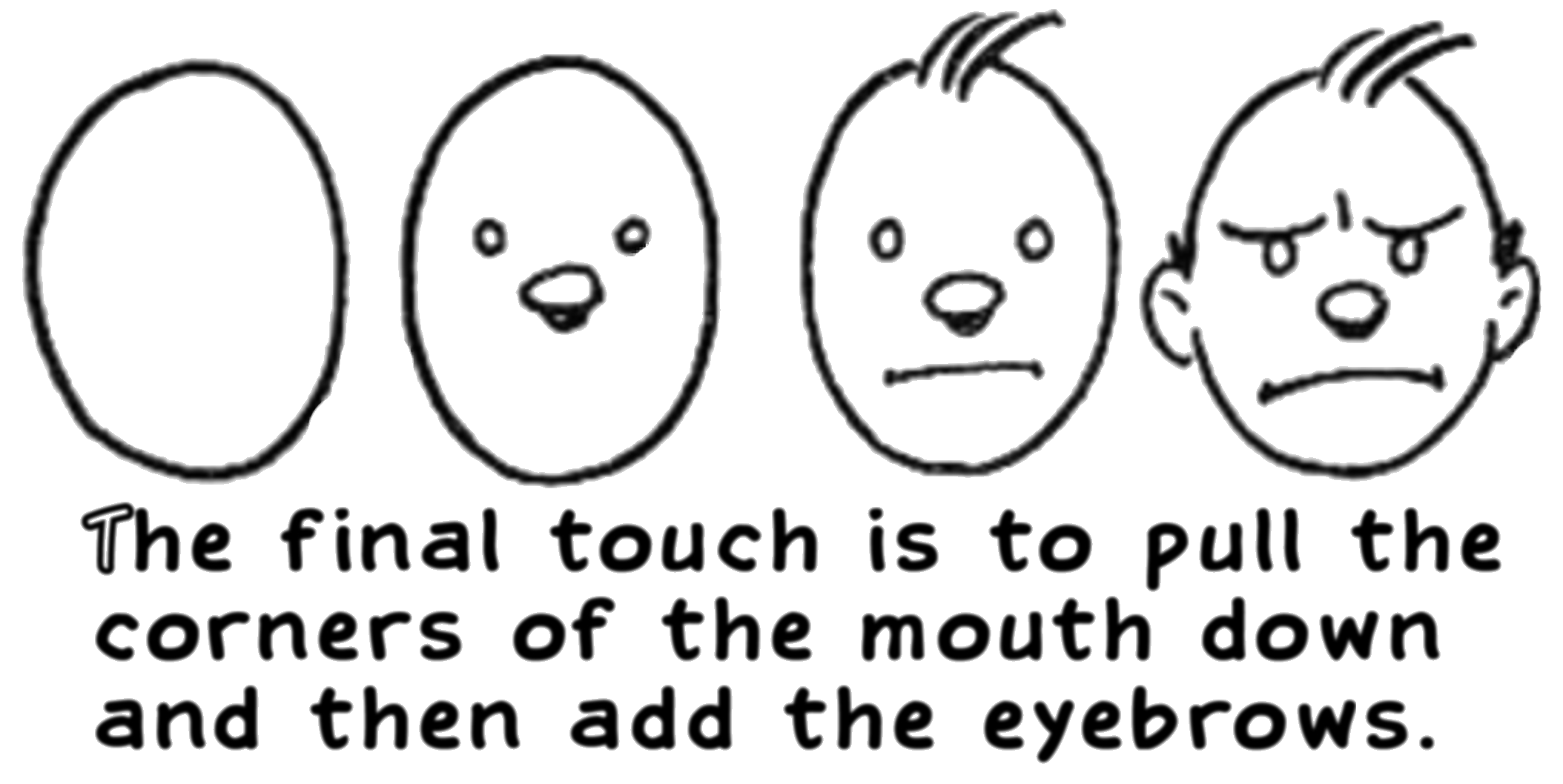
Yesterday, in a post entitled "red balloon," I talked a little more about the idea that no one can make you happy. I hope you'll take a minute to read that first, because a lot of important groundwork is laid for what follows here. Today, I want to talk about an equally important truth:
No one can make you mad.
I was talking about one of the chapters in my book, "The Best Advice So Far," with a friend of mine yesterday. He seemed to have no trouble accepting the idea that no one can make you happy, that you have to take responsibility for that choice yourself. But when I introduced the idea that no one can make you mad, he balked. He huffed. He puffed. (But he really didn't blow this house down, because it stands up to some pretty good huffing and puffing.)
I had sushi with a new friend in Boston later that evening, and this idea came up yet again. My friend said that a particular public view advertised on a billboard made him angry. He had a similar reaction to my friend's from earlier that day, when I suggested that no one can make us angry.
It seems this is territory that many people feel strongly about protecting.
I certainly don't claim to have all the answers. And I do think there is room for debate about whether the initial feelings associated with anger are within our control, or whether they are more akin to a pain response when we get hit. But I believe that either way that coin lands, the responsibility for being angry – maybe not "getting" angry, but being angry – still lies with us.
Hear me out.
I was staying with a friend a couple of years ago. I was in another room, when suddenly, a ruckus erupted elsewhere in the house. Someone had knocked at the front door. My friend let them in and began yelling. A girl's voice protested. My friend escalated. And soon thereafter, the door slammed. I heard my friend stomp to his room, muttering loudly. I gave it a few minutes, then went to see what had happened.
I knocked lightly on his door. I heard him sigh on the other side. "Yeah … come in." He was still fuming.
I poked my head in. "Hey, are you OK? What happened?"
He launched in, and I could tell that he truly believed that he'd been in the right with the altercation. He explained that his girlfriend had come by. Apparently, after knocking for a minute or so without his answering the door, she had called his phone to tell him she was outside. He said she had been irritated that he wasn't letting her in. "I left the [expletive] door open for her! How stupid do you have to be to not try turning the [expletive] knob before you stand out there knocking for a [expletive] hour! And then, she treats me like I'm the idiot – like I somehow forgot she was coming." He growled, screwing his eyes closed. "She just makes me so mad!"
I have the kind of relationship with this friend where we can usually just say it like it is. So I went there.
"Let me ask you something," I said. "If it had been another friend" – I suggested the name of a teen we both know – "and she did the same thing exactly, would you have responded the same way?"
The air rushed out of him with a lot of the heat, and I could see him coming back. "Uggh. No."
I continued. "How do you think you would have felt or handled it, if it had been her? Same scenario."
"I … probably would have just opened the door and apologized that I didn't hear her." There was a short pause, then he added, "I'm an idiot." He shook his head at the sudden realization and actually smiled. "I don't know why I get so mad when it's her."
When I get so mad. Ah … progress.
We talked for a while, about how we become comfortable – sometimes too comfortable – with those closest to us. We take them for granted. We stop treating them with the common courtesy we would give to most anyone else. But the real core of this talk was what was introduced above. No one can make you mad. My friend had realized here, based on the scenario where he imagined it had been another friend, that he could control his response. His girlfriend wasn't making him do anything. And that leaves only one option.
We choose our responses.

Whether with a girlfriend or with the guy in front of us who is driving too slow for our liking, we choose.
As I said regarding the idea of anyone making us happy, it is certainly easier with some people to choose to be happy. So it is with anger. It is easier with some people than with others to choose not to give in to anger. But in the end, whether easy or hard, the choice is still ours.
If we can accept this, while it will require some real work in order to change our responses, it offers a level of freedom and personal peace that is well worth the effort.
no

One Christmas, many years back, a dear friend gave me a wonderful book: The Right Thing To Say by Judith Martin. If you want a compelling, entertaining and utterly useful book, I highly recommend this one. For those of you who belong to a book club, I image it would be the most-discussed book yet! And all you tough guys -- you'd like it, too. You won't admit it. But you will like it. Bring it home in a plain, brown wrapper. Read it in secret, with a flashlight under the covers, like when you were a kid. Do what you must, but read it. The chicks will dig you for it.
Well, in that book was a gem of advice that I have both practiced and passed along countless times since:
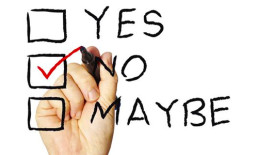
THE BEST ADVICE SO FAR: “No” is a complete answer.
Somehow, after reading this, it seemed both simple and logical that one could actually just say no without any further explanation necessary. Of course, there was a certain finesse that could be added to the starkness of no:
“I’m sorry, I won’t be able to help.”
“I’m afraid I can’t.”
“I’m going to have to pass this time.”
Add a pleasant smile, and that’s it. Done. End of story.
Interestingly enough, this advice appeared not in a book about being assertive, but in a book about etiquette, implying that not only is this response complete in itself, it is also sufficiently polite.
Notice the absence even of “I’m busy” or “My schedule is crazy right now.” The truth is, regardless of what we might imagine, people generally accept a simple no as enough information.
What’s more, even in the case of that really pushy person, the to-the-point approach of just saying no leaves precious little room for emotional manipulation or finding loopholes in the story. It puts the onus on the other person to have to say, “Well, why the heck not?” And most people realize that this, ironically, is not good etiquette.
Once you learn to say "no" with confidence and courtesy, you'll have a lot more time to say "yes" to the good things in life.

trip talk

Last week, I made a whirlwind trip to get Chad from Penn State after his last final. By "whirlwind," I mean eight hours up on Thursday, arriving at midnight, and hitting the road again Friday by 3:00 to head back.
I love road trips. I'm no college kid anymore, but I still love them. Travel of any kind reminds me how much is going on in the world beyond my usual circles. I really do think, every time I travel, "I could just pick up and travel -- or even move -- any time I want!" That's not at all to say that I'm looking to move or that I'm unhappy or that I've got the wanderlust bug. New England is very much home to me, and I love my life. Travel simply reminds me of the many choices and options I have open to me all the time. And that helps me stay open to possibility where I am.
So, I had eight hours to myself on the way to PSU. I had my iPod loaded with all kinds of retro music I hadn't listened to in decades (yes, I said decades). But honestly, I spent more time with the music off than on, enjoying the space to let thoughts roam. Or settle. In fact, one of the chapters I've already completed for the book is about the value of cultivating silence in our lives.
However, I don't want to talk about the trip there just now. I want to talk about the trip back.
Often when people travel together, they listen to music much of the time. Or they take turns driving while the others try to catch as much of a nap as possible, between being jostled by lane shifts and using a wadded shirt as a pillow. This was not the case with Chad and me. We talked. The entire eight hours. I'm not kidding. And by "talked," I don't mean punch-buggy or the license plate game. Sure, we joked around some and shared new music we'd discovered; but a good seven hours of the eight were spent in real conversation about life. Stuff that matters.
At one point, we found ourselves talking about the meaning of normal. We all label others as "not normal" in many ways every day. I mean, it just seems obvious to us. He's an odd duck. She's too thin. He's a little lazy. She's super smart.
Chad and I came to the conclusion that what we really mean when we say these things is, "That person is not like me." Think about it. Isn't that what we are really saying? Aren't we setting ourselves as the standard for what is to be considered normal?
By way of example, let's talk about a towel.
That morning, before we had headed back from Penn State, I was getting ready to take a shower at Chad's apartment. In the interest of packing light, I hadn't brought a towel, so I asked if I could borrow one. Chad pointed to a yellow towel and a green towel hanging over one another on the corner of one of the doors, up high. "I've been using those, and I can't remember the last time I actually washed them with finals and everything, but you're welcome to use one of them." He smirked.
Stop. Some of you just made scrunchy face. But why?
Chad's roommate, also a friend, stepped in and offered one of his own towels. "Here," he said, "use mine. I only used it a couple of times."
You just made scrunchy face again, didn't you.
The truth is, the towel I used was dry. Fine. Did the job. Wasn't even stinky. So why the scrunchy face? "Because," you protest, "that's ... just ... gross!" But don't you really mean that you yourself would not do it, and therefore it "isn't normal"?
Years ago, I visited San Luis, Mexico. We had gone to bring shoes to a village where dwellings were constructed from junkyard scraps: tires, wire, cardboard. We could not drink the water there. For the moment, imagine that you live here. You own no shoes. You live in one of these single-room, make-shift houses with many views to the stark outside, where seams between the garbage that constructs your walls do not meet. Six other members of your extended family live here, as well, sleeping on the dirt floor.
Introduce the towels offered to me at Chad's college apartment.
In San Luis, do these towels seem normal? No. But is it for the same reason that elicited your scrunchy face earlier? No.
In San Luis, one might wonder, "What do you do with it?" If you explained that you use it to dry water off your body after a hot shower, they would be no more enlightened. Shower? Hot water? And you do this ritual every day, sometimes more than once?
How odd. How "not normal" it all seems.
By the standards of most of the world, a towel is a luxury. More like magic. And if you do happen to own one, you certainly aren't washing it after every use. Or every week of use.
Of course, it's about more than towels. It's about making value judgments on anyone for any reason. You see, the best we can ever really say without being egocentric is, "That person is different from me. They are doing this differently from how I would do it." It is no worse or better. Just different.
I remember now what led us to this discussion. Chad had asked if I thought that, deep down, everyone really wanted to do the right thing. He was thinking specifically about a young man he had counseled in a prison. I suggested that the right thing can only mean the right thing as I define "right." How can someone really want, deep down, to "work a nine-to-five job and earn an honest living" when they've only ever known selling pills on the street? When that is what his father sent him out to do in junior high school, and what made his father proud of him when he'd sell them all and bring home the money he collected? "A real job" would seem much like that towel would seem showing up in San Luis. "Don't you want this towel? How could you not want this towel? I know that deep down, you must really want this towel!"
What the heck is a towel?
One of the chapters I have slated for The Best Advice So Far will be about treating people as people and not as props -- as background features in the world of me. I think I'll include some of the thoughts Chad and I shared on this trip. Don't misunderstand me. I'm not saying that we should have no standards in life, or that we should be moral relativists, or that we should not try to help people move beyond their current station. I'm simply saying I think we would all do well to remember that there are countless real and valid perspectives in the world beyond our own.