
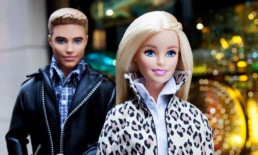
fake: part two

The week before last, I shared with you a post containing a bit of uncharacteristic rambling about fake things I like as well as a few I don’t personally care for. The central premise was that just because something is fake … doesn’t necessarily mean it’s bad.
Thing is, as I got toward the end of that post, some deeper thoughts began to tickle the fringe of my sleep-deprived mind. But they would have taken the post in a completely different direction (if I could have even managed to grab hold of them in that state). So I just decided to write a follow-up post.
Well, here we are. And so I shall.
In the comments section after that previous installment, there was quite a bit of interesting discussion about “fake people.” We all know them:
The too-loud laugher, or the guy with the glistening perma-smile that never quite creases the eyes.
The party guest who enters with fanfare, kisses the air beside both cheeks with an ostentatious *muah!* and always seems to be standing in camera-ready poses.
The co-worker who profusely issues compliments and nods heartily in agreement during conversations — and yet somehow always seems to be at the center of office gossip, drama and controversy.
Today, I’d like to offer some thoughts on fake people (and, quite possibly, ourselves). Let me be clear up front that my goal here will primarily be understanding and perspective, not necessarily solutions, though some of the latter may work themselves in.
the makings of fake

manipulation
I’ve made the claim often on this blog and in the book that virtually everything we do in life is done for a perceived gain. That gain is not always achieved, mind you, but our motivations remain in place.
Some of the nicest, kindest people you’ll ever meet are heroin addicts. They’ve mastered the art of penitent looks and crocodile tears. They give award-winning performances when they tell you that you’re the only person left who cares about them or explain the legitimate-sounding reason they need that loan from you.
Flirtation and insincere or surface compliments might be dished in hopes of scoring a rowdy romp, knowing before the first smile is flashed or eyebrow is lifted that it’s just for tonight.
The slickest apologies are often delivered by those who simply want you to stop talking about their faults, with never the slightest intention of actually changing.
Behaving in an outward manner that appears to be at odds with our inner self can be an effective way of getting what we want from people.
But don’t suck your teeth or point your finger at “those people” quite yet. If we’re honest with ourselves, we’ve all been guilty of me-centered insincerity at some point or other:
We've been more solicitous of a famous or influential person than we’d have been to the average Joe, in hopes that it may open doors for us down the line.
We've led into a conversation with a friend by telling them how wonderful they are, all the while knowing that it’s funneling down to asking them for a favor.
We've feigned sick or claimed to be busy with imaginary tasks, in order to get out of an awkward or tedious situation.
I’m not implying that we remain passive with manipulative people or let them off the hook. I’m simply suggesting that we strive to minimize disdain wherever possible, remembering the times we ourselves have given in to the temptation to use our acting skills for self gain.
attention
I know quite a number of people who, it seems, would shrivel up and cease to exist if they weren’t able to keep a mainline of attention flowing in.
This is the too-loud laugher at the party.
It’s the big spender — with the pile of credit card bills in the secret box at home.
It’s the limelight-stealer who always seems to have coincidentally just done something just a little more amazing than whoever spoke last.
It’s also that co-worker I mentioned earlier, or that one friend in the group, who’s everyone’s confidante — and the first to gossip in corners. Fanning flames and watching the sparks jump and catch in new locations is a fascination. Seeming to run to put them out as well feels heroic. All that’s important is remaining at the center of the action.
I’ve had countless opportunities to get past the surface with “fake” people of this variety. It often takes a long time and lots of patience, because the need for attention is every bit as much an addiction as drugs or alcohol. And withdrawal or detox are just as painful. Normal levels of attention feel the same as being invisible. And feeling invisible … feels like being dead.
Often, if you go back far enough, this brand of “fake” stems from feeling unloved. And along the way, attention in its many forms became the substitute: the close-enough. Ironically, while these people may occasionally get a short-lived fix, their approach usually leads to even more rejection and loneliness.
safety
For some, smiling, nodding in agreement and laughing at every joke feels safe. Social niceties, personal inquiries, stories and winks can come off as feeling rehearsed … because they are.
Unlike attention-fake, the safety-faker is generally well-liked. They're popular even — just not well-known.
Large groups actually feel safer to these people, because they can blend in and use their safety go-tos often without being discovered. They are the best party hosts — and yet the most insecure people.
These “fakers” don’t have malicious or deceptive intent. In fact, if you take the time to get to know them, you might be surprised to find that they’ll confess they are “terrible with people” or uncomfortable with conversation. Once their rehearsed stand-bys run out, they begin to feel stuck, even panicked, and will often withdraw.
Safety-fake can also be a substitute for love: "I know how to be what I think people want me to be. But I fear people wouldn't like the me that I really am inside."
This would also include the people pleasers (my former self included). People like happy, fun, entertaining people. So we learn to be happy and fun and entertaining — even when we’re crumbling inside.
etiquette
Many people I know were simply raised to smile and laugh warmly, despite how they might be feeling about a person or situation. Think of the classic Southern Belle (though this type of rearing is certainly not limited to any particular region).
And really, the problem isn’t with practiced cordiality itself. In fact, most of us put this into play at some time or other.
You’re at that gathering where you’ve been cornered by someone who’s been talking for the last half hour without pause about the different types of eyes used in puppet fabrication. (Yes, this really happened to me.) You’re starting to sweat and feel a tightness in your throat, panicking that you’ll still be standing there in another hour. Or two. Will anyone rescue you?
But what do you do? You raise your eyebrows, smile and say, “Uh-huh” or “Mmmm…” with much nodding of head — even after the words have turned to the horn sounds the adults made in the Peanuts cartoons.
What's the alternative if you can't get a word in edgewise? Run away in the middle and later claim that you had to throw up? Shout over them (at your friend's party, mind you) and tell them outright that you frankly don’t give a rip about whatever they’ve been talking about?
Sometimes, you just have to grin and bear it, reminding yourself that the present squirmy feeling won't matter in a year. (Though when I know the corner-trap guest is at a party, I always plan my escape with certain friends who stay on the lookout, ever ready for that rescue.)
Acting in contrast to how we may feel based on etiquette is different from doing so for reasons of safety. The former is based on “good breeding” (whether the instruction itself was balanced or not) and may be employed by confident people as a point of strength, whereas the latter is typically a coping strategy for dealing with insecurity.
sincerity
A couple of years ago, a change in health plans landed me with a new primary care doctor. Upon my very first visit, I found the usual questions taking a turn down an odd path. Do you smoke? and Any allergies? drifted into questions about family history of depression, spending habits and the like. Keep in mind that this was within five minutes of meeting me for the first time.
I stopped him mid-question and stated directly, “It seems to me that you’re attempting to diagnose me with mental illness, bipolar disorder if I had to guess.”
He stopped writing and bit his lip. Guilty.
“Well, if you want to know, yes. You do seem a bit too … happy.”
There have been times when I’ve invited someone to a gathering with my close circle of friends, and they’ve confided in me afterward, “They all seem great. But it felt … weird. Nobody is really that nice, for that long.”
And we aren't the only ones. I've known many wonderful people across a lifetime who've been labeled by some as "fake," but who I knew to simply and legitimately be that nice.
That excited.
That gregarious.
That happy to see their friends.
That interested in what others had to say.
Even if it’s perhaps not the norm or quite what you may be accustomed to.
*****
Just as with the first post on the topic, let me point out that perhaps what you see as “fake” may be more complex — less black-and-white — than you’ve been seeing it.
I might even go so far as to say that there are no fake people. There are only real people making real choices for specific reasons.
This also seems the perfect opportunity to reiterate one of the central pieces of advice from the book:
Focus on the person, not the problem.

Again, my goal here isn’t to suggest how to “fix” anyone. My hope is that in considering the why over the what, you may find ways to trade judgment for empathy a little more often.
And in the process, you may even gain some insight into your own choices where being fake is concerned, toward making different choices tomorrow.



fake: part one

Due to a lack of sound sleep over the past couple of days, my brain is in a strange, swishy sort of place. Rather than fight it, I figure I’ll just ride the wave of weirdness and see where we land.
By and large, the word “fake” has a negative connotation:
Lucio’s new girlfriend is so fake.
The masterpiece was somehow stolen and replaced with a fake.
The newscast was decried as fake news when it suggested that the news about fake news was fake.
But I’d like to suggest that being “fake” isn't necessarily a bad thing.
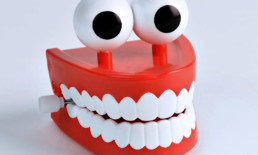
Case in point: fake teeth.
Let’s begin with some fun facts about fake teeth. The original version of the wind-up toy teeth was released in 1949 as “Yakkity Yak Talking Teeth.” H. Fishlove and Co. was the first to market the toy, and Fishlove remains a division of Fun, Inc., where the toy is still manufactured today.
They’re fake. But they’re apparently good enough an idea to have retained popularity for nearly 70 years. (I feel obliged to point out that it’s doubtful wind-up real teeth would have fared so well.)
Speaking of fake teeth, I’ve got two in my mouth right now.
About 25 years ago, a kid I was mentoring had a PTSD flashback and head-butted me in the face at close range. The blow broke a jagged corner off one of my two front teeth and snapped one of my bottom teeth clean in half.
Regarding the lower damage, even the slowest of breaths in and out over the exposed nerve was enough to make a lumberjack drop his logs and run crying for mama.
And it happened on a Friday evening going into a long holiday weekend, which meant I wouldn’t be able to get to a dentist until Tuesday.
Well, the nub of it (pun intended) is that I pretty much ate minimally through a straw, nursed two bottles of Anbesol and cried until I could get to a (very mean) dentist that Tuesday. The bottom job was a terrible match, but stayed in. And the top repair fell out in just a few months. I decided that I couldn’t afford to shell out the money on account of vanity, so I sported that chipped tooth for over two decades.
Last year, while on vacation in Florida, I made a new friend at the gym. We got talking about stuff that matters in life, and before I left, I gave him a copy of my book, The Best Advice So Far. Well, as it turned out, Houman is a dentist and noticed my chipped tooth, and I told him the story of how it had come to be. He kindly invited me to stop in the following year and let him fix it. It was a kind gesture.
Well, this year was “the following year.” I saw Houman again during workouts at the local gym. True to his word, he once again invited me to come let him fix the tooth. (And, no, I wasn’t smiling extra wide just so he’d notice.) I did go to his practice where I got V.I.P. treatment as well as the gracious gift of his skill and care in fixing that long-broken tooth.
As I walked out of Houman’s office, I couldn’t stop running my tongue over the smooth surface of the tooth. I took pictures and sent them around. I found myself repeatedly looking at it in the rearview mirror. And I immediately became aware that, for nearly 25 years, I’d been smiling in such a way that the top of my lower lip covered the jagged corner of that front tooth. Since that day, however, I’ve found myself smiling bigger than ever.
My real tooth was great. But part of it has been gone — the shards somewhere in the carpet or under the baseboard heater of a long-vacated apartment — for more than half my life. My new tooth … is fake. And yet it’s awfully good. What’s more, if I’m being honest, it makes me feel loved that a new friend would go out of his way for me for no reason at all.
In a further effort to be fair to “fake” (and because, as I pointed out, my brain is on its own little roller coaster) let me share with you a few more of my favorite fakes … followed by a few that foster frowns.
Fake Things I Like
Flavors
Fake banana flavoring (which my best friend, Dib, refers to as “breathy banana”) is definitely good, particularly when it comes in the form of a banana popsicle.
And while I know it’s basically made of Vaseline and sugar, I do love me some Cool Whip. I don’t buy it myself, but my mom does; and when I’m visiting, well … I’d be lying if I said I didn’t maybe eat a spoonful (or two) of it, right out of the tub when no one was looking.
Medicine
In 2002, after three years of mounting health problems that finally had me sleeping as many as 18 hours a day, unable to work, I was officially diagnosed with Multiple Sclerosis. I was 32 years old, and my mother — a nurse — was crying with me and telling me that I could live with her and that she would be my care-giver and that they would install a wheelchair lift so I could be as mobile as possible, for as long as possible.
I was devastated.
I asked for a second opinion, which my doctor gladly agreed to. A team of specialists from Brigham and Women in Boston conducted test after test, with no change in diagnosis.
Then I got a call. The endocrinology department had discovered that I had no thyroid hormone in my body. None whatsoever. And it looked like I hadn’t for years. The best we could trace it back, my thyroid had stopped working in 1999, following a serious of freak accidents that had landed me in the hospital for four days with complete amnesia.
It was long haul back. But I didn’t have MS. The solution: fake thyroid hormone, introduced at a low dose which increased until I was, at long last, back to normal. Now, I take it daily. Without my morning dose, I start getting foggy by 1:00PM.
Again I say, fake — can be not only good, but downright miraculous.
Rubber Replicas
The kid in me has never really left. I still love rubber bugs, spiders, scorpions, snakes. You name it. (This is probably because I like the real versions so much. You’d rarely find me as a kid without a collection of creepy-crawlies in jars or riding my bike with a live snake wending between my fingers; and I still always catch spiders, silverfish or centipedes when I find them in the house and let them outside — or I just leave them right where they were.)
Equally fun are those life-like replicas of overturned soda, dropped ice cream cones, vomit, doggy doo, dirty diapers and such.
Santa Trackers
Of course, everyone knows that Santa himself is real. But I’m sorry to inform you that the news spots that track the progress of Santa’s sleigh on Christmas Eve … well, they’re fake. Obviously, in order to get to every house in the world in a single night, Santa has ways of going the speed of light, which doesn’t match the news trackers. But they’re still fun!
Fake Things I Don’t Like
Flavors
Fake banana? Yes! Nice. Yummy. Good.
Fake cherry on the other hand? ::BLECHT:: It just makes everything taste like cough syrup from the 70s.
And fake cola from generic brands? Equally revolting. Yes, yes, I know that all cola is technically fake, but work with me here. You know exactly what I’m talking about.
Don’t even get me started on fake cherry cola …
Air
I appreciate air conditioning. I do. But somehow, if I’m in fake air too long — whether in a home, car, business, plane or elsewhere — I just start to feel weird. Claustrophobic. Same goes for forced heat. No matter how hot or muggy a summer day may be, or how frigid a winter day, I’ve just got to open windows or get outside. This is definitely an area where nothing beats the real thing.
Diet and Exercise Programs
Please — do yourself a favor and watch this short clip from 1945. Everyone wants a quick fix. The 30-minute abs program on home DVD was, last I checked, down to 3-minutes. From “fat jigglers” to those ridiculous tin-foil suits to ab “zappers” that promise you can sit and watch TV eating pizza and still look like a god or goddess, people are all too eager to believe that being fit is easy. That, my friend, is real fake news.
Being healthy, losing weight, gaining muscle: they always have and always will require (I’m sorry to say it) discipline, hard choices, time and work.
Wood Paneling
Need I say more?
*****
There you have it: two not-necessarily-cohesive-nor-by-any-means-exhaustive lists of my personal Likes and Dislikes when it comes to fakes. I suppose like most things in life, “fake” can’t be painted in well-defined strokes of black and white. (And, as such, you are welcome to gulp like generic cherry cola and gasp not like banana popsicles.)

Alas, for all the fun, this post now has my mind churning on some more serious “fakes” that don’t necessarily fit here.
So … be sure to tune in soon for fake: part two!