
what to say (reprise)
Back in the spring, I introduced you to my writer-friend Diana by way of a unique book review with a personal twist. (By the way, this four-book series, The Rose Shield, would make a perfect, no-fail gift for any choosy Fantasy readers you may know; and Diana's also just released a beautifully illustrated children's book, Grumpy Ana and the Grouchy Monsters, for the little readers on your list.)


Sally Cronin of Smorgasbord revived one of Diana’s previous posts entitled “Write and Change the World.” It was written nearly three years ago, before I came to know Diana. As I read it early this week for the first time, it felt current. It reminded me of important things. And I would have missed it, had Sally not seen the value in shining the spotlight on it again, these years later.
*****
A couple of days ago, I treated myself to a meal out. It’s second nature to me to ask the server’s name and give my own, and then to ask at least one others-centered question that has nothing to do with waiting ts.
Holly told me she was a Christmas baby … well, her due date was Christmas, but she’d been born on the 21st. My light non-server question was this: “What’s one thing you love to do in your life outside of work?” She smiled broadly and talked about spending time with her Long-Haired German Shepherd, including pictures of “her baby.”
You’d have thought I’d given her a $100 bill, the way she responded to that simple moment of exchanging names and showing even that little bit of interest in her as a person, outside of her role — of what she could do for me. She just kept shaking her head in wonder that anyone would think to do such a thing, thanking me at least three times thereafter when she came back to check on my table.
It struck me once again that what feels quite natural to me … isn’t, for many people.
This interaction with Holly, on the heels of having read Diana’s wonderful post from yesteryear, got me thinking. I’ve been blogging now for nearly seven years. When I first started, I was posting daily (how I ever managed it, I really can’t fathom); and yet that first few months was when my readership was new and quite small. In other words, most current visitors to my blog have never read those early posts, though they were the foundation upon which the entire blog since then has been built.
Add to this the slate gray sky and rain that has presided over the last few days, and waking mornings to find the car encrusted in frost, and my mind was made up.
This week, I’m sharing one of my early posts — from August of 2011.
It’s a light and fun summer story starring a great friend and lovable cast.
It’s a practical guide to having more meaningful connections with the people around you.
It’s a timely reminder, against a backdrop of global fear and distrust, that we can still choose the kind of world we will live in day to day.
And as Sally and Diana reminded us this week … there really is power in our words.
what to say
August 2, 2011
Chad and I hung out earlier today, working on some projects together. Realizing that we’d completed all we could for one day’s work, we decided to get ice cream. (Does it seem like I eat ice cream a lot, or is it just me?)
Instead of heading to the usual chain type of place, we visited a local farm which sells a wide variety of ice cream made with milk from their own cows. I got a cup with one scoop of Banana and one of Death By Chocolate. Chad couldn’t decide between two varieties, or between a cup or a cone. So he didn’t. That is to say, he got a cup and a cone. I can’t quite remember the names, but I believe one was Maine Black Bear and the other had something to do with Turtles.
While we were there, we made conversation with many people – all of whom we had not previously met. The girls working the counter. An elderly couple. Some little kids with their mom. Another older gentleman.
Chad and I often remind ourselves that what comes as second nature to us might well seem a great challenge for others. Other good people who’d really like to be more open with the rest of humanity, but just find it especially difficult to know where to start. In other words, what would involve no risk at all for Chad and me – may feel to many others like jumping blindfolded from a cliff. If you are such a person, I’d like to offer a few simple, use-it-now tips for what to say.

what to say: “hello”
This might seem obvious, but it truly surprises me how many people tend to find sudden interest in their key ring or fingernails or some distant object whenever they have to cross paths with other people, instead of just smiling and saying “hello.” If you’re new to all this positive social risk stuff, getting really good at saying “hello” is a great place to start.
If you need a checklist, here it is:
- smile
- make eye contact
- say “hello”
That’s it! Putting this into regular practice can change your daily outlook (and maybe some other people’s, as well).
what to say: "I notice …"
During our ice cream extravaganza, I did this when I commented to a little girl about her ice cream choice (it was pink and looked like it had confetti in it): “Wow, it looks like you picked the best ice cream. I should have gotten that.”
It was a small interaction, but she smiled and took her next bite as if she were really something. Her mom also smiled at the interaction and told me that her daughter “does love pink.” And her brother, only a year or two older, stepped right up and showed off his watermelon slushy, which I also raved about.
The second older gentleman I mentioned was wearing a shirt with the logo for “Oldies 103.3,” a local radio station. First, I just smiled and said “hello.” He smiled warmly and returned the “hello,” as he struggled to get up from the driver’s seat of his car, adding that he promised he hadn’t hit our vehicle with his door. Sensing the man’s good nature, I followed up with a comment about his shirt: “Now, you might be up there in years, but I swear, you don’t look a day over 103.2!”
He looked down at his shirt, and followed right in stride with a grin. “Oh, me? I’m a young 72, but believe me, I feel 103 some days!”
“I’m with you there!” I laughed.
Other comments might look like these:
“Cool shoes.”
“Nice tattoo.”
“You have a really great speaking voice. You should be in radio.”
These exchanges aren’t earth shattering. But they do go beyond nods and typical, predictable exchanges to showing genuine interest in people for the individuals they are. In addition, they cause people to feel connected – instead of isolated, separate, invisible.
what to say: "what about you?"
So often, when people find themselves in new social situations, they become so nervous and preoccupied with how they are coming across or what they will say next, that they miss the easier option. What’s more, the other option is not only easy – it’s virtually fail proof. Asking others-centered questions simply takes noticing (and not much, even at that).
We asked the girls at the serving window, “So, what’s it like working at an ice cream shop during the summer?” No-brainer, right? And they were all too happy to tell us: “It’s pretty cool. It’s slow during the days. We have time to read in between. But night time gets crazy, with lines out to the street sometimes.” Most people appreciate when someone shows even the slightest interest in their life, and are quite willing to engage in a bit of genuine conversation over it.
With the older couple, I asked the woman, “OK, I have to know. What kind of ice cream did you get?” She was all smiles: “Coffee. I always get coffee!” Her husband was soon by her side and I asked him the same. “Maple walnut,” he said, adding sagely, “It melts slower on a hot day.” I found this both informative and amusing.
I followed with one more question: “Now, if you were both on one of those game shows where you had to answer questions about one another without consulting each other, would you have known each others’ favorite ice cream?”
“Oh, yes!” they both agreed confidently. “We’ve been married for sixty years!” she added. “We ought to know!”
“Sixty-one,” her husband corrected.
“Sixty,” she reiterated.
“Well, you may have been married sixty years,” he said archly, “but I have been married sixty-one.”
It was all in good fun. They were awfully cute. (And sixty years! Kudos!)
Again, these questions don’t have to be deep or intrusive. If it helps, don’t think of them as so much personal as personalized. In my examples from today, we were at an ice cream place. We simply used the obvious environment and asked related questions about work and favorite flavors.
Remember that most people really want to interact with their world and the people in it. To feel like they belong. Like you, however, they just may not know how. I trust that these little tips — and perhaps a deep breath – will help you feel a bit more prepared to take some new positive social risks, confident that you now know what to say.



traffic

You’re a contestant on an episode of Family Feud. You’re starting the round, facing off against your opponent, your palm hovering tensely above the buzzer. The host presents the next challenge:
“One hundred people surveyed, top five answers on the board … Name something that causes people to feel angry or impatient.”
:: BZZZT! ::
What’d you guess?
I have a strong suspicion as to the Number 1 answer on the board.
Despite the host of major issues happening across the globe at any given time, it seems few things in life routinely get people worked up quite like traffic.
In fact, this is so much the case that I wonder if we’ve conditioned ourselves at this point to start seeing red once the brake lights ahead of us get to glowing.
Likewise, in becoming comfortable with viewing frustration on the road as “normal,” we justify the bad behavior that so frequently accompanies it.
I’ve seen some of the most mild-mannered people I know get Manson eyes (Charles or Marilyn; both apply) in traffic…
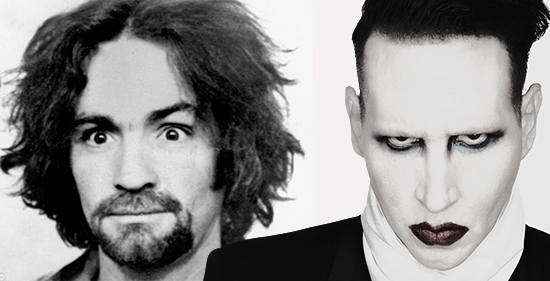
…hands flying off the wheel in all sorts of interesting gestures as they [yell / screech / curse] at all the other people who dare use the same roadway and make “me” to have to sit in this @*$#! mess.
Which reminds me of one particular meme I saw recently that made me laugh due to its pithy delivery of the truth:

The central theme of my writing is “You always have a choice.” Yet while traffic itself is one of those things that, in many cases, falls beyond the realm of immediate choice, it does not negate the fact that we do have choices nonetheless — even in gridlock.
Sure, sure. That’s easy to say, I know. But how do you change the reality of things when your blood pressure begins to spike on the highway? How do you start exercising patience that has atrophied due to lack of use?
Today, I’m going to share a few practical ideas with you — things I find myself doing routinely as soon as I realize I’m not going to be getting anywhere fast.
Shift (Your Focus, that is)
I make a bold claim in Chapter 6 of The Best Advice So Far (“Happiness”):
No one can make you mad.
Yep. You may not be able to control the flow of traffic, but you do have control over your attitude and state of mind. I won’t delve too deeply into the root causes of anger here in this post, or how much of what we call anger is based on situation versus biology. What I’m confident of is that, while we may debate the origin of the initial spark, from the second right after that spark forward, we have choices to make. Rolling down the window and flipping the bird is most definitely a choice, as is taking a few slow, intentional breaths. One choice fuels the fire; one throws a blanket on it.
The first step when anger and frustration begin to build is to remind yourself as quickly as possible that you do have choices. Make it a habit. This one simple “reset” really does have the power to change your state of mind.
Maximize the Moment
Here’s another excerpt from Chapter 15 (“Patience”) of The Best Advice So Far :
We've gained the world at our fingertips.
And we've lost the virtue of patience.
Patience, by definition, is the ability to graciously wait. It stands to reason, then, that if I no longer have to wait, I will no longer have opportunities to build patience. And that leaves me being impatient.
Impatient with stoplights that aren't turning when I will them to.
Impatient with stepping through the options on the automated help system.
Impatient with learning a new skill or sticking with a new undertaking.
Impatient when others do not get out what they are saying fast enough for my liking.
Impatient with the natural foibles and learning curves of my children.
As patience wanes, other things expand to fill the void. Stress. Irritation. Headaches. High blood pressure. Anger.
With this in mind, try viewing traffic as a valuable opportunity instead of merely a roadblock. It’s referred to as “exercising patience,” right? Why not try thinking of it as a sort of workout, right there in your car — your chance to build patience that will serve you well in every area of life.
Keep in mind that fanning the flames of anger is also a workout, an expenditure of both mental and physical energy. Thing is, for all that effort, it doesn’t actually accomplish anything. Traffic doesn’t suddenly break as other drivers flee from your ire. Your car isn’t frightened into spontaneous transmutation to a hovercraft. Put your energies to good use, rather than wasting them on things you cannot change.
I’m not just doling out motivational hype and hokum here. While I’m not known for road rage, I’m also not immune to feeling my teeth clench and my lungs get tight when there’s nothing but a stagnant see of bumpers in front of me. And so I know that I have the potential within me for that to escalate. But I really do remind myself that I always have a choice and that “patience is a virtue” as soon as I’m aware that negative feelings and reactions are on the rise. So I’m telling you from years of first-hand experience — it works.
Put Things in Perspective
One of my favorite strategies when less-than-snazzy stuff happens is to immediately ask myself a simple question: “Will this matter in a year?” So where traffic is concerned, this would sound something like, “Am I still going to care about this particular traffic jam a year from now?”
If the answer is an honest “No,” then I know I get over it at some point in the future. And if I’m just going to get over it anyway, I might as well make the choice to get over it right now, because any time between now and the eventual “over it” moment … is just time wasted.
If you can grab onto the logic of this and put it into regular practice, it’s pure gold.
Remember the People
It occurs to me that getting angry in traffic is often an indicator that we’ve forgotten to treat people as people and not as props, background noise, obstacles in our way or means to an end.
It’s easy to see traffic as vehicles — or at best, robots driving vehicles — rather than as people just like you, driving their own cars with places to go and people to see, many of them likely as frustrated as you are.
Often, when I’m in traffic, I look at the people in nearby cars and try to imagine stories for them. Where are they coming from? Where are they going? Who is waiting for them (if anyone)? Are they fretful that they’ll miss their flight? Late for a funeral? Hoping to see their kids before they’re asleep? Trying to get to the hospital to see a friend before visiting hours end? Maybe. Maybe not. But I’ve discovered that there’s a certain magical power in imagining the best instead of the worst.

Believe it or not, you can even go beyond making up stories to creating them, being part of them.
Thanks to hands-free technology, I can use time stuck in a traffic jam to send encouraging texts to kids I mentor, or to catch up on returning calls to friends and family.
I also find ways of positively interacting with the other people right there in traffic around me. For instance, you’d be surprised how many scowls turn to smiles when people look over and see me looking back at them wearing the bright red CNC clown nose I keep in my backpack. In one of the pockets, I also have a pack of note cards and a marker; holding one up to my window has turned many a frown upside down.
 I fully realize that not everyone is cut out for this kind of engagement, nor should they be. I’m merely trying to show that introducing humanity to a situation encourages empathy. And empathy has a way of diffusing me-centered irritation. (And in the case of traffic, it also helps remarkably well in making the time seem to go by more quickly.)
Play a Game
Singing “The Wheels on the Bus” or the full version of “Ninety-Nine Bottles of Beer on the Wall” might have officially reached their retirement date. And it’s not much fun playing “License Plates” when you’re stuck in your own state and going no more than 2 mph. But there are still plenty of boredom-busting games I play to keep things positive when traffic is at a standstill. I’ll share just a few that I believe anyone can do quite easily if they have a mind to.
How Many Songs
A standard radio song is about three-and-a-half minutes long. Make a bet with yourself about how many full songs will play before you reach your turnoff, or pass a certain exit, or get 5 miles according to your odometer. This is not only fun, it can have a reverse-psychology effect where you actually want one more song to play before you get to the checkpoint, just so you can win.
Word Collecting
Make a list of three fairly common words, then listen to a talk radio station, tuning your ear to “find” all three words before a certain checkpoint (see above). Or choose one really common word (like “the” or “so” or “like”) and set a number of times (25? 50?) to “find” it being said on the station before the checkpoint.
Crypto-Stories
This is a new one to me, one I just made up a few weeks ago. Create a cohesive story (real or fictional) from the letters and numbers on the plate in front of you. For instance:
731YS2
When I saw this one, I came up with this story: “My mom is 73. It has been 1 Year Since she was 72.”
Here’s another:
7954BW
My story: “In 1979, my grandmother (who is 93) was 54 (older than I am now!), and I’ve seen many Black-and-White photos of her from those early days (even though they had color film by then).
It doesn’t really matter what you see in the numbers and letters. The sky is the limit. This one passes the time, strengthens creativity, and often brings positive thoughts and realizations about things you’d not have considered otherwise.
Learn Something
Audiobooks (and audio language lessons) are surefire ways to make any commute seem to whiz by, and if chosen wisely, are time well spent. If you need a suggestion for your next listen (or your first), I've got just the thing:

Exit
I hope you found today’s post not just entertaining or even thought provoking, but rather that it provides some meaningful maneuvers for avoiding aggravation the next time you’re trapped in traffic. So before you lay on that horn, try taking these strategies for a spin. If you do, I believe you’ll find patience coming along for the ride more and more often.
fear: two

The previous post wound up being a sort of flight of ideas on fear. I had no intention of taking it further than that when I hit “Publish” last week. But the theme of fear has continued to rear its … well … rather common head in the time since then. So it seems worthwhile to take another walk on the dark side.
*****
I wound up getting to the gym quite late last night — 4:15AM to be exact. (Yes, that was late, not early, considering my usual arrival is between midnight and 2:00.) As you might imagine, the place was pretty empty. Other than myself, there were only two people working out.
One of them was a woman. We were busy at opposite ends of the gym, but I noticed her. She was quite thin, perhaps in her mid to late fifties. Her gait was unsteady, hinting at a neuromuscular disease. And she was tearing the place up (in the best of ways). She moved non-stop between machines, taking only minimal breaks between sets before she was back at it.
By the time I moved that way to use the cables, she was on the mats doing bicycles (an ab workout) for durations that would make me cry. I thought about wandering over, introducing myself and telling her that she was putting me to shame. But she was wearing headphones; and so I kept my admiration to myself for the time being.
We both finished up about the same time. The sky was still black with just a hint of cobalt on the horizon as I headed out to the parking lot, only a few yards behind the woman. I walked a bit faster, thinking now might be a good time to introduce myself. Perhaps hearing my footsteps on the pavement, she cast a wide-eyed glance over her shoulder and then turned abruptly, quickening her own pace.
I decided to let the moment pass, heading for my car instead. By the time I got my things inside and was finally situated, the woman was in her own vehicle and slowly rounding the corner in front of me. Just then, she hit the Caution: Pedestrians crosswalk sign. There was a * thunk * as the plastic yellow tower tipped to the side and scraped along her rear fender before righting itself. She stopped, her face worried. She craned around backward but still couldn’t see what she’d hit.
I knew that getting out of the car and back in would be no mean feat for her. So I hopped out to tell her there was nothing to worry about, that there was no damage to the sign or her car. Our eyes met in her rearview mirror. Her brow furrowed more deeply, so I smiled and waved, moving toward the side of her car where she might be able to see me more clearly.
She gunned the gas, tires chirping, and hightailed it out of there.
As I stood there holding my good intentions, it felt odd to consider that anyone would see me as a threat — that I could ever strike fear into someone.
On the drive home, an interesting thought occurred to me. I wasn’t offended at the revelation. In fact, it made sense when I put myself into the woman’s shoes. But all the same, there it was, as plain as day…
I’d been stereotyped.
That is to say, muscled guys who approach woman after dark are up to no good.
In Logic, this belief is what’s called a universal categorical proposition. Here’s the For-Dummies version:
It’s all or nothing.
All muscled guys who approach women after dark have ill intent.
No muscled guys who approach women after dark have good intentions.
*****
Some parental axioms never seem to go out of style:
If you keep making that face, it’ll freeze that way.
As long as you live under my roof, you’ll abide by my rules.
Nothing good ever happens after midnight.
In the case of the latter, we find another all-or-nothing belief that’s somehow embedded itself into society. And yet when I subject this statement to even the most rudimentary of consideration, it falls apart pretty quickly.
As I mentioned, I work out after midnight, and that seems pretty good. Some of the best conversations I remember from across a lifetime have happened after midnight. Nearly every good song of mine was written after midnight. In fact, it’s fair to say that virtually all of my book The Best Advice So Far was also written after midnight. I’ve walked on the beach, planned surprise parties and dropped off items for charity all after midnight.
And yet, consider…
The terrorist attacks of 9/11. The Boston Marathon bombing. The recent Las Vegas killing spree, NYC rush-hour incident and Texas church massacre. Every school shooting. They all happened before midnight.
So, if they aren’t true, where do universal categorizations like “Nothing good ever happens after midnight” come from? How do they start? And why do they persist?
I’d like to proffer that the underlying cause of such unfounded beliefs and negative stereotypes is the same.
Fear.
Moreover, unpredictability appears to be a major ingredient in fear. You see, if something is unpredictable, then I can’t control it. And I need to feel like I’m in control. So I begin placing people and situations into black-and-white categories that at least allow me the illusion of predictability and control.

I cannot allow for “some” to exist outside the bounds of my categories, or even that “most” exist within them, because either would reintroduce that dreaded unpredictability.
And so, rather than face that uncertainty in life, we adhere strictly to “All” or “None.” It’s just easier that way.
If I can convince myself and others to buy into my system, I can be at peace again. So I tell my teens that “Nothing good ever happens after midnight,” because it feels like I now have a definitive line in the sand that will allow me to protect them and not to worry. As long as they are in before the carriage turns back into a pumpkin, nothing bad will ever happen to them. I can sleep. It’s simple.
It’s not true, mind you. But it’s simple.
*****
I mentioned Logic earlier in the post. It's probably on my mind more than usual because I’m helping a young friend of mine get through his college Logic class this semester.
The field of Logic is funny. It’s clearly stated that whether a premise is true or false is irrelevant. All that matters is the form of the argument. That is to say, if my premises were all true, and if that would make it impossible that my conclusion were false, then my argument is valid.
As such, the following is considered a valid argument by the rules of Logic:
All bankers are swindlers.
All swindlers are aliens.
Therefore, all bankers are aliens.
Oddly enough, if the premises contradict one another, the argument is considered valid by virtue of the loophole that since it’s impossible for me to make all the premises true, I can’t rule out that the conclusion might be true:
All dogs are pigs.
Some dogs are not pigs.
Therefore, dogs are human.
Yup, that’s considered a valid argument.
Before you label it all crazy talk, consider how often we take this approach when we construct our arguments about people and situations in real life.
Nothing good happens after midnight.
It is after midnight.
Therefore, whatever is happening is not good.
Or…
All muscled guys who approach women after dark are dangerous.
A muscled guy is approaching me, a woman, after dark.
Therefore, the guy is dangerous.
Likewise…
All white people, including police officers, are prejudiced against people of color.
All black people are lazy, out to steal jobs without hard work or merit.
All [Democrates/Republicans] are stupid.
All Muslims are radicals plotting to harm Americans.
All gay men are pedophiles.
All highly attractive people are shallow and self-absorbed.
None of this is true, of course. Not even close. But it’s simple.
And so, like those logicians, we convince ourselves that truth is irrelevant, as long as our premises validate the conclusion that will keep our sense of control intact.
You see, if I label it and categorize it, I can avoid it. I can stay on this side of the boundary, with them all on the other side. And I can feel safe. Protected. Justified. I can control it.
Please note, however, that Logic does go on to differentiate between arguments that are merely valid and those that are sound. That is, in order to be considered sound, an argument must both be valid and actually have true premises.
Well, given this new insight, none of the arguments above is sound.
Don’t get me wrong. I’ve had “vibes” about certain people or situations, a feeling that something wasn’t quite right. Often, I’ve trusted that hunch. And though I’ll never really know whether it was accurate, I do support trusting your gut — if and only if you’re sure that there are no underlying stereotypes already in place before such an encounter, ideas stemming from categorical fear or lack of understanding.
I guess what I’m inviting each of us to do today is to consider where we might be building walls that keep out people or opportunities in our life, and then to ask ourselves whether the arguments we make in defense of those walls are rooted in fear — or in truth.

For some real-life stories of stereotype-smashing encounters, check out the following posts:


eating my words

I was in a hurry. I had company coming any minute and realized that I was out of a few things. So I dashed out to the closest grocery store, had the car door open before I’d even turned off the ignition, and made a beeline for the entrance.
However, once I’d traversed the crosswalk and arrived at the outdoor gourd display, I was stopped short by an elderly couple who shuffled, a quarter-step at a time, toward the automatic door, which opened, then closed, then opened …
The man seemed to be the root of the hold-up. His back was hunched, his head stooped and shaking, as he leaned heavily on a quad cane in his left hand while his wife supported him on the other side. Once they’d gotten through the first door, they doddered a few more laborious steps and the woman headed right to retrieve a shopping cart — leaving her husband in just about the only spot that could have completely blocked the second door.
A backup was now forming, others patrons unable to circumvent the painfully slow couple to get inside.
I sighed in irritation, feeling a pressure build behind my eyes. Why now of all times? I need to get my things and get home.
The man was too close to the door — which continued to open, close, open, close — for his wife to get the carriage around him. She let go of it, assisted him in stepping sideways a few times, then pushed the cart through the door … where she left it to block the inside of the doorway while she returned once more to aid her husband.
I saw my opening. I quickly maneuvered behind and around the old man. Yet even on tiptoes and sucking in my breath, I wound up knocking his left elbow as I passed. I slipped to the front of them and through the doorway, where I moved the cart forward a few inches to scoot around it and on my way.
Eating my words 1
A minute later, somewhere toward the back of the produce section, I heard a voice:
“Treat people as people, not as props or obstacles in your path.”
“Focus on the person, not the problem.”
“Patience is still a virtue.”
In case you don’t recognize it, the voice I heard was my own, reminding me of things I’ve written about often on this blog and within the pages of my first book, The Best Advice So Far.
I stopped.
I thought about my 93-year-old Nana, and how glad I’d be if she could manage — however slow her pace — to still get out and enjoy doing her own grocery shopping. I thought about how I’d feel if I saw some impatient, inconsiderate, self-absorbed jerk darting around her, jostling her on his way to get about his own business.
Grade-A Heel.
Eating my words 2
I don’t very much like that picture of myself; and, as a rule, it’s not who I am. What I do like very much, however, is that I have that voice speaking in my head, loud and clear.
In my role as a mentor, writer and speaker, people often thank me for the advice I share, expressing how it’s helped them solve a problem, change their perspective or approach people differently. But as I replied to one reader-friend in the comments section of a recent post:
“Trust me — I am my own reader in the sense of thinking about these things. I honestly believe that I benefit most from writing what I write. It keeps me honest. Hard to write and speak things and then ignore them.”
I went looking for the old couple, to apologize. I looked down every aisle. Oddly enough, they were nowhere to be found. I was sad about that. Still, I’d gotten yet another timely reminder about people, myself and the things that really matter in life all the same.
I took a break in the middle of publishing this post, deciding to go for a short walk to enjoy the unseasonably warm day and the fall foliage along a lakeside trail nearby. No sooner had I begun, it seemed, I came upon a woman and her old dog. The woman walked with a cane, the dog plodding along beside her. They were making their way by inches across a wooden bridge — no way around them. But you can bet that my patience, empathy and ability to see people as people had returned. I stooped to pet her friend while she and I enjoyed some light conversation as she continued to cross the bridge at her own pace. How wonderful, I thought, that despite her obvious challenges, she was making the choice to go out — and live.
Eating my words 3
None of us gets it right every time in life. But I can tell you first hand that you’ll get it right a lot more often, right your course more quickly, when you’ve got a stream of consistent and positive messages flowing in.
I’m not talking about the glut of motivational memes scrolling up our feeds between celebrity gossip and weird pet tricks. I’m talking about selective input to which we devote regular time and focus.
It's a slow and steady diet. There are no quick fixes or overnight successes. And none of us ever arrives.
Whether for you or for me, a lifestyle of positivity requires being intentional. It doesn’t happen by accident.
As with most things, it comes down to choice.


brand you

This past Wednesday, I was invited to be a guest lecturer at Benjamin Franklin Institute of Technology in Boston, where I taught a group of opticians-in-the-making about branding and marketing.
I love teaching. And by all indications, I'm good at it. But as a rule, I’m more interested in people than I am in imparting information. As such, I found myself naturally sliding into the role of mentor throughout the two-and-a-half-hour class. Whether these students ever wound up becoming opticians or not, I wanted them to go away from our short time together thinking differently about life, themselves and how they interact with others.
It’s actually not all that big a stretch to get personal when talking about branding and marketing. After all, in essence, every single one of us is an individual brand.
That is, whether we like it or not — or are even aware of it — we are constantly engaging in the same core functions as any business where marketing is concerned. We face similar challenges. And we are therefore subject to many of the same “rules” concerning success or failure.
Maybe you rail against commercialism. Maybe it gets your blood up that I’d be using capitalistic terms as a comparison in interpersonal matters. And that’s all well and good. But I’m afraid it won’t exempt you from experiencing gains and losses all the same, based on the foundational principles that follow.
Or perhaps you’d claim that you really don’t give a flying leap what anyone else thinks about you. And that may be true. Nevertheless, just as any company operating with such a mindset would suffer negative consequences, so will an individual who doesn’t qualify that statement and adjust accordingly.
Allow me to share a few terms from my Wednesday class, as well as some thoughts on how they might apply to brand you.
brand
(noun) 1. a product or service manufactured by a particular company or other entity under a particular name.
You exist in tangible form. Moreover, you are available for public consumption (i.e., you share the world with other people). Therefore, you can be thought of as a product.
You come with intangible traits and actions that impact others. And so you are a service as well.
Due to the nature of choice, in the practical day-to-day sense, you are the maker of you. And the results of the choices you make become associated with your particular name.
Ergo, for all intents and purposes, you are a brand.

Celebrities and politicians aren’t the only ones who need to think about themselves as a brand.
It doesn’t matter whether you’re 3 or 93, consumers (i.e., other people) are sizing you up, making judgments. They’re forming opinions and sharing them liberally. And they’re deciding whether to engage with you — or to steer clear.
“Oh, come on,” you protest. “ ’Three or ninety-three’? Now you’re just being hyperbolic.”
Am I?
Consider the following:
“I feel badly that I keep evading Janice’s invitations for my Bradley to play with her Hayden. But I just don’t feel comfortable having Bradley exposed to that kind of bratty behavior. Bradley is a gentle child and Hayden is a little bully.”
“I could sit and talk with my neighbor Stanley for hours on end. He has so many interesting stories to tell and still knows how to laugh, even with his wife having passed away last year.”
“Some cranky blue-haired woman got up in my face after church this morning, shaking her finger and giving me an earful about my son’s new ear gauges. Not very Christian-like — and, frankly, none of her damn business. ‘Good morning to you, too, you mean old biddy!’”
In actuality, I’ve heard versions of each of these in the last week alone, having only changed enough details to avoid getting myself into trouble with people.
That means all of us in between 3 and 93 need to consider the implications of our brand on others out in the world as well.
Perhaps it will help to think about brand you as your personhood and the effects of your choices on those around you. And just as a company’s brand choices result in profit or loss, our own interpersonal choices come back to impact us in return, for good or for ill.
brand identity
(noun) 1. the unique characteristics for which a business or other entity wishes to be known, characterized in part by what sets them apart from other similar businesses or entities.
Some people think of a logo, color scheme and tagline as “brand identity.” In fact, some marketing writers say as much. But these things are just the outward symbols of something that is (or should be) decided before a business ever opens its doors.
Think of brand identity as the answers to these questions:
Who am I?
What is my driving purpose?
What are my non-negotiable principles?
What do I most want to be known for/as?
What sets me apart from others who may look similar to me on paper?
Bloggers, authors and life coaches may immediately grasp what I’m talking about. If you sound like everyone, you won’t reach anyone. Establishing a clear direction, niche and voice is vital.
Others of you may be thinking, “Well, I’m off the hook here. That’s all stuff outgoing ‘people-people’ have to worry about. I’m an introvert, so I’m quite happy to just blend in with the wallpaper.”
I’m here to tell you that there are even many brands of “quiet.” And which you are perceived to be … matters.
Some quiet people are wise. They are known as active listeners who merely reserve their words for when it really matters. So when they do speak, people listen.
Some quiet people are kind. They feel fulfilled working behind the scenes to share the things they bake, to write encouraging notes, to feed birds and tend gardens and beautify the world around them.
Some quiet people are aloof. They think of themselves as better than others. They are easily annoyed. And so they can’t be bothered to engage.
Some quiet people exude confidence even in their silence. Others remain quiet out of fear.
Some quiet people are depressed. Or angry.
Some are sociopaths.
It’s not about quietness. It’s about what’s behind it.
Introvert. Extrovert. Maybe a little of both. It’s irrelevant in terms of personal brand. Any Myers-Briggs profile can be a smashing success. And any can go down in flames. It’s not about personality type. It’s about choice.
And even if we don’t want to think about our brand identity — how we want others to see us — we’re being seen regardless. We’re becoming known for something. We’d just be leaving it up to others to decide who we are, rather than being an active participant in that process.
marketing
(verbal noun) 1. the action or business of promoting and selling products or services, including market research, advertising and public relations.
As soon as a product, service or business is seen by someone else, marketing has begun.
Ideally, marketing is intentional and reflects the brand identity at all times. In thinking of brand you, that would be character and integrity.
However, make no mistake; just as with any company, marketing is happening whether you like it or not. It’s happening whether you choose to be involved in it or not.
Even if you were a hermit, you’d be subject to marketing by way of rumor, suspicion or urban legend.
Marketing is happening because people see you (even when you don’t think they’re looking).
Your actions are creating window displays.
Every word you speak is a commercial. Gossip to me about someone else, back stab or belittle them, and you can put money on the fact that I’ll be tucking that away, guarding myself based on the knowledge that I could just as easily be your next target.
Your social media accounts and emails are full-page spreads. Your posts and tweets are ad copy. They are creating expectations in the minds of a viewing audience. Are you the real deal … or are you guilty of false advertising?
People you don’t even know are talking about you, because someone you interacted with only briefly — no more than a blip on your radar — told someone else how wonderful [pessimistic, helpful, conceited, intelligent, mean] you were.
And that means there are unseen doors of opportunity opening or closing all around you, all the time. Job opportunities. Dating opportunities. Best-friend-of-your-life opportunities. All coming your way — or walking away — based on PR and word-of-mouth marketing going on right now.
Don’t misunderstand me. I’m not saying we should be worried about or distracted by what people think of us. One of the best things about getting older is that I care less and less if others agree with me. But that is because I’m coming from a foundation of knowing who I am and what I’m about. No target audience can include everyone. But even those who might not like me will be hard pressed to report that I am unkind, thoughtless or deceptive.
In other words, I strive to make my marketing reflect a clear brand identity.
As long as we know who we are and stay true to that identity, our accounts will be in the black at the end of the day. PR will work itself out in the long run, showing our character for what it is. And we will thrive.
brand image
(noun) 1. the impression of a product held by real or potential consumers.
Many people think that “brand identity” and “brand image” are synonymous, interchangeable. They’re not.
Brand identity is the beginning of a process, the cause.
Brand image is the result of a process, the effect.
Brand identity is how I want people to see me.
Brand image is how people actually see me.
The goal is for the two to align perfectly. But that takes being intentional.
It may take market research, by way of seeking and being open to feedback from others who will be honest with you.
Some cuts may be necessary for future growth, however hard in the short term.
You might need to shift your focus. Adjust your priorities. Change up the game plan.
But if you are diligent and consistent, making new choices when old ones are shown to be at odds with that core identity for which you want to be known, you'll reap the benefits of a positive personal brand with a bottom line of more peace, purpose, joy and fulfilling relationships.
umbrella

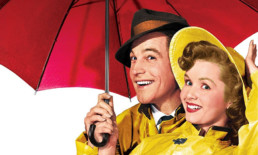
Singin’ in the Rain just may be my favorite movie of all time.
I watch the film at least once a year, and I reference lines or scenes from it often. It still gives me the same feeling it did the very first time I saw it. I laugh just as hard. My eyes still get wide at some of the dance numbers. And, of course, I sing along through the whole thing.
I dare you to watch it and not at least smile.
In Gene Kelly’s big number, his character, Don Lockwood, is feeling giddy with new love; and so, despite the torrential rain, he waves his driver on and walks home, using his umbrella as a dance prop rather than as any sort of protection. Soaked and smiling broadly as the scene ends, he hands his umbrella off to a shrug-shouldered and miserable-looking man passing the other direction.
Between gorgeous sunny streaks, we’ve also had our share of heavy rain here in Florida, where I’m spending the month of August. In fact, within my first 24 hours here, I was caught driving in the most blinding storm I can recall — the sky, road and crushing downpour all blending into one continuous sheet of gray.
And I hadn’t brought an umbrella.
Thing is, I could easily have bought one. But — call me crazy — I just figured, why bother? So I get a little wet. I’m getting wet in the ocean and pools and hot tubs anyway, right?

During one such storm, I ventured out to get a few things at the nearby grocery store. I hadn’t quite stopped dripping by the time I got in line at the register. Yet there in front of me, right in the store, an even bigger storm was brewing, lashing out at everyone nearby.
Being quite late at night, there were only two check-out lanes open: a standard lane and a 10-items-or-less lane. I was in the latter. A family of four was currently being rung and occupied the short space between the cashier and the bagging station.
The middle-aged woman between that family and me was in full rage, shouting loudly, throwing her hands this way and that to further emphasize her tirade:
“Yeah, I know you saw the g*#d@* sign! Don’t pretend that you don’t speak #$%&* English either! Yeah, you speak English plenty fine when you want something, don’t you. 10 ITEMS OR LESS! What, you need @$&*% help counting to 10? Lemme help you! ONE … TWO … THREE …
She jabbed a rigid finger at remaining items on the belt with each count.
The screaming woman continued:
“… NINE … TEN! That’s right! Not 12! Not 15! Not @#$&* whatever you want! You @#$&* IMMIGRANTS come over here thinking you can do whatever the @#&% you want, while the people who LIVE HERE are supposed to just sit back and take it! Go back to wherever you came from! Maybe they’ll teach you how to COUNT!”
The family stood there red-faced. The children looked visibly shaken, cowering away from the outburst and pressing half-faces into their parents.
The belligerent woman didn’t let up. Next, she lit into the mortified cashier, a woman of about 70:
“You should’ve told them to go to the end of the other line! It’s people like you who let these @#$&*% people walk all over us! Any other store, you’d be fired for no following the rules and making them leave! I’ve been standing here all night with my five items — yeah, that’s right,” she turned to the family again, “five! Not @#$%& FIFTY! G$*d#* IMMIGRANTS!”
Now, in my estimation, the family had approximately 20 items. And “standing here all night” was approximately two minutes.
Throughout this, I was not more than three feet behind this woman, watching all of this. Many things crossed my mind. I wondered if I should intervene, say something, defend the family or the cashier. I was embarrassed at the behavior of someone who was treating others this way in the name of “America.” I wanted to somehow let the attacked family know that this woman didn’t represent most people. But something told me that engaging with her would only have prolonged the episode for all involved.
The cashier, Joan, kept her attention squarely on the family, somehow managing to ignore the invective that was underway. In what was surely her best effort to make the family feel welcomed and safe, she smiled encouragingly and apologetically at them, moving their remaining items through as quickly as possible. Payment complete, she bid them “Have a nice day” as they grabbed their few bags and made a bee-line for the door without looking back.
Joan took a slow, deep breath, then began to ring the items of the irate customer. With her best attempt at cheer, asked the woman, “Did you find everything you needed today?”
The woman was still proclaiming her outrage, “You should’ve made them move. It’s not fair that you make everyone else wait …”
Joan spoke in a light tone, “I understand how frustrating that must be. We don’t always see into the cart to know exactly how many items someone has until after we’ve begun ringing. I’ll be sure to keep an extra careful eye out next time.”
Despite Joan’s choice to exercise humility and even bear the burden of fault (instead of immediately having called for management or security, which would have been the reasonable choice), the angry woman continued to murmur her complaints until her order was completed and she stormed out.
Though the entire ordeal had lasted only minutes, Joan looked pale and harried. The storm had taken its toll. Still, she gave me the brightest smile she could manage. “How are you tonight, sir?”
I put my hand on the conveyor belt to stop its movement. I caught Joan’s eyes and smiled. I don’t believe I could have turned the tide with the previous woman’s diatribe. But this was a moment I could make the choice to do something about.
“Joan, that was an awful situation. I’m sorry you got caught in the middle of that. I can’t believe how well you handled it, focusing your attention on that family and making them feel like valued customers, and then treating that angry person with respect and dignity as well. Not many people could have held up with grace if faced with the same thing. Good job.”
Joan’s small smile broadened and her eyes moistened in true appreciation (and, I hope, pride).
I took my hand off the conveyor and she began scanning my few items.
Blip. Blip. Blip.
“I’d also like to speak to your manager," I added, "to let them know how impressed I am with you, Joan.”
Joan looked around as if she were being filmed by news crews and cameras were flashing her way. She clearly was not accustomed to compliments.
The attendant at the nearby customer-service desk, who’d been watching the whole thing, spoke up: “I’ll call a manager right now for you.”
Joan finished ringing my items and, as I paid, thanked me profusely for my kindness. Meanwhile, the manager had arrived. I stepped out of the lane so Joan could ring the next customer, but spoke loudly enough so that she could hear me. I told the manager about the incident and how extraordinarily Joan had dealt with all involved.
A smile crept across the manager’s face and he spoke even more loudly than I had. “Great job, Joan! I’m buying you lunch tomorrow!” Then to me but just as loudly, “Joan is one of my very best employees.”
A small round of applause broke out, led by another cashier but including all nearby workers and even customers.
Joan blushed, grinning broadly.
On my way out, I caught her eye one more time and smiled affectionately.
As the exit doors slid open, I felt just as I imagine Gene Kelly had giving away his umbrella — then singing and dancing out into the rain.


what not to say

I always seem to have some crazy story or other to tell, don’t I?
I was asked a thoughtful question recently, as my birthday nears: “What would you like to see more of and less of in the year ahead. After The Zinc Fiasco of 2015/2016 and last month’s visit to Death’s door (aka, The Black Pill Debacle of 2017), my “less-of” response seemed a given”
I’d like to have less … in the way of health issues.
Don’t get me wrong. I consider myself very fortunate. Yet when birthday presents past include a medical dictionary marked with sticky strips on every page containing some strange malady I’ve encountered … one might have reason to suspect that something’s up.
And many have told me I’m the healthiest sick person they’ve met so far. (I suppose that’s true to my nature, being a lifelong “balance of extremes” as I call it.)
Well, wouldn’t you know, a week ago today (just after I finished writing last week’s post, in fact), I wound up adding another sticky to that medical dictionary of mine.
The hedge along the driveway had turned into a jungle; and the worker the landlord had hired to take care of it had just informed her that he’d have to postpone — until the second week of September. Well, that was just not an option. The drive would literally be impassable by then. So the landlord asked if I might consider taking care of tedious job for some cash. I agreed.
Picture it if you will:
- Eight-foot overgrown hedge
- Five-foot ladder on an uneven gravel drive
- Electric hedge trimmer
So there I was, tip-toeing on the second-to-last rung of the too-short ladder, stretching as far as I could over the top of the hedge to get those last few outcropping branches at the far side … when the ladder began to wobble.
I reached out instinctively to steady myself … on nothing … and in doing so, let go of the heavy, two-hand-operated saw …
… which dropped immediately to continue buzzing on into my left hand.
It’s hard to describe what you wind up thinking in a moment like that. One thing is for sure: you just know it’s bad.
I tossed the saw in the other direction and jumped (or, rather, fell and happened to land on my feet) as the ladder toppled.
Before I could manage to clutch the injury in a tight grip with my good hand, I got enough of a glimpse to see the gore. Blood bubbled up through the fingers that closed around it, dripping to the ground.
I couldn’t feel anything at first, of course. A small mercy at least. But my brain didn’t need to feel anything in order to imagine the worst.
Was it one finger or two? Were they still attached or was I just holding the pieces together?
I ran inside and knocked as hard as one can with an elbow on the landlord’s door.
No answer.
I was going to have to deal with this myself.
[Sinking feeling in pit of stomach.]
Now, I’m famously calm, cool and collected when it comes to dealing with other people’s injuries. But when it comes to my own … I just can’t manage the emotional distance necessary.
I got upstairs and ran the kitchen sink. The time had come. I’d have to look.
Quickly, I plunged my hand under the gushing stream of water, which turned pink as it gurgled and swirled its way down the drain. Part of my left index finger flapped up and down as the flow rushed over it.
Well, it was just one finger.
And it didn’t fall off in the sink.
This was good.
The pain was setting in now and, while the blood continued to pulse out, I was still able to assess that it was a deep, jagged cut. Between fluttering flesh and blood, I could see white or yellow.
This was not good.
I must’ve kept my finger under the water a full five minutes, squirting dish soap over everything often and trying to remember everything I’d learned in life thus far about serious wound care.
Make sure it’s clean.
Keep pressure on it.
It was probably time for that pressure. I grabbed a wad of paper towels and squeezed it around my finger with a vice grip using my other hand. I could feel it throbbing. Soon the paper towels were red. I changed them.
Keep it elevated above heart level.
Put ice on it.
I did these things.
Avoid infection at all cost.
I remembered something about salt. I filled a large bowl with water, more dish soap and copious amounts of salt, then sank my hand — bloody wrappings and all — into the bowl.
The Best Advice So Far: Don’t add copious amounts of salt to an open wound if it can at all be avoided.
It was a long afternoon and night.
Eight hours later, however, after doing everything right as far as I could figure, it was still bleeding pretty badly.
*sigh*
I hopped in the car, continuing to keep my mummified hand held high, and drove myself to the ER.
*****
Stick with me here. I promise — I’m not delirious from pain meds. There is a connection between my story and where I’m going with things next.
*****
Recently, I caught some episodes of the Netflix original series Luke Cage. It takes place in Harlem and centers on a main character who has found himself with unusual strength and impenetrable skin after being the subject of a prison experiment. I think it’s fair to say that 95% of the characters in the series are either black or Hispanic.
I found it a hugely entertaining show. Yet I do believe I heard the “N-word” more often by the end of the first episode than I’d heard in total during my lifetime to that point.
Thing is, while I’m sure many might debate this on several levels … it sort of fit. It wouldn’t have seemed as real if the writers and directors had had the street kids and kingpins of Harlem referring to one another as “African-Americans,” or calling their inner circle “Buddy” or “Pal.”
I’ve worked closely as a mentor with inner-city kids. Close friends in the black community really do call one another — even themselves — the “N word.” But take my advice: I wouldn’t try it if you’re white, no matter how much you may like someone.
I have gay friends who quite affectionately call one another … well, terms that I wouldn’t recommend you use if you’re a straight co-worker.
And while your spouse may look in the mirror, sigh in exasperation and say, “I’m getting chunky,” please — don’t take this as permission for you to sigh in exasperation and say, “Yes, you certainly are getting chunky.”
Debate it all you like. There are just some things that a person can say about himself or herself that others simply can’t (at least not without heaping woe upon your own head).
*****
There I was in the ER. During the many phases of check-in and registration, or as I chatted with others in the waiting room, I stayed as positive as I could for someone who still didn’t know the extent of my injury. I bolstered myself both mentally and aloud to others with such things as “I’m lucky. It could’ve been worse.”
But four hours later, when the receiving nurse finally called me in, I found myself a little put off when she greeted me with a joke (“At least it wasn’t your middle finger; you need that one”) followed by a statement of exactly what I’d been saying myself so many times to that point:
Well, it could’ve been worse.
You see, when I say it about myself, it’s encouragement and positivity.
But when someone else says it to me … it has the opposite effect. It invalidates my pain, my fear, my concern.
Other seemingly ubiquitous exclamations that I’d include in this category of “I-can-but-you-can’t”:
I know exactly how you feel. Why, when this happened to me …
I once knew a guy who [had something more horrific happen to him].
(About a break-up or divorce) Well, now that they’re gone, I can tell you that I never really liked him/her anyway.
The problem with each of these is that they minimize what the other person is feeling or experiencing.
So what do you say instead? Try:
Oh no … you poor thing.
I’m so sorry this happened to you.
I’m right here if you need me for anything.
This isn’t coddling. It’s not commiserating. It’s called empathy. And we’d each do well to know the difference.
In fact, genuine empathy doesn’t require words at all.
It’s looking someone in the eye with compassion.
It’s a shared grimace or a shoulder squeeze.
It’s letting silence be silence if need be.

*****
I was fortunate enough to have gotten a doctor who specialized in wound surgery. He commended me on how clean I’d managed to keep it. And he shook his head, mystified, that the cut was as deep and covered as much area as it did, and yet hadn’t disrupted any of the major “stuff” in such a tight space: bone, joint, tendon (all of which he could also see), artery, major nerves.
Given the location and jagged nature of the wound, he decided that going in with stitches might cause more problems than it solved. He used some powders and ointments that temporarily stopped the bleeding and applied liquid stitches (which I still think is just plain old SuperGlue), compression wrapped it, splinted it, and told me not to unwrap it, move it or get it wet for four days — unless, of course, the bleeding resumed.
I’m happy to say, while I’ll have nasty scar, the healing process is going remarkably well. Any loss of sensation is slight, and I have nearly full motion back.
I consider myself highly fortunate.
It could’ve been worse. Much, much worse.
But if you care about me, don’t be the one to tell me so.
*****
A few additional thoughts in closing:
I do believe that there’s a nebulous amount of time that passes after hard things, after which we might be able to agree with someone aloud about how lucky they are or how “it could have been worse” without being too insensitive. If you’re not sure how much time that is, don’t chance it and err on the side of caution.
I also think there are a select few people who, for them to say such things to one another even at the start, is almost the same as saying it yourself. This includes only the very closest of friends and family; if you’re not sure whether or not you hold that place with someone — you most likely don’t.
A rule of thumb I try to live by is this: only if I myself would feel completely loved, supported and validated were a specific other person to say such things to me, should I assume it’s OK for me to say such things to them.
creative love

Due to an unexpected turn of events this week (a stolen wallet, fraudulent charges to my bank card and all that goes along with getting your life back to normal afterward — a topic about which I may write in more detail at a later time), I'm still not quite over the finish line where the audiobook release of The Best Advice So Far is concerned.
In the meantime, I thought I'd share one more audio chapter — Chapter 14: “Creative Love.”
This chapter has remained one of the most popular and most talked about chapters of the book. What's more, the chapter combines memories from 4th-of-July celebrations both recent and long past. So in honor of Independence Day, Tuesday here in the U.S., I thought sharing this chapter would be apropros.
Click the link below to listen to the official audiobook recording of Chapter 14: “Creative Love” (the full chapter text is below, if you'd like to follow along):

CHAPTER 14
CREATIVE LOVE
A year has passed since I got caught in that 4th-of-July traffic jam I told you about in the chapter on choosing positivity. Last night, I joined the best people for food and fireworks by the ocean. Unlike many towns, this one has taken to allowing private citizens to light their own fireworks along the shoreline. Not sparklers and bottle rockets, mind you. Real, honest-to-goodness fireworks. And lots of them.
Of course, this is all off the books. Fire and police officials “happen” to be very busy in remote parts of town at those hours, it seems — ::wink wink:: — but let's just keep that between ourselves, shall we?
As our little clan made our way along the sidewalks, the town was out in force. Patriotic music played strong and clear as we passed one yard, then seemed to garble like the tuning of a short-wave radio as we walked, only to gradually form itself into another solid tune as we approached the next yard — all accompanied by much boisterous and bad singing. Dogs strained at leashes, barking wildly at the cacophony. Children clustered together on quilts and blankets, bedecked with glowing bracelets and necklaces and halos, all wide-eyed and slack-jawed as they beheld the wonders in the sky.
The sea wall was packed, layers deep. No one seemed to mind. But I navigated my way through the crowd and down the concrete steps, then jumped from the wall to enjoy the spectacle from the rocky beach below. The nearest firework bundles and boxes were a mere twenty feet away from where I sat. Should be exciting.
The colors and assortment were dazzling, all fired quite low and seemingly right overhead. But what struck me most was the magnitude of sound. Whizzing. Screeching. Whirring. BOOMing. It was the loudest I could recall.
Ever.
At one point, it became overpowering. The sound — not the light — was actually hurting my eyes. So I closed them for a moment, placing my hands over them and pressing firmly with my fingertips. That's when the flashback hit.
Ricky.
It was the summer I had graduated from high school. I'd gotten a job at a school for the blind, and I had three “boys” assigned to my care, all of them in for a short-term summer program. In truth, they were each older than I was.
Ricky was 18. Aside from being blind, Ricky had pronounced Asperger's Syndrome. This was also accompanied by a form of echolalia. That is, Ricky's tendency was to copy or rephrase what other people said, rather than forming responses with any real personal meaning. So, if one asked Ricky, “Are you having a good day?” he might reply “I'm having a good day” — whether he was having a particularly good day or not.
Ricky was the best. Though he was a year older than I was, he had the affect and voice of a sweet-tempered six-year-old. I was fascinated, but even more determined to have actual communication with him. I was 17 and had no real training. What did I know. But I thought it odd that staff just fell into Ricky's patterns, asking predictable and repetitive questions to which they got his predictable and repetitive responses. One day early on, I tried something.
“Hi, Ricky,” I said.
Ricky smiled, weaving his head back and forth, which I already understood meant that he was excited and happy. “Hi. Hi, Ricky. Hi,” he replied.
“Did you have a good day today?” I asked.
“I had a good day today,” Ricky said.
“And what did you like about today?” I continued.
Ricky fell silent. He stopped swaying as if he were listening for something far off. Then he continued his dance, without answering me.
I tried again. “What did you like about today, Ricky?”
He paused again for a moment, then resumed his rhythmical bobbing. “It's nice,” he said.
I welled up (much as I'm doing even now as I recall it). Ricky had given a real answer!
I continued asking only questions which Ricky could not repeat or rephrase with ease. In what seemed a very short time, Ricky and I were having meaningful exchanges regularly.
I remember the day — or rather the night — that Ricky spoke first to me, without my having asked him anything. I had just tucked him into bed and he began to cry. “I'm sad,” he said. This was very unusual for someone like Ricky, to report on how he felt, however obvious.
“Why are you sad, Ricky?” I asked.
“Mom,” he said.
“You miss your mom?” I asked, again finding this peculiar behavior, even without any real training.
“I miss my mom,” he replied, giving in to his comfort zone of repeating. But that was all right. He'd already told me as much.
Ricky sobbed for a long time that night without any more talk. I stayed with him, lightly raking his hair with my fingertips or squeezing down his arm, which he enjoyed. After more than an hour, he finally fell asleep.
This same scenario played out for the next three nights. Ricky would cry when I put him to bed, and I would stay with him and get him to sleep. After a few days of contemplation at his bedside, I had concocted a plan. There was no way to be sure whether or not it would work, except to just try it and see what happened.
The next day was my day off. I picked up a painter's cap for $5.00. I chose it because it was soft and durable, and the lid was flimsy instead of hard. The following day, I tucked the hat inside my work bag. When bedtime came, sure enough, Ricky began to be homesick. I hated to think about the night before, because I knew the other staff member would not have stayed with him or comforted him. As Ricky began to cry, I took out the hat. I placed it into his hands and helped him feel it. “What do you think this is, Ricky?”
“A shirt,” he guessed.
“Nope. It's not a shirt. Good guess. Try again,” I urged.
“Try again,” he agreed. A few moments later, he said, “Underwear,” then scrunched his face up and giggled like he'd told a naughty joke.
Weeks ago, when Ricky had first arrived, I'd helped him unpack. He had exactly two pairs of yellowed underwear in which the elastic waistbands were stretched and torn. There were two undershirts and one pair of socks, all in similar repair, along with a couple of T-shirts, a pair of jeans and one pair of shorts. This was to last the whole summer. The following day, I had immediately gone shopping and later presented Ricky with a small but new wardrobe — one item at a time. And so it seemed he did remember the day I had given him the underwear, as he guessed at what lay in his hands now. The memory of Ricky's reddened face, giggling even as the tears of homesickness streamed down, is still very clear in my mind.
I laughed, too, and replied as if he'd really gotten me with his joke. “No, Ricky, it's not underwear, silly. It's a hat.”
“It's a hat,” he said, as if he'd thought of it himself. He felt around the opening and the rim again, trying to make sense of the new revelation.
“It's not just any hat, though,” I said mysteriously. “It's a magic hat.”
He didn't reply this time, just listened. I had his attention.
“Here's how it works. You say out loud all of the things you miss and love about home, and the hat remembers them. Then, you put on the hat, and it helps you think good things about what you miss, so you won't be sad while you fall asleep. So, here we go. Let's hold the hat together in our hands and think of as many things as we can think of that you love about home. What's first?”
“Mom,” Ricky said, sniffling.
“Good one! And what else do you love about home?” I prompted.
He scrunched his eyes, which were always closed, as if considering. “Cookies.”
“Cookies? Nice! And what else?”
“Books.” (I hadn't realized before then that, of course, he might like a bedtime story. But I didn't interrupt.) Ricky had already stopped crying as he thought. Before long, his answers became mumbles that meant he was drifting off . I took the hat from his hands.
“OK, now let's put the hat on you, so you can think about all those things you love about home,” I said as I pulled the hat over his mop of brown hair. He reached up and touched it, then pulled the covers up and fell asleep. “Good night, Ricky,” I said.
The plan had worked. And it continued to work every night thereafter at bedtime.
The 4th of July fell on a Saturday that year, and most parents had come on Friday to get their children for the weekend. Ricky's parents lived in New York, and so had not come. I offered to take Ricky to fireworks that night, even though I was not on shift. This was met with much debate. Bringing a blind student with multiple needs to an event like fireworks? Too upsetting. And you're not even working. But no one could argue that Ricky trusted me and was calmer when I was on. And I had clearance to drive the vans. My taking Ricky for the night would also mean that other staff would not have to stay on duty for one student.
And so, we went.
Now, I honestly can't remember how the next turn of events came about. But my sister Shannan wound up coming along. She was sixteen at the time, and had absolutely no experience with special needs. Still, she came. I wondered how she would be with Ricky.
Ricky grew very anxious as the crowds thickened approaching the main event. Shannan and I told him that fireworks would sound very loud and scary, but that it was the fun kind of scary. “It's fun,” he said, but he didn't seem too sure. Patriotic music played somewhere close by. My sister, without hesitation, asked Ricky if he would like to dance. Ricky's whole life was a dance, in a way — rocking and bobbing and doing the two-step. And so he accepted her offer. She helped him up and fell right into his little two-step, as if it were the cool kids' dance. “You're a really good dancer, Ricky,” she said.” He laughed his giddy laugh. “I'm a good dancer!” he shouted, elated to be dancing with a real live girl.
Soon, the first “test” rockets fired, and Ricky was clearly nervous. We sat down on the grass, my sister on one side, and I on the other, pressing in tight on either side so that Ricky would feel safe. “This is going to be a lot of fun!” I assured him. “All of the sounds will be different, because the fireworks look different.”
For Ricky, there would be no bursts of color. No designs in the air. No light — only sound. Ricky tilted his face upward in expectancy, as he waited for whatever would happen next, somehow understanding that the noise had come from above him.
Then my sister said something which I'd forgotten until the memory resurfaced last night: “I'll draw pictures on your back of what it looks like.”
It was brilliant, really. And moving.
The first legitimate explosions rained overhead. Ricky gasped, but he didn't seem anxious now. I squeezed his hand and said, “Wow! This is scary! Sometimes, it's fun to be scared!” Ricky smiled, with red light shining on his upturned face. Shannan got up and knelt behind Ricky, then wiggled her fingertips over his back in an outward motion approximating what was happening in the sky. The next one screeched out five separate rockets that spiraled away at the end. Ricky squeezed my hand tighter. My sister drew arcs with curly-Qs up Ricky's back, one at a time. And so it continued.
I really believe that Ricky was having all the fun of going to a scary movie with good friends. He began to laugh out loud, or crouch smaller at the bigger booms, giggling. All the while, I squeezed his hand as my sister drew forms.
THE BEST ADVICE SO FAR: Tenacious love expressed with creativity can work wonders.
Another shattering *BOOM* brought me back to the present, where I sat there with my fingertips still pressed over my eyes. A few tears escaped as I remembered Ricky and the events of that night.
I wondered where he was, and what he might be doing today.
I wondered if he still had the magic hat.
I wondered if he remembered me, or that night when he'd danced with a girl who smelled nice.
I wondered if he might be at fireworks somewhere even tonight, smiling, squeezing his hand tighter and feeling imaginary fingertips drawing pictures across his back.
What I did not need to wonder about — what I was certain of — was that time, creative energy and love had been well spent all those years ago.

kindness

Last week, I shared with you the first fully mixed and mastered chapter from the forthcoming audiobook version of The Best Advice So Far. This past Friday, my best friend Dib came over to record the Foreword, which she wrote. And once that's edited, I should have no more to do before giving wings to a project that's taken just about 120 hours to complete.
Then ... it's into the next book. (:: deep breathe ::)
For now, I'm still reeling (and celebrating!). With brain-buzz still in effect, I almost decided to skip posting this week. But instead, I thought I'd share one more short audio chapter with you. It's one of my favorites, "Chapter 10: Kindness."
You can listen to "Chapter 10: Kindness" by clicking the audio link below. (The full text follows underneath.)
And again ... if you haven't yet got your summer reading list lined up, I invite you to pick up a copy of either the print version of Kindle version at Amazon.

CHAPTER 10
KINDNESS
In the early 1990s, the term “Random Acts of Kindness” was all the rage when a book by the same name was released. Everyone was abuzz about it, as if this were the first time anyone had thought to be nice to anyone and — gasp! — for no apparent reason! As I recall, the challenge was also to try to remain anonymous, so that you weren't doing it just for the rush of being thanked.
I considered myself a pretty nice guy, but even I was inspired. I was just thinking about it more, I guess. Looking for opportunities to jump on the RAK bandwagon. I remember being at an amusement park, in a line for food behind two teenage girls. They were trying to figure out how both of them could eat on four dollars and change — no mean feat at amusement park prices. I had a little extra money, so I pulled out a ten, folded it until it fit in my palm, and tapped one of the girls on the shoulder. “Here,” I said, holding out my downturned fist. She looked at me as if I were going to drop a scorpion in her hand. I flicked the folded bill into my fingertips like a magic trick and added, “Get something to eat.” They took it, still a little spooked. I walked away (it was the closest I could come to remaining anonymous under the circumstances). As I was leaving, I heard them excitedly chattering about what they could now eat. It felt good.
Some years later, Random Acts of Kindness got a facelift with the “Pay It Forward” movement. Another book was behind the push, followed by a movie where we got to see the creepy “I see dead people” kid in a less creepy role. Unless you count ending the movie with the kid getting shot in a Random Act of Violence as creepy. No one could blame you.
The twist with Paying It Forward was that you were supposed to do the nice thing with the understanding that the next person had to do something nice for someone else, and so on and so on.
Within a year, in 2001, the Twin Towers were attacked. It rocked America to the core. And, once again, people remembered to be kind to one another. Neighbors who hadn't ever introduced themselves stood side by side along streets, holding candles and talking about things that mattered.
That was all so long ago. Ah, the droll days of yesteryear, when kindness was cool.
Wait.
Hasn't it always been cool? Isn't it still kind of cool?
THE BEST ADVICE SO FAR: Kindness still works.
We get in this mindset that, if Oprah is talking about it, we just have to try it. But next month, it will be the new no-diet-no-exercise weight-loss pill. Or taking your dog to some guy who whispers to it.
But kindness is not a fad. It's a choice. It's a mindset. It's a lifestyle.
“Yes,” you protest, “but all the good acts of kindness, like paying for the person behind you in the drive-thru or at the toll booth, have been done to death.”
And I reply with a hearty, “So?” Can kindness really be overdone? I've heard of killing someone with kindness, but I hadn't considered it an actual threat.
I still try to make Random Acts of Kindness a regular practice. It is not a duty, mind you. It's fun. I like it. It energizes me.
So, I'm driving through at the local coffee shop, and I say, “I'm feeling a random act of kindness right now. Please ring in the order of the person behind me along with mine.” The teller smiles and is perhaps inspired to look for her own opportunities. But for now, I share the fun of the experience at hand by letting her deliver the news. And I can assure you that whoever gets to the window next is not thinking, “Oh brother. That is so 1995.” I love to do this and then just imagine the response. As I play it out, the woman has had a long, hard day and felt unappreciated. She gets the news that her coffee is on the house, courtesy of a stranger. She smiles broadly and is reminded of what is right with the world instead of wrong. She puts on her radio and, as luck would have it, her favorite song from her youth is just starting to play.
Hey, it could happen. The point is, I enjoy the possibilities. It causes me to have a brighter outlook and an impish sort of Christmas spirit all year long.
Chad, who attended Penn State, started an organization called The Clown Nose Club. (Don't wince; it has nothing to do with actual clowns.) Their philosophy and mission are written specifically, but the For Dummies version goes something like this: “to go out of your way to let people know they matter.” That's it? That's the stated goal of a whole club? Yes. Yes, it is. And you would not believe the response. No sooner had this club started than stories were hitting the newspaper, and radio shows were asking my friend to talk about it to their listeners. In its fledgling months in existence, the club drew more than 80 members.
They say that bad news sells. I'm here to tell you that good news and happiness sell, too. People can't get enough of a good thing. Kindness doesn't go out of style. Truth is, kindness not only helps others, it improves your own outlook on life. And that just makes the world a better place.

lemonade: for the ears

At the end of February, I finished recording the tracks for The Best Advice So Far. And at that time, I posted one of the audio recordings here on the blog —"Chapter 2: Negativity."
Well, I had set a goal for myself to have everything mixed and mastered by June 1. It turned out to be far more than I had bargained for — over 100 hours altogether. Wearing headphones for hours on end, listening for "poppy" Ps and "tappy" Ts and "slushy" SHs, all while watching jagged sound waves on a screen. Listening to every facet of my own voice, up close and personal. Let's just say it was no picnic.
But now I can have a picnic. Because I did meet my goal. At long last — it's done!
And I am inviting you to my picnic.
The audiobook version should be available July 1, if all goal according to schedule (just waiting to have my best friend Dib come this Friday and record the Foreword). In the meantime, however, since we're past Memorial Day and into the unofficial start of summer, I thought I'd share another chapter with you. In fact, it's the chapter that inspired the cover of the book itself, as well as all of the branding for The Best Advice So Far.
You can listen to "Chapter 39: Lemonade" by clicking the audio link below.

And ... if you haven't yet got your first beach read of the season picked out quite yet, you can grab a copy of either the print version of Kindle version at Amazon (again, with the audiobook soon to join the lineup).