

blabber

I read a claim today that women talk three times more than men: 20,000 words per day for women compared with 7,000 for the average man. However, more recent and credible research counters this, stating that the average adult of either sex utters about 16,000 words per day.
To get a better grasp of that number, imagine trying to count from 1 to 16,000 in one stretch. Ready? Go! 1 … 2 … 3 … 4 … 5 … 6 … 7 … 8 … 9 … 10 … 11 …
Is it sinking in yet just how large a number 16,000 words really is?
My goal today isn’t to debate who’s talking more. It’s simply to say that we are all talking an awful lot. But what are we actually saying with all those words?


go team

Rogers had Hammerstein.
Han Solo had Chewbacca.
Cookies have milk.
And I have … you.
The “Thanks and Acknowledgements” section of my book, The Best Advice So Far, ends with this:
“My sincere thanks, as well, to every person so far who has read or listened or pondered or asked a question or checked in on things along the way. You are as much a part of this book as I hope it might become of you.”
I know authors sometimes say things like this that might come off as ingratiating, cliché or saccharine. Only, in my case … I really mean it, both with regard to the book and this blog.
I write. But my writing is not an end in itself. My aim is to inspire others to live like it matters, to challenge themselves to take more positive social risks, to notice and foster the best in people rather than the worst – and to remember, above all, that we always have a choice. I trust that, in small but consistent ways, that is happening as you read and experiment with me along the way.

the non-people

Before I even start today’s post, I have a feeling I’m going to upset some people. I suspect that even some avid and supportive readers are going to make frowny faces in my direction. But I just have to get this out.
To set the stage, I want to ask you to go beyond mere reading for a bit and to actually take a moment, as best you can, to imagine that a certain personal situation is true and happening to you right now. Envision it. Feel it. React to it.
I want you to imagine that a concerned friend has emailed you a link to a social media post in which you’ve been the topic of discussion, but yet in which you have not been tagged. You follow this link and find that a group of people – some of whom you know but many whom you don’t – have posted a less-than-flattering candid picture of you (or, perhaps, your kids). You don’t know where this picture has come from, only that you didn’t take it. The caption added to this picture is ridiculing you. What a train wreck you are. How delusional you are. How monstrously un-cute your kids are. What a god-awful spouse you married, and how it's no wonder that rumors are circulating that you've been cheating with someone else who is named in the post.
Below this is a long train of comments where "friends" and strangers alike are joining in to add their two cents, mostly agreeing, really ramping up the humor of it. Adding more pictures designed to humiliate or embarrass. They jab at your body type and how you've really let yourself go. One person even goes so far as to say your “very existence is an insult to humanity.” Another says they are “surprised evolution allowed such a step backward.” You scroll and scroll, but it never seems to end.
How would you react? How would you feel? Would you keep reading, driven to know every rotten thing people had said? Would you add a comment to spite them, call them out or express how hurtful this was?

mercury

If the people who know you best were asked to compare you to something, what would they choose? "I would say he/she is a lot like ____________." How would they fill in that blank? What analogy would they use? Why?
I have the privilege of knowing and spending time with a young friend named Max, who recently asked me if I would write a recommendation for him. The recommendation was requested in hopes that it might boost Max’s chances of joining a highly selective group of teens heading to Germany this summer for an educational excursion.
I made it a personal policy long ago to write recommendations, no matter how much I may like a teen I mentor, only when I feel 100% convinced and passionate about what I might say on their behalf. That said, Max was a shoe-in. After I'd finished and submitted the recommendation, I was driving somewhere, when I suddenly had a strange thought: Max is a lot like mercury.
Mercury is a fascinating element. It’s surprising how few people any more have actually seen it, now that mercury thermometers have gone out of style. But its properties are almost mesmerizing. (If you’d like to hop over and watch some quick handling of mercury, check out THIS VIDEO.)
Every element, by definition, is unique. But mercury still stands out from among the others somehow. It’s strong, yet malleable. It has properties of both a liquid and a solid. It pulls apart easily, but just as easily reforms. There’s nothing else quite like it.
There is also no one else quite like Max.
big kids: part 2 of 4

Yesterday, I wrote the first installment in this four-part series. It had occurred to me in a new way that, for all children don't yet know, there is an equal amount that adults have forgotten. While it's not absolutely necessary, I do recommend hopping over and catching up to speed by reading "part 1" from yesterday, since it contains important groundwork for today's post (as well as the next two).
2. Children know how to give simple gifts.
How many times have you struggled over what to buy for someone in your circles on their birthday or for a holiday?
Wondering if the gift will be taken as too little. Or too much.
Laboring over the fact that there is nothing they really need.
Or resorting to just grabbing a gift card or cheese wheel at the last minute.
Kids aren't torn up about such things. Yet somehow, in the absence of high-paying jobs or cash flow, they still manage to excel at gift giving.

returns
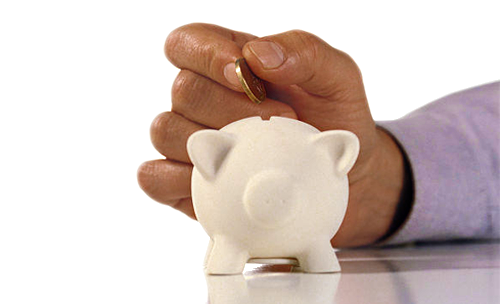
There's been a lot of focus on the stock market lately. I have to confess -- I don't know much about it. I've never owned stock, and so all of the uproar goes on largely unnoticed by me, since my day is not affected whether things go up or down. Just the same, it got me to thinking.
I talk quite a bit about investing in people. It's a phrase I and those closest to me use so often that I assume it's meaning to be generally understood. Yet it occurred to me recently that this may well not be the case.
In the typical sense of investment, one gives with the hope – and perhaps expectation – of gaining something of greater value in return. I invest $10 and I get back $20. Something to this effect.
Moreover, an investment at its best is assumed to be mutually beneficial. I lend you something you need now, and you return it to me with a percentage increase later. I help you succeed up front, and you share that success with me down the road.
Of course, as recent trends will confirm, investment always involves risk, as well. I give, as I said, hoping or expecting something in return – but knowing full well that I may get nothing in return. If you lose, I lose. It's par for the course.
In financial investments, there is research involved. I check you out, as it were. I only invest in those areas where the chances of a good return are relatively solid. However, once in a while, I invest in a new venture with no track record, because I believe in its merit and ability to succeed, though this has in no way been proven to me.
Investing in people is similar in many ways. Yet it differs on some key points, as well.
While I expect nothing, I do hope for a return and increase when I invest in people. But I do not expect to keep the profits. In a way, it's like taking some of the seed for my garden and tossing it over the fence into my neighbor's barren yard. While I hope to look over that fence and see growth begin, the benefit is not experienced in my own yard, in terms of personal increase.
At its best, investing in others is also mutually beneficial. By investing in friends, I develop solid relationships with people who are also willfully investing in me. Additionally in my case, by investing in teens, I have gained some invaluable adult friendships over the years, some that I know will last a lifetime.
There is also a now-and-later principle at work in interpersonal investments. Sometimes, I invest in a teen for quite a long time before seeing positive change really take root and flourish. In addition, there are many times when I am low on commodities such as perspective or peace, and friends "lend" me some of theirs. Later, when they are running low, I can give them some of my own. Sharing a good meal or favorite movie or late-night talk with a friend is of value any time, to be certain. But it does seem to have even greater returns when the particular timing of it helps to lift you out of a pit.
The returns when investing in people are not always direct. I don't give love to get love back. I may get love back. How wonderful when this happens! But even if it does not, there is still a return of love in a different way – that is, I have better learned to love. I have multiplied my own ability to love, making future successful investments all the more profitable. Likewise, though someone may not respond as I had hoped to my investment of patience or kindness, I have learned to become more patient all the same. More kind. More diverse and creative in my approach. And these things are always of great value.
As with finances, there is a risk involved when investing in another person. Those thrown seeds may not take root and grow. They may grow and be torn up as weeds. Or they may get nearly to fruition, only to be neglected, unwatered, left to be sun scorched. And this is always sad to watch.
Once in a great while, I do cut my losses, as it were. While I can honestly say that I have never given up on someone in whom I have invested, I have made the choice to withhold certain "revenues" where there have been deliberate acts of waste. For instance, I will not invest years of consistent time and energy into an addict who does not want to change. If you've been following the blog for a while, you may recall that I did this at one time with John, a young man I took in for a while, but who willfully chose to continue using and lying about it. For both our sakes, I had to make the heart-wrenching choice to put him out (I'm happy to say again here that he made it and is now a successful, grounded adult).
In such cases, however, I continue to invest my love and care. I cannot count the times I have had to say, "I can't help you any more right now, because you won't invest in helping yourself. But I will come and be with you where you are, cry with you in the gutter, or visit you in prison if that's how it must be for a while."
However, the wonderful truth is that, unlike money, personal investment banks don't deplete.
First, I can invest all of my love in each of several markets. It's really rather amazing, that I can love someone with all the love I have and also love someone else with the same amount of love. Countless parents with several children will concur.
What's more, though I may invest love in many human directions, whether that "love stock" skyrockets or plummets, I will not run out. There will always be more love I can choose to give. More patience. More encouragement. More hope. And so, I can invest fully, confident that no matter what happens, I will have more to invest the next time, if I so choose.


farewells
The end of summer has always been a bit melancholy for me.
Every year when I was a kid, we would rent a house on Cape Cod for vacation. Crossing the Bourne or Sagamore Bridge, or even waiting in the car for my parents to retrieve the key from the rental agency, felt like a beginning.
Time went slowly in the best of ways during those weeks. I would be able to read through several books, sitting in a low chair with my toes digging into the wet sand as the tide moved up or back, necessitating a move every so often to be sure feet were occasionally splashed. Outdoor showers were the norm. Extended family clam boils with corn on the cob seemed to last and last. And naps were frequent. There was no sense of urgency, no thinking about the next day while the current day was in progress.
But then that last day would come. And this day went quickly. Whatever book I'd been reading lost interest, or perhaps I just lost focus. The sky looked different. There was even a change to the air. I could swear I smelled fall and school coming. And it would always seem much too soon that one of the adults would announce that we'd better head back. I remember the feeling of brushing off my feet with a towel in the parking lot before getting in the car, purposefully not doing too good a job, so that I could keep that sand with me even just a little longer.
I did not sleep well that final night. I thought. I reflected. I often cried silently (though I don't think anyone knew). Early on the morning of our departure, I would clip a piece of rug from some unseen corner or peel a fleck of paint from inside a closet in my room. It didn't much matter what it was, as long as it was part of the house. And I would keep these things in a small baggie or container. Once home again, it was days before I could put that keepsake away, leaving it by the bedside and looking at it until I fell asleep nights.
Even as an adult, I have an evening every year where I say goodbye to summer. I go to the ocean alone and listen. I think about that year's fun and adventure, times spent with friends. I make no attempt to stifle tears that may come. They are good tears. I am thankful. Before I leave, I really do say goodbye, as if to a dear friend who is only going away for a while.
The end of summer brings other farewells each year, as well.
Though I'm no longer a kid (at least on the outside), my birthday is still a special time for me. But by mid-August, the day itself and the last of the celebrations with friends have passed.
Perhaps the most poignant farewells for me come by way of seeing students off to college. Seeing off new freshman marks the end of an era. It solidifies the fact that "my kids" are now adults, and our relationship will never quite be the same as it had been for the last four to six years. A new relationship is gained, but the transition is an emotional one for me nonetheless.
Today, I saw off two juniors, who are now adult friends. I had lunch and some good conversation with Tim (and, for those keeping track, yes, I had another ice cream with him afterward). Then I went straight off to help Chad pack and load up the little convertible that he and his mom would be taking out to Pennsylvania in a mere hour. And though I go out to visit these guys at their schools throughout the year, this always feels like the end of summer camp all over again. Things will change. For a time, we will necessarily miss sharing more of the little daily things that make up our lives. Late night talks by pools or in deck hot tubs or by the ocean, staring up at the sky without thought to the hour, will not come again until next year.
When these times come, I find myself thinking a slightly humorous though comforting thought: Better to miss someone you wish would stay, than to have someone stay that you wish would leave.
So I say my farewells. I will allow myself to feel whatever accompanies the changes, mindful of this also – that the pain of loss is directly proportional the joy allowed in and the love invested.
young love
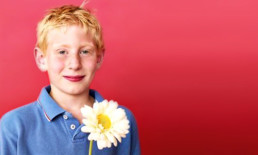
Yesterday, I was handed a love letter. However, the letter was not meant for me. Rather, it was written by a young teen boy, and I was asked to read it and then give my opinion of it.
Oh, the pressure. And the honor.
First of all, the letter was printed by hand on wide-ruled paper. In pencil. Before I even began to read the words of it, my thoughts were many. Chiefly, they were that this boy is one of the sweetest and most genuine people I know.
The object of his affections was a girl he had met during summer camp, which he had attended for six weeks. In the very first paragraph of his three-page letter, he simply and unabashedly confessed his love for her, exclaiming that this was the first time he had ever felt this way, and so he thought he'd better do something about it.
The rest of the letter pondered in detail the many reasons for which he loved her, reading like a modern-day Robert Burns. Was it her walk that mesmerized him so? Her voice when she sang that enraptured him? Or her laugh, which he confessed made him feel "more at home than anything else in the whole world"?
At the end of the letter, after his starry-eyed musings had run their course, he graciously permitted that it was all right if she didn't love him back. He ended with, "It's just that I'm afraid I may only ever feel this way once, and so I'd rather take the chance and say something, than to have the lifelong regret of never having tried."
Alas, you'll recall that I was asked for my opinion on whether or not he should send the letter to this girl (by postal mail no less, only adding to the endearing scenario). Was it all just too much? Was he setting himself up for a fall? No one wanted this earnest fellow to get his heart broken, least of all the boy himself.
Every good writer knows the importance of tension. And so – I'm not telling you what I shared with him by way of advice concerning the letter. I will, however, reflect on a few thoughts I had in the process.
Is it truly "better to have loved and lost than never to have loved at all"?
Which is the worse state of affairs: to risk being rejected for who you truly are? or to risk being accepted for who you are not?
Is a pure and heartfelt expression of love ever wrong?
Does someone so young really even know what love is, to go on gushing about it so? And is it all right if he doesn't truly know what love is, but goes on gushing about it anyway, simply because that is what he is feeling today and all that he knows love to be?
Who among us has really cornered the market on "what love really is" anyway? And if we have, is it then that we finally find ourselves expressing it with abandon, regardless of the consequences?
For all of my questions, I am most interested in knowing the answer to only one: What if she, as young and naive in the ways of love as he, were to find him rather charming in his boyish sincerity?
What if, by some chance, her answer to his big question – is yes?

simple love
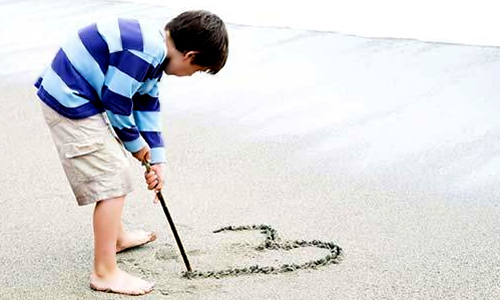
All of my reminiscing with Disney classics lately has me thinking about childhood. I don't mind saying that I've extended mine by a few years now, with no plan to change things anytime soon. It perpetually amazes me how royally grown-ups can muck up things that are designed to be very simply expressed and understood.
During my years working with small children, I've seen then express love in profound ways:
Bringing you a drink that they carefully filled to the tippy-top.
Offering you their best eraser or butterfly hair clip just because.
Drawing a picture of both of you holding hands in green grass, blue sky and sunshine.
A look of concern and a silent hug. Then walking away to let you be alone.
There are many books out there of letters and prayers and quotes attributed to children. Whenever such a book makes it into a crowd of adults, someone inevitably interjects with a lofty air: "Well – obviously, real children didn't write these. I have a degree in [insert long degree name that no one particularly cares about], so I know these things. These were doctored by editors or coached by parents, just to make a book and bilk money out of the type of people who frequent the Christmas Tree Shop."
My only advice to such people is to spend some time with actual children. They'll shock you with some of the things they say. With what they understand about the world and the people in it. For all that I may have taught children along the way, I have learned as much from them – and sometimes, perhaps, just been reminded – about the way things are supposed to be.
I've shared some quotes with you recently. Yesterday, I ran across an article offering some quotes from kids ranging from 4 to 8 years old. The children were asked in random, live interviews to describe love – what it is. Some talked about family love. Some friendship. Some took a stab at what they thought romantic love might be. Their quotes may not become famous, with generations knowing their names. But there is real wisdom to be found in some of their replies. I've culled out a dozen of them for you here.
When you love somebody, your eyelashes go up and down and little stars come out of you.
Love is when Mommy sees Daddy on the toilet and she doesn’t think it’s gross.
Love is when you go out to eat and give somebody most of your French fries without making them give you any of theirs.
When my grandmother got arthritis, she couldn’t bend over and paint her toenails anymore. So my grandfather does it for her all the time, even when his hands got arthritis too.
When someone loves you, the way they say your name is different.
Love is what makes you smile when you’re tired.
Love is when you tell someone you like his shirt, even when he wears it every day.
Love is when my mom makes coffee for my dad and she takes a sip before giving it to him, to make sure the taste is OK.
Love is when you kiss all the time. Then when you get tired of kissing, you still want to be together and talk.
If you want to get better at loving, you should start with a friend who you hate.
Love is like a little old woman and a little old man who are still friends even after they know each other a really long time.
You really shouldn’t say ‘I love you’ unless you mean it. But if you mean it, you should say it a lot because people forget.
Say what you will about being dirty or hyper or loud, but kids get it. Or perhaps, as that last little boy noted, we adults just forget.
I hope you've been inspired, in some small way, to remember.
If so, do something differently because of it.

hypothesis

I woke this morning to find a text waiting:
Dear Erik:
I love you. In my stunted, lopsided, entirely sincere and unapologetic way, I do. Also, I fear that you are overworked.
This was from a male friend.
It got me thinking. In some form or other, I hear "I love you" an awful lot.
I am hugged an awful lot. I am thanked, affirmed and encouraged an awful lot. And an awful lot of 'X'es and 'O's come through my phone. By an awful lot, I mean dozens of times a day.
I certainly don't take it for granted. But it suddenly occurred to me that many people -- most people -- don't live this way. And that must make it all seem very Pollyanna. Yet this is the norm among my friends. If anyone in our "little family" (which isn't so little) ever tried to shake hands with each other, we would all burst out laughing, as if it were a joke. Shaking hands to say hello? C'mon! But again, it occurred to me that, for many, a handshake may seem downright intimate.
So how did I fall into this charmed life? How did I get lucky enough to wind up in the mix with so many people of this sort? Did I hit some kind of love lotto? I mean, really? How is this even possible?
Ever the astute one, I also noticed that I say "I love you" an awful lot. I give an awful lot of hugs. I thank, affirm and encourage others an awful lot. And I send out an awful lot of 'X'es and 'O's through my phone.
It leaves me wondering if there might be a connection.
Perhaps ten or twelve years ago, I realized that my mother and I never hugged hello or goodbye. I knew she loved me, without a doubt. It was just one of those things we … didn't do. So one day, as I stood at the door after a visit, I delivered this proclamation:
Mom, I hug people. Young and old. Married and single. Male and female. I hug people. But I don't hug you, and you're my own mother. So I know it will be weird, but we are changing that today.
She got all flustered. She assured me that she loved me, and I assured her that I knew. She told me that it wasn't that she didn't want to, but, well, that she wasn't raised that way, and she was old now, and it was just, well – just not the way she did things.
Ignoring her completely, I proceeded to wrap my arms around my mom and hug her. Now, she'll laugh that I'm telling you this, but that first time, she did what I refer to as "The Nurse Betty." She stiffened up, held her breath, turned her head to the side, and smartly patted my back with two, firm, flat-palmed whacks. Had she been an Englishman instead of Nurse Betty, she would then have pulled away, coughed uncomfortably and ostentatiously low in her throat as she straightened a nearby picture frame that didn't need straightening, and said, "Well, then – cheerio and all that, my boy."
I laughed, which made her laugh. I then gave her a quick lesson in hugging sans Nurse Betty pats, and we tried it again.
She was a fast learner.
Today, my mom is a hug maniac. She hugs us, her sisters, her mother, her friends, her neighbors. Strangers walking down the street. Stray dogs. She just hugs people and it's like – well, it's like she was raised that way. She also says "I love you" an awful lot.
Ever the astute one, I've noticed that, since my mother became this hug maniac, she also receives an awful lot of hugs.
Data noted and entered into the log, to be considered with previous data toward drawing a conclusion.
Without formal experimentation, I'm going to venture a few hypotheses:
- Being open encourages others to be open.
- Genuine positivity is contagious (cf. Chad).
- Things that were once uncomfortable can become the comfortable norm given practice.
- People can change.
Please help me test the veracity of these statements by conducting your own experiments, collecting the data, and informing me of your findings. Thank you.