
fallen
Saturday, I woke to find a message waiting on my cell. It had come in a couple of hours beforehand. It was my mother. She was on her way to the hospital, letting me know that my Nana had taken a fall. She didn't know anything more.
My heart was immediately in my throat, imagining the worst. We'd just lost Grampa last spring, and now –
I was able to reach my mother, who was already in the hospital. Best anyone could figure, Nana had fallen sometime during the previous night while bringing her coffee cup back to the kitchen. She had banged her head badly on the frame of the bed and lain all night there on the floor, unconscious. In the morning, as she came to, she had the presence of mind to remember the MedAlert necklace and press the button as she'd been shown.
This isn't the first time Nana has fallen. The last time, she was conscious the whole time. It had been a couple of days before anyone found her there. It was a saving grace that she had passed out during this weekend's episode. The thought of her lying there, fully aware last time, and being unable to get help makes me indescribably sad.
I had a full day planned, but of course, I would put it all on hold and reschedule things on the way to the hospital if they would be keeping Nana overnight. I set in with my questions:
"Do they know what caused it?"
"Maybe lack of sleep, a med combination, or a sudden drop in blood pressure as she got up from the couch."
"Did she break anything?"
"No. She's just got some nasty bruises on her elbows and head, but otherwise fine."
As I talked with my mother, I could hear Nana in the background, talking up a storm with somebody. That was a good sign.
"Will they be keeping her?"
"We don't know yet. I'll keep you posted."
Just after I hung up, I began to move things off of my schedule, in the likely event that Nana would have to stay overnight. Shortly thereafter, however, my mother called me back. The hospital had released Nana. She was going home. My aunt would stay with her. They were getting her some kind of necklace based in new technology that automatically calls the hospital if the wearer falls.
I was relieved. I didn't know when the actual release would happen, so I tried to keep what I could of my afternoon schedule, awaiting further news.
Today is 9/11. Those of us who are old enough to remember the events of ten years ago – remember it well.
I was just getting into my car to bring it for a tune-up, when a neighbor pulled in, got out of his car looking dazed, and approached me, ashen: "Have you been listening to the news?"
Though I did not know the man well, I knew from his face and tone that whatever was on the news was dire. My first thought was that the President had been assassinated. The neighbor briefed me on the first crash and then hurried off inside, presumably to tell family the same.
I turned the radio on. Every station was the same topic. That is always very bad.
As I drove, little information was yet known. It appeared to be some sort of bizarre accident. I wondered how many floors of a building a plane crash could take out. How many people had been victims, both inside and outside the plane.
I arrived at the service station. All work had stopped. There was no familiar sound of machinery or the echo of voices from underground bays. Everyone stood in the waiting area, eyes transfixed on the screen. Just like that, the news had changed. This was no accident.
My head swam. Another plane. Hijackings. And another plane. How many? Terrorists. Boston Logan Airport. I have friends who are flight attendants there! The Pentagon. The second tower. The White House.
It felt like the end of the world. Numbing. How could our safety and security suddenly disappear like this?
The first of the towers began to show signs that it would not hold. Chaos. Smoke. Panicked masses flooding from doorways. Businessmen and women, tailored clothes torn, running wildly down streets under a snow of ash.
Someone jumped from an upper window.
Slow motion. Leviathans melting, crashing impossibly inward. Downward.
Horror.
Yet, as memorable as the shock and terror of that day – was what happened next.
All of the other "urgency" of life – stopped. The lists of Must Do's got set aside, deemed less than critical after all.
We suddenly became less selfish, more noble. Less about me and more about us.
Volunteers turned out in record numbers to help the rescue efforts. People took all of their vacation time to go. To do whatever they were allowed to do.
Prayers flooded the television sets. Billy Graham was interviewed on major news programs. Hard-nosed critics from "the other side of the fence" leaned in. Respectful. Listening. Hoping for comfort. Open to viewpoints they'd have openly ridiculed the month before.
Flags were displayed in record numbers. Patriotism soared. Speeches were numerous about the ideals upon which our "Great Nation" was founded – ideals which had long gone out of vogue if one did not wish to engender a heated battle.
Communities across the nation engaged in candlelight vigils. Whole streets shone with solemn unity as neighbors said hello to one another – timid but heartfelt – for perhaps the first time.
How soon we forget what is important and what is not.
I realized, as the news of my Nana's fall came, that I was willing – and, yes, able – to put life on hold to be with her.
If she would be kept overnight.
If it were more serious.
If I might lose her.
But finding that she was all right, as relieved as I was, I pieced my schedule back together and went about my business for the day as planned.
Why does it take dire circumstances for us to realize the value in what is truly valuable – what has been valuable all along?

The truth is, none of us knows how much more time we will have with those truly valuable people in our lives. I think today is a day to remember – to start remembering – not only the fallen of 9/11, but the "future broken glasses" all around us. To upset our schedules and pursuits, in pursuit of more time spent with those we love.
You can bet I'll be by to visit with Nana this week. Maybe I'll bring some old swing music. Maybe I'll read some of my book to her. I've been meaning to for a while. It's time I stopped "meaning to" and just decided to make it happen.
How about you?



regret
In [my recently released] book The Best Advice So Far, I talk about my first kiss. And while it was my first kiss in the sense of romance, it wasn't strictly my "first kiss."
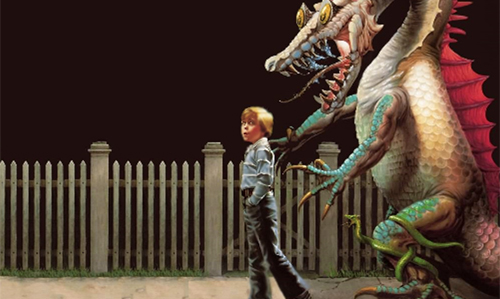
In grade school, those of us waiting for delayed parents would find various amusements. One such day in fourth grade (and in a religious school, no less), a small group of us went down a back hallway and through the Secret Door. The Secret Door was, to us, much like a door from Alice in Wonderland. Only, instead of leading to magical kingdoms with fanciful characters, it just led under the staging area for the church.
For us at that age, it really was a different world. Once crawling through The Door, which was only half our size, the under-stage area opened up to be high enough by far for us to stand upon entering. Then, like being in some sort of ancient ziggurat, we had to stoop lower and lower as we made our way back, beneath the inverted platform stairs.
Strewn around were various relics. Musty choir robes in dilapidated boxes. Stacks of tarnished offering plates. Broken pieces of ornate wood from pews, churning our imaginations as to just how they'd been broken. (Large parishioner? Act of God?)
Above loomed pipes leading to the gray, resin bottom of the baptismal tank, where I myself had been baptized on a frigid winter evening several years before. Church services and baptisms had been dutifully held during the surrounding weeks, despite the fact that the church had not paid its power bill. The building itself was bitterly cold, even for those out in the congregation, tightly clustered within heavy coats and stamping their feet as quietly as possible. But there I was, six years old, wearing only my swim trunks and T-shirt, shivering. This paled in comparison to descending the steps into the water, where the ice across the top of the pool had been broken up only moments earlier. My body shook despite the fact that more and more of it was melting into numbness, as I sucked in short, panting breaths, miniature icebergs floating all around me.
I've since thought that my encounter on this night was not all that unlike what passengers on the Titanic had endured. It's all good though. I was assured that my "willingness to sacrifice" meant Jesus loved me just a little bit more than everyone else, and would have my back at some future time of real need by way of reward.
But I digress. There we were – two girls, another guy friend, and me – sitting cross-legged in a tight circle in the Land Beyond The Door, playing a game.
A game of "Truth or Dare."
Well, for some reason I'll never understand given the particular company, at one point, I chose "Dare." (An omen of my life to come, it would seem.) And that is when I had my first kiss, technically.
I won't divulge too much about the female in question, but suffice it to say that she had long frizzy hair, glasses, a uni-brow, sour breath – and braces the metal of which was perpetually covered over with a strange, waxy orange substance that resembled (and may have been) the powder from cheese curls. The dare was that I had to kiss her -- on the lips – for a count of five seconds. And you know the bridging "Mississippis" were not regulation length.
Enter regret.
Well, at least the idea of regret.
Had I the opportunity to go back in time and un-kiss the girl, would I? Maybe. But I don't really think of that as regret so much as prudence brought with age. In reality, I came away from the ordeal quite in one piece (though I do still shudder at the recollection).
Moreover, I now have another zany tale to tell.
Many of life's less-flattering moments are this way. They result in experience and gripping party stories. No harm done.
Alas, if only our worst decisions were kissing the fuzzy-yellow-tongued girl in grade school.
Real life comes with more options. Harder choices. Bigger stakes. The potential for higher achievement is always paired with an equal risk of more devastating failure.
Words are hurled which cannot be unspoken.
Relational rifts are forged.
Trust is broken.
Marriages crumble.
The temptation of a moment closes doors for a lifetime.
Or we simply wish we'd done more when we had the chance.
What of regret then? I still hold to the notion that regret is an entirely useless, and thus wasted, emotion.

Now, remorse – that is useful, insofar as it causes us to see and admit the error of our ways. But remorse is temporary. It is a moment of realization, or perhaps even a process of grief. It instills wisdom and, with luck, changes future decisions. But it should eventually come to an end.
Where remorse lingers, it becomes regret. And regret has always seemed self-indulgent to me – a continual flagellation of sorts which we fool ourselves into believing somehow balances out our trespasses. Worse yet is when regret turns the corner into self-pity, or an attempt to garner pity from others. Perhaps if I remain sullen, decrying my past, others will be inclined to remind me of my virtues.
Again, I say -- useless and wasted emotional energy. It gets us nowhere. It changes nothing. If anything, it prevents real change from happening.
Beyond remorse, there is certainly room for movement with some similar words: restitution and reparation. Where remorse leads to realization and true sorrow, there are many times where a wrong can be made right.
First, the power of a sincere apology should never be underestimated. It always amazes me the number of people I encounter who live in regret; and yet, when asked, "Have you ever apologized?" the answer is some version or other of "no." More often than not, the seeming humility associated with regret is actually no more than a clever disguise for deep-rooted pride.
Did you lie about someone? Tell as many people as you can think of the truth of the matter -- yes, even years later.
Did you swindle someone, leave a debt unpaid, or turn financial matters to your own gain? Make the sacrifice and repay it now.
Nothing says, "I'm sorry" better than a sacrifice to right things as well as they may be righted.
I am not oblivious to the fact that not all wrongs can be righted. I recall one seventeen-year-old boy with whom I worked at a drug rehab. We had great rapport. But still, I could tell he was building up to telling me something big for weeks. Finally, I just put it out there: "You clearly need to say something. I'm listening. I won't judge or condemn you. I'll just listen." He sat silently, staring at his fumbling hands. His face flushed and then contorted as he began to cry, for what I suspected had been the first time in a long time. He went on to tell me that he and his younger half-brother had experimented sexually together a few years back. As he was able, I asked him for specifics, because this was likely the one opportunity he would have to get it all out there -- every awful thing he had done, that he believed about himself – and have someone still look him in the eye and love him.
This is essentially what I told him.
In the end, due to the nature of a past choice, the emotional choices of the offended or otherwise involved, a death – or a combination of these factors – remorse and restitution do not always result in reconciliation. Still, regret has no place. It changes nothing. Much as I suggest in regard to worry, once you have done all that can be done (which is often more than you think) -- you can do no more. Accept the consequences as graciously as you can. But choose not to live under the cloud.
Seek counseling. Live differently going forward. Love differently where you may.
But whatever you do, pull up the stakes of regret and move forward.

ties that bind

In Monday's post, I briefly talked about a time when, as heartbreaking as it was, I had to cut ties with someone I cared greatly for. In that instance, it was truly not a selfish decision. I was not acting out of anger. I was not feeling used or abused. And it was not merely the easiest choice. Rather, it was a choice that I sincerely believed was best for the young man in question.
The sad truth was that drug abuse was ruining him. Holding him down. I couldn't bring myself to allow the relatively pleasant and "normal" lifestyle he enjoyed with me to delude him into thinking that continued drug use would lead to such good things in the real world he would soon enter as an adult. So, when yet another episode of use and blatant lying occurred, I chose to send him packing, trusting that the hard reality of where he found himself would eventually speak more truth than my words were currently achieving. And as I've said – in doing so, he got the message. Today, he is happy and healthy.
This particular cutting of ties was done for the benefit of another person. But there are times in life when we must make the difficult choice to dissociate – or at least limit our time – with people for our own benefit, a measure aimed at allowing us to move forward toward positive personal goals.
If, for instance, I am serious about adopting a positive outlook in my life, yet a certain friend is constantly negative and sarcastic, I may need to make the decision to spend less of my time with this person.
Typically, I will attempt to have several positive conversations with this friend, explaining my goal and inviting them to join me. If I've previously been "guilty" of the same behavior, I call myself – not them – out on it. For example, I have said to people in the past, "You know, I've realized that I [not "we"] tend to cut other people down for the sake of humor or amusement too much, and I really want to change that about myself. Will you help me by pointing it out to me whenever you hear me doing this?" If my friend is also guilty of the offense in question, inviting him to keep me on my toes may be enough to limit his own sarcasm toward others, at least in my presence. If it isn't, I might point it out to him at a future time: "Hey, you can't say those things! Remember, you're supposed to be helping me stay positive toward people."
However, if this friend just isn't interested in my "new leaf" and continues to be negative despite my requests, I may suddenly begin to be unavailable more often, at times when we might normally have otherwise gotten together.
Making a decision like this can often be awkward or painful. It helps to view your choice as directly related to the other person's choices. They choose negativity, and so they choose not to spend as much time together with you. Conversely, were they to choose not to cloud the space with negativity when you were together, you would be happy to spend more time with them again.
This is not selfish. It is not unkind. Often, making the choice to cut ties is simply part of being responsible – planning not to get into trouble. Where a relationship can sustain it, an honest and direct conversation may be helpful, going so far as to say, "I'm really serious about change in my life, and it's difficult for me when we spend time together, because of the negativity that tends to be part of what we talk about." [Notice that I still do not speak in terms of "what you are doing," but rather of the behavior – "the negativity."]
Serious dieters clear the fridge and cabinets of snacks. Likewise, they choose not to go to book clubs that are bent on meeting at pastry shops or fast food joints.
Guys intent on saving their marriages don't hang out with their buddies at the strip club on the corner.
Drug users who really want to quit don't continue to visit crack houses where old friends hang out.
So it is for those who want to be intentional about adopting and maintaining a positive outlook and lifestyle. Some things just have to go. Again, think in terms of distance from behaviors and not people. You are not rejecting people, only their current choices that hinder your own.

web

Earlier this morning, I was helping my young friend Evan get a jump start on Chemistry before he starts the school year. Many high school students view chemistry as tedious numbers and formulas; but for me, it's always been fascinating. Of particular interest today was one of the non-essential side inserts in the book. Here is an excerpt (let the wonder begin!):
Strands in a spider web are about one tenth the diameter of a human hair. Yet ... the silk in the [golden orb spider] web's frame and spokes is stronger than steel, more elastic than nylon, and tougher than rubber. Scientists are always looking for lightweight materials with these properties, but they cannot set up farms to harvest spider silk, because a spider will fight to defend it's territory.
Instead, scientists use biotechnology to produce spider silk. Scientists have identified the spider genes that contain the instructions for producing silk. When these genes are transferred to goats, the goats produce milk containing spider silk. Scientists separate the silk from the milk, purify it, and then spin it into fibers.
©2008 Prentice Hall Chemistry, p. 43
OK, first of all … what the heck? Who knew such things were going on in the world, on both a natural and perhaps not-so-natural level? Furthermore, if you were not convince heretofore not to kill spiders, know all the more the wondrous little factory you are squashing if you do.
That said, getting this inside scoop on spider webs got me thinking back to last night. I was online around 11:00 when one of the kids I mentor popped up in a chat. We got to talking and, next thing we knew, we were heading off on a whim to see the after-midnight showing of Rise of the Planet of the Apes (which, by the way, was a pleasant surprise). Without giving too much away, there is one graphic in the movie that attempts to depict the exponential effects of a medical phenomenon. A dot of yellow light appears on a grid of sorts and from it, arms shoot off in all directions like spider legs. Where each leg touches down, another dot appears, growing new offshoots of its own, and so on. Soon, zooming out from the grid, the "spiders" and their legs have become a giant, interlaced web.
Recently, Pinocchio was turning up at every turn in my life. Now spider webs. What's the deal?
Rather than questioning, I decided to just with it.
I saw Chad off to Penn State this past Saturday. But during the summer, we had several talks about something that also reminded me of spider webs. Chad's musings went something like this:
Imagine if I could zoom out on my life and see a map of the world that accounted for both space and time. What if I were just one dot on this map, but I could see all of the strands that connected me to people I've positively affected in some direct way. Then imagine that I could see the strands from each of those people to other people that they have positively affected due in some small part to my influence, and so on. I wonder what I'd see – how far reaching in space and time one person's influence really is.
As I considered this would-be map of my own life, I thought with wonder that it very well might look something like a spider web or the grid graphic from Apes. It was a happy and humbling realization.
I'm convinced that when we allow ourselves to focus too much on our own little "dot" through me-centered thinking, investing most of our energies into making sure it glows brightest on the grid of our life, we actually leave a much smaller impression on the world than if we shine our light on the other "dots" around us.
Mother Teresa comes immediately to mind. She gave little thought to her own needs or even her appearance, so focused was she on devoting herself to serving the poor, hungry, homeless and diseased of Calcutta. She did not intend to make an impression or to "grow her web," as it were. She did not sit home thinking of what deep or wise thing she could say the next time the press were around. Her only thought was to help one more. And one more. And then one more. And yet, never thinking of herself, none can deny the influence she has had – and continues to have – on people the world over.
What do you see when you imagine the "web" of your own life? Do you envision it as small and sparse? Or expansive and inspiring?
You have enormous potential for positive influence. What may in the moment seem like only the smallest act of gentleness, kindness, encouragement or good will may have an immeasurable effect. Consider this until you believe it. Then, like Mother Teresa, look around you for just "one more."

returns
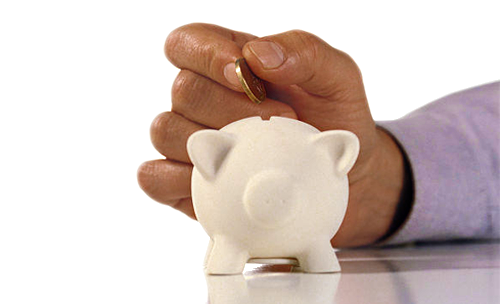
There's been a lot of focus on the stock market lately. I have to confess -- I don't know much about it. I've never owned stock, and so all of the uproar goes on largely unnoticed by me, since my day is not affected whether things go up or down. Just the same, it got me to thinking.
I talk quite a bit about investing in people. It's a phrase I and those closest to me use so often that I assume it's meaning to be generally understood. Yet it occurred to me recently that this may well not be the case.
In the typical sense of investment, one gives with the hope – and perhaps expectation – of gaining something of greater value in return. I invest $10 and I get back $20. Something to this effect.
Moreover, an investment at its best is assumed to be mutually beneficial. I lend you something you need now, and you return it to me with a percentage increase later. I help you succeed up front, and you share that success with me down the road.
Of course, as recent trends will confirm, investment always involves risk, as well. I give, as I said, hoping or expecting something in return – but knowing full well that I may get nothing in return. If you lose, I lose. It's par for the course.
In financial investments, there is research involved. I check you out, as it were. I only invest in those areas where the chances of a good return are relatively solid. However, once in a while, I invest in a new venture with no track record, because I believe in its merit and ability to succeed, though this has in no way been proven to me.
Investing in people is similar in many ways. Yet it differs on some key points, as well.
While I expect nothing, I do hope for a return and increase when I invest in people. But I do not expect to keep the profits. In a way, it's like taking some of the seed for my garden and tossing it over the fence into my neighbor's barren yard. While I hope to look over that fence and see growth begin, the benefit is not experienced in my own yard, in terms of personal increase.
At its best, investing in others is also mutually beneficial. By investing in friends, I develop solid relationships with people who are also willfully investing in me. Additionally in my case, by investing in teens, I have gained some invaluable adult friendships over the years, some that I know will last a lifetime.
There is also a now-and-later principle at work in interpersonal investments. Sometimes, I invest in a teen for quite a long time before seeing positive change really take root and flourish. In addition, there are many times when I am low on commodities such as perspective or peace, and friends "lend" me some of theirs. Later, when they are running low, I can give them some of my own. Sharing a good meal or favorite movie or late-night talk with a friend is of value any time, to be certain. But it does seem to have even greater returns when the particular timing of it helps to lift you out of a pit.
The returns when investing in people are not always direct. I don't give love to get love back. I may get love back. How wonderful when this happens! But even if it does not, there is still a return of love in a different way – that is, I have better learned to love. I have multiplied my own ability to love, making future successful investments all the more profitable. Likewise, though someone may not respond as I had hoped to my investment of patience or kindness, I have learned to become more patient all the same. More kind. More diverse and creative in my approach. And these things are always of great value.
As with finances, there is a risk involved when investing in another person. Those thrown seeds may not take root and grow. They may grow and be torn up as weeds. Or they may get nearly to fruition, only to be neglected, unwatered, left to be sun scorched. And this is always sad to watch.
Once in a great while, I do cut my losses, as it were. While I can honestly say that I have never given up on someone in whom I have invested, I have made the choice to withhold certain "revenues" where there have been deliberate acts of waste. For instance, I will not invest years of consistent time and energy into an addict who does not want to change. If you've been following the blog for a while, you may recall that I did this at one time with John, a young man I took in for a while, but who willfully chose to continue using and lying about it. For both our sakes, I had to make the heart-wrenching choice to put him out (I'm happy to say again here that he made it and is now a successful, grounded adult).
In such cases, however, I continue to invest my love and care. I cannot count the times I have had to say, "I can't help you any more right now, because you won't invest in helping yourself. But I will come and be with you where you are, cry with you in the gutter, or visit you in prison if that's how it must be for a while."
However, the wonderful truth is that, unlike money, personal investment banks don't deplete.
First, I can invest all of my love in each of several markets. It's really rather amazing, that I can love someone with all the love I have and also love someone else with the same amount of love. Countless parents with several children will concur.
What's more, though I may invest love in many human directions, whether that "love stock" skyrockets or plummets, I will not run out. There will always be more love I can choose to give. More patience. More encouragement. More hope. And so, I can invest fully, confident that no matter what happens, I will have more to invest the next time, if I so choose.
farewells
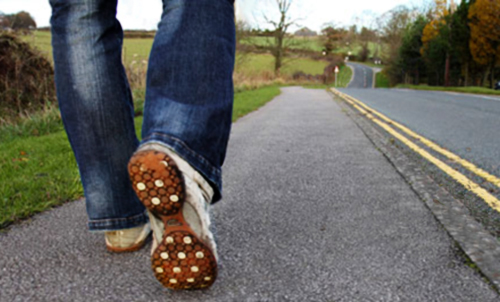
The end of summer has always been a bit melancholy for me.
Every year when I was a kid, we would rent a house on Cape Cod for vacation. Crossing the Bourne or Sagamore Bridge, or even waiting in the car for my parents to retrieve the key from the rental agency, felt like a beginning.
Time went slowly in the best of ways during those weeks. I would be able to read through several books, sitting in a low chair with my toes digging into the wet sand as the tide moved up or back, necessitating a move every so often to be sure feet were occasionally splashed. Outdoor showers were the norm. Extended family clam boils with corn on the cob seemed to last and last. And naps were frequent. There was no sense of urgency, no thinking about the next day while the current day was in progress.
But then that last day would come. And this day went quickly. Whatever book I'd been reading lost interest, or perhaps I just lost focus. The sky looked different. There was even a change to the air. I could swear I smelled fall and school coming. And it would always seem much too soon that one of the adults would announce that we'd better head back. I remember the feeling of brushing off my feet with a towel in the parking lot before getting in the car, purposefully not doing too good a job, so that I could keep that sand with me even just a little longer.
I did not sleep well that final night. I thought. I reflected. I often cried silently (though I don't think anyone knew). Early on the morning of our departure, I would clip a piece of rug from some unseen corner or peel a fleck of paint from inside a closet in my room. It didn't much matter what it was, as long as it was part of the house. And I would keep these things in a small baggie or container. Once home again, it was days before I could put that keepsake away, leaving it by the bedside and looking at it until I fell asleep nights.
Even as an adult, I have an evening every year where I say goodbye to summer. I go to the ocean alone and listen. I think about that year's fun and adventure, times spent with friends. I make no attempt to stifle tears that may come. They are good tears. I am thankful. Before I leave, I really do say goodbye, as if to a dear friend who is only going away for a while.
The end of summer brings other farewells each year, as well.
Though I'm no longer a kid (at least on the outside), my birthday is still a special time for me. But by mid-August, the day itself and the last of the celebrations with friends have passed.
Perhaps the most poignant farewells for me come by way of seeing students off to college. Seeing off new freshman marks the end of an era. It solidifies the fact that "my kids" are now adults, and our relationship will never quite be the same as it had been for the last four to six years. A new relationship is gained, but the transition is an emotional one for me nonetheless.
Today, I saw off two juniors, who are now adult friends. I had lunch and some good conversation with Tim (and, for those keeping track, yes, I had another ice cream with him afterward). Then I went straight off to help Chad pack and load up the little convertible that he and his mom would be taking out to Pennsylvania in a mere hour. And though I go out to visit these guys at their schools throughout the year, this always feels like the end of summer camp all over again. Things will change. For a time, we will necessarily miss sharing more of the little daily things that make up our lives. Late night talks by pools or in deck hot tubs or by the ocean, staring up at the sky without thought to the hour, will not come again until next year.
When these times come, I find myself thinking a slightly humorous though comforting thought: Better to miss someone you wish would stay, than to have someone stay that you wish would leave.
So I say my farewells. I will allow myself to feel whatever accompanies the changes, mindful of this also – that the pain of loss is directly proportional the joy allowed in and the love invested.

young love
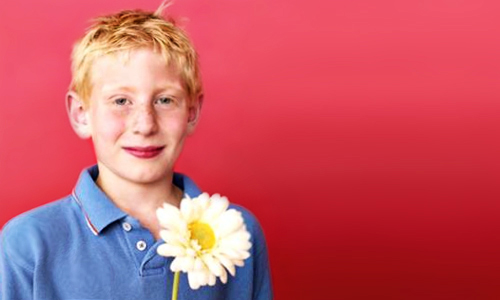
Yesterday, I was handed a love letter. However, the letter was not meant for me. Rather, it was written by a young teen boy, and I was asked to read it and then give my opinion of it.
Oh, the pressure. And the honor.
First of all, the letter was printed by hand on wide-ruled paper. In pencil. Before I even began to read the words of it, my thoughts were many. Chiefly, they were that this boy is one of the sweetest and most genuine people I know.
The object of his affections was a girl he had met during summer camp, which he had attended for six weeks. In the very first paragraph of his three-page letter, he simply and unabashedly confessed his love for her, exclaiming that this was the first time he had ever felt this way, and so he thought he'd better do something about it.
The rest of the letter pondered in detail the many reasons for which he loved her, reading like a modern-day Robert Burns. Was it her walk that mesmerized him so? Her voice when she sang that enraptured him? Or her laugh, which he confessed made him feel "more at home than anything else in the whole world"?
At the end of the letter, after his starry-eyed musings had run their course, he graciously permitted that it was all right if she didn't love him back. He ended with, "It's just that I'm afraid I may only ever feel this way once, and so I'd rather take the chance and say something, than to have the lifelong regret of never having tried."
Alas, you'll recall that I was asked for my opinion on whether or not he should send the letter to this girl (by postal mail no less, only adding to the endearing scenario). Was it all just too much? Was he setting himself up for a fall? No one wanted this earnest fellow to get his heart broken, least of all the boy himself.
Every good writer knows the importance of tension. And so – I'm not telling you what I shared with him by way of advice concerning the letter. I will, however, reflect on a few thoughts I had in the process.
Is it truly "better to have loved and lost than never to have loved at all"?
Which is the worse state of affairs: to risk being rejected for who you truly are? or to risk being accepted for who you are not?
Is a pure and heartfelt expression of love ever wrong?
Does someone so young really even know what love is, to go on gushing about it so? And is it all right if he doesn't truly know what love is, but goes on gushing about it anyway, simply because that is what he is feeling today and all that he knows love to be?
Who among us has really cornered the market on "what love really is" anyway? And if we have, is it then that we finally find ourselves expressing it with abandon, regardless of the consequences?
For all of my questions, I am most interested in knowing the answer to only one: What if she, as young and naive in the ways of love as he, were to find him rather charming in his boyish sincerity?
What if, by some chance, her answer to his big question – is yes?

love hate

When I was a kid, I ate everything set in front of me. Spinach. Liver and onions. Meatloaf. Lima and wax beans. Brussel sprouts. I ate them all without a complaint. I even liked them.
Alas, my sole nemesis when it came to food – was beets. I just couldn't seem to stomach them. They tasted like mud with a faint hint of baby formula. It was for this reason, of course, that it also seemed they were part of every meal. As I grew older, hosts would ask me if I liked this food or that, and I would always say the same thing: "I'm easy. I like everything. Except beets."
Once in college, when I sort of broke up with a girl I sort of wasn't really even seeing for not quite six weeks, she showed her disapproval in some uniquely memorable ways. During Christmas break, she sent me a crafty little hand-made postcard. On it were glued magazine clippings of a skeletal, starving child and a torn globe with a mushroom cloud coming out of it, drawn in red crayon. A real, dead fly was also attached, squashed and discoloring the paper beneath cellophane tape. Scrawled across the card in black crayon was her message:
I HOPE YOU HAVE A MISERABLE CHRISTMAS! THIS IS THE BEST YOU DESERVE!
I met with another demonstration of her disapproval one morning when I came out to my car to find an industrial-size tin can of generic beets sitting on the hood of my car. The attached note was reminiscent of the Christmas wishes:
THIS IS THE BEST YOU DESERVE!
One might be surprised to learn that the person responsible for these "gifts" was 21. At times, I have to strain to remember her full name. This is due to the fact that I have only ever referred to her since graduating college by the code name "Psycho Chick."
Eesh. As if childhood weren't enough to cause a guy to hate beets.
Somewhere along the line, I began to study Russian. And even the most cursory introduction to the culture will make clear that Russians love their borscht – beet soup. Thus, enamored with both the language and the people, I set about the goal of learning to like beets. (Besides, given my personality, I was never really comfortable with letting one little vegetable best me.)
Today, whenever I visit a more extensive salad bar, you will see pickled beets on the plate.
Beets and I have a complicated relationship. But I've learned to love them.
Another birthday is fast approaching. This has me thinking again about last year's birthday, when Chad treated me to dinner. We were both up for an adventure, and so decided to choose a restaurant at random from an app on his iPhone. This landed us at an authentic Nigerian restaurant about 45 minutes away.
We were the only customers.
I talk more about this night in the book, but in short, we asked the genuinely friendly waiter to just surprise us and bring us an array of things he himself would find delicious. Among the delicacies proudly presented to us were bitter greens with tiny pieces of bone shards for seasoning, a whole gelatinized ox hoof – and tripe (please do humor me and click the link).
If you don't already know, tripe is the stomach or intestinal lining of an animal. In the case of our visit, it was unadorned with spices or sauce. There it sat, in all its sponge-like glory. We each took a bite. Knowing its origins, one will find it no surprise that it tasted like poo. Yet, out of respect for the hospitality and care of our host, we forced ourselves to finish the entire thing. We laughed quietly together as we choked it down, bite by bite, holding our breathe like little kids taking cough syrup.
I did not like tripe. I might even go so far as to say that I hated tripe.
And I loved it.
I loved it because it was a unique experience. It was shared with a close and daring friend. And it is now yet another treasured memory of a chance taken, a reminder that we are alive.
A few days ago, Chad and I had dinner at an Indian restaurant on a whim – one we've visited before but which we do not frequent. Our waiter, Burak, was Turkish and had the best voice. He taught us to say "thanks" and "you're welcome" in his native language. The latter was approximately forty-three syllables long, but we gave it our best shot, much to Burak's amusement and appreciation.
In addition, to make this particular visit unique, we decided that we would order a smorgasbord of dishes we had never tried (except for the ginger honey nan, for which I'm certain there is an actual rule somewhere stating that it may under no circumstances be passed up).
The bhel puri was addictive. We both agreed that we were doomed from that day forward to be stricken with random cravings for it.
The mango pickle, on the other hand, despite its deceptively enticing name, was … er …
I like to consider myself as having a better-than-fair facility with words. Yet I'm having real difficult coming up with an accurate way to describe the taste of mango pickle. I can only say that, upon chewing the first bite, my left eye began to flutter, then closed and would not open for some time. I didn't ask Chad, but I'm nearly certain that my facial expression resembled that of a baby who has just squished a rotten grape in his mouth, and yet hasn't yet the language to express his dismay.
Upon seeing this reaction, Chad did the logical thing. He immediately also took a bite. I love this about Chad. We both agreed that it was the strongest tasting food either of us had ever eaten. In our case, that is saying a lot.
Because of the surrounding experience, I also now have soft spot for mango pickle, despite the taste.
I have this love-hate relationship with many things in my life.
Horseflies are highly annoying. And yet they remind me of beaches and summer and being a kid.
Cigarette smoke smells foul and causes my asthma to flare up. Still I love it, because it reminds me of Brandon and John and other smokers I have loved along the way.
I could go on, naming dozens of things I hate. And love.
Of course, life is filled with many things we may hate more than beets and cigarette smoke. Bills. A dead-end job where we may be overworked and under-appreciated. Family reunions. Abuse in our past. Yet I still believe, if we are willing to face the challenge, that we can find something to love in the things we hate.
Bills signify that I have luxuries most of the world will never enjoy, for instance. In addition, is there a spouse or friend with whom you could make bill paying a sort of date together? That's ridiculous, you're thinking. Bill paying can't just be 'made fun.' You really might be surprised just how far optimism and creativity can go toward transforming the drudgeries of life into memorable moments.
But what of abuse? Certainly, we cannot just decide to be happy about past hurts that have been inflicted upon us. No. But I can attest that it is possible to embrace such experiences as part of the wholeness that is you, remembering that the past has no power over you in the present. To be thankful for your unique story and its power to help others along the way, if you are willing. To love who you have become despite your past. Or perhaps because of it.
As with most things, I believe that finding ways to love the things you hate all boils down to perspective.
Perspective and choice.

rich

A few days ago, I stopped at the convenience store up the street at 5:00 AM for my daily pre-gym ritual. My shopping path is down to a science by now, and within a minute, I was plopping my wares down on the counter: one 32-oz. Gatorade, one strawberry milk, and one banana protein shake for after the workout. The total came to $6.87. I swiped my debit card and the register began to beep. Dave, the cashier, looked at me with a quirked mouth. "Do you want to try it again?"
"It didn't take?" I asked.
"It says 'insufficient funds,'" he said apologetically, as if he'd somehow caused the problem himself.
"That's odd," I said. "I was sure I had plenty in there. Yeah, let's try it again."
Beep.
"No luck," Dave said. "Do you want to put it on a different card?"
I exchanged my debit card for a little-used credit card, made the purchase, thanked Dave and left the store. Once in my car, I called the automated line at my bank. Sure enough, my balance was $5.42.
It will be a little hard to explain to some readers why I smiled instead of panicking, at finding this meager sum as my balance. But I'll try.
Three years ago, I was working at a school for the deaf – the school where I'd worked with the amazing little boy, Brian, whom I told you about in a recent post. I was well-liked and trusted by staff and students. I had freedom to create and implement services as I saw fit. I was paid well and had full benefits. And I loved the kids and my work there.
The problem was, I loved something else more.
Since high school, I have mentored teens on a "volunteer basis." And, while I have been employed in many other professions over the years, mentoring has always been my calling. My first love. For me, volunteering has never been an hour-a-week outing with one child. There is great value in this, and I encourage it! But my volunteering has always been a full-time investment with dozens of kids at any given time, even more if you count larger groups.
It's difficult to give a scope on what mentoring looks like for me. I am "on-call" 24 hours a day. I talk with kids a lot, at all hours, about whatever is on their mind. Family. Dating. Choices. School. Loss. I help facilitate family communication and mediate conflicts between friends. I teach music and language and writing and memory skills – whatever will enrich teens and create opportunities for open dialog. I advocate for students and parents, regarding educational needs in their schools. I give driving lessons. I've picked kids up, dropped them off, bailed them out, and taken them in.
I love this with everything I have in me. It's like oxygen.
Four years ago, I had reached a breaking point. I was investing in more teens than ever before and in more intense situations. I had capped my work week with the school at 24 hours, but they were wanting more of me and my position: full-time hours along with training, travel, and speaking engagements. I could no longer do it all. I was physically ill, I wasn't sleeping, and my energy was depleted all of the time.
Hard and painful decisions had to be made.
The obvious choice was that I would finally have to give up mentoring. With me, it's all or nothing. And I could no longer give my all. The reasonable choice – the responsible choice – was to invest more in the work that paid the bills. I did love the students I worked with, I was good at what I did, and I had a lot going for me there, I told myself. But the thought of really giving up mentoring – my passion – was excruciatingly sad. Still, doing both was no longer an option. I just – couldn't.
I'm certain that I cannot, even as a writer, accurately express the magnitude of the choice I faced.
Parents, teens, and "past teens" who are now adults themselves, reacted strongly to the news. "You can't give up! It's what you do. It's who you are. It's what you're made for." The wave of support and appreciation was overwhelming. This only made the inevitable decision all the harder.
Over a birthday dinner at a fine restaurant, my friends Bud and Dib were the first to suggest the highly implausible alternative: "What if you just took the plunge, resigned from the school, and mentored full time instead?"
I could think of a dozen reasons that this didn't make sense. How would I survive? And yet, these two people who could not love me more if I were their own flesh and blood were suggesting it. From their mouths, it almost sounded plausible.
"You've made such a difference in our own kids' lives," they continued, "and many, many other people feel the same. We'd certainly be willing to help you and we know others would, too."
My eyes glassed over and I felt woozy at the sheer magnitude and joy of that possibility. But I felt equally queasy about the idea of asking people for money in such a way.
During the next week, I lined up ten or so counterarguments – things that would have to fall into place if I were to make such a drastic life change.
By way of example, I'd had the same doctor since I was a child, and he was absolutely wonderfu – making time to see me whenever I needed him, whether he had room in his schedule or not. Staying late. Using his dinner breaks. If my health insurance lapsed, I'd lose him and never get back on the list, I told myself. But that very week, I got a letter from him, saying that he was leaving the practice after decades, to do medical work overseas. The doctor issue was no longer an issue.
Systematically and in short order, each of the barriers I'd presented was removed. Every last one. It was uncanny.
The last test was the school. It was mere weeks before the students would arrive for the start of another year – and I would have to resign, leaving them without a specialist in my field. How would they respond? Yet when I told my boss, a friend whose own children I had mentored many years prior, her reply was gentle and gracious: "We can't replace you. Even if we could fill the position, we won't be able to replace what you brought to this school. But mentoring is your heart. It's your life. Will will miss you. Now go and do it!"
And so I did.
That was three years ago next month. I have not asked anyone for money during this time, and yet the bills continue to get paid, thanks to the timely generosity of friends, and even strangers who simply believe in what I'm doing. It's taken some adjusting, for certain. But it has been an amazing journey. My friendships have deepened. I've learned more about humility than ever before. I wake up every day full of life and enthusiasm, getting to do what I love. Knowing that I am making a difference.
And I am happy.
Some may say that I have less. I honestly can't see it that way.
Every piece of furniture in my apartment was given to me.
This means that, as I move about my home, I am constantly reminded of the many people who care for me.
My car has over 250,000 miles on it and is need of extensive repairs.
I have transportation that has not failed me yet. I have no car payment. My car holds a lifetime of memories, of doing things that matter.
I have no health insurance.
I have been healthier in the last three years than any period prior, and have not needed to see a doctor. For the small stuff, I have several dear friends who are in the medical field, who are willing to have a look (though John usually just tells me that I have the dreaded B.S. – "Baby Syndrome").
I do not have extra money set aside for vacations or luxuries.
I was treated to a nine-day, all-expense-paid trip to Paris just last year, and with the most wonderful people -- a vacation those wealthier than I would envy and even the wealthiest could not hope to repeat, as far as the human element. What's more, visits to friends' homes are true vacations that I am fortunate to enjoy often, and where I am treated with care that surpasses the finest of hotels.
I have no stock portfolio or 401K. And, yes, my bank account can dip to dollars and cents.
I have more than I need of material things. I share meals around tables filled with warmth and laughter regularly. As for the things that matter, my present is brimming and my future is secure.
For my last milestone birthday, my closest friends held a dinner in my honor. I was seated at the head of the table, where a golden crown was placed on my head. Many hugs were exchanged. Teary toasts were given. Gifts were filled with thought and care. Faces were lit with joy all around.
Birthdays are a time for celebration and reflection. With my next birthday only weeks away, I look around me at all I have.
Truly, no king is richer.
256
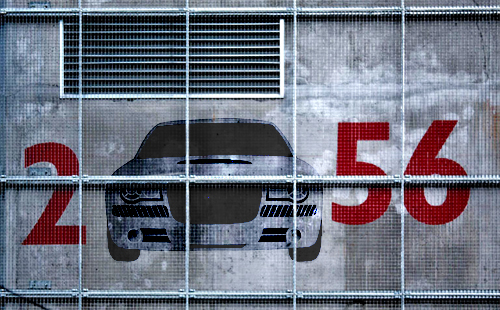
I mentioned my car briefly in yesterday's post. My previous car – the one that John mangled early in its life – was Frankensteined back together and wound up lasting me to 251,000 miles. Even then, it did not die. I traded it for my current car: a 1999 Nissan Altima, which has already broken the old record and will pass the 256,000 mile mark this week. My mother says that the unusual durability of my cars is due to the fact that I have been assigned "really good car angels." I am not inclined to start arguing with her about this.
A few days ago, I called one of the kids I mentor, to see if he wanted to join me for a late ice cream. Ever the adventurous one, he was up for it. When I arrived to pick him up, I chatted quickly with his dad at the door.
"What's that sound," he asked with furrowed brow.
"What sound?" I replied. I didn't hear anything. He stepped around me out the door, to where my car was idling.
"That sound," he said, matter-of-factly. "That's not good. You need to get that looked at. Sounds like a [insert gobbledygook of automotive terms]. I'd hate to see you get stranded somewhere if that lets go."
Now that he'd pointed it out, I suppose my car was making a sort of rattling/clicking noise. I honestly don't hear it anymore. And, like I said in the last post, it goes right away when I crank up the stereo.
Of course, whatever that noise might be, it is certainly not lonely in my car.
When I turn right (or is it left?), the CV joint on the front right wheel clicks and grinds. And any time I go above 40, there's a sort of fwip-fwip-fwip-fwip noise caused by bearings out on the left. Any slight bump or irregularity in the road results in a squeak and crunch, since the shocks (or is it struts?) in the back have been shot for some time.
Then there are the noiseless culprits.
My catalytic converter needs to be replaced before my September inspection. And the car hasn't had working A/C in a few years. Or, rather, it has "sometimes A/C." It works for five minutes. Or three. Or fifteen. And then it doesn't. If I turn it off for ten minutes, it might come back. Or it might not. The might nots typically happen on the 90-degree days with matching humidity.
I don't even notice new scratches, dings or dents. The body rot and paint fading kind of hide them. The rubber all around the windows looks like rats have been nibbling it. And the area around the gas tank lip, where the pump inserts, is rusting through. Last year, at inspection, I had a number of sensors replaced, along with needing to have metal sheets soldered in places where the flooring under the carpets had holes rotted in it.
For some time now, I've felt quite lucky at the end of each day that the old gal is still ticking. (Er … maybe I shouldn't use another onomatopoeia, given all the other noises emitting from the poor thing.)
I apologize if all of this is sounding like the equivalent of folks getting to that age when conversation pretty much consists of enumerating one's aches and pains in detail. So what's my point?
Well, my point is that the car's woes – aren't. Aren't woes, that is. Well, they are, I suppose. They exist. And I'm aware of them. I just don't have the funds to put into anything but the most urgent of repairs. But when I think about my car, I don't think about all of that. Honestly, I don't.
I'll tell you what I do think of.
I've had this car for nearly 10 years. During that time, I have had hundreds of friends and kids in and out of those now-dented and scratched doors.
Sodas have been spilled on those carpets by boisterous boys. And many a fry has been left under those seats – surprises I've found only much later.
We've laughed and blasted music and sang together at the top of our lungs in those seats.
The back seat and trunk have held more lost-and-found items of clothing than I can count, as well as board games, fishing nets, beach chairs and coolers.
The ashtray has held countless coins that have been scraped together (along with whatever we could find next to those fries under the seats) to buy ice cream cones.
The gas from many a gift card – generously given by friends who believe in what I do with that car – has been pumped into that rusted tank.
I've perfected my calm-and-steady voice while inwardly screaming in fear for my life, during road lessons for scores of new teen drivers.
We've driven to beaches and movies and pizza joints. We've made road trips to and from colleges and, sometimes, wherever the road took us for a while.
Many late-night conferences have been held in that car. Deep talks. Meaningful talks. Breakthrough talks. Sometimes inside. Sometimes leaning against the off-kilter hood under the stars.
And many tears have been soaked into the cracked leather of those front seats.
That is what I see when I look at my car with its 256,000 miles. Every mile holds a story.
And so, rather than champing at the bit to be rid of it, I'll be a little sad to see it go. In the meantime, I'll trace those scratches fondly with my fingertips and continue making one more memory – and one more – until it's time to say goodbye.
As always, I'd love to hear your thoughts, stories or questions. I invite you to leave your comments below.