

after happily ever

How do you hold onto grand ideals – the way you wish things were – in the middle of a less-than-ideal reality?
I recently visited my brother and his family in North Carolina for a few days. While there, his fiancée wanted to plan some outings with my mom and me, and among them was going to see the newly-released live action movie version of Cinderella.
Make fun all you want – I enjoyed it.
I was talking with my friend Chad last night over FaceTime, and in amongst the three hours of conversation topics was the somewhat odd way my brain works. Case in point: while I enjoyed Cinderella from a sheer entertainment standpoint, my brain was also simultaneously trying to process why I enjoyed it – what about the production, cinematography, score, dialog and actions combined into that feeling of enjoyment. All the while, I was enjoying the reactions from my mom, soon-to-be-sister-in-law and nephew – and considering the particular reasons each of them was enjoying it, as well.
Sound exhausting? I’ll be honest – it can be. But most of the time, it’s just “me being me”; and it produces some interesting insights.

julie and julia (and me)
Where to begin...
My writing chops feel a bit like our first glimpse of the Tin Man in Oz.
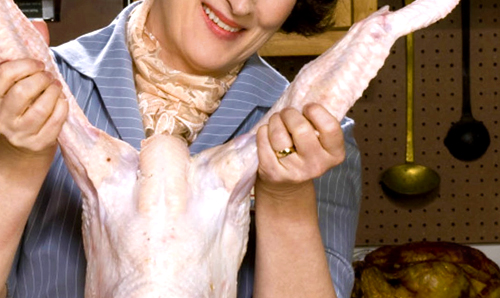
Last night, I finally got around to watching the wonderful film, Julie and Julia. When I'd first heard tell of the film, I couldn't envision what all the fuss was about: "Girl Cooks Her Way Through Julia Child's French Cookbook." It just didn't do it for me.
Then I watched it. I can only assure you that it is so much more than at first it seemed.
I laughed. I cried. And all for the best of reasons.
Now, I realize that this isn't intended to be a movie review blog. Fear not. What I hope to convey here are but a few of the many ways in which the film provided glimpses and reminders of real life and the things that matter. Rather than be long-winded or pedantic, I'll simply give you the short list, which I trust will whet your curiosity – and appetite – just enough to spur you to enjoy the film for yourself if you haven't already.
1. Meryl Streep is amazing (all right, this doesn't technically fit into the category of "glimpses and reminders of real life and the things that matter," but I just couldn't go any further without mentioning it).
2. While Julia Child (for those fortunate enough to remember her) was largely known to us for her eccentricity, her characteristic warble, and the small space we saw her occupy in her television kitchen and dining room, she was a complex, wonderful and fascinating person. Tenacious. Willful. Romantic. Positive. It was a good reminder, once again, not to ever ever see people as two-dimensional or defined by the role for which we might happen to know them in moments. Teachers. Parents. Children. Police officers. Store clerks and bankers and flight attendants. And the "loser" at the end of the bar. We are all real people with multifaceted lives – people worth knowing more about.
3. Julia Child was not a life-time chef nor born to chefs. She just decided she wanted to cook – and be good at it – because of her personal experiences with the food of Paris. She began this pursuit at nearly 40 years of age, at a time when the culinary arts were dominated by men. Against the odds, she set her heart on something and, through hard work and love, became a world-renowned figure. It is truly never too late to find something you love to do – and do it. Julia is quoted as having said, "Eat well. Live Big. Bloom late." This seems to me a wonderfully inspiring motto by which to live.
4. In a day when eating is often for all the wrong reasons – driving with our knees, trying to keep the Big Mac sauce from plopping onto our laps while we cram it down in the car between stops – this movie was a great reminder to continually be intentional about enjoying the simple things in life. While in Paris, Julia once described a meal of oysters and fine wine as "an opening up of the soul and spirit for me." Remember – this was before she had ever poached an egg. Rather, this enjoyment of the simple pleasures is what inspired her to want to cook and to do it well. Does it seem a great stretch for you to be the type to enjoy food this way? Start with deciding only to eat when you have time to taste it. From there, anything is possible. (Note: I've also found that spending as much time as possible with others who've learned to enjoy the simple things is invaluable.)
5. Both Julia and Julie had people who absolutely adored them. And some that hated them, seemingly making it their sole goal to oppose them. Why? Because Julia and Julie were passionate about something and succeeding at it. And best I can figure, this just ticks unhappy people off, for some reason. The film bolstered my resolve to keep my course set, to do what I do because I believe in it and love doing it, and to give as little thought as possible to the naysayers and troublemakers along the way.
6. Julia's world-changing book, Mastering the Art of French Cooking – was a whole lot of work. In the days before computers and spell-check, using manual type and carbon copies, it was all the more so. She faced the difficulty of co-authors shirking duties. She experienced the highs and huge disappointments of publisher interest – and then rejections – before the final elation of seeing the book go to print only many years later. Likewise, the film's other heroine, Julie, struggles through keeping a daily blog for one year, as well as the intensive cooking commitment involved (524 recipes in 365 days!). All of this reminded me of the joys and struggles I myself have faced in the writing process. But more so, it reminded me to remind us all – that anything worth having is worth fighting for.
Now, in the spirit of so many of my previous blog posts about taking chances and experiencing new things – for Pete's sake, see the film, will ya? (Yes – guys, too. No one will tell.) Love it. Hate it. Makes no difference. The point is to keep trying something different. To challenge yourself. To stay open-minded. To think new thoughts. To broaden your world view.
Or maybe even to try cooking a new dish.


life: the movie
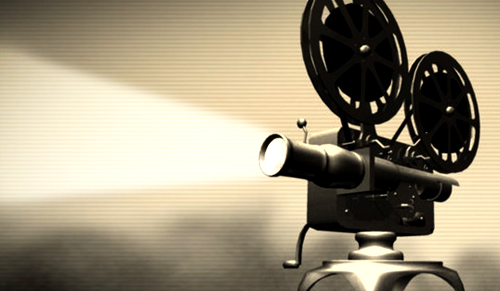
I recently read a book by Donald Miller called A Million Miles in a Thousand Years. It got me thinking. To paraphrase his preface, imagine going to a movie about a guy who goes to college and gets good grades so that he can get a good job. He graduates, gets the job, but wishes he had a better car. So he works longer hours, moves up the ladder, and finally, at the end of the movie, he is able to get the car he wanted. He drives off in his car into the sunset.
Would you watch this movie? How long do you think it would hold your attention?
Miller proffers this supposition: if it would make a snooze-fest of a movie, it makes a snooze-fest of a life.
Miller actually found himself in a position few of us ever will. Movie producers did approach him, wanting to make a movie of his life, based on some things he'd written in a previous book. However, at every turn, the producers wanted to change the actual facts of Miller's life. They wanted him to have worked a more interesting job. To have had more love interests and tension. To have done more noteworthy things with his time, and had more interesting interactions with unusual people and such.
At first, Miller interjected, reminding them that this wasn't "the way it really was." But they continually told him that it wasn't important what actually happened, but rather that it "made for an interesting movie, one that people would want to watch."
Despite being an established writer and public speaker, Miller realized that, as a matter of fact, his life was extremely uneventful and mundane. He did the same basic things every day, staying predictable and safe. It was then that he decided to intentionally take steps in order to live a different version of his life. And with that decision, he began to accomplish more than he ever thought he could. From hiking the treacherous road to Machu Picchu, to biking coast to coast to raise money for charity, he turned his life into something that he and others might actually want to watch. Something filled with drama and mystery, romance and adventure.
Of course there are real movies that do draw an audience, but not for reasons we'd want our lives to be known. I'm not certain that farcical teen dramas, a la Mean Girls, are the goal to which we should aspire. And Bonnie and Clyde, while exciting in its own way, doesn't seem quite the thing either.
While reading Miller's book, I asked myself if anyone would want to watch the movie of my own life. And, do you know what? I actually think they would. It would have pain, for sure. But also triumph. The characters would be fascinating. No one would be able to guess what would happen in the next scene. Even I couldn't. I like that.
How would the movie of your own life look if it aired today?
Are the dialogs riveting, or repetitive and stale?
Would the action be suspenseful, or cloyingly predictable?
Would the plot hold anyone's attention, or would they walk out, demanding a refund?
If your life-in-movie-form wouldn't be quite award winning, remember that you always have the next choice. The choice to thicken the plot. The choice to add new and interesting characters to the cast. The choice to rewrite the script, day by day.
Here's to Take 2.
