

(re)view

My mom joined me for the first two weeks or so of my extended vacation to Naples, Florida. One of the many outings we enjoyed together was a three-hour tour (just like Gilligan’s Island!) by boat through the Ten Thousand Islands of the Everglades mangrove forests to a remote island where we could go shelling for a while before returning.
Before I tell you more about our day, I’m going to share with you a review someone left online of this very same tour they’d taken just a day or so earlier:
Nothing special
Probably the most disappointing [cruise we’ve taken]. We spent most of the time traveling to the remote island that really was no different than the beach at our condo. When we arrived at the island, we were on our own to explore, so if there was anything special there, we missed it.
We saw a few dolphins and some shore birds. That’s it. This cruise was a bust. I would not recommend this tour.
Now, let me share with you my own review:
Perfect Morning with Mom
The staff and crew were energetic and personable. We had good personal conversations with several, and they love what they are doing, which makes a difference. Our captain (Dave) and mate (Jack) were terrific.
We saw lots of wildlife, and Captain Dave stopped often for us to get great views, photos and videos. On our tour, we saw burrowing owls, snowy egrets, herons, cormorants, pipers, skimmers, limpkins, pelicans, osprey and pink spoonbills; three manatees; skates; and a huge pod of dolphins that were not shy, many of which swam and jumped in our wake or beside us for a while. We had enough time on the island to collect a good assortment of “keeper” shells, one of which I’d never found before.
Even without the wildlife and shell haul, the boat ride itself was fun, relaxing and surrounded by beautiful views.
I went with my mom, and we both had an excellent time.
How is it that such a dismal review and a raving review could both have been written about the same tour?
Before I answer that, so that you don't think I was just being overly kind in my review, allow me to share some pictures with you of what my mom and I experienced (click to enlarge individual pics on mobile):


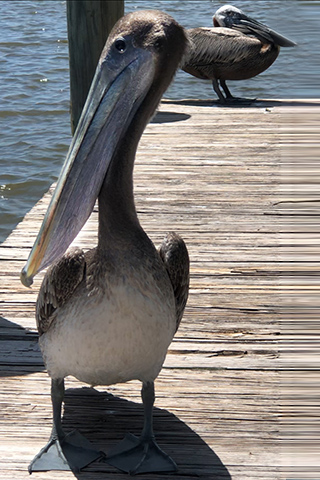


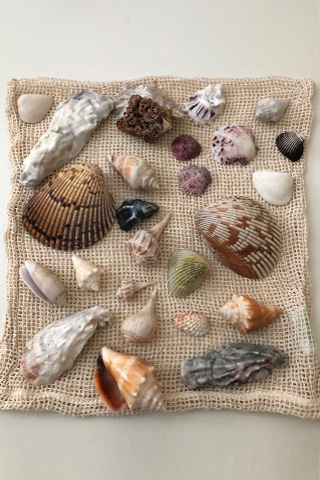






First, I submit to you that both reviews were TRUE—true for the person who wrote them.
What’s incredible to consider, however, is that the actual tour itself—the ride, the views, the wildlife, the crew, the island—were likely just about the same for both reviewers.
That leaves only one explanation for the difference in experience.
Perspective.
Unfortunately, the word “life-changing” has been so overused at this point that it’s lost any real meaning. I can only say that to master the art of changing one’s perspective is central to changing one’s life. What’s more, changing our perspective lies entirely within the realm of our own choice. And that means that whether you live a one-star life or a five-star life, for the most part, is up to you.
You can’t blame it on the boat captain (or anyone else) if you miss out on the special moments all around you, wherever your little island in life happens to be.
Please know that I'm not claiming to be somehow better than the other reviewer. I've simply put in the time and practice to become better at something—a particular life skill that anyone can learn.
In April, I released my third book: Alternate Reality: The Better Life You Could be Living. Let me end this post where that book begins:
introduction
IT SEEMS TO ME that the potential for happiness or misery exists in about equal proportion in the world. No one is immune from either. Likewise, I see people experiencing what seem on the surface to be parallel circumstances and yet exhibiting very different reactions to them. One man is whistling merrily as he strolls along a busy sidewalk while another is scowling with hands stuffed into his pockets. The couple to my left is sharing baby photos and laughing warmly with a stranger at a restaurant, while the one to my right is grumbling about the wait. The third-grade teacher in Room A is excited for her students to try out the new math game she created last night, while the teacher in Room B across the hall is sighing and counting down the minutes until the end of the school day. This family’s bonds tighten when their mother passes away, while that family frays and falls apart in the face of their own such loss.
There’s an endless body of evidence around us, pointing to the conclusion that life is not merely about what is, but about how we choose to tune our attentions.
I know some great photographers. And I know some not-so-great ones. As with most art, I’ve found that the difference between the great and the not-so-great does not lie in the sophistication of the available equipment. Pictures taken by one photographer with a disposable camera can be breathtaking, while those taken by another with a top-of-the-line setup can fall flat. Rather, the difference lies in the use of fundamental skills. In a creative eye. And in a certain amount of patience.
In life, we are all photographers. We are not handed the images that must fill our pages. We can walk around a situation, setting up the composition of the shot we’d like to capture. We can wait for clouds to shift so that a particular light will fall on a subject. We can choose to take up the frame with more of this and less of that. To zoom in on one thing and not another. And, as with a camera lens, the choices we make will cause some things to become clearer, while others blur into the background.
It’s a matter of focus.
As far as I’ve ever seen (and I know an awful lot of people), there is no reward for choosing to focus on the negative in life. Granted, there are perceived gains—pity, attention, martyrdom. But they are a sad bouquet, if you ask me, in comparison with the perennial garden of wonder, joy, contentment and hope that we plant when we choose to focus on the positive.
As with photography, getting good at it takes work. New techniques must be learned. Skills honed.
The subject or scenery may not change, so you learn to change your perspective. It may take hundreds of shots of the same thing at times, spurred on by the unwavering belief that there is something beautiful hiding there.
This book is a collection of real-life stories, essays, observations and challenges designed to pique curiosity and promote just such a change in perspective. You’ve turned your camera on by opening these pages and making the choice to read. So you’re ready. Now stay alert. Study the landscapes you find here. Try out new lenses as you move through your own terrain. Take lots of snapshots. Some may turn out blurry, garish or underwhelming. That’s OK. Keep switching up the angle. Catch the changing light. Be patient. Slowly but surely, it will come—the ability to see what others do not, what you yourself had once missed.
The artistry.
The new book, ALTERNATE REALITY, is available now at Amazon.com.




hope z

For as long as I can remember, my usual workout time has been between midnight and 3:00 AM. A couple of weeks back, two young guys—Josh and DaeDae—started working the overnight shift at my gym.
I’ve been chatting with them here and there—when I arrive, when I leave or whenever they happen to be cleaning nearby. Nice guys. But until recently, it’s been mostly small talk.
Friday morning, on my way out, I decided to go a little deeper with them. I wanted to ask about something that’s been on my mind quite a lot lately, especially where Gen Z is concerned.
You see, I’ve noticed a distinct change in people’s mind sets over the last five or six years. I suspect it’s been brought about by a perfect storm of political upheaval, a pandemic, a stark rise in hate crimes and a 24-hour news cycle (or pseudo-news cycle, in many cases) where strong personalities seem bent on peddling controversy and worst-case scenarios in exchange for ratings or personal social-media followings.
Meanwhile, we’re being continually bombarded with click bait—video and article titles that are intentionally vague, misleading, skewed or outright false. If they’re to be believed, everything we know and love is a hair’s breath away from being torn away from us. Our freedom. Our democracy. Our safety. Our health.
Our very existence as a species on planet earth.
And the result has been an outbreak of fear, anxiety, depression and doom every bit as widespread, infectious and devastating as COVID-19.
So I stopped and asked Josh and DaeDae this question: “How do you feel when you think about your future?”
And in stereophonic unison, they immediately replied.
Excited.
Not much surprises me, but I admit that this did.
And it encouraged me.
And piqued my curiosity.
I continued. “That’s great to hear. So… what do you do when you hear all the bad news about, like, the United States maybe not surviving, or climate change, or meteors that might wipe out all life on earth or whatever?”
Josh took a few beats then said this:
“I can’t worry about all that. All of that stuff is outside of my control. I can only control my own choices. So I just make the best choices I can today. That’s all I can do. If the rest of that stuff happens, you just have to deal with it as it comes.”
DaeDae jumped in. “Exactly. Worrying won’t change anything. Nothing. So you just do what you can do, and you choose to be happy and believe that the future will be good. I’ve never been more excited about the future than I am right now.”
I promise, I’m not putting words in their mouths. To the best of my recollection, this is precisely what they said and how they said it.
This is remarkable in and of itself. It very nearly sums up the contents of my entire first three books.
But let me take things up a notch by telling you a little more about Josh and DaeDae.
Josh is Puerto Rican. DaeDae is black. Both are 19. Both are out of high school now and working the overnight at a low-wage job that mostly consists of restocking paper towels, mopping floors and cleaning bathrooms.
And they’ve never been more excited about their future than they are right now.
In case you’re starting in with your yes-buts, please don’t chalk their positive outlook up to youth or naivety. They’ve experienced firsthand the inherent inequities in the system. They’re well aware of racism and race-related violence. And where we older generation practiced fire drills in school, Josh and DaeDae practiced armed-intruder drills from first grade on.
These two Gen Z guys have already managed to figure out something vitally important to peace, happiness and success—something that many, many others with more years, more privilege, more money seem to miss.
All of that stuff is outside of my control. I can only control my own choices. So I just make the best choices I can today. That’s all I can do.
I’ll add a few thoughts of my own to those of Josh and DaeDae:
What you consider to be your sources of news—and how much time you devote to watching them—is your choice.
How far you go down the rabbit hole of sensationalistic internet articles, social media and online videos is your choice.
Which conversations you get into and with whom is your choice.
If politics worries you—vote. Write letters to your congressperson. Financially support the candidates you believe in.
If climate change worries you, recycle. Find ways to reduce your carbon footprint. Get involved in activism. Donate to worthy, well-vetted causes.
If you feel helpless, help someone in need. Appreciate the many good things you do have in the present rather than dwelling on those you don't have, or which you may or may not have at some nebulous later date.
These are all choices you can make.
Conversely, worry is no more than wasting time, thought and emotion on choices you cannot make. That is the very definition of futility. And futility breeds hopelessness.
From The Best Advice So Far:
Worry serves no purpose
but to ruin the present.
I do hope you will take both courage and encouragement from Josh and DaeDae’s wisdom and outlook, and that you too will be able to join them in saying,
I’ve never been more excited about the future
than I am right now.
P.S. If you or your discussion group are looking for a personal, practical and experiential approach to rediscovering what’s right with your life, the world and the people in it, I invite you to check out my new book, Alternate Reality.

scam

Most people who read my blog know me first and foremost as an author. So they are surprised when they learn that I do other things as well. (And conversely, those whose first dealings with me center on one of those other areas are always surprised to find that I’m also an author.)
Well, one of those other things I do is designing information systems. I’ve done this since I was a child and home computers first came out. But as far this story is concerned, here’s the simple version: I build fancy stuff with spreadsheets. Often, it’s stuff that few other people can figure out. And for that reason, I always have clients who seek me out and pay me well for this work (which I fit in between my writing and marketing and mentoring and…)
You might think these two worlds are incongruous, but in my mind, they’re just different ways of helping people. And I am passionate about infusing both with core values such as kindness.
To that end, I choose to donate a little time each week as I’m able to helping answer posts on a couple of free online forums. Typically, I can only volunteer about a half hour or so per week; but I can get a lot done in that time, considering that the forums are designed to help people with relatively small stuff. A little knowledge sharing here. A formula tweak there.
Recently, I read a forum post from someone who appeared to be located in Romania, and who was requesting spreadsheet help. But in assessing things, what he required wasn’t small stuff. It was a highly customized, time-intensive solution (i.e., real work).
Usually, I’ll just pass over such posts or suggest that the person consider hiring a developer. In this particular case, however, I made the choice to “break my rule” and try to help the guy out anyway. You see, I’ve been especially aware lately of the need for tenacious worldwide kindness. And while it wouldn’t bring about world peace, going the extra mile for this stranger in Bucharest seemed a good opportunity to put feet to my convictions.
Still, it was a bit tricky. Sharing complex solutions on a free forum would create unrealistic future expectations for site visitors. In addition, I can’t offer in a free public forum the same level of complex work that my private clients pay me for.
But my mind was made up. I was going to help this guy (I’ll call him “Ivo” here).
Since Ivo’s shared spreadsheet contained his email address, I reached out to him privately rather than through the public forum. I introduced myself. I explained essentially what I’ve shared with you here: that I am a longtime forum contributor, that the help he required went beyond what I could provide through the free forum, but that I was willing to help him at no cost if he would simply share a copy of the sample spreadsheet with me.
Some hours later, his email reply popped up.
As I try to keep this blog family friendly, I’ll have to do some censoring:
“You bet. You [#&%@!] poor [*!@~$] scammer, eat [&$^#%]. Maybe that’s more useful to support your laughable existence.”
Here, I’d offered him free work —work I’d have charged any other client $150 for—and this was his response?
What would you have done at this point, if you had been me?
*****
I won’t lie. My initial reaction was to bristle. Hey, I’m human, just like you.
I mean, I owed this guy nothing. I didn’t need to help him in the first place. He wasn’t a paying client. And I would certainly have been well within my “rights” to dismiss him at this point. Just one more self-absorbed, entitled jerk in the world.
Shrug it off. Press “Delete.” Move on. Right?
Instead, right after that initial sense of self flared up at Ivo’s response—in the next moment, where choice begins—I was given a good dose of my own advice from previous books:
“Humility is a strength, not a weakness.”
“Focus on the person, not the problem.”
“Kindness still works.”
Add to this that I’m just about to release my third book, Alternate Reality (just released: April 2022!). As part of the editing process, I’ve read through the entire thing about ten times by now. And that has meant being intensely confronted with even more of my own words, including this new piece of shared advice:
“Instead of thinking the worst about people,
wonder the best.”
Right about the time I was reading Ivo’s email, you might imagine that I was applying this bit of advice to him. “Wow, here I am going the extra mile to be kind to a stranger, and he replies with such rudeness, accusing me of being a scammer?” But rather than thinking in terms of his choices, I found myself considering my own.
Would I think the worst of this guy based on his rude response? Or would I practice what I preach and make the choice to wonder the best about him?
I chose to wonder the best. I shifted my focus from what he had done—to why he might have done it. And that brought a new response: empathy.
I responded to Ivo’s email. I told him that I understood why he might be skeptical; after all, the world is a weird place sometimes. I offered him four different means of verifying who I was, for his own peace of mind, and again extended the offer of help.
I’d like to tell you that the clouds parted, that birds started chirping and that a swell of rhapsodic music began to play. Alas, it did not. My heartfelt email was ignored.
Surely, now was the time to dust off my hands and forget about this guy. I mean, you can lead a horse to water, but you can’t make him drink. And I want to be exceedingly clear here: that is true. As had been the case from the start, I owed this stranger nothing. I would not have been a bad person to walk away. And on the flip side, I wasn’t earning any cosmic brownie points if I chose to stick with it. All I can tell you is that, at the time, I felt compelled to try once more.
After a few days, I emailed Ivo again. I told him that I wondered if his skepticism was based in personal circumstances that had burnt him. And so, rather than continuing with my request for a shared spreadsheet, I worked out the entire complex formula in a spreadsheet of my own and then copied and pasted it directly into the email for him. I carefully explained how to implement it on his own sheet, asking only that he not post the formula publicly, so that I would not have that conflict of interest with other paying clients. I ended the email expressing my hope that this act of kindness might help restore his faith in humanity, even if only in some small way.
No birds chirping. No clouds parting. No music playing.
Instead, Ivo took my formula and did exactly what I’d asked him not to do: he posted it on the public forum. What’s more, he asked the larger community of volunteers there to confirm his earlier assumption that I was a scammer, and that this was malicious code. And to top it off, he implied in this public forum that I’d tried to get money out of him.
I’ll admit, my resolve to be kind was fraying around the edges at this point.
But I replied to his now public commentary as gently (yet directly) as I could. I reminded him that he could click my name link and be taken to the same profile I’d already sent him via email as one of four different means of verification. I asserted that I’d made very clear that my offer of help was free with no strings attached. I told him that I felt he was now just digging his heels in, committed to somehow proving that his initial assumption about me was true: that I was, in fact, a scammer. I told him that I couldn’t recall ever having worked so hard to give someone a free gift.
And then I remembered another piece of advice from The Best Advice So Far:
“Tenacious love expressed with creativity
can work wonders.”
It doesn’t always. But it can.
Allowing that "love" can be applied in both an individual and humanitarian sense, I determined to do the least likely thing.
I set aside my self-imposed rule of not posting complex work on the public forum, went into his publicly shared spreadsheet and implemented my full solution for him there, so that he could see with his own eyes that it was producing exactly the complex result he was hoping for.
I added one more comment, once again wishing him well and hoping that this might somehow restore in him a little faith in humanity.
And then, satisfied that I’d truly done all that was within the realm of my own choice to do, I let it go and moved on.
*****
The next day, I got a ding alerting me that Ivo had replied in the forum.
“Your solution works perfectly. I misread you and your motives. I owe you an apology.”
I’ll admit, I wasn’t expecting that.
Yet as nice as that was, something still felt unresolved. Empathy kicked in again. I was aware that if other forum contributors read the exchange, they might avoid offering Ivo help on any future posts of his. So I offered a path to a “clean slate”—figuratively and literally. I suggested that he back through all of his comments and delete them, after which I would do the same. I’d already spent five times my weekly allotment of donated forum time on this one issue, but this seemed important.
Within a day, he had done just that: deleted all of his comments. I followed suit. Clean slate achieved.
Cue the singing birds.
But it didn’t stop there.
Two days later, I received an email reply from Ivo. Turns out, he’s from Latvia, not Romania. He apologized again and asked if he might get a second chance to undo that negative first impression he’d made.
He said he actually considered himself to be a kind and helpful person. He recalled to me the story of a woman he’d helped at a coffee shop late one night. In his words:
She told me she was an Uber driver and had just crashed. For some reason, she had no money and no phone. In addition to losing her only means of income, she mentioned that she also had cancer in her legs, and at one point she started crying. She asked for some cash and promised that she would give it back the next day at the nearby museum where she worked as a guard. We ended up walking to the ATM together, and I withdrew a hundred bucks. I gave it to her and she cried again a little, hugged me and thanked me enormously. It felt very good to be helpful to somebody in a great need!
And he never saw her again. No such person worked at the museum.
It had all been a scam.
Oh, and in case you're wondering (as I did) about how Uber and "bucks" match up with Latvia, this all happened to Ivo during his first and only trip to the United States. It happened in Washington, D.C.—where Ivo had had to make an emergency diversion to the Latvian embassy. You see, upon arrival in California, thieves had broken into Ivo's car and stolen everything they could get at, including his passport. Still, despite his own troubles, there he was trying to help this "poor woman" at the coffee shop.
You see, Ivo really wasn’t an awful, self-centered, ungrateful person. He was a nice guy who had just been hurt one time too many before I came along.
But the kindness I’d shown actually had turned the tide inside him. Again in his own words:
I think this experience will stick with me and will teach me a good lesson in the future as well.
Ivo and I have been talking back and forth for a little while now, having terrific conversations about stuff that matters. As it turns out, we have a lot in common. Yet we’re also learning from one another. Stretching our perspectives. And we’re just having fun getting to know one another.
Is kindness always rewarded with a happily-ever-after ending? Nope.
Will some people turn out to be as mean as they at first appeared? Yes.
Are scammers still out there scamming? They are.
But what, then? Should we all decide to live within the confines of our own little self-protective bubbles?
To never show spontaneous kindness again, because of those who might take advantage of it?
To just give up on hope? On humanity?
To me, that seems like the biggest scam of all.
Here’s another tidbit from The Best Advice So Far:
“Whatever you choose to do,
do it without expectations,
simply because you believe in doing it.”
Where that limit lies for each person and in each situation will vary. But my encounter with Ivo serves as yet another reminder that “you always have a choice.”
A choice to look beyond the what to the why.
A choice to focus on the person and not the problem.
A choice to trade thinking the worst for wondering the best.
Quite often, I’ve found, those “best wonderings” will be closer to the truth.

unmentionables

I’ve always thought it a little strange that we as a culture are conditioned to believe that certain topics are taboo.
Unmentionables, if you will.
I’m not sure who decided what made The List. Perhaps it was the same unmentionable “they” who are so often referred to in cultural lore:
“They say people hide razor blades in caramel apples.”
“They say you shouldn’t swim within thirty minutes after you eat.”
“They say the average person swallows eight spiders a year while sleeping.”
Pure poppycock, of course. But such things have been passed on for so long now that they feel true; and so we continue to live in their shadow, crouching in corners from boogeymen of our own making.
It seems much the same process accounts for what “should” or “should not” be spoken about with others:
Don’t get into it with politics.
You might come up against someone who doesn’t see the world the way you do, and that would surely lead to fisticuffs. Worse still, someone may calmly and rationally introduce an idea you hadn’t considered before, challenging your dyed-in-the-wool stance; and, frankly, that kind of thinking could only be catastrophic. Conversing, after all, is about debating and being right. And your favorite news station will always tell you that you’re right. So play it safe.
Don’t breathe a word about your family struggles.
It’s a real drag for everyone else (whose relationships are perpetual bliss) to have to hear about it. Seeking help or input is a sign of weakness; better to seem strong in your weakness than to show your weakness and potentially gain strength. Just bite your tongue, tough it out and hope for the best.
Don’t talk about aging or dying, yours or anyone else’s.
It’s sad and it’ll bring people down. Yes, we will all eventually arrive there. Perhaps, even now, you’re caring for declining parents and facing that inevitable goodbye. But talking about it—big no-no. Regardless of your thoughts and feelings and worries and wonderings, it’s best to keep them to yourself and maintain the unspoken illusion that you’re at perfect peace with it all—as if it’s nothing more than walking off into the beautiful golden sunset, just like in the movies.
This list of unmentionables could go on and on.
It seems a shame that we’ve bought into this notion that we are such frail beings that we’d surely turn to dust if we stirred up much beyond pleasantries and platitudes. That we’ve been lulled into the mundane rhythm of talking about little more than the weather or the big game or what we thought of the latest film.
That said, ironically, I’m going to tell you what I thought of the latest film.
It was A Beautiful Day in the Neighborhood, in which Tom Hanks brings to vibrant life the true story of Mister Rogers and his relentless empathy for a struggling young journalist. It truly is a beautiful film. But that beauty transcends “the story,” underscoring the power of vulnerability, the magic of a thoughtful question and the wisdom of giving people the space to feel what they feel.
Without giving away too much, there is one point where members of a family fall into an awkward silence when one of them acknowledges aloud his own serious illness. Fred Rogers is in their company. Of note, he allows that silence to remain unbroken for quite a while, aware that he is a guest who is merely visiting this deeply personal moment. His eyes move around the circle, stopping on each person there. Most quickly look down or away. One however meets his gaze with glassy eyes, a quirk of mouth seeming to convey, Sorry you got stuck in the middle of this.
Eventually, Mister Rogers draws in a slow breath, smiles, then speaks with quiet assurance about the “taboo” reality they are all facing together:
“This is human." Downcast eyes flick toward him, hungry for hope, as he continues. "If it's human, it's mentionable. And anything mentionable is manageable.”
Then, as if to be sure they understand him, he repeats the last part once more…
“Anything mentionable is manageable.”

And with those words, the heavy chokehold breaks.
Please understand, I’m not in any way against friendly chit-chat. By all means, exclaim what a lovely day it is when the sun is shining. Root, root, root for the home team. Inquire about the holidays or weekend plans. I do. And I enjoy it.
Nor am I saying that we should let concerns or struggles or unpleasantness consume our thoughts or conversations. Sometimes, in fact, the healthiest thing might even be to set them aside for a time.
I’m simply suggesting, along with Mister Rogers, that we ought not continue to subscribe to this dodgy notion of “unmentionables”—keeping our mouths sealed for fear of spiders in the night.
A fear-driven life is a terribly small one indeed.

emoti-cons

Yusif is a talented writer. He’s completed one novel. He’s several drafts into another novel and has two more in the works.
I know Yusif personally. I’ve read his work. We’ve brainstormed together often. He’s creative and his ideas are truly unique, never derivative. What’s more, I’m certain that Yusif’s stories have mass-market appeal.
I was hanging out with Yusif at a museum one day two summers ago. He was looking at a blurry, black-and-white photo from the early 1920s, depicting a nondescript teacher and her students standing outside a one-room schoolhouse in the Florida Everglades when, out of the blue, he spun around and announced, “I want to write a story about this!” Before the day was out, he had completed a full chapter outline for what would be a middle-grade novel. And over the next two weeks, if memory serves me correctly, he was writing a chapter a day.
Upon completing each chapter, Yusif would read it aloud to me, sometimes in person and sometimes over the phone. His descriptions were masterful without being overwrought. I cared about his characters. His dialog was fresh and authentic.
He was passionate about researching details. He read every book he could get his hands on about the early settlement of the Everglades: the people, their background, customs, housing, transportation, religion, food, relationships with the Native Americans of the area. We made several more trips to area museums, churches, schools and Everglade City itself. We walked together through the actual setting of his story, studying the buildings, the photos on the walls. Eating alligator.
Within a year, the novel was completely written, thoroughly edited and ready to be submitted.
It was an exciting time.
Except when it wasn’t.
You see, there were many, many days during that year when Yusif read his work… and hated it.
The enthusiasm and positive attitude with which he went into querying the manuscript fizzled. As sure as he’d ever been that this book could fly—maybe even become a favorite book for many readers—he was now equally convinced that no agent would want the book. That readers wouldn’t get through chapter one without putting it down, never to pick it up again.
“Be honest with me. It’s awful isn’t it? No one’s going to want to read this,” he moped.
How is it that the very same story and ideas that had thrilled him now felt lackluster? That the characters he’d grown to love—that he’d brought into being, and rooted for and cried over—now seemed like cardboard cutouts? And that the same configurations of words that he’d painstakingly crafted and tweaked, and which he’d read aloud to me with pride only weeks earlier, now sounded bland and trite, even embarrassingly bad?
To quote the Bee Gees:
It's just emotion that's taken me over
Tied up in sorrow, lost in my soul
Interestingly enough, while Yusif was working on his second novel (with all of the wide-eyed wonder and hope with which he’d begun the first), we watched a video series where prolific author Judy Blume talks about her process. Her unassuming nature, candor and vulnerability struck me. Here was one of the all-time bestselling children’s writers, whose books have sold over 82 million copies and earned her more than 90 literary awards (including three lifetime achievement awards) saying, “So often, I’ve doubted myself. I’ve cried when my work has been rejected. My feelings still get hurt when people don’t understand who I am and what I’m about. Honestly, there are many days when I just hate writing, hate my stories.”
And yet, like Yusif, there are many other days about which Judy exclaims, “Writing is in me. It is me. These characters and stories in my head just have to come out. It’s my love. It’s my life.” She pauses to read a short excerpt from a book she published decades ago, and she genuinely chokes up, her eyes filling with tears. “I just feel so deeply for this character here,” she explains.
Keep in mind... she herself had created that character.
Whether it’s writing, a relationship, a career, a project or a dream—we all have times, for whatever reasons, when those things which once had us feeling so energized that we were bouncing on our tiptoes just feel… dead. Dumb. Worthless. Hopeless.
Emotions are a wonderful thing. They help us to connect with others. To empathize. To a large degree, they are what sets us apart as human.
They can also be unreliable reflections of reality.
They shift often, sometimes quickly.
They're influenced by a thousand factors, many of which are outside our awareness.
They can deceive us. Overpower our reason, overturn conviction and smudge the lines of what we once knew without a doubt to be true.
Think of emotions like a steak knife: a useful thing when handled properly… yet potentially deadly if we aren’t careful. And to extend the analogy, the problem is not the knife itself, but what we choose to do with it.
One of the best ways I’ve found for outsmarting the “emoti-con” is pinning down moments of clarity in some concrete way that you can return to later as needed.

For instance, write down what you know to be true about that project (or that resolve, or that person, or yourself) during times when you are sure of its value. What is going right? Why is it important? What impact is it having on you currently, or what fresh insights are you having about it? What are your hopes for it? Why do you believe those hopes are achievable and valuable?
Some people journal, and this is a great tool for pinning down such moments of clarity. Still, to some, “journaling” sounds like something ongoing, permanent—something you just don’t do or wouldn’t be good at. If that’s you, change the word. Don’t call it “journaling.” Just think of it as “writing something down.” It doesn’t have to be in a special diary or notebook. Often, when I have these moments of clarity, I just jot them down in the Notes app on my phone. In fact, much of my writing, both in my books and on this blog, is my “journaling”—my captured moments of clarity, of those things that result in positivity. My cork board of what works. Believe me, I reread my own stuff regularly—not as critic or editor, but just as a reader like you who needs the reminders as much as anyone else.
Another powerful “pin” is recording. Most phones have a voice recording app. Use it. Then, when moments of high emotion or doubt come—when you forget the good—play it back. Hearing your own enthusiasm and conviction speaking to you can work wonders, given that extra sensory element.
You could also capture those moments of clarity visually. Take a picture or video of yourself holding that work-in-progress when you’re feeling genuinely inspired and proud and purposeful. It’ll show on your face. Words optional.
Or why not combine several of these?
Then revisit these moments of clarity. And do it regularly, not just when emotions have you down for the count. Try it and see what happens. Building a “clarity scrapbook” in this way can help you stay more positive and focused, leaving less chance that you’ll be duped (at least not for long) by the “emoti-con.”

unplug (kindly)

Let me say up front that this post may not be for you. Who is it for then? Well, it’s for people like me:
- who love people and whose natural tendency is to talk with and listen to others
- who tend to have high interpersonal output most of the time
- who sometimes find themselves running on fumes
- who need ways to unplug without resorting to becoming a recluse
If this sounds like you, read on.
There’s a funny thing about me. (Well, there’s a list, but I’ll tell you about one of them.) It’s actually the cause of much astonishment and incredulous shaking of heads in my circles.
People talk to me.
I mean they really talk to me.
I don’t know why exactly, but I could be the ninth person in the checkout line at a convenience store and every interaction in front of me will be some form of predictable script:
A: “How are you?”
B: “Good ‘n’ you?”
A: “Fine thanks. Is there anything else I can get for you today?”
B: “No that’s all, thanks.”
Not so when I reach the counter. I feel like I technically say the same things: “How are you today?” and the like. But the responses are anything but predictable. Let me give you an example in context.
Just last week, I didn’t go into two different convenience stores I otherwise frequent, for the sheer fact that I was unusually busy and pressed for time. Oh, sure, I had time to run in and grab a protein shake and run out. But that just isn’t the way things go, and I know it. A “quick” stop into such a place might have me leaving an hour or more later.
As it happened, however, I noticed that a couple of tires were running low on air. And the only place I knew where I could fill them at that moment…was one of the aforementioned convenience stores I was purposefully avoiding. Still, I needed the air.
I figured it was OK, since I didn’t actually need to go into the store in order to use the air pump. So off I headed on smushy tires for what I couldn’t image being more than a five-minute ordeal.
Well, the air pump requires four quarters. And while I have a large bag full of change sitting right in the armrest of my car, do you think I could find a measly four quarters?
:: rummage rummage rummage ::
Nope.
Alas, only three to be found. I’d have to go in.
Well, no sooner had the sliding apertures parted to bathe me in harsh fluorescent light than the twenty-something store clerk spotted me. And despite the small line waiting to check out, he dashed around the counter toward me, arms spread, joyfully shouting my name: “E-r-i-i-i-i-i-k!”
This culminated in a bear hug, accompanied by some variety of what I can only call “snuggle noises.”
After releasing me, he jogged back to continue ringing out the waiting line of customers. Soon, the queue had dwindled and I was ready to ask for my quarters for the air pump. (You do remember the air pump, right?)
“So anyway…” the clerk started in, as if we’d only momentarily been distracted from an in-depth conversation to which he was now returning. “I’m going to visit my family out of state soon. I haven’t seen them in a while. But I really need to, because I’ve been depressed. You remember my transgender ex-roommate, right? Well, I don’t know if you know this, but she literally tried to kill me. I still think I’m dealing with all of that drama…”
Thing is, this type of interaction isn’t especially unusual for me. In fact, it’s the norm. Again, why that is, I can’t say exactly. It just is. And so typically, I’d listen and ask questions—and leave an hour later with my quarters.
This particular night, however, two out-of-the-ordinary responses were at work inside of me:
1. While the information the clerk was divulging to me wasn’t the least bit funny, I had the most overpowering urge to burst out laughing at the relative absurdity of the situation from anyone else’s perspective.
2. I realized that I was not only too busy to get into a long conversation at the moment, I was also low on mental energy. So I felt a tinge of impeding panic at the thought of having my limited reserves tapped by either a deep and lengthy conversation or by the energy required to tactfully extricating myself from one.
I don’t want to get ahead of myself here by telling you just yet how I managed to leave two minutes later with my quarters. But some of you know exactly what I’m talking about, don’t you?
Please don’t get me wrong. I have a lot to say in my book The Best Advice So Far on the topic of “ducking” (i.e., changing your course in life to avoid awkward interactions with people from the past). What I’m talking about here is not “ducking.” I really like the people I interact with at “my places.” I enjoy the sense of community that I’ve invested in building. Ironically, that’s part of the problem.
One of the main topics of this blog and the accompanying book is ways to engage with the other people around you. To go a little deeper. To see people as people and not merely as background noise to our own busy lives.
However, the reality is that there are also times when we need to step back. Sometimes, you just have to take the gracious out for the sake of self-preservation.
As Dib and Holly so often reprise in the words of their mom, Carlotta…
“Save yourself.”
In The Best Advice So Far, I go into a fair amount of detail exploring techniques for expanding upon a conversation. It stands to reason, then, that doing the opposite will work to keep things short when necessary. Today, I’d like to offer four strategies for disengaging, while still treating others with kindness.

*****
Unplug Strategy #1: Keep things "closed."
Open-ended questions have an unlimited set of responses, whereas closed-ended questions have a limited set of responses:
“What have you been up to lately?” [Open-ended question. The reply is unpredictable and may be just about anything.]
“Isn’t it a beautiful day today?” [Closed-ended question. The reply is predictable and limited to a small set.]
Open-ended questions are terrific tools for keeping a conversation going.
However, if you need to keep things short, stick to closed-ended questions.
By the way…
While “How are you?” functions as a closed-ended question most of the time (with a set of replies limited to variations on {good, bad, so-so} ), for those of us who have that je ne sais quoi which usually results in preternatural empathy and connection with others, it most certainly winds up being an open-ended question, I’ve found. If you need to save time or conserve energy, don’t ask. (Better alternatives follow.)
Similarly, in The Best Advice So Far, I explain how noticing (i.e., observing out loud) and reflecting (i.e., repeating back key pieces of information another person has shared) can draw a person out. But the truth is, they can be used in a closed-ended way. This still allows you to connect, to be kind, and to be others-focused, while not inviting a full-on conversation:
“Wow, that’s quite a shiner you’ve got there.” (Open-ended noticing. This encourages the person to tell you the story behind the black eye.)
“Blue looks good on you.” (Closed-ended noticing. Here, I’m complimenting—perhaps on the shirt the person is wearing—while being careful to choose a topic that isn’t likely to have a long backstory.)
“Vacation, huh?” (Open-ended reflection. The person has just told you they are going on vacation. Reflecting it back this way invites them to tell you more: when, where, what they plan to do, etc.)
“I’m glad you’re getting a vacation. So important.” (Closed-ended reflection. I’m still reflecting back that I’ve listened and heard their excitement about the vacation, but in a way that naturally terminates the conversation.)
Unplug Strategy #2: Announce your exit up front.
This one might best be shown simply by giving a few examples:
- “Hi, Jeremy! Nice to see you. Man, I can hardly catch my breath today. I’m lucky I could find time to run in and grab these items quick.”
- [Starting a phone call:] “Hey, Karen. I’ve got just about five minutes here before I have to run, but I wanted to be sure to use the little bit of free time I had to give you a ring back regarding your voicemail message.”
In the case of my exuberant and divulging store-clerk friend, here was my response:
- “Oh, I’m so happy for you that you’ll get to have a little vacation with your family. You deserve it. Hey, listen, I hate to cut things short, but my car is actually running out in the parking lot by the air pumps. Could you change a dollar for quarters?”
Unplug Strategy #3: Don’t divulge.
The more you tell about your own life and times, the more conversation points you introduce. You’ll notice in the examples from the previous point that I didn’t tell the person what is keeping me so busy or why I have to run in five minutes.
This is a lifesaver!
Unplug Strategy #4: Greet…Period.
A genuine “Hello!” with a smile goes a long way. In fact, if this comes naturally to you, it’s easy to forget just how rare, and therefore special, it is these days. Let it be enough. Feel free to further personalize and connect by adding the person’s name and perhaps a “Great to see you.”
And leave it at that.
*****
No need pull up the hood, don the sunglasses or avoid eye contact. You can still be friendly while keeping things short. One of the best pieces of advice I’ve heard and shared is this: “Saying no isn’t mean, it’s saying yes to something else.” And especially for those who are givers by nature, it’s a good thing to say “yes” to yourself as well.

dwelling

The phone rang at 9:52 this morning. Unknown number. I didn’t pick up.
At 9:53, a voice message appeared. I listened.
It was “Fabiola from the District Court victim advocacy office,” informing me that the case against the woman who stole my wallet and fraudulently used my debit card last summer was being heard today. It was a short message, which ended by asking me to return the call if there was anything I wanted to add to the case before it went before the judge.
At 9:55, I called back. No answer. I left a message explaining that the local police detective in charge of the case had assured me I’d receive an invitation to appear in court when the woman was tried, but that I’d received no such letter or call. I requested that the case be continued until such an invitation were issued, to allow me to be there, and asked that Fabiola call me back.
I continued to call back every 5 or 10 minutes. Answering machine. Answering machine. I left a couple of other messages with details pertinent to the case:
- I’d learned that this woman had 19 prior counts of theft and fraud before mine, and yet had never received jail time.
- I’d lost not only days of my life trying to rectify the stolen funds with my bank and piece back together the contents of the stolen wallet, but actual money by way of lost work hours and having to order a replacement license.
- The woman had committed these thefts with a child of under four years of age in tow, using the boy as part of the con, involving the child in the crimes and modeling to this child that theft was an acceptable way of life.
Do you think me heartless? Did you imagine that I’d have more compassion, given my lifelong role as a mentor to youth, many of them having made poor choices along the way?
Please know that my first response was compassion. Had I learned that the woman had used my bank card to buy formula, diapers of food staples, I would have shown up to court and advocated for leniency, even offering her my own help where possible.
But it quickly became clear the day of the incident that she was not stealing out of indigence or need. No, she was rushing down my own street (a mark of a seasoned criminal, knowing that purchases near the residence of the victim are less likely to be flagged immediately as fraud), buying cartons of cigarettes here, magazines there, donut gift cards at the next place.
At close to 11:00, Fabiola called back. The case had gone to trial at 10:00 she told me. She was upstairs at the hearing when I’d called back.
I could feel my blood pressure going up.
“Fabiola,” I said, “so what you’re telling me is that you called me eight minutes before the hearing and immediately hung up the phone and went upstairs … meaning you had no intention of hearing my feedback before the case was tried.”
Awkward silence on the phone.
Then the excuses began.
“Well, we sent a letter to you in February.”
“I didn’t receive any letter. What address do you have?”
“8 Meadow Lane …”
“No, I haven’t lived there in over six years. And it’s not the address I listed on the police report.”
“Oh, well, I’m sorry you didn’t receive the letter, but we did send it.”
“Yes, you sent it to the wrong address … which wasn’t the one I provided on my victim statement. Are you telling me that the police didn’t give you my victim statement? It’s not in your case file? Because if that’s the case, I need to hang up with you and go right down to the police department to file a complaint against the detective in charge. Gee, and he seemed so competent …”
“Well,” Fabiola hemmed and hawed, “I didn’t say we didn’t get the report. I just know that we sent a letter to 8 Meadow Lane and didn’t hear from you.”
“And that is because … I don’t live there. Are you telling me you didn’t receive it back from the post office then? Because after I get done at the police station, it sounds like you’re telling me that I need to stop in at the post office and ask why they also screwed up. But what I’m sure of is that you had my phone number, because you called me this morning … eight minutes before the trial.”
More awkward silence.
“I was only just able to find your phone number this morning, sir. But good news. The defendant plead guilty and received probation.”
I drew in a long, slow breath and let it out.
“Fabiola … so, you didn’t use the address on the police report … which also had my phone number printed clearly on it … and you just happened to find my number minutes before trial … after which you left me exactly zero time to even call you back to voice my concerns and requests for reimbursement? And after nineteen priors and involving a young child in her con, the woman received … probation. What can I do at this point to have a say in the matter?”
“Well, sir, I’m sorry you didn’t respond to the letter, but …”
I cut her off. “Fabiola, I’m not going to accept that. I didn’t respond to a letter which may or may not have been sent to an address I haven’t lived at in six years and that did not match the address written on my police report or currently listed for me with the DMV.”
“Yes, well … no, there really isn’t anything that can be done now, because we didn’t hear back from you …”
I cut in again. “… because you didn’t send the letter to the correct address, and then called at a time you knew would not allow me to respond.”
“Again, sir, the case has been heard.”
“Can it be re-opened, so that I, the victim, can be heard?”
“No, it can’t. The judge doesn’t like to keep cases like this sitting around. He wants to just move them through. So once judgment is passed, there’s nothing you can do. But if she breaks her probation, she’ll be in a lot of trouble and maybe get jail time.”
“She hasn’t been ‘in a lot of trouble’ after twenty priors,” I said. “And were separate charges filed for involving a young child in the crimes? This is not in debate. She was caught on camera at three places with the child.”
“I don’t really know, sir. That’s not our field. That would be family court. Maybe one of the employees at one of the merchant locations filed a 51A.”
sigh
I was over it. As politely as I could muster, I ended the call with Fabiola.
*****
In my first post of 2018, I told you that my theme for the year would be further exploration of the advice contained in my book The Best Advice So Far, whether by way of different stories, new perspectives or additional thoughts. Here are a few ideas I was planning to revisit in this post:
Misery is a choice.
Worry serves no purpose but to ruin the present.
The sooner you accept that life is not fair, the happier you will be.
And I had originally intended to use a conversation I’d had with a friend a few weeks back as the central anecdote for this post. Little did I know that before it was all over, I’d wind up being my own object lesson for this particular “deep dive.”
I write quite a bit about topics like how to navigate regret, banish worry, and let go of anger before it turns into bitterness. But there’s some related ground that doesn’t get much air time.
I call it dwelling.
Dwelling is a bit different from regret, worry or anger. And yet it can involve elements of all of these. It’s a sort of nebulous in-betweener. It’s good at hiding—which is why it tends to go unnoticed so long.
When dwelling sets in, we tend to find ourselves saying things like:
“I can’t focus. I’m distracted.”
“I just feel exhausted all the time.”
“I feel depressed, but I don’t know why.”
But these sentiments speak only about effects, not the underlying cause—the roots that lie hidden below the surface, leeching the vitality from the soil of the soul.
I told you that it was originally my intent to use a recent conversation with a friend (we’ll call him “Ray”) as the central anecdote for this post. Ray and I were talking on the phone and he expressed that he’d been feeling tired and empty for a while. “But,” he added, “there’s really no reason for it that I can see. Work is fine. The family’s good. It just doesn’t make sense.”
For the next few minutes, we brainstormed together, considering everything from certain vitamin deficiencies to seasonal affect disorder. But I’ve seen the insidious strangle hold of dwelling enough times by now to at least pose the question: “Ray, is there any one thought you find your mind returning to frequently—one that makes you feel upset, but that you keep pushing away or minimizing because you don’t know what to do with it?”
No sooner had I asked than Ray offered, “Well, yeah … sort of.” He told me exactly what it was.
And sure enough … it was a case of dwelling.
Like regret, my friend wondered whether things might have turned out differently if he’d somehow known or said or done something he hadn’t seen then.
Like worry, he went round in circles about whether he might have some sort of responsibility remaining, to do something that might prevent a similar situation from happening to others in the future.
Like anger, he felt his life had been made more difficult by the incompetence and mistreatment of others; but those others were not people he knew personally, and they were only small cogs in the machinery of a much larger broken system.
And so he tucked the situation away until a perennial “next time,” when maybe it would play out differently, or he’d see whatever he’d been missing that would vindicate himself while finally making sure the wrong-doers got their comeuppance.
Only thing is, for all the mental expenditure, not a thing had changed in the year between.
I realize I’ve explained a bit about what dwelling isn’t, or what it’s like, or what it does to us; but I haven’t quite spelled out what it is.
As best I can describe it, dwelling is replaying the details of a difficult situation—often one we identify as “unfair”—with the intention of somehow making it fair eventually (even if we don’t immediately recognize that that’s what we’re doing).
We have “that conversation” again and again, wishing we’d said something smarter. Or that someone in authority had stood up for us. Or that we hadn’t felt so helpless.
Somewhere in the back of our consciousness, we imagine that our feelings of being wronged will matter “this time” when we rerun the scene, or even that revisiting it again and again will have some kind of cumulative effect.
Dwelling often has a generic, distanced or vague object:
the situation
the system
the government
people / the world
life
… which is why it tends to slip under the radar for so long: because anger feels like it should have a clear object for us to get mad at. In fact, we may have thought we worked through anger toward a specific person, while continuing to dwell on the situation (e.g., the time we lost, why we didn't see it sooner, how this could have happened to me, etc.).
At other times, dwelling centers on an encounter where a stranger or person we’ll never see again mistreated us.
And so we don’t know what to do with it. No matter how many times we rewrite the script—to rework the characters, plot or lines—it always returns to the same program that aired the first time around.
The good news is that the solution for moving on from dwelling is fairly simple, at least as I’ve come to practice it. And that solution is the same one I use for just about any of the look-alikes such as regret, worry or anger (adapted here from Chapter 33 of The Best Advice So Far):
1. I ask myself, “Is there anything I can do about this right now?”
If there is, I do it right away, however small a thing it may be. Yet what I’ve realized with dwelling—which differs from its cousins regret, worry and anger—is that often, all you can do is identify and accept that you are dwelling and that it isn’t getting you anywhere.
2. If I determine that there is nothing I can do about the issue right now (beyond, perhaps, that acceptance that I’ve been dwelling), I ask myself, “Is there anything I can do about this at a later time?”
Often, this turns up a different result from asking whether there is anything I can do immediately. One of the most common times dwelling rears up is in the middle of the night.
So let’s say I find myself dwelling again on court thing at 3:00 in the morning. And I decide that, while I could get out of bed and write a letter, it’s probably not wise, seeing that I’ve got to get up in a few hours. If I find there is something such as this that I can do at a later time, I write down what I can do and when.
You may think this seems like a silly step. But I've found that physically writing down that next step does something in the way of symbolically taking the situation out of my head and making it external. To have the thing I’ve been dwelling on—and its next possible action point—written safely down and folded up on the bedside table assures my subconscious mind that I won't forget.
And so if that dwelling tries to persist, I just focus my thoughts: “It's OK. I wrote it down. I will do something about it at that time.” Strangely enough, this allows me to sleep in those wee-hours dwell-spells (or to keep from being distracted during any interim, such as work, where I can’t address an action point immediately).
3. If, however, I've answered that there is nothing I can do at the moment and nothing I can do at any time in the future about what I’ve been dwelling on—and this is the most important step—I make a deliberate and active choice to let it go.
I reiterate to myself that I have done all I can do, and that continuing to give this thing any more brain space and energy is only wrecking perfectly good moments in the present. If I find the scene trying to play itself out again in my head down the road, I shut the thoughts down immediately, reminding myself that I've put the issue to the test and determined that it is 100% out of my control.
So I don't try to control it.
*****
I should note a couple more important things about dwelling.
First, dwelling can happen throughout the course of a day. Or it can last for weeks, months—even years. The sooner we can identify it for what it is and start shutting it down, the better. Without taking measures to lift the needle from the record, it will play indefinitely, scratching away at our happiness.
In the case of the woman who’d stolen my wallet, and the subsequent failures of the court system, I found myself feeling the weight of the unfairness. I replayed the details as I drove. I felt the tightness in my jaw as I worked with the kids I mentor, distracting me from giving them my full attention.
A few hours in, I realized I was at the beginning stages of dwelling. And as soon as I recognized it, I put it to my three-step test:
Could I do anything to change the situation right now?
I decided I could not.
Could I do anything about it later?
I considered that I could write a letter to the judge in the case, explaining my experience and the shortcomings of the victim advocacy office; but I decided this would not really change the system or the outcome of the case. And while I could contact the probation officer and follow up each and every month, waiting for the wallet thief to miss a check-in so that I could drag her back into court, I finally determined that this would also not change the woman or the broken system. All it would do is allow the woman’s actions to continue to take up more of my free time with negativity.
Having decided that there was nothing I could do now, and nothing of value I could do later—I just didn’t give it any more airplay.
And every time vapors of it tried to coalesce in the hours and days that followed—to gain momentum through words, images or emotions—I scattered them decisively, stating matter-of-factly, “No, I’ve already put this one into the ‘can-not-control’ chute. Done.”
I’m here to tell you that being consistent and disciplined with this strategy really works.
That said, I need to mention that there are certain scenarios where you may not want to go it alone in getting past dwelling:
- You realize that you’ve been dwelling on the same thing for years—even a lifetime.
- You honestly aren’t sure about whether you can do anything about the situations now or later.
- There are many different circumstances that come back to haunt you, rather than one or two.
- You suspect that incidents from your past have contributed to persistent and detrimental mindsets or patterns of behavior in the present.
If any of these special cases sounds like you, the process I’ve suggested in this post still applies. However, you may want to invite help from a counselor in working through the steps and getting to a place where lingering hurt no longer has a hold on you.
Remember, dwelling (i.e., replaying situations over and over without any change) is 100% wasted energy. It does not even out the cosmic scales in our favor. And not only is it wasted time and energy, it steals from our one source of time and energy, leaving us depleted in other areas that do matter and that we could do something about.
Perhaps worst of all, dwelling gives negative experiences a prolonged lifespan, well after the events themselves are over and done with.
The wonderful reality is that the past has no more power over us than what we choose to give it.


bathwater

“You always have a choice.”
I’ve spoken or written this central message of The Best Advice So Far literally thousands of times by now. And yet, I still feel and see the power in it as much as I ever have—the power to transform the way we view and live life.
In the first chapter of the book, I introduce you to Chad. You can read his full story there in the book (or HERE, right now and for FREE, if you like); but I trust you’ll get the gist from this snippet, even without the full context:
You see, even an ultra-optimist like Chad fell apart and was completely overwhelmed and despondent, because he'd forgotten a very important truth. He was immobilized, because he believed in that space of time that life was happening to him, and that he had no say in the matter. Yet, once he was reminded of this key truth, he not only rebounded but began to take the world by storm.
THE BEST ADVICE SO FAR: You always have a choice.
Chad did not need to be a doctor. There was no rule that said he must struggle through a schedule of classes he hated, or even that he needed to remain at that university. Chad had choices.
If you don't accept this truth—that you always have a choice—if you don't remember it and live it, then you are left to play the part of the victim in life. You begin (or continue) to live as if life is happening to you, that you are powerless, oppressed by your circumstances. But, if you truly change your mind set to believe and live out in practical ways that, in every circumstance, you have a choice—now, you open a door for change. Instead of living as if life is happening to you, you will begin to happen to life. You will begin to realize the difference that one person—you—can make, that you are an agent of change in your own life and in the lives of others.
Don't misunderstand me. I'm not saying that we get to choose everything that happens to us in life. We do not choose abuse, for instance, and we can at no time choose to undo those things which have happened to us in life.
We do not choose illness. We do not choose when or how the people we love will leave us. Or die.
We do, however, have the choice of how we will respond in every situation, even the hurtful ones. Instead, so often, we pour our frustration and anger into those things we cannot change, rather than investing that energy into the many choices that we can make from that point forward.
And yet, I realized recently that, much of the time, the stories I feature center on macro-level change:
- You are not “stuck” in that job. It’s within your power to choose to walk away from it and do something else (as impossible as that may seem in a moment).
- You don’t need to stay with that B.E.A.S.T., i.e., Big Energy-Absorbing Stupid Thing, that you’ve stuck with for so long, even though it’s sucking the life out of you. (For your own sake, if you haven’t already, please read that chapter in the book, or this post).
- Chad wasn’t doomed to misery throughout his college years for the sake of grinding through a major he hated, even if quitting diverted from plan or conflicted with the perceived expectations of others.
In essence, each of these is a way of saying, “You can stop doing that—right now—and make a whole new choice.”
And that is 100% true. You can.
But it isn’t the only option. Not by a long shot.
Today, I want to explore another possibility…
Staying.
You see, staying is also a choice. Sometimes, it’s even the best choice—one that involves countless other choices that have the ability to breathe new life into a tired, difficult or even painful situation.
I’m in the process of writing my next book, entitled Tried and (Still) True, which seeks to revitalize some very old pieces of popular wisdom that have sadly gone out of use. Among them is this gem:
Don’t throw the baby out with the bathwater.
Rather than just read over that and move on, leaving it as no more than a vague notion, let’s do some visualization together.
I present to you Exhibit B (for “Baby”).
When most people hear the word “baby,” they envision a wide-eyed little wonder like the one on the Gerber label.

Awww. Babies are adorable (even when they aren’t really). Babies coo and giggle. Babies think everything we do is hilarious. We want to cuddle them and talk gibberish to them and smell their baby-head smell.
Thing is … babies also poop.
In fact, sometimes, babies poop a lot. It’s remarkable, really, how such a tiny body can even…
But, alas, I digress.
Let us imagine that such plentiful pooping has just occurred courtesy of our imaginary baby.
Back in the olden days, they didn’t have disposable diapers.
They didn’t have Johnson & Johnson.
They didn’t have wipes.
They had cloth diapers that needed to be washed afterward and reused, and not much else. (In fact, I recently learned that my own mother used cloth diapers even on me, and I’m not that old … or so I keep telling myself).
And so the quickest way to restore equilibrium when things got … messy … was to plunk the little tyke into the tub straightaway. For the sake of keeping our mental images consistent, let’s make it the small old-fashioned wooden variety.
Almost immediately, that water begins to work its cleansing magic on our baby. But the poop hasn’t really gone anywhere. It’s just been transferred to the water and diffused (mostly). Suffice it to say that when we’re done, no one is going to be arguing to keep that water and reuse it. No, the natural response is to throw it out.
But, at the end of that bath, the baby is still sitting right there in the middle of the ick.
What to do? What to do?
Oh, bother. It’s all such a nuisance. Let’s just throw the baby out with the bathwater and be done with it.

Original illustration from Narrenbeschwörung (Appeal to Fools) by Thomas Murner, 1512
I should think the problem here is evident.
And that problem … isn’t the baby.
Yet so often, isn’t this our first approach to life? Instead of doing the work to separating the good from the bad when things get … er … poopy, we just want to toss the whole kit and caboodle out the window and wash our hands of the whole darned thing (in another basin, of course).
But in doing so, we potentially risk missing out on the beauty of what exists right where we are, for the sake of imagining that pastures are greener anywhere but here.
Maybe it’s a job—or an entire career path—that feels like an albatross around our neck. There’s no joy anymore, no sense of purpose. It’s just a perpetual loop of SSDD. Again, there is always the choice to make a new choice, to leave it all behind and start over. And often, that’s exactly the right choice to make.
But what if there’s still a baby there in the murk?

I recently had a speaking engagement in Charleston, South Carolina. Before heading out, I was in the mood for a new pair of dress pants. Upon entering the store, I was greeted by a young guy (we’ll call him Dan) who started in with the expected, “Can I help you find anything?” Realizing that such positions are often based on commission, I assured Dan that I’d come find him once I was ready to check out.
As is typically the case, I couldn’t find a pair of pants I liked in my size. (Fine—if you must know, I have short stocky legs, a skinny waist and a big butt.) So I chose the closest match and went looking for the in-house tailor. As promised, I found Dan to help me out.
I stood in front of the three-way mirror on the carpeted riser with the hems of the new pants pooling around borrowed black slip-ons, as the tailor tucked and made his chalk marks. Before I knew it, I was back in my comfy jeans and the tailor had whisked the trousers off to the workroom with the promise that they’d be finished in ten minutes. But Dan stuck around to complete the purchase, and so I got to talking (I know, shocker, right?).
I asked Dan if this was his first job and if he liked it. He told me he’d previously worked for a fast-food sub place and then as a waiter at a chain restaurant before this job. He told me that he missed the freedom of wearing more casual clothing to work, but that he guessed this job was a step up for him. His face didn’t convince me, so I probed a little further.
“But …?”
Dan shifted his feet and smiled half-heartedly. “Well … there can be tension over who gets to work with customers, because of the commission thing. So you never really get to be friends with anyone. And I realize it’s kind of a dead-end job as far as money is concerned.”
OK, so quit, right? Find another job you like more. It’s not a bad option, and it certainly beats going to work every day and feeling stressed out, discouraged or lacking purpose.
But that’s not the option I posed to Dan. Though I’d heard mostly about the bathwater—what he didn’t like—I also sensed there was a baby there somewhere.
“Do you mind if I ask a few what-if questions, Dan?”
“No, go ahead,” Dan said. I could tell he was genuinely interested in the conversation and its possibilities.
“What if you chose to transfer care of one of your own rightful customers over to another salesperson every so often, and let them have the commissions if any? Would the loss on the commission tank you? And how do you think your co-workers would respond?”
The look on Dan’s face clearly showed that this was an idea he hadn’t even considered. “Um … I’m not sure how they’d react. They’d probably think I was up to something. But no, the commissions aren’t that great, especially if it was only once in a while.”
“What if you flat out told them, ‘Building good relationships is more important to me than the money, and this is my way of trying to help us all enjoy work more’?”
Dan smiled as the gears turned.
“And what could you learn here that you don’t already know,” I continued, “something that might open doors for you down the line?”
Here, Dan paused, looking quizzical. “I don’t really know. I mean, there’s not much to the job, really.”
“Well …” I thrust my chin in the direction the tailor had disappeared. “Do you know how to tailor a pair of pants? What do you think the tailor would say if you asked if you could observe him sometime, or even asked him to teach you how to do it?”
Again, a grin came across Dan’s face. “Hmmm. I guess that would be new, and kind of fun actually.” Then he added, as if I were magical, “How do you come up with this stuff?”
I just gave him a mysterious raise of eyebrow and said, “Practice.”
My pants were finished and Dan led me to the counter to check out. He thanked me a couple of times for the conversation and promised that he’d look around for things to learn and ways to get to know the other workers better, and with that, we said our goodbyes.
*****
Maybe, like Dan, your bathwater is a job you’ve been slogging through each day for too long.
Maybe your bathwater is a once-romantic relationship where each of you has gotten a bit tired and lazy, clouding your feelings toward the person you fell in love with.
Maybe it’s a teenage son or daughter who seems a million miles away emotionally, or with whom every word seems to turn into a fight lately. And it just feels easier to give up.
Maybe it’s that book you started writing. Or that good cause you used to champion with passion. Or that dream you once chased, that slowly got pushed out by the daily grind.
How might you reclaim your baby while still ditching the dirty bathwater?

choice: the wall

In my last post, I invited you to celebrate with me the successful completion of a yearlong writing goal I’d set for myself in 2017.
Since that post, I’ve allowed myself a break from all things blog. It was strategic. I knew that if I were to just continue on writing at the previously set “goal pace,” I would have felt locked into it rather than having been able, as I did, to have closure on that goal—and to then begin a new one.
Well, today is the day I begin that new goal where this blog is concerned.
As my focus turns toward writing the next book—currently entitled Tried and (Still) True—I want to be sure that I continue to give the concepts in The Best Advice So Far adequate development. They are, after all, timeless—just as true and life-changing now as they were at the start of things.
I imagine it’s much the same as having a second or third child: being sure, with all the time and attention that the new addition requires, to continue to love and foster and invest in the firstborn.
An idea coalesced during my short writing break: Why not revisit the advice in every chapter of The Best Advice So Far again, but from an as-yet-unexplored angle or with new stories?
As soon as the notion hit me, it just felt somehow right. Familiar and yet at the same time fresh and exciting. And so, for most if not all of 2018, that will be my new goal and focus. I’m not committing myself to stick stringently to plan, if something outside the express realm of the first book should happen along the way and burn to be told. But I believe it will make for a good guiding force.
*****
Sometime back in the early fall, I caught wind of a great deal on a three-day cruise out of Miami to the Bahamas. Little did I know at the time, when I booked a cabin for the MLK holiday weekend, that winter in New England would be plunging the region into weeks of sub-zero temperatures. During the worst of it, temperatures dropped to -19°F with wind chill affecting -35°F. Attempting such simple tasks as pumping gas (should one have run out of the house quickly without donning gloves) was not only painful but downright dangerous. And try as I might—whether by standing awkwardly with my toes tucked under the old-fashioned radiators in my home, or standing in the shower several times a day for no other reason than warming up—I was never quite able to thaw the blocks of ice that had replaced my feet.
So when the day finally came, I was beyond ready to walk barefoot on sun-warmed grass or sand, to squint with hand-shaded eyes at a too-bright sky—and to bask in the profligate luxury of feeling too hot.
As it turned out, the day I left for Florida, my own home area had a freakish warm streak approaching 60°, while Florida saw a relative cold spell, with one night dipping into the 40s. Still, their “chilly” was shorts-and-flip-flops weather for me.
The cruise was all I had hoped it would be, a real soul restorer. And yet, again, I was surprised by the abundance of generally bad behavior around me.
Before we even set sail, during the mandatory safety drills which required that all hands (and guests) be on deck, many people were disruptive and outright rude to the staff: crying out angrily in the middle of instructions that it was taking too long, or that they were bored, or that the (extremely patient) muster leaders were keeping them from the bar and drinks they had paid for.
I frequently passed people grumbling (to whom, I wondered) about the overcast sky.
Several cruisers with whom I tried to engage in friendly small talk while waiting in a line or on a transfer ferry (not, God forbid, keeping them from the bar or their drinks) were unnecessarily aloof—even dismissive.
Late one night, after a full day of fun on shore and a posh dinner in the formal dining room, I came up to the main deck and slid, smiling, into one of the large hot tubs. I asked the two other guests sharing the spa—a father and his college-aged daughter—how they were enjoying their cruise. They immediately began to complain:
…about the weather,
…about the “small” size of the (eleven-story) ship,
…about the “inferior quality” of the food.
Within fifteen minutes, able to tolerate it no longer, I politely extricated myself from the conversation in search of cheerier company.
Mind you, there were numerous dining options available at all times, each allowing all-you-can-eat access to, I dare say, several hundred varied and exquisitely prepared foods.
You’ll have to trust me when I say that I’m being generous to a fault as I describe the rude behavior of many aboard the ship. More than once, it was not only sad but uncomfortable, even for me.
*****
On Sunday morning, we docked in Nassau, Bahamas.
It’s not a beach sort of place. Rather, you exit the ship and are immediately greeted by a cacophony of urgent voices crying out from just beyond the iron fence:
“You! You! Taxi! Taxi!”
“City tour! Come now! I show you the best places only!”
“Beads! Necklaces! Good price, mon!”
Security guards usher cruise guests out of the melee and into a long, narrow—and carefully presented—strip of shopping options, where one can buy anything from Gucci watches and handbags to Vera Wang shoes at prices that hint at (if not outright tout) the use of slave labor.

Walking beyond the shops funnels the wayward invariably toward Queen’s Staircase.


The tall, steep set of stairs leads upward to—more shops on the periphery of what alleges to be the central attraction: Fort Fincastle.

For those who chose to look only as far as the wall or back toward the port, it’s idyllic:

But turn the other direction—to where the majority of the island lay beyond that wall—and the illusion quickly evaporates.
I stood on the barricade and hopped down a few feet to a square landing made of cracked concrete. From this perch, drifts of garbage became visible, piling up yards high against the wall. Peering through the nearest thicket of palms, I was able to just make out a shanty. A young woman slumped on the porch, watching a naked child and a chicken totter about in the dirt. A rope drooped low to the ground, laden with a few articles of clothing hung out to air.
I had no interest in the veneer that had been set up for tourists. I wanted to know the real people of the island. So it was that my travel companion and I decided to venture over the wall and into the real Bahamas.
I can only describe the change as immediate and stark.
Whereas shops along the main drag by the port bustled with the day’s visitors, every building that appeared to have at one time been a place of business was dilapidated, defaced, boarded up. Closed.
It appeared at first that the other structures were abandoned as well. Crumbling walls. Trees through roofs. Bushes and tall grass growing up through rusted jalopies. Here or there, a scrawny chicken scratched at the dust. Feral cats rubbed skeletal ribs along graffiti-covered walls.
Where were the people?


A little further in and there began to be signs of life—voices of beauty heard and strong spirits felt, before their owners ever came into view.


Then, at long last, they emerged: the real people of the island.
A thin man with dreadlocks plodded off course and toward us on unsteady feet. It was the first islander to make contact, and we were in another country, outside the bounds deemed “safe” for travelers. What did he want?
When he reached us, he grinned warmly and offered an outstretched fist for a “bump.” We bumped.
::bump bump::
“Welcome to Bahamas, mon! Have a nice day!” he bellowed. We wished him the same and off he went to continue his trek.
A brightly dressed woman and child were next. My guess was that they were on their way to church. Again, they smiled and welcomed us to their island.
A young man waved from a doorway across the street.
Further in we went.
Before long, a police car pulled up alongside us. The window rolled down. The officer smiled. “You came from port?” We confirmed that, yes, we had. The officer continued, “I would suggest you turn back soon. This is a high crime area. Not safe, you know.” We thanked him for the information and on he drove.
Not wishing to tempt fate, we turned down a parallel side street.
We met Kenneth, who told us much about the recent political race in the Bahamas and about his love of American football.
The next street was blocked off with makeshift barricades, as broken pavement gave way to packed dirt and mud. Side-stepping deep puddles, we continued down the road anyway.
A few more strides brought us upon two elderly ladies with shorn heads and dressed in their night clothes, chatting with one another in the middle of the street. No sooner did they spy us than their faces cracked with beaming smiles with many missing teeth. “Hallo!” they cried, one of them reaching her hands out to take ours. “Welcome to Bahamas! A lovely day!” And we felt welcome.
We told them that we’d happened upon their little street when the police had warned us to turn back. “Bah!” cried the first woman, who introduced herself as Shari. “Bah!”
Her friend waved a dismissive hand. “The news lady, she tells the world that we are criminals” (this last bit sounding like creamy-nose). “She say that we are bad people. But we are not bad people.”
The first joined in again, addressing us with emphatic voice and large gestures. “You walk far, yes?”
“Yes, quite a ways,” we agreed.
“And did anyone harm you?”
We shook our heads, smiling.
“Did anyone rob you? Ask you for money or something? Are we robbing you now?”
“No, not at all,” we concurred. “Everyone has been very friendly and kind, including you both.”
“Yes! You see then. We are not criminals, bad people. We are nice people. We don’t care who comes here, what color is their skin or nothing. We just want people to be happy!” Shari’s raspy voice pealed, her final word stretched triple length:
Haaaaah-peeeee!
We all laughed aloud together as she continued to grip our hands as if she were our own grandmother.
“And look around you. Is this so terrible? This is a nice neighborhood we have! You see it with your own eyes, yes?”
We surveyed our surroundings once more. You would never see such poverty and unfit living conditions even in the worst of places in the United States.
“It’s a beautiful place with nice people and good neighbors like yourselves living here. Thank you for welcoming us and being so kind to us, even though we’re visitors.”
“Bah!” Shari cried again, beaming. “There are no strangers here. Only friends!”
I promised them that I would tell you all about them, their kindness and their beautiful island. And though they’ll never know it, I’m making good on that promise.
*****
Now, how is it that those with enough leisure time and excess money to take a luxury cruise with bountiful cuisine and endless entertainment—those who have everything—can find endless reasons for rudeness, disappointment and griping…
…while those who are among the poorest of the poor—those who have nothing—can live as though they have everything, exclaiming that their lives are filled with beauty and that everyone is their friend?
“You always have a choice.”
Therein lies the wall.


candy canes

I finally got my tree this week.
The front lot at Hanson’s Farm up the road glistened with new-fallen snow. They had fewer than a dozen trees left, having started with nearly two hundred just three weeks ago. This actually worked in my favor, given my longstanding tradition of choosing the Charlie-Browniest tree I can find — the one least likely to be picked due to some flaw or other.
Some I had to rule out on account of their being too tall or too fat to fit in the space, nestled between a window, the bookshelf and the low pitched ceiling in that corner of my second-story farmhouse living room.
Yet even with the further reduced selection, they all seemed perfect. Too perfect.
I gave them a second looking over and then a third, before deciding on the only one that appeared to have any gap at all in the branches — a little Fraser fir.
The owner, a kind-faced farmer with weathered skin and calloused hands, sold me the tree for just twenty dollars, including trimming the trunk by half an inch and settling my purchase into the trunk of my car.
It started to snow again on the drive home — that kind of gentle snow that looks like tiny perfect circles and falls straight down.
Once home again, I hoisted the tree onto one shoulder and edged my way up the narrow, steep stairs, seemingly without losing a single needle. As I settled the base of the tree into the heavy cast-iron stand, I noticed that the trunk was actually bent. I’d have to work a bit to get it to stay upright. I smiled. I’d chosen the right tree after all.
Lying on my back, branches outspread above me, I steadied the tree with one hand while turning the three keys bit by bit.
Check.
Tighten this one three times.
Check.
Loosen that one twice.
As I worked, my face mere inches from the stand, something rather magical happened. So cold was the tree still that, though the room was plenty warm and cozy, I could see my frosty breath.
At last, the tree was standing plumb.
I gave the frigid tree a day for its branches to settle. And by the next morning, the house was already permeated with the rich scent of evergreen. All of the water I’d poured just the night before was gone, having slaked the thirsty tree, and so I added more.
It was time to string the lights.
My lights are white, never the colored variety. No LEDs. No blinking. No fading. Just the old-fashioned, steady white bulbs — the kind where the whole strand goes out if one of them fizzles.
It’s very important that the lights wind deep inside the tree as well as to the tips of branches, as opposed to simply wrapping them round and round the outside. It gives the tree depth. And as much as possible, wires should be strategically hidden, since they break the magical effect.
Once the lights were in place — with just the right number remaining to weave into the wicker star on top — I gave myself an evening to enjoy the tree in that simple state.
Friday night, serenaded by Bing Crosby and the Andrews Sisters, I decorated the tree with ornaments spanning a lifetime.
A set of six intricately painted Fabergé-style eggs, unpacked from their rectangular, satin-lined case.
Cookie-cutter shapes — a holly leaf, a stocking, a gingerbread man and others — each made by hand with nothing but applesauce and generous amounts of cinnamon, and smelling exactly as you might expect them to.
Classic glass bulbs, their crackled gold paint casting multiple reflections.
And, of course, the candy canes.
Actually, the candy canes are the first to adorn the tree. There are only five left from the set of twelve that first decorated the tiny tree in my dorm room during my freshman year of college.
That makes them exactly three decades old this year.
And, yes — they are real candy canes.
When Chad was still in high school, I had a group of his peers over around Christmas time. The crowd was bigger than anticipated, so I ran out quickly to grab some more food. When I returned, Chad told me, a look of comical disgust on his face, “I think something’s wrong with your candy canes. I ate one of them. It tasted gross and it was chewy, like gum.”
That was ten years ago.
I struggled to remove them from their box this year. They were stuck to the cardboard in multiple places, their stripes barely recognizable any longer, having long since broken through their cellophane wrappers. I have to be careful about where I place them on the tree, as they do tend to slowly ooze down onto the branches beneath them.
On the heels of last week’s post, as well as comments I’d left in response to another recent post by my friend Sean, I found myself wondering … why do I feel compelled to keep these gooey, thirty-year-old candy canes in circulation?
I stared into the mesmerizing lights of this year’s tree for nearly two hours last night, contemplating this question.
Historically, I’m a perfectionist. I suppose I’ve done other things in life simply to keep an unbroken record. Even so, the deteriorating condition of the candy canes themselves ruled out this reasoning.
Next, I considered whether some remnant of OCD from years gone by might be the culprit. But all of my Christmas trappings are stored in a four-cubic-foot cubby. And I’m certain that, if someone were to suggest to me with any seriousness at all that they thought it might be hoarding or the like, I’d throw those candy canes away in a heartbeat, if only to spite them.
Was I holding onto the past in an unhealthy way? Yet as I regarded each collection of ornaments, it was immediately clear that none of them came from “happy golden days of yore.”
The eggs had been a gift from my friend Leigh Anne in 1992, one of the most difficult years of my life. Likewise, the cinnamon set was made by my friend Wendy and given to me in 1999 — another year fraught with major upheaval.
The tarnished gold bulbs had hung on the trees of my childhood — a period characterized in large part by fear and turmoil.
And the candy canes? Although I was a star student, the truth is I hated college. In fact, every single semester, I packed up all my things with no intention of ever going back, and only returning at the insistence of my mother who had some foresight at a time when I myself did not.
Was I attempting to sterilize a painful past, then? No, that wasn’t it. I can remember it all in vivid detail and call it what it was, though it has no real hold on me in the present.
So … what then? Why were those candy canes (or, for that matter, any of the other ornaments from hard times past) still decking my tree now?
At last, I arrived at an answer that felt like the truth.
My eyes wandered from the tree to the surrounding room.
On a window sill, a mason jar filled with nothing but curls of brown paper, a message tied around the lid with green-and-white-striped twine: “Unconditional Love.”
A miniature replica of the Eiffel Tower, which glows with multicolored lights when turned on.
Two cookbooks written by dear friends.
Everywhere I looked were tokens of love. And within that context, the reason for the candy canes became clear.
Whatever life has brought my way, I’ve chosen to hold onto the good in spite of the bad.
I’ve made consistent choices to surround myself with reminders of the wonderful people at each stop along the way, the diamonds among the coal, the proof that I’ve made it through — and that I will continue to do so, come what may.
And so I’ll keep those drippy candy canes as long as I’m able.
Why?
Simply put, because I choose joy.
