

un-worry

Worry and anxiety have been big themes in the last couple of weeks around here:
You may recall that I moved last year about this time into a new place. It’s the first time I’ve really felt “at home” in 20 years, and it has allowed me room to breathe for just $800/month. The landlords invited me to “stay forever” and offered to keep this incredible rate as long as I chose to live here. Well, I just learned that they are now selling the house and that I need to move out, after only one short year.
As the book has just gone to print and speaking in conjunction with the book has only begun to open up, other sources of income have simultaneously and inexplicably dried up. I’m at a crossroads where I am faced with the choice to either find a way to allow these new options, as well as the ongoing mentoring, time to emerge and flourish – or to take on regular hours of "just-pay-the-bills" type work again, which would limit both my mentoring and speaking opportunities severely. This is in conjunction with now needing to move and all the financial changes that will involve.
Just yesterday, I wound up in the ER for seven hours with extreme internal pain ... and lots of time to wonder what it could be. That is, in fact, why today's post is late in getting published. (No worries; it was not life-threatening. I’m home now recuperating and will live to see another day.)
Everyone faces moments or periods of anxiety, worry, fear or outright dread. No matter how serene we may be, sudden change, bad news or added challenges affect us. However, the degree to which worry controls our mind or capsizes us remains within the realm of choice.


regret
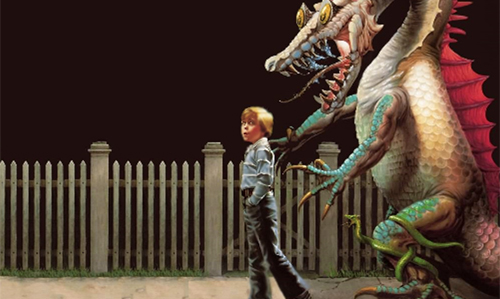
In [my recently released] book The Best Advice So Far, I talk about my first kiss. And while it was my first kiss in the sense of romance, it wasn't strictly my "first kiss."
In grade school, those of us waiting for delayed parents would find various amusements. One such day in fourth grade (and in a religious school, no less), a small group of us went down a back hallway and through the Secret Door. The Secret Door was, to us, much like a door from Alice in Wonderland. Only, instead of leading to magical kingdoms with fanciful characters, it just led under the staging area for the church.
For us at that age, it really was a different world. Once crawling through The Door, which was only half our size, the under-stage area opened up to be high enough by far for us to stand upon entering. Then, like being in some sort of ancient ziggurat, we had to stoop lower and lower as we made our way back, beneath the inverted platform stairs.
Strewn around were various relics. Musty choir robes in dilapidated boxes. Stacks of tarnished offering plates. Broken pieces of ornate wood from pews, churning our imaginations as to just how they'd been broken. (Large parishioner? Act of God?)
Above loomed pipes leading to the gray, resin bottom of the baptismal tank, where I myself had been baptized on a frigid winter evening several years before. Church services and baptisms had been dutifully held during the surrounding weeks, despite the fact that the church had not paid its power bill. The building itself was bitterly cold, even for those out in the congregation, tightly clustered within heavy coats and stamping their feet as quietly as possible. But there I was, six years old, wearing only my swim trunks and T-shirt, shivering. This paled in comparison to descending the steps into the water, where the ice across the top of the pool had been broken up only moments earlier. My body shook despite the fact that more and more of it was melting into numbness, as I sucked in short, panting breaths, miniature icebergs floating all around me.
I've since thought that my encounter on this night was not all that unlike what passengers on the Titanic had endured. It's all good though. I was assured that my "willingness to sacrifice" meant Jesus loved me just a little bit more than everyone else, and would have my back at some future time of real need by way of reward.
But I digress. There we were – two girls, another guy friend, and me – sitting cross-legged in a tight circle in the Land Beyond The Door, playing a game.
A game of "Truth or Dare."
Well, for some reason I'll never understand given the particular company, at one point, I chose "Dare." (An omen of my life to come, it would seem.) And that is when I had my first kiss, technically.
I won't divulge too much about the female in question, but suffice it to say that she had long frizzy hair, glasses, a uni-brow, sour breath – and braces the metal of which was perpetually covered over with a strange, waxy orange substance that resembled (and may have been) the powder from cheese curls. The dare was that I had to kiss her -- on the lips – for a count of five seconds. And you know the bridging "Mississippis" were not regulation length.
Enter regret.
Well, at least the idea of regret.
Had I the opportunity to go back in time and un-kiss the girl, would I? Maybe. But I don't really think of that as regret so much as prudence brought with age. In reality, I came away from the ordeal quite in one piece (though I do still shudder at the recollection).
Moreover, I now have another zany tale to tell.
Many of life's less-flattering moments are this way. They result in experience and gripping party stories. No harm done.
Alas, if only our worst decisions were kissing the fuzzy-yellow-tongued girl in grade school.
Real life comes with more options. Harder choices. Bigger stakes. The potential for higher achievement is always paired with an equal risk of more devastating failure.
Words are hurled which cannot be unspoken.
Relational rifts are forged.
Trust is broken.
Marriages crumble.
The temptation of a moment closes doors for a lifetime.
Or we simply wish we'd done more when we had the chance.
What of regret then? I still hold to the notion that regret is an entirely useless, and thus wasted, emotion.

Now, remorse – that is useful, insofar as it causes us to see and admit the error of our ways. But remorse is temporary. It is a moment of realization, or perhaps even a process of grief. It instills wisdom and, with luck, changes future decisions. But it should eventually come to an end.
Where remorse lingers, it becomes regret. And regret has always seemed self-indulgent to me – a continual flagellation of sorts which we fool ourselves into believing somehow balances out our trespasses. Worse yet is when regret turns the corner into self-pity, or an attempt to garner pity from others. Perhaps if I remain sullen, decrying my past, others will be inclined to remind me of my virtues.
Again, I say -- useless and wasted emotional energy. It gets us nowhere. It changes nothing. If anything, it prevents real change from happening.
Beyond remorse, there is certainly room for movement with some similar words: restitution and reparation. Where remorse leads to realization and true sorrow, there are many times where a wrong can be made right.
First, the power of a sincere apology should never be underestimated. It always amazes me the number of people I encounter who live in regret; and yet, when asked, "Have you ever apologized?" the answer is some version or other of "no." More often than not, the seeming humility associated with regret is actually no more than a clever disguise for deep-rooted pride.
Did you lie about someone? Tell as many people as you can think of the truth of the matter -- yes, even years later.
Did you swindle someone, leave a debt unpaid, or turn financial matters to your own gain? Make the sacrifice and repay it now.
Nothing says, "I'm sorry" better than a sacrifice to right things as well as they may be righted.
I am not oblivious to the fact that not all wrongs can be righted. I recall one seventeen-year-old boy with whom I worked at a drug rehab. We had great rapport. But still, I could tell he was building up to telling me something big for weeks. Finally, I just put it out there: "You clearly need to say something. I'm listening. I won't judge or condemn you. I'll just listen." He sat silently, staring at his fumbling hands. His face flushed and then contorted as he began to cry, for what I suspected had been the first time in a long time. He went on to tell me that he and his younger half-brother had experimented sexually together a few years back. As he was able, I asked him for specifics, because this was likely the one opportunity he would have to get it all out there -- every awful thing he had done, that he believed about himself – and have someone still look him in the eye and love him.
This is essentially what I told him.
In the end, due to the nature of a past choice, the emotional choices of the offended or otherwise involved, a death – or a combination of these factors – remorse and restitution do not always result in reconciliation. Still, regret has no place. It changes nothing. Much as I suggest in regard to worry, once you have done all that can be done (which is often more than you think) -- you can do no more. Accept the consequences as graciously as you can. But choose not to live under the cloud.
Seek counseling. Live differently going forward. Love differently where you may.
But whatever you do, pull up the stakes of regret and move forward.


things that suck
Some time back, a roommate of mine came out of his bedroom early one morning, went into the bathroom and soon exited holding a wad of tissue paper to his mouth. He hadn't yet shaved for the day, so it wasn't a razor nick. Had he bitten his tongue in his sleep? I inquired.
He wasn't sure what had happened. He said his lip had just started bleeding out of nowhere, somewhere in the night. He divulged that the same odd phenomenon had occurred the previous night.
Odd indeed.
Suddenly bleeding noses, I've heard of. In fact, I was plagued with them for quite a while growing up. But lips? They didn't appear chapped. It was all very strange. But I shrugged it off.
I was up unusually late the following night when my roommate emerged from his room – once again holding tissue paper to his mouth. Only this time, he had the wide-eyed look of comprehension.
And horror.
While I hadn't given the first two incidents much more thought, my roommate had, the mouth in question being his own. He was a heavy sleeper, but that night, he had been determined to sleep lightly and figure out what was prompting the freak lip leaking. As he lay there, fighting the urge to completely doze off, he became aware of a slight tickling sensation on his face. Almost a numbness setting in. Instinctively, he swatted and then dove for the lights. Scanning in the direction of the swipe, he saw something moving on the floor. An insect of some kind flailed dazedly – a large insect that he did not recognize.
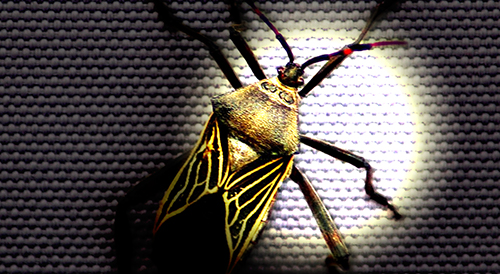
I squirmed and twisted as he related the tale to me. There in his hand was Exhibit A, having been pressed between folds of paper towel. It appeared to be dead, though its body was not crushed. I could not identify it either, though it was about the size of a large boll weevil. But a weevil it was not.
We each separately searched the Internet, narrowing down by characteristics, until we found a match for the intruder. Moreover, we both had arrived at the same conclusion independently, deeming it more than coincidence. The insect in question was a "kissing bug," also called an "assassin bug."
This specimen hails from the southwestern United States and South America. It apparently maps onto one vertebrate's breath somehow. Then it nests nearby until nightfall. When the host's breathing reaches a certain rate or saturation, the kissing bug homes in on the breath, inserting a long needle of a proboscis into a lip and feeding on the victim's blood.
I know. You thought this was a family show.
It's nearly impossible not to start quirking your mouth at this story. I found myself running my hand across my lips frequently for the next few days. My only consolation was to find that this insect was not a hive or swarm insect, rather more of a loner. And the odds of the critter making it to the Northeast were slim. The best we could figure, it must have come up in luggage from a neighbor who had traveled south, or who had just recently moved in. Still, we had exterminators sent up.
But that wasn't the end of it.
You see, it appears that this lip-sucker also has the potential to carry a parasite that can be "dropped off" during feeding, and which causes some rare illness called Chagas disease.
My roommate had insurance, but had not yet chosen a primary care doctor. I called friends of mine, a husband and wife team of general practitioners. I spoke with the wife. As I told her about the incident, she interrupted me no fewer than five times:
"Stop it!"
"You're playing a joke on me, aren't you?"
"Tell the truth!"
But it was no joke. She jumped on the Internet herself while I was on the line. I could hear her punctuated blurts:
"No way!"
"You've got to be kidding me!"
"Eeeyew!"
Coming from a doctor, this said something.
Well, suffice it to say that they saw him right away and started him on a regimen of anti-parasitic medication forthwith.
For what cruel reason have I subjected you to this horrific tale? Well, I suppose I am given to a bit of sensationalistic shock from time to time. But I actually do have a point in this particular case.
There are a lot of things in life that "suck." But for the vast majority of them – however intense, overwhelming or terrifying they may be – they pass. Even those that seem like they will not pass, they pass just the same.
Realizing this, I've taken to asking myself a simple question when sucky things pop up in life: "Will this matter to me in a year?"
If the answer to that question is no, then with some practice and discipline, I just refuse to give it any more thought (beyond making it an outrageous party story, if the opportunity presents itself).
If the answer to that question is yes, then I set into another set of questions.
First, I ask myself, "Is there anything I can do about this right now?" If the answer is yes, I do it. Right then. In the case of my roommate's nasty visitation, what he could do is find the number of a doctor to call as soon as the business day started. I provided that.
If I determine that there is nothing I can do about the sucky thing immediately, I then ask myself, "Is there something I can do about it later?" If there is, I write down what I can next do about it, and when I can do it. Taking this step to write down my next move works wonders in getting the niggling thought out of my head. Whenever it comes up again, I just remind myself that I've got that slip of paper and I don't need to think about it anymore until that time. In my roommate's case, the revelation came in the middle of the night. He could not immediately see the doctor. Had I been him then, I might have jotted down "Call Dr. Smith at 9:00AM" along with his number. I might also have written the name and number for an exterminator and for the leasing office of my properties, along with their hours of operation. And that's it. There is no more I can do (perhaps thoroughly searching my room with a flashlight, just to be sure!).
If I find that I cannot do anything immediately or at a later time – then there is nothing I can do. Being miserable, depressed or fearful serves no purpose other than to prolong the suckiness of the incident. Again, by practice and discipline, I remind myself of the steps I took and that there is no longer anything I can do. If the thought resurfaces, I know that I've already done all I can do and I actively choose to put it out of my mind.
In doing this consistently and rigorously, I've actually managed not to worry or brood much in life anymore. I believe anyone who knows me well would attest to this. Yet it was not always so! It took being consistent and following the "formula." But it didn't take forever. Now, it's a normal part of life.
One note. I understand that grief from significant loss, death or trauma are in a different category. However, the same principles apply, even here. Perhaps what you can do right now is seek some help in processing the loss. Maybe a next step when certain thoughts come is to call a confidante, or visit a graveside and talk out loud. Grieving is a process and should not be rushed. Nor should thoughts of a lost loved one be denied. But positive choices can still be made that keep grief from becoming paralyzing as it takes its course. Remember, we can't always choose our circumstances, but we can always choose our next step.
I wish you good night. I trust you will sleep tight. I definitely hope the kissing bugs don't bite. But even if they do, give these new strategies a try. See if they can lessen the time spent in worry, and increase the time spent enjoying the many wonderful things that life is presenting in the moment.