
scam

Most people who read my blog know me first and foremost as an author. So they are surprised when they learn that I do other things as well. (And conversely, those whose first dealings with me center on one of those other areas are always surprised to find that I’m also an author.)
Well, one of those other things I do is designing information systems. I’ve done this since I was a child and home computers first came out. But as far this story is concerned, here’s the simple version: I build fancy stuff with spreadsheets. Often, it’s stuff that few other people can figure out. And for that reason, I always have clients who seek me out and pay me well for this work (which I fit in between my writing and marketing and mentoring and…)
You might think these two worlds are incongruous, but in my mind, they’re just different ways of helping people. And I am passionate about infusing both with core values such as kindness.
To that end, I choose to donate a little time each week as I’m able to helping answer posts on a couple of free online forums. Typically, I can only volunteer about a half hour or so per week; but I can get a lot done in that time, considering that the forums are designed to help people with relatively small stuff. A little knowledge sharing here. A formula tweak there.
Recently, I read a forum post from someone who appeared to be located in Romania, and who was requesting spreadsheet help. But in assessing things, what he required wasn’t small stuff. It was a highly customized, time-intensive solution (i.e., real work).
Usually, I’ll just pass over such posts or suggest that the person consider hiring a developer. In this particular case, however, I made the choice to “break my rule” and try to help the guy out anyway. You see, I’ve been especially aware lately of the need for tenacious worldwide kindness. And while it wouldn’t bring about world peace, going the extra mile for this stranger in Bucharest seemed a good opportunity to put feet to my convictions.
Still, it was a bit tricky. Sharing complex solutions on a free forum would create unrealistic future expectations for site visitors. In addition, I can’t offer in a free public forum the same level of complex work that my private clients pay me for.
But my mind was made up. I was going to help this guy (I’ll call him “Ivo” here).
Since Ivo’s shared spreadsheet contained his email address, I reached out to him privately rather than through the public forum. I introduced myself. I explained essentially what I’ve shared with you here: that I am a longtime forum contributor, that the help he required went beyond what I could provide through the free forum, but that I was willing to help him at no cost if he would simply share a copy of the sample spreadsheet with me.
Some hours later, his email reply popped up.
As I try to keep this blog family friendly, I’ll have to do some censoring:
“You bet. You [#&%@!] poor [*!@~$] scammer, eat [&$^#%]. Maybe that’s more useful to support your laughable existence.”
Here, I’d offered him free work —work I’d have charged any other client $150 for—and this was his response?
What would you have done at this point, if you had been me?
*****
I won’t lie. My initial reaction was to bristle. Hey, I’m human, just like you.
I mean, I owed this guy nothing. I didn’t need to help him in the first place. He wasn’t a paying client. And I would certainly have been well within my “rights” to dismiss him at this point. Just one more self-absorbed, entitled jerk in the world.
Shrug it off. Press “Delete.” Move on. Right?
Instead, right after that initial sense of self flared up at Ivo’s response—in the next moment, where choice begins—I was given a good dose of my own advice from previous books:
“Humility is a strength, not a weakness.”
“Focus on the person, not the problem.”
“Kindness still works.”
Add to this that I’m just about to release my third book, Alternate Reality (just released: April 2022!). As part of the editing process, I’ve read through the entire thing about ten times by now. And that has meant being intensely confronted with even more of my own words, including this new piece of shared advice:
“Instead of thinking the worst about people,
wonder the best.”
Right about the time I was reading Ivo’s email, you might imagine that I was applying this bit of advice to him. “Wow, here I am going the extra mile to be kind to a stranger, and he replies with such rudeness, accusing me of being a scammer?” But rather than thinking in terms of his choices, I found myself considering my own.
Would I think the worst of this guy based on his rude response? Or would I practice what I preach and make the choice to wonder the best about him?
I chose to wonder the best. I shifted my focus from what he had done—to why he might have done it. And that brought a new response: empathy.
I responded to Ivo’s email. I told him that I understood why he might be skeptical; after all, the world is a weird place sometimes. I offered him four different means of verifying who I was, for his own peace of mind, and again extended the offer of help.
I’d like to tell you that the clouds parted, that birds started chirping and that a swell of rhapsodic music began to play. Alas, it did not. My heartfelt email was ignored.
Surely, now was the time to dust off my hands and forget about this guy. I mean, you can lead a horse to water, but you can’t make him drink. And I want to be exceedingly clear here: that is true. As had been the case from the start, I owed this stranger nothing. I would not have been a bad person to walk away. And on the flip side, I wasn’t earning any cosmic brownie points if I chose to stick with it. All I can tell you is that, at the time, I felt compelled to try once more.
After a few days, I emailed Ivo again. I told him that I wondered if his skepticism was based in personal circumstances that had burnt him. And so, rather than continuing with my request for a shared spreadsheet, I worked out the entire complex formula in a spreadsheet of my own and then copied and pasted it directly into the email for him. I carefully explained how to implement it on his own sheet, asking only that he not post the formula publicly, so that I would not have that conflict of interest with other paying clients. I ended the email expressing my hope that this act of kindness might help restore his faith in humanity, even if only in some small way.
No birds chirping. No clouds parting. No music playing.
Instead, Ivo took my formula and did exactly what I’d asked him not to do: he posted it on the public forum. What’s more, he asked the larger community of volunteers there to confirm his earlier assumption that I was a scammer, and that this was malicious code. And to top it off, he implied in this public forum that I’d tried to get money out of him.
I’ll admit, my resolve to be kind was fraying around the edges at this point.
But I replied to his now public commentary as gently (yet directly) as I could. I reminded him that he could click my name link and be taken to the same profile I’d already sent him via email as one of four different means of verification. I asserted that I’d made very clear that my offer of help was free with no strings attached. I told him that I felt he was now just digging his heels in, committed to somehow proving that his initial assumption about me was true: that I was, in fact, a scammer. I told him that I couldn’t recall ever having worked so hard to give someone a free gift.
And then I remembered another piece of advice from The Best Advice So Far:
“Tenacious love expressed with creativity
can work wonders.”
It doesn’t always. But it can.
Allowing that "love" can be applied in both an individual and humanitarian sense, I determined to do the least likely thing.
I set aside my self-imposed rule of not posting complex work on the public forum, went into his publicly shared spreadsheet and implemented my full solution for him there, so that he could see with his own eyes that it was producing exactly the complex result he was hoping for.
I added one more comment, once again wishing him well and hoping that this might somehow restore in him a little faith in humanity.
And then, satisfied that I’d truly done all that was within the realm of my own choice to do, I let it go and moved on.
*****
The next day, I got a ding alerting me that Ivo had replied in the forum.
“Your solution works perfectly. I misread you and your motives. I owe you an apology.”
I’ll admit, I wasn’t expecting that.
Yet as nice as that was, something still felt unresolved. Empathy kicked in again. I was aware that if other forum contributors read the exchange, they might avoid offering Ivo help on any future posts of his. So I offered a path to a “clean slate”—figuratively and literally. I suggested that he back through all of his comments and delete them, after which I would do the same. I’d already spent five times my weekly allotment of donated forum time on this one issue, but this seemed important.
Within a day, he had done just that: deleted all of his comments. I followed suit. Clean slate achieved.
Cue the singing birds.
But it didn’t stop there.
Two days later, I received an email reply from Ivo. Turns out, he’s from Latvia, not Romania. He apologized again and asked if he might get a second chance to undo that negative first impression he’d made.
He said he actually considered himself to be a kind and helpful person. He recalled to me the story of a woman he’d helped at a coffee shop late one night. In his words:
She told me she was an Uber driver and had just crashed. For some reason, she had no money and no phone. In addition to losing her only means of income, she mentioned that she also had cancer in her legs, and at one point she started crying. She asked for some cash and promised that she would give it back the next day at the nearby museum where she worked as a guard. We ended up walking to the ATM together, and I withdrew a hundred bucks. I gave it to her and she cried again a little, hugged me and thanked me enormously. It felt very good to be helpful to somebody in a great need!
And he never saw her again. No such person worked at the museum.
It had all been a scam.
Oh, and in case you're wondering (as I did) about how Uber and "bucks" match up with Latvia, this all happened to Ivo during his first and only trip to the United States. It happened in Washington, D.C.—where Ivo had had to make an emergency diversion to the Latvian embassy. You see, upon arrival in California, thieves had broken into Ivo's car and stolen everything they could get at, including his passport. Still, despite his own troubles, there he was trying to help this "poor woman" at the coffee shop.
You see, Ivo really wasn’t an awful, self-centered, ungrateful person. He was a nice guy who had just been hurt one time too many before I came along.
But the kindness I’d shown actually had turned the tide inside him. Again in his own words:
I think this experience will stick with me and will teach me a good lesson in the future as well.
Ivo and I have been talking back and forth for a little while now, having terrific conversations about stuff that matters. As it turns out, we have a lot in common. Yet we’re also learning from one another. Stretching our perspectives. And we’re just having fun getting to know one another.
Is kindness always rewarded with a happily-ever-after ending? Nope.
Will some people turn out to be as mean as they at first appeared? Yes.
Are scammers still out there scamming? They are.
But what, then? Should we all decide to live within the confines of our own little self-protective bubbles?
To never show spontaneous kindness again, because of those who might take advantage of it?
To just give up on hope? On humanity?
To me, that seems like the biggest scam of all.
Here’s another tidbit from The Best Advice So Far:
“Whatever you choose to do,
do it without expectations,
simply because you believe in doing it.”
Where that limit lies for each person and in each situation will vary. But my encounter with Ivo serves as yet another reminder that “you always have a choice.”
A choice to look beyond the what to the why.
A choice to focus on the person and not the problem.
A choice to trade thinking the worst for wondering the best.
Quite often, I’ve found, those “best wonderings” will be closer to the truth.



less lonely

We’ve heard it a million times: “Bad news sells.” And we’ve certainly had more than our fair share of it lately, haven’t we?
As someone who takes my own advice perhaps more than anyone, and ever keeping in mind that central theme of mine — “You always have a choice" — I went beyond simply turning off the bad news to making an active search of good news.
Would you believe that there is actually a whole news site called Good News Network?
There I read an article that not only held true to the claims of offering good news, but that introduced me to something I've suspected was true for some time, yet for which I had no proof.
Until now.
I encourage you to read that article for yourself. But the short version is that researchers from California and Italy teamed up to conduct a study which reveals that people with greater empathy and wisdom are less lonely.
Conversely, as you might have guessed, that means people with less empathy and wisdom are more lonely.
Well, that seems easy enough, right?
Just get more wisdom.
Get more empathy.
Be less lonely.
Phew! Glad we solved that one so quickly.
Hmmm…

In reality, those two qualities — wisdom and empathy — are a bit hard for most people to nail down. After all, how do you measure something like wisdom? How do you gain more of it, for that matter? If it were a matter of merely reading the array of inspirational memes that endlessly scroll across our social media accounts all day and pressing the “Like” button, we’d all have wisdom to spare. None of us would ever be lonely.
Likewise, if empathy were gained simply by being around other people, or commenting on their posts, or hitting the sad emoticon button when they post that they just broke up with their boyfriend again, empathy would be the norm (and, therefore, loneliness the exception).
Alas, not so.
Here's a quick self-check for wisdom:
1.) Do you listen as well as you speak?
2.) Are you known for being patient and tolerant?
3.) Are you comfortable with and intentional about silence and self-assessment?
4.) Have you honed the awareness skills necessary for noticing what is going on around you?
5.) Do you live as an agent of choice, not merely a victim of circumstance?
And now, for empathy:
1.) Do you listen as well as you speak? (Sound familiar?)
2.) Do you know how to ask the right kind of questions at the right time?
3.) Is it the norm for you to consider others, whether they are physically present or not (and, in fact, even if you may not know them at all)?
4.) Have you accepted with peace the fact that not everything is about you?
5.) Do you regularly practice tangible acts of kindness?
Well, at risk of being accused of shameless promotion, helping people increase empathy and wisdom are the main goals of my mentoring, speaking, this blog and both of my books.
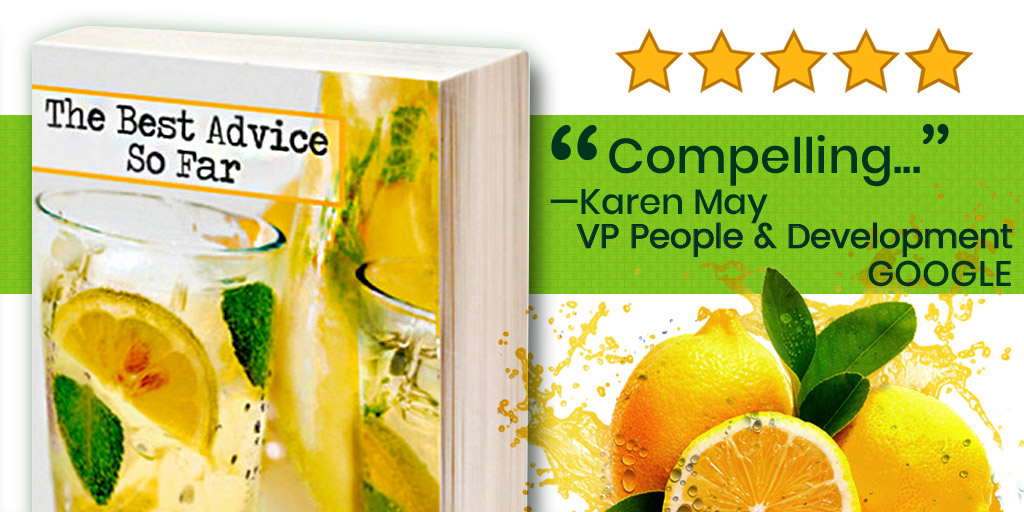
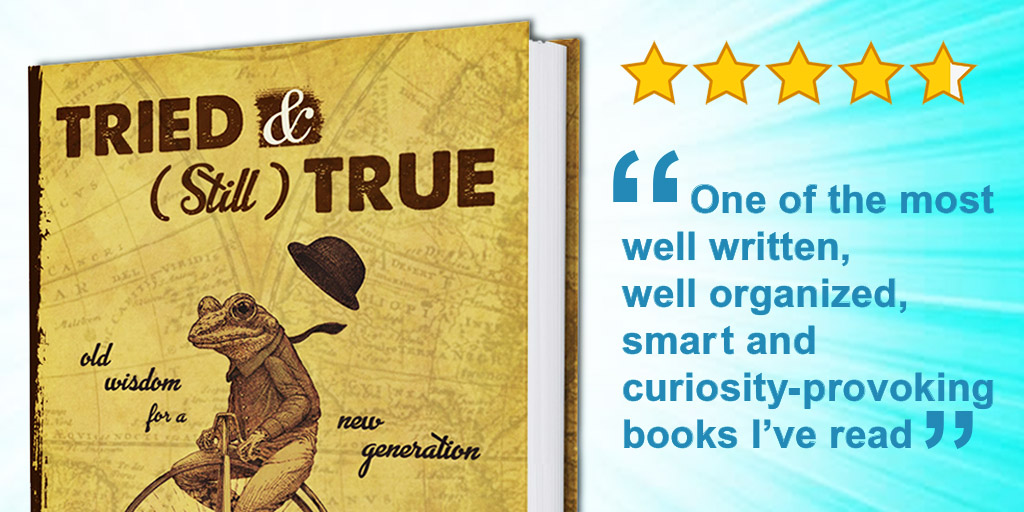
And those themes continue in new ways as I’m now in the process of writing my third book.
So it seems I’ve actually been helping people to be less lonely this whole time. Who knew?
Honestly, I did. I knew.
I knew because I’ve seen the results over and over in people’s lives for decades. As I said, I just didn’t have the science behind it until now.
Here’s some more good news. If you are feeling lonely, you really can do something about it. And as this new study shows, being less lonely isn’t reliant on having more people around (which is tough during the current extended pandemic). It’s something you can work on all by yourself. Today.
I encourage you to pick up one or both of my books. But I also understand that many people have been greatly affected by this pandemic and may not have money for extras right now. If you really want to read these books and simply can’t afford to, follow the links to the book titles above. You can get started reading a good deal of each of the two books using the download links I’ve provided there. And if you finish those and want to continue, drop me a message on my website’s contact form. Introduce yourself, let me know which book you’d like — and I will send you a full digital copy of either for free. No strings attached.
So why not start being less lonely right now?

the builders

I was wakened from a sound sleep by the ungodly grinding of a saw cutting through what sounded like concrete or metal right outside my bedroom wall. The whole place shook, setting the nearby jar candles to skittering. It was immediately clear that this was not going to be a situation solved by fingers in the ears or pillows over the head. So I got up.
Just when I thought things couldn’t get any worse, there was a loud crunching and a thunk.
That sounds like it’s right in the house, I thought. And then the noise suddenly cut off. Moments later there was a knock at the door. I opened it to find one of the construction guys there wearing grubby jeans, a tank top and a backward ball cap. His ears were studded and gauged, and one tattooed arm leaned against the wall of the stairwell that leads up to my floor. “Hey, um… what’s on the inside of the wall we’re working on?”
I knew something very bad had happened. “My bedroom,” I informed him. “Bedroom closet to be exact.”
I led him through the entryway and into the bedroom. I live in an old farmhouse with open closets, so I had used the bedroom closet for storage, placing a low white bench with drawers and storage cubbies in front of it on top of which a full-length mirror leaned back against the door opening. I took down the mirror.
The workers had broken through the outside wall into the room, a five-foot strip of the wall revealing daylight beyond. But that wasn’t what caused the sharp inhale or widening of my eyes.
It was the horde of ants covering the walls… and everything else inside. Coolers. Lawn chairs. Luggage. Bedding. I could get at none of it until I removed the plastic storage bins. But those, as it happened, were impaled on a large bolt that had come through the wall. Meanwhile, the ants were happily beginning to explore outside the closet.
As this isn’t really about the incident, I’ll montage. Cracked bins ripped through. Running back and forth to the fire exit stairs with closet contents, even as ants ran up my arms and dropped into the other rooms. Workers doing impromptu extermination with a shop-vac. The cloying fog of Raid fumes permeating.
Throughout the ordeal, I’ll admit that I growled aloud more than once. And since the construction worker was doing his best to contain the situation, I wanted to be clear that my irritation was with the situation and not with him. I said as much to him, followed by stating aloud some of my own advice (more for my sake than his): “These are the times when I have to ask myself, ‘Will this matter in a year?’ And if the answer is no—which it is in this case—then it’s not worth wasting time in the present getting up in arms about it.”
Thus began my conversation with the builder.
If you were to have driven by my house and seen this guy standing outside on his ladder, swinging his hammer, you probably wouldn’t have given him much thought. Just another common laborer. And if you had noticed him beyond this peripheral glance, you might have made assumptions about him based on his job, clothes and tattoos—assumptions about his background, lifestyle, intelligence, education level, worldview.
But allow me to tell you what I learned about him.
As I say, the temporary crisis didn’t matter in the grand scheme of things. However, mere minutes into our interaction together, we found ourselves talking openly about stuff that did matter.
His name is Zach. He’d been raised by two women. One was his mother. The other was his grandmother, a woman for whom he now happily served as a primary caregiver. Every day. Like clockwork. His expression of love and respect for his mom and grandmother, and his happiness to help, were among the first things he told me.
Zach shared with me some of the pain he experienced growing up and the problems it led to in his early adulthood. But he’d worked hard to overcome those issues.
He’s a voracious reader who enjoys deep conversations about life.
In fact, he’s been having an ongoing conversation online with a young Muslim man from the Middle East. This distant friend had shared his desire to visit the United States, but expressed his concerns about how he might be treated because of his ethnicity or religion. Zach was honest with him. “Some people here will be suspicious and act on fear. But many, many won’t.” He invited the young man to stay with him personally should he make the trip, promising to introduce him to good people and places.
Zach is educated. Prior to being a builder, Zach had been the director of a public school program for kids on the autism spectrum or with other behavior-related challenges. He told me about some of his students over the years, adding that he’d finally decided he needed to take a break because his compassion for the kids was starting to get the better of him even during his off time. He felt he needed to do something a little more physical and less emotional for a while.
This had led to his current job. And his favorite part of that job… was the math. I’m sure he’s told me five or six times during our conversations in the last couple of days, smiling despite himself each time, “I love numbers almost as much as I love people!”
Two mornings later, Zach and a co-worker were back bright and early to continue repairs. I threw on jeans and some flip-flops and ran out to tell them that the exterminator was due back at 8:00 and might be spraying from the exterior, which would mean that construction might be delayed a couple hours.
As we all stood around awaiting more information by phone, we got to talking once again. The other worker was a stocky, heavily bearded guy with his knit cap pulled low. Even wearing his dusty mechanic-blue jacket, tattoos were clearly visible, rivaling Zach’s. If not for his clothing, you could easily imagine him having been a Viking downing tankards of grog at some alehouse of yore. He flicked the ash off his cigarette and took another puff.
I introduced myself. His name is Doug. He shook my hand and the three of us chatted for a few minutes.
Zach and Doug then took off for a bit as the exterminator arrived and did his thing. Once they returned, Zach went into the bedroom to assess what needed to happen inside the closet. A few days earlier, based on our conversation, I’d given him a copy of my first book, The Best Advice So Far; and I’d just handed him a copy of the newly-released TRIED & (Still) TRUE. Doug was immediately curious. “You write books? Cool. What’s it about? Where can I get one?” As Zach continued with his tape measure, Doug and I got another chance to talk a bit.
Here again, one might make assumptions about the kinds of things “someone like Doug” might talk about in the few minutes standing with a stranger in a hallway while on a job. You’d likely be wrong.
I could immediately tell that Doug has a quick wit and sense of humor. Once we got to talking, he laughed often.
Doug also plays in a band. If you went only by his black “DOOM” T-shirt, depicting what looks like someone trying to pull demons out of hell, you probably wouldn’t guess that his primary instrument is upright bass or that his band, Cactus Attack, finds it tricky to schedule their tours on account of two of his other band mates being full-time teachers.
I handed Doug his own copies of the books. He read the backs, brows intent. “This is my favorite kind of book. I love philosophy. Thanks, man.” From there, Doug shared with me his observations about how people too often seem to be looking for differences between themselves and others rather than similarities. "I talk to people about this all the time,” he said. “You’ve got to slow down and make time to get to know people and their story before you make judgments. Even people who do things you might strongly disagree with usually have a reason that makes sense to them, and I think it’s valuable for us to be able to understand those reasons.” We talked about religious cults, terrorists and factions within modern feminism, with Doug passionately making the case for empathy and education at each turn.
Later, when the three of us were in the mix again talking, I suggested the word “malapropism” to describe a habit Zach said he sometimes falls into, at which point Doug interjected, “Actually, with you, Zach, it’s usually malaphors, not malapropisms.” This was interspersed with his thoughts on Socrates and Plato, peppered with other underused words such as pedagogy.
There was clearly much more to both of these great guys than might at first meet the eye.
Though I say this often, it’s worth repeating: names matter. By asking someone’s name and giving your own, you open doors of possibility. So often, if we aren’t careful, we can get to treating people as little more than background noise, obstacles to overcome or means to achieving an end. Names serve as a reminder that the other people all around us are just that—real people, with lives as full, interesting, meaningful and complex as our own.
In addition, while most of us would agree if asked that one should “never judge a book by its cover,” it takes intention and consistency to actually live it. And it’s been my observation that the standard most used in judging book covers is little more than “does that cover look enough like my own?” I’ll quote Doug here from our conversation: “What a boring and small life it is to surround yourself only with people who are exactly like you.”
To quote Bill Nye the Science Guy, “Everyone you will ever meet knows something you don’t.” If we truly embrace this, the world and the people in it become an endless source of connection, fascinating stories, learning and growth.
My friend Chad often says, “Follow your natural curiosity.” I agree, 100%. However, I think so often anymore that we forget how to be curious. We leave it behind, somewhere back in the ether of childhood. As we get older, we allow that natural curiosity to be replaced with fear. Yet the more we give in to this, the smaller our worlds become.
In fact, if there were one takeaway here, it would be to rediscover your curiosity. And then follow it.

You’ll encounter new stories and change your own story in the process. Zach and Doug are two recent reminders of the benefits of doing this, here in my own little corner of the world. Now I encourage you to go find out who your own next surprise might be.

elevator

Whenever someone learns that I’m a writer, they inevitably ask the following two questions:
- What do you write?
- Who is your target audience?
They’re reasonable questions. And you’d think that after a decade of professional writing, I’d have honed my elevator pitch by now. I haven’t. I’ve tried—really, I have. But it doesn’t seem any easier today than it was when I first started.
You know how people will ask you a question and a response comes directly to your mind, but then you edit it by the time it comes out of your mouth because you know that your first thought isn’t likely to be considered an “acceptable” answer? Like when someone you’ve just met asks why you’re still single or what your family is like. I mean, not everything in life has an elevator pitch (at least not an accurate or completely honest one), does it?
Funny enough, I don’t even feel awkward in actual elevators. Talking or explaining things isn't my problem. It’s that my genre and audience don’t quite fit in any one nutshell.

Most of the problem can be chalked up to the connotations of words. For instance, consider the following snippet of conversation between an imaginary person (IP) and me:
IP: Are you liberal or a conservative?
Me: Yes
Well, that answer is certainly both short and true. But it doesn’t really answer the intended question. Let’s try again.
IP: Are you liberal or a conservative?
Me: I’m both. For instance, I’m conservative with my money but liberal with my willingness to help people.
OK, well, now we’ve got a bit more of an answer. It’s short enough. Yet while it does relay some important information about me, it’s still not what the asker is expecting. What’s more, given the question itself in isolation, my expectation would be that the asker was looking to place me on one side or the other of a line relative to their own understanding of those terms.
In actuality, if someone were to ask me that question, here’s how it would most likely go:
IP: Are you liberal or conservative?
Me: That’s an interesting question. I’m curious about what makes you ask and why the answer feels important to you.
Back to “what I write,” I often wind up facing a similar quandary where genres are concerned—like there's an unstated expectation that determines how I'll be labeled if I choose this word or that one.
For instance, is my writing motivational? Yes, in the sense that readers report back that it causes them to see the world differently and to make new choices.
But when you think of the word “motivational” as far as a type of writing or speaking, you likely think about certain key people (whom I won’t name) and, well… hype. Speaking rapidly and loudly, pumping up people’s adrenaline at conferences, telling them that they can achieve anything they want in life if they just believe hard enough and work hard enough and such. But what I’ve noticed is that, while people feel good after going to a “motivational” event or reading such a book, the heightened enthusiasm wanes almost before the trip back home is over or that book has made its way back to the shelf.
It’s like paying a hundred dollars for a one-time personal trainer at the gym—and then never going back after that first visit.
I was just telling a friend today that I don’t want people to need me to tell them what to think or to do next in life: to wait for the next talk or post or book for their fix. I want to open people’s minds to a new way of seeing the world and give them a set of starter tools with which they can strike out on their own and live in the unique and creative ways that only they can.
Likewise, I absolutely want to be inspirational, in the sense of encouraging people to live differently. I want to inspire an understanding, first and foremost, that we are each an agent of choice in our own lives and that, as such, even true victims of circumstance need not be ruled by victim mentality. I want to inspire readers and listeners to follow their curiosity; to find fun wherever they are or make their own; to get reacquainted with their childlike sense of wonder; to engage with the people around them in meaningful ways instead of treating others as props, obstacles or means to an end.
But culture has also now dictated certain cumulative connotations to the word “inspirational” where writers and speakers are concerned. For instance, many people associate inspirational writers and speakers with religious writers and speakers. This brings to mind anything from the modern health-and-wealth doctrine to the writings of the Dalai Lama. And that’s not me.
How about “self-help”? Even when people review my books or try to describe me to others, if they use this term at all, it’s almost always in quotes: ‘self-help.’ That observation alone tells me that people who know what I’m about don’t feel quite right about trying to fit me into this category. And I agree. I definitely want people to learn to “help themselves.” But, honestly, I’ve never really understood “self-help” as a term to describe a type of writing or speaking. It seems a bit of an oxymoron, you know? How is reading or listening to someone else’s thoughts or perspectives self help? Isn’t it just… help?
Don’t get me wrong. I know many wonderful speakers and writers who do choose to identify themselves in alignment with one of the above genres; and it doesn’t decrease the value of what they have to say. I just know that I personally get to feeling all “slidy” inside whenever I think about applying one of these categories to myself. It just feels… off.
I can’t help but think that categorization by genre and “keywords” is more about marketing and money than anything else. I’ve become even more aware of this as I’ve tiptoed into building Amazon Ads, which require you to pull the curtain back on the inner workings of things where terms like “men’s self-help” and “women’s self-help” are differentiated and somehow result in more sales. And so we’ve been conditioned as consumers to believe that marketers understand our needs better when we see “men’s shampoo” or “women’s fiction.” (After all, isn’t it really just… shampoo or a novel?) Likewise, at the end of the day, is sound advice really gender-biased?
Which brings me to that second question: “Who is your target audience?”
Here again, I struggle.
The central theme in everything I write or speak about is “You always have a choice.” The basics are that while no one has every choice we might wish we had, we do nonetheless always have a choice. Here’s a short passage from the opening chapter of my book The Best Advice So Far:
If you don't accept this truth—that you always have a choice—if you don't remember it and live it, then you are left to play the part of the victim in life. You begin (or continue) to live as if life is happening to you, that you are powerless, oppressed by your circumstances. But, if you truly change your mind set to believe and live out in practical ways that, in every circumstance, you have a choice—now, you open a door for change. Instead of living as if life is happening to you, you will begin to happen to life. You will begin to realize the difference that one person—you—can make, that you are an agent of change in your own life and in the lives of others.
Don't misunderstand me. I'm not saying that we get to choose everything that happens to us in life. We do not choose abuse, for instance, and we can at no time choose to undo those things which have happened to us in life.
We do not choose illness. We do not choose when or how the people we love will leave us. Or die.
We do, however, have the choice of how we will respond in every situation, even the hurtful ones. Instead, so often, we pour our frustration and anger into those things we cannot change, rather than investing that energy into the many choices that we can make from that point forward.
Let that sink in. Even in the worst of circumstances that life may bring, you always have the next move. You have a choice.
And from the opening of the new 2020 release, TRIED & (Still) TRUE:
While “Know thyself” may caution us to be realistic about our own weaknesses, that does not imply that we should do so at the expense of being realistic about our strengths.
Most people are adept at exclaiming their own faults. Sometimes it’s even an ongoing conversation in their head. But identifying and speaking about their positive qualities feels—wrong somehow. Like conceit. However, consider this. If we do not identify and feel comfortable with our positive qualities and abilities, how will we be able to develop them and use them to their fullest potential?
If I don’t know that I have money in my pocket, I cannot spend it. It only makes sense that we can’t intentionally use or benefit from something we don’t acknowledge that we possess. Likewise, if I don’t know the strengths and positive qualities I possess, I will not use them very often or very well—if I use them at all.
This leaves me dwelling primarily on—you guessed it—my faults. And as I ruminate on those faults, it stands to reason that I will evidence them more frequently. If I’m unable to see my strengths, then I am left to see only my weaknesses. And if I perceive myself as a sum total of my weaknesses, change seems an impossible goal. It is too overwhelming.
All shadow and no light.
In fact, to make changes in an area of weakness implies that the goal is to move toward a position of strength in that area. Yet if I cannot be realistic about my strengths, I have no marker for where I’m headed or how far I’ve come.
Holding out just those two small examples, I have to ask: to whom does this type of writing apply? Who is the ‘primary target audience’ who would most benefit from principles and encouragements such as these?
Men? Women? Non-binary individuals?
Teens? Parents? Grandparents?
Couples? Singles?
Blacks? Asians? Whites?
Americans? Mexicans? Europeans?
College students? Business professionals? Retirees?
Low-wage workers? Billionaires?
Just randomly picking other themes from my writing:
“You have to start from where you are, not from where you wish you were.”
“Kindness still works.”
“Worry serves no purpose but to ruin the present.”
No matter how long and hard I think about it, I just can’t say that this type of person needs to hear such things more than that type of person. Best I can figure, this advice is universal.
And yet, even in their universality, my words are always specific. Personal. I never write or speak with a generic “everyone” in mind. I have individuals in mind. And so far, it seems to be working, since readers and listeners tell me often, “I felt like I just had a conversation with you, not like I was [reading a book, attending a talk, etc.].”
Just yesterday, I received another such email from someone I do not know who’s reading the new book, saying, “It's as if you are sitting in our living room chatting.”
I love to hear this kind of feedback. After all, the reason I started writing for publication was that I realized no matter how much time I could devote to live interactions with people, I’d still be limited in how many people I could help and encourage. Writing allows me to have further reach, while still remaining personal in my approach. It just makes sense.
So if you were to press me for an elevator pitch on what I write and for whom, the best I think I could manage as far as an elevator-type pitch would be this:


unmentionables

I’ve always thought it a little strange that we as a culture are conditioned to believe that certain topics are taboo.
Unmentionables, if you will.
I’m not sure who decided what made The List. Perhaps it was the same unmentionable “they” who are so often referred to in cultural lore:
“They say people hide razor blades in caramel apples.”
“They say you shouldn’t swim within thirty minutes after you eat.”
“They say the average person swallows eight spiders a year while sleeping.”
Pure poppycock, of course. But such things have been passed on for so long now that they feel true; and so we continue to live in their shadow, crouching in corners from boogeymen of our own making.
It seems much the same process accounts for what “should” or “should not” be spoken about with others:
Don’t get into it with politics.
You might come up against someone who doesn’t see the world the way you do, and that would surely lead to fisticuffs. Worse still, someone may calmly and rationally introduce an idea you hadn’t considered before, challenging your dyed-in-the-wool stance; and, frankly, that kind of thinking could only be catastrophic. Conversing, after all, is about debating and being right. And your favorite news station will always tell you that you’re right. So play it safe.
Don’t breathe a word about your family struggles.
It’s a real drag for everyone else (whose relationships are perpetual bliss) to have to hear about it. Seeking help or input is a sign of weakness; better to seem strong in your weakness than to show your weakness and potentially gain strength. Just bite your tongue, tough it out and hope for the best.
Don’t talk about aging or dying, yours or anyone else’s.
It’s sad and it’ll bring people down. Yes, we will all eventually arrive there. Perhaps, even now, you’re caring for declining parents and facing that inevitable goodbye. But talking about it—big no-no. Regardless of your thoughts and feelings and worries and wonderings, it’s best to keep them to yourself and maintain the unspoken illusion that you’re at perfect peace with it all—as if it’s nothing more than walking off into the beautiful golden sunset, just like in the movies.
This list of unmentionables could go on and on.
It seems a shame that we’ve bought into this notion that we are such frail beings that we’d surely turn to dust if we stirred up much beyond pleasantries and platitudes. That we’ve been lulled into the mundane rhythm of talking about little more than the weather or the big game or what we thought of the latest film.
That said, ironically, I’m going to tell you what I thought of the latest film.
It was A Beautiful Day in the Neighborhood, in which Tom Hanks brings to vibrant life the true story of Mister Rogers and his relentless empathy for a struggling young journalist. It truly is a beautiful film. But that beauty transcends “the story,” underscoring the power of vulnerability, the magic of a thoughtful question and the wisdom of giving people the space to feel what they feel.
Without giving away too much, there is one point where members of a family fall into an awkward silence when one of them acknowledges aloud his own serious illness. Fred Rogers is in their company. Of note, he allows that silence to remain unbroken for quite a while, aware that he is a guest who is merely visiting this deeply personal moment. His eyes move around the circle, stopping on each person there. Most quickly look down or away. One however meets his gaze with glassy eyes, a quirk of mouth seeming to convey, Sorry you got stuck in the middle of this.
Eventually, Mister Rogers draws in a slow breath, smiles, then speaks with quiet assurance about the “taboo” reality they are all facing together:
“This is human." Downcast eyes flick toward him, hungry for hope, as he continues. "If it's human, it's mentionable. And anything mentionable is manageable.”
Then, as if to be sure they understand him, he repeats the last part once more…
“Anything mentionable is manageable.”

And with those words, the heavy chokehold breaks.
Please understand, I’m not in any way against friendly chit-chat. By all means, exclaim what a lovely day it is when the sun is shining. Root, root, root for the home team. Inquire about the holidays or weekend plans. I do. And I enjoy it.
Nor am I saying that we should let concerns or struggles or unpleasantness consume our thoughts or conversations. Sometimes, in fact, the healthiest thing might even be to set them aside for a time.
I’m simply suggesting, along with Mister Rogers, that we ought not continue to subscribe to this dodgy notion of “unmentionables”—keeping our mouths sealed for fear of spiders in the night.
A fear-driven life is a terribly small one indeed.

even though

I was talking with a friend recently. I’ll call him Ralph here. Ralph’s relationship with his brother has been on the outs of late, and he was trying to understand what had happened and what he might be able to do at this point to improve the relationship.
I asked a series of questions. This revealed that the rift had started when Ralph had voiced his stand (e.g., opinions, religious views, moral position and, dare I say, judgment) on some of his brother’s recent personal decisions.
I asked Ralph, “How do you think you’d handle it if you were in the mix with a flamboyant gay guy?”
At first, Ralph looked bewildered, like he thought I hadn’t heard him clearly or that I was having a flashback to my famed Amnesia Episode of 1999. But trusting that I usually have a point to my rabbit trails, he answered. “Well, a few years ago, I actually was in the mix with a flamboyant gay man that I needed to interact with at an annual event. And we got along great.” It was clear from the phrasing that this was one of very few such people Ralph had ever known, if not the sole example.
I continued, “So, would you say it would feel comfortable for you to use the words ‘even though’ in describing your relationship with that person? For instance, could you easily complete this sentence, ‘I liked the guy even though…’?”
Ralph straightened up, answering quickly and confidently. “Yes, absolutely. I feel comfortable saying that I liked him even though he was gay, flamboyant and married to a man.”
The slump to his shoulders told me that he wasn’t expecting what I said next.
“I thought that might be the case, Ralph. And that’s a problem.”
*****
I love words.
There’s an inherent power in words. The right word or phrasing used at the right time can earn a first date or seal the impossible business deal. Likewise, a word used carelessly or at the wrong time can start a war.
My curiosity is continually piqued by connotation: the implied meaning or feelings that become associated with a word or phrase over time among a particular group of people. One example I cite often is rocking chair. Here’s the dictionary listing:
rock·ing chair
/ˈräkiNG ˌCHe(ə)r /
noun
a chair mounted on rockers or springs, so as to rock back and forth
Nothing particularly earth-shattering for a native speaker to learn there.
However, answer the following questions to yourself:
- What is a rocking chair made of?
- What color is a rocking chair?
- Who sits in a rocking chair?
Cultural connotation all but guarantees that the majority of people will form an instant mental image paired with the following connotations:
- Rocking chairs are made of wood.
- Rocking chairs are brown or white.
- Elderly people (usually “grandmothers”) or young mothers sit in rocking chairs.
If you “saw” something different, it’s either because you yourself had or have a rocking chair that came to your mind—or because you are simply trying to be contrary.
However, there is nothing about the actual definition of rocking chair that in any way prohibits it from being plastic, being purple with green polka-dots, or being used by a teenaged boy.
Ignoring the connotations of language causes us to falter in our communication (or to choose willful deceit).
With this in mind, let’s dig a little deeper into that two-word transitional phrase that had my friend Ralph feeling so confused: “even though.”

*****
Looking up “even though” in a dictionary, here’s basically what you’ll find:
e·ven though
/ˈe ˌvən ˈTHō /
conj. phrase
despite the fact that
Not very helpful.
Here’s where diving a little deeper gets interesting. And please know…I realize that not everyone is a linguistic nerd like I am, so I’ll try not to get too crazy here.
At the most basic level, “even though” shows contrast. In this way, it fits into the family of meanings similar to “but” in logical flow.
Here’s the example sentence given by Merriam-Webster:
“She stayed with him even though he often mistreated her.”
We have two facts here:
- He often mistreated her.
- She stayed with him.
The phrase “even though” is used to join the two facts while adding a logical (or in this case illogical) connection.
What would be considered the parallel or expected or natural course of action resulting from “He often mistreated her”? I think most of us would consider it to be something along the lines of “She left him.”
By pairing the two facts with “even though,” we show a contrast between the actions of the two people—and, in fact, between the people themselves. We’re not concerned in this sentence with exploring why she acted as she did. But by using “even though,” we’ve essentially created opposites:
abuser / victim
too mean / too nice
As such, while it’s not expressly stated in the sentence, “even though” asserts the following strong implication:
She did not often mistreat him.
In other words, if the speaker of the sentence knew that the woman had also mistreated the man, to use “even though” would have been an intentional act of deceit aimed at making it seem that she had not.
Coming full circle, I’ll say it again: “even though” shows contrast.
Opposite qualities or expectations.
Yeah, so?
Well, let’s revisit Ralph’s reply to my probing question:
“Yes, absolutely. I feel comfortable saying that I liked him even though he was gay, flamboyant and married to a man.”
And here’s the diagnostic element. Since using “even though” felt comfortable to Ralph, he had set up a foundational separation between himself and the other man. In fact, he’d created logical opposites, not merely “differences.”
Make sure you grasp that. It’s key.
When we say (or think, or would feel comfortable saying or thinking)…
“I [nice / positive / right thing] even though that person ________________,”
…we’ve revealed that we believe whatever fills that blank is not nice / not positive / not right.
We are in short saying, “I am good but you are bad.”
Certainly, in some cases, that dichotomy is true and accurate:
“Nora loved her brother even though he had murdered a man.”
It would be good and kind and noble of Nora to continue to love her brother. And we would consider that her brother was, at least in this regard, not good or kind or noble.
Or consider this one:
“I love my kids even though they are messy.”
That’s terrific. But make no mistake: a contrast—an opposite comparison—is being made here. I am not messy (which, by implication, is the right way to be), so it’s mighty big of me to overlook the flaws of my kids. The use of “even though” casts me in a favorable light and, therefore, my kids in an ugly one.
The problem comes in when we deceive ourselves into thinking that our expressions of love or acceptance for someone “even though”… is somehow an indicator that we’ve become a beacon of true equality. In fact, it reveals quite the opposite about us.
So when someone who identifies as Christian says, “I get along fine with my neighbors, even though they are Muslim,” it’s really saying…
“I am right and good and so big a person that I can get along with those wrong and bad people.”
And when my friend Ralph expressed, “I liked him even though he was gay, flamboyant and married to a man,” he was really saying…
“I—being a straight person of reserved demeanor whose family is doing things the only correct and acceptable way—am by default the moral standard; and yet I'm such a good person that I found it within myself not to mention the flaws and wrongness of that other morally depraved person who really should change to be more like me.”
Still not convinced? Then please accept a challenge.
If you don’t think this type of comparison is being made when you have an “even-though” view of others—if your claim is that it does somehow reflect true equality and that I'm just nitpicking—try flipping your statements around so that you are on the other side of “even though”:
“My kids love me even though I…”
“The Muslim family next door gets along with me even though I…”
(And if you're a teen, or you are Muslim, put your parent or Christian neighbor first in those examples.)
When I asked Ralph to swap the order of his “even though,” here’s how he completed it:
“My flamboyantly gay associate liked me even though I…am a self-righteous and judgmental jerk.”
Kudos to you, Ralph. You’re on the road to enlightenment.
The fact is, “even though” statements feel bizarre where a mindset of true equality exists. Consider:
“We have been friends since childhood even though she has brown hair.”
Weird, right? But why? Well, the reason such a statement likely feels off to you is that, in your heart of hearts, you truly don’t care about hair color. You may notice it. You may even appreciate or admire it. But at the core of your being, where truth lies, hair color simply holds no connotations of right or wrong, good or evil. It just is.
True equality draws no lines. But neither does it draw attention.
True equality is invisible to itself. It forgets that it even exists.

“Even though” isn’t just about the words you happen to say aloud.
It’s an attitude, a mindset, a revelation of self.
"Even though" is a worldview.
And true equality finds little use for it.

unplug (kindly)

Let me say up front that this post may not be for you. Who is it for then? Well, it’s for people like me:
- who love people and whose natural tendency is to talk with and listen to others
- who tend to have high interpersonal output most of the time
- who sometimes find themselves running on fumes
- who need ways to unplug without resorting to becoming a recluse
If this sounds like you, read on.
There’s a funny thing about me. (Well, there’s a list, but I’ll tell you about one of them.) It’s actually the cause of much astonishment and incredulous shaking of heads in my circles.
People talk to me.
I mean they really talk to me.
I don’t know why exactly, but I could be the ninth person in the checkout line at a convenience store and every interaction in front of me will be some form of predictable script:
A: “How are you?”
B: “Good ‘n’ you?”
A: “Fine thanks. Is there anything else I can get for you today?”
B: “No that’s all, thanks.”
Not so when I reach the counter. I feel like I technically say the same things: “How are you today?” and the like. But the responses are anything but predictable. Let me give you an example in context.
Just last week, I didn’t go into two different convenience stores I otherwise frequent, for the sheer fact that I was unusually busy and pressed for time. Oh, sure, I had time to run in and grab a protein shake and run out. But that just isn’t the way things go, and I know it. A “quick” stop into such a place might have me leaving an hour or more later.
As it happened, however, I noticed that a couple of tires were running low on air. And the only place I knew where I could fill them at that moment…was one of the aforementioned convenience stores I was purposefully avoiding. Still, I needed the air.
I figured it was OK, since I didn’t actually need to go into the store in order to use the air pump. So off I headed on smushy tires for what I couldn’t image being more than a five-minute ordeal.
Well, the air pump requires four quarters. And while I have a large bag full of change sitting right in the armrest of my car, do you think I could find a measly four quarters?
:: rummage rummage rummage ::
Nope.
Alas, only three to be found. I’d have to go in.
Well, no sooner had the sliding apertures parted to bathe me in harsh fluorescent light than the twenty-something store clerk spotted me. And despite the small line waiting to check out, he dashed around the counter toward me, arms spread, joyfully shouting my name: “E-r-i-i-i-i-i-k!”
This culminated in a bear hug, accompanied by some variety of what I can only call “snuggle noises.”
After releasing me, he jogged back to continue ringing out the waiting line of customers. Soon, the queue had dwindled and I was ready to ask for my quarters for the air pump. (You do remember the air pump, right?)
“So anyway…” the clerk started in, as if we’d only momentarily been distracted from an in-depth conversation to which he was now returning. “I’m going to visit my family out of state soon. I haven’t seen them in a while. But I really need to, because I’ve been depressed. You remember my transgender ex-roommate, right? Well, I don’t know if you know this, but she literally tried to kill me. I still think I’m dealing with all of that drama…”
Thing is, this type of interaction isn’t especially unusual for me. In fact, it’s the norm. Again, why that is, I can’t say exactly. It just is. And so typically, I’d listen and ask questions—and leave an hour later with my quarters.
This particular night, however, two out-of-the-ordinary responses were at work inside of me:
1. While the information the clerk was divulging to me wasn’t the least bit funny, I had the most overpowering urge to burst out laughing at the relative absurdity of the situation from anyone else’s perspective.
2. I realized that I was not only too busy to get into a long conversation at the moment, I was also low on mental energy. So I felt a tinge of impeding panic at the thought of having my limited reserves tapped by either a deep and lengthy conversation or by the energy required to tactfully extricating myself from one.
I don’t want to get ahead of myself here by telling you just yet how I managed to leave two minutes later with my quarters. But some of you know exactly what I’m talking about, don’t you?
Please don’t get me wrong. I have a lot to say in my book The Best Advice So Far on the topic of “ducking” (i.e., changing your course in life to avoid awkward interactions with people from the past). What I’m talking about here is not “ducking.” I really like the people I interact with at “my places.” I enjoy the sense of community that I’ve invested in building. Ironically, that’s part of the problem.
One of the main topics of this blog and the accompanying book is ways to engage with the other people around you. To go a little deeper. To see people as people and not merely as background noise to our own busy lives.
However, the reality is that there are also times when we need to step back. Sometimes, you just have to take the gracious out for the sake of self-preservation.
As Dib and Holly so often reprise in the words of their mom, Carlotta…
“Save yourself.”
In The Best Advice So Far, I go into a fair amount of detail exploring techniques for expanding upon a conversation. It stands to reason, then, that doing the opposite will work to keep things short when necessary. Today, I’d like to offer four strategies for disengaging, while still treating others with kindness.

*****
Unplug Strategy #1: Keep things "closed."
Open-ended questions have an unlimited set of responses, whereas closed-ended questions have a limited set of responses:
“What have you been up to lately?” [Open-ended question. The reply is unpredictable and may be just about anything.]
“Isn’t it a beautiful day today?” [Closed-ended question. The reply is predictable and limited to a small set.]
Open-ended questions are terrific tools for keeping a conversation going.
However, if you need to keep things short, stick to closed-ended questions.
By the way…
While “How are you?” functions as a closed-ended question most of the time (with a set of replies limited to variations on {good, bad, so-so} ), for those of us who have that je ne sais quoi which usually results in preternatural empathy and connection with others, it most certainly winds up being an open-ended question, I’ve found. If you need to save time or conserve energy, don’t ask. (Better alternatives follow.)
Similarly, in The Best Advice So Far, I explain how noticing (i.e., observing out loud) and reflecting (i.e., repeating back key pieces of information another person has shared) can draw a person out. But the truth is, they can be used in a closed-ended way. This still allows you to connect, to be kind, and to be others-focused, while not inviting a full-on conversation:
“Wow, that’s quite a shiner you’ve got there.” (Open-ended noticing. This encourages the person to tell you the story behind the black eye.)
“Blue looks good on you.” (Closed-ended noticing. Here, I’m complimenting—perhaps on the shirt the person is wearing—while being careful to choose a topic that isn’t likely to have a long backstory.)
“Vacation, huh?” (Open-ended reflection. The person has just told you they are going on vacation. Reflecting it back this way invites them to tell you more: when, where, what they plan to do, etc.)
“I’m glad you’re getting a vacation. So important.” (Closed-ended reflection. I’m still reflecting back that I’ve listened and heard their excitement about the vacation, but in a way that naturally terminates the conversation.)
Unplug Strategy #2: Announce your exit up front.
This one might best be shown simply by giving a few examples:
- “Hi, Jeremy! Nice to see you. Man, I can hardly catch my breath today. I’m lucky I could find time to run in and grab these items quick.”
- [Starting a phone call:] “Hey, Karen. I’ve got just about five minutes here before I have to run, but I wanted to be sure to use the little bit of free time I had to give you a ring back regarding your voicemail message.”
In the case of my exuberant and divulging store-clerk friend, here was my response:
- “Oh, I’m so happy for you that you’ll get to have a little vacation with your family. You deserve it. Hey, listen, I hate to cut things short, but my car is actually running out in the parking lot by the air pumps. Could you change a dollar for quarters?”
Unplug Strategy #3: Don’t divulge.
The more you tell about your own life and times, the more conversation points you introduce. You’ll notice in the examples from the previous point that I didn’t tell the person what is keeping me so busy or why I have to run in five minutes.
This is a lifesaver!
Unplug Strategy #4: Greet…Period.
A genuine “Hello!” with a smile goes a long way. In fact, if this comes naturally to you, it’s easy to forget just how rare, and therefore special, it is these days. Let it be enough. Feel free to further personalize and connect by adding the person’s name and perhaps a “Great to see you.”
And leave it at that.
*****
No need pull up the hood, don the sunglasses or avoid eye contact. You can still be friendly while keeping things short. One of the best pieces of advice I’ve heard and shared is this: “Saying no isn’t mean, it’s saying yes to something else.” And especially for those who are givers by nature, it’s a good thing to say “yes” to yourself as well.

what to say (reprise)

Back in the spring, I introduced you to my writer-friend Diana by way of a unique book review with a personal twist. (By the way, this four-book series, The Rose Shield, would make a perfect, no-fail gift for any choosy Fantasy readers you may know; and Diana's also just released a beautifully illustrated children's book, Grumpy Ana and the Grouchy Monsters, for the little readers on your list.)


Sally Cronin of Smorgasbord revived one of Diana’s previous posts entitled “Write and Change the World.” It was written nearly three years ago, before I came to know Diana. As I read it early this week for the first time, it felt current. It reminded me of important things. And I would have missed it, had Sally not seen the value in shining the spotlight on it again, these years later.
*****
A couple of days ago, I treated myself to a meal out. It’s second nature to me to ask the server’s name and give my own, and then to ask at least one others-centered question that has nothing to do with waiting ts.
Holly told me she was a Christmas baby … well, her due date was Christmas, but she’d been born on the 21st. My light non-server question was this: “What’s one thing you love to do in your life outside of work?” She smiled broadly and talked about spending time with her Long-Haired German Shepherd, including pictures of “her baby.”
You’d have thought I’d given her a $100 bill, the way she responded to that simple moment of exchanging names and showing even that little bit of interest in her as a person, outside of her role — of what she could do for me. She just kept shaking her head in wonder that anyone would think to do such a thing, thanking me at least three times thereafter when she came back to check on my table.
It struck me once again that what feels quite natural to me … isn’t, for many people.
This interaction with Holly, on the heels of having read Diana’s wonderful post from yesteryear, got me thinking. I’ve been blogging now for nearly seven years. When I first started, I was posting daily (how I ever managed it, I really can’t fathom); and yet that first few months was when my readership was new and quite small. In other words, most current visitors to my blog have never read those early posts, though they were the foundation upon which the entire blog since then has been built.
Add to this the slate gray sky and rain that has presided over the last few days, and waking mornings to find the car encrusted in frost, and my mind was made up.
This week, I’m sharing one of my early posts — from August of 2011.
It’s a light and fun summer story starring a great friend and lovable cast.
It’s a practical guide to having more meaningful connections with the people around you.
It’s a timely reminder, against a backdrop of global fear and distrust, that we can still choose the kind of world we will live in day to day.
And as Sally and Diana reminded us this week … there really is power in our words.
what to say
August 2, 2011
Chad and I hung out earlier today, working on some projects together. Realizing that we’d completed all we could for one day’s work, we decided to get ice cream. (Does it seem like I eat ice cream a lot, or is it just me?)
Instead of heading to the usual chain type of place, we visited a local farm which sells a wide variety of ice cream made with milk from their own cows. I got a cup with one scoop of Banana and one of Death By Chocolate. Chad couldn’t decide between two varieties, or between a cup or a cone. So he didn’t. That is to say, he got a cup and a cone. I can’t quite remember the names, but I believe one was Maine Black Bear and the other had something to do with Turtles.
While we were there, we made conversation with many people – all of whom we had not previously met. The girls working the counter. An elderly couple. Some little kids with their mom. Another older gentleman.
Chad and I often remind ourselves that what comes as second nature to us might well seem a great challenge for others. Other good people who’d really like to be more open with the rest of humanity, but just find it especially difficult to know where to start. In other words, what would involve no risk at all for Chad and me – may feel to many others like jumping blindfolded from a cliff. If you are such a person, I’d like to offer a few simple, use-it-now tips for what to say.

what to say: “hello”
This might seem obvious, but it truly surprises me how many people tend to find sudden interest in their key ring or fingernails or some distant object whenever they have to cross paths with other people, instead of just smiling and saying “hello.” If you’re new to all this positive social risk stuff, getting really good at saying “hello” is a great place to start.
If you need a checklist, here it is:
- smile
- make eye contact
- say “hello”
That’s it! Putting this into regular practice can change your daily outlook (and maybe some other people’s, as well).
what to say: "I notice …"
During our ice cream extravaganza, I did this when I commented to a little girl about her ice cream choice (it was pink and looked like it had confetti in it): “Wow, it looks like you picked the best ice cream. I should have gotten that.”
It was a small interaction, but she smiled and took her next bite as if she were really something. Her mom also smiled at the interaction and told me that her daughter “does love pink.” And her brother, only a year or two older, stepped right up and showed off his watermelon slushy, which I also raved about.
The second older gentleman I mentioned was wearing a shirt with the logo for “Oldies 103.3,” a local radio station. First, I just smiled and said “hello.” He smiled warmly and returned the “hello,” as he struggled to get up from the driver’s seat of his car, adding that he promised he hadn’t hit our vehicle with his door. Sensing the man’s good nature, I followed up with a comment about his shirt: “Now, you might be up there in years, but I swear, you don’t look a day over 103.2!”
He looked down at his shirt, and followed right in stride with a grin. “Oh, me? I’m a young 72, but believe me, I feel 103 some days!”
“I’m with you there!” I laughed.
Other comments might look like these:
“Cool shoes.”
“Nice tattoo.”
“You have a really great speaking voice. You should be in radio.”
These exchanges aren’t earth shattering. But they do go beyond nods and typical, predictable exchanges to showing genuine interest in people for the individuals they are. In addition, they cause people to feel connected – instead of isolated, separate, invisible.
what to say: "what about you?"
So often, when people find themselves in new social situations, they become so nervous and preoccupied with how they are coming across or what they will say next, that they miss the easier option. What’s more, the other option is not only easy – it’s virtually fail proof. Asking others-centered questions simply takes noticing (and not much, even at that).
We asked the girls at the serving window, “So, what’s it like working at an ice cream shop during the summer?” No-brainer, right? And they were all too happy to tell us: “It’s pretty cool. It’s slow during the days. We have time to read in between. But night time gets crazy, with lines out to the street sometimes.” Most people appreciate when someone shows even the slightest interest in their life, and are quite willing to engage in a bit of genuine conversation over it.
With the older couple, I asked the woman, “OK, I have to know. What kind of ice cream did you get?” She was all smiles: “Coffee. I always get coffee!” Her husband was soon by her side and I asked him the same. “Maple walnut,” he said, adding sagely, “It melts slower on a hot day.” I found this both informative and amusing.
I followed with one more question: “Now, if you were both on one of those game shows where you had to answer questions about one another without consulting each other, would you have known each others’ favorite ice cream?”
“Oh, yes!” they both agreed confidently. “We’ve been married for sixty years!” she added. “We ought to know!”
“Sixty-one,” her husband corrected.
“Sixty,” she reiterated.
“Well, you may have been married sixty years,” he said archly, “but I have been married sixty-one.”
It was all in good fun. They were awfully cute. (And sixty years! Kudos!)
Again, these questions don’t have to be deep or intrusive. If it helps, don’t think of them as so much personal as personalized. In my examples from today, we were at an ice cream place. We simply used the obvious environment and asked related questions about work and favorite flavors.
Remember that most people really want to interact with their world and the people in it. To feel like they belong. Like you, however, they just may not know how. I trust that these little tips — and perhaps a deep breath – will help you feel a bit more prepared to take some new positive social risks, confident that you now know what to say.

fear: two

The previous post wound up being a sort of flight of ideas on fear. I had no intention of taking it further than that when I hit “Publish” last week. But the theme of fear has continued to rear its … well … rather common head in the time since then. So it seems worthwhile to take another walk on the dark side.
*****
I wound up getting to the gym quite late last night — 4:15AM to be exact. (Yes, that was late, not early, considering my usual arrival is between midnight and 2:00.) As you might imagine, the place was pretty empty. Other than myself, there were only two people working out.
One of them was a woman. We were busy at opposite ends of the gym, but I noticed her. She was quite thin, perhaps in her mid to late fifties. Her gait was unsteady, hinting at a neuromuscular disease. And she was tearing the place up (in the best of ways). She moved non-stop between machines, taking only minimal breaks between sets before she was back at it.
By the time I moved that way to use the cables, she was on the mats doing bicycles (an ab workout) for durations that would make me cry. I thought about wandering over, introducing myself and telling her that she was putting me to shame. But she was wearing headphones; and so I kept my admiration to myself for the time being.
We both finished up about the same time. The sky was still black with just a hint of cobalt on the horizon as I headed out to the parking lot, only a few yards behind the woman. I walked a bit faster, thinking now might be a good time to introduce myself. Perhaps hearing my footsteps on the pavement, she cast a wide-eyed glance over her shoulder and then turned abruptly, quickening her own pace.
I decided to let the moment pass, heading for my car instead. By the time I got my things inside and was finally situated, the woman was in her own vehicle and slowly rounding the corner in front of me. Just then, she hit the Caution: Pedestrians crosswalk sign. There was a * thunk * as the plastic yellow tower tipped to the side and scraped along her rear fender before righting itself. She stopped, her face worried. She craned around backward but still couldn’t see what she’d hit.
I knew that getting out of the car and back in would be no mean feat for her. So I hopped out to tell her there was nothing to worry about, that there was no damage to the sign or her car. Our eyes met in her rearview mirror. Her brow furrowed more deeply, so I smiled and waved, moving toward the side of her car where she might be able to see me more clearly.
She gunned the gas, tires chirping, and hightailed it out of there.
As I stood there holding my good intentions, it felt odd to consider that anyone would see me as a threat — that I could ever strike fear into someone.
On the drive home, an interesting thought occurred to me. I wasn’t offended at the revelation. In fact, it made sense when I put myself into the woman’s shoes. But all the same, there it was, as plain as day…
I’d been stereotyped.
That is to say, muscled guys who approach woman after dark are up to no good.
In Logic, this belief is what’s called a universal categorical proposition. Here’s the For-Dummies version:
It’s all or nothing.
All muscled guys who approach women after dark have ill intent.
No muscled guys who approach women after dark have good intentions.
*****
Some parental axioms never seem to go out of style:
If you keep making that face, it’ll freeze that way.
As long as you live under my roof, you’ll abide by my rules.
Nothing good ever happens after midnight.
In the case of the latter, we find another all-or-nothing belief that’s somehow embedded itself into society. And yet when I subject this statement to even the most rudimentary of consideration, it falls apart pretty quickly.
As I mentioned, I work out after midnight, and that seems pretty good. Some of the best conversations I remember from across a lifetime have happened after midnight. Nearly every good song of mine was written after midnight. In fact, it’s fair to say that virtually all of my book The Best Advice So Far was also written after midnight. I’ve walked on the beach, planned surprise parties and dropped off items for charity all after midnight.
And yet, consider…
The terrorist attacks of 9/11. The Boston Marathon bombing. The recent Las Vegas killing spree, NYC rush-hour incident and Texas church massacre. Every school shooting. They all happened before midnight.
So, if they aren’t true, where do universal categorizations like “Nothing good ever happens after midnight” come from? How do they start? And why do they persist?
I’d like to proffer that the underlying cause of such unfounded beliefs and negative stereotypes is the same.
Fear.
Moreover, unpredictability appears to be a major ingredient in fear. You see, if something is unpredictable, then I can’t control it. And I need to feel like I’m in control. So I begin placing people and situations into black-and-white categories that at least allow me the illusion of predictability and control.

I cannot allow for “some” to exist outside the bounds of my categories, or even that “most” exist within them, because either would reintroduce that dreaded unpredictability.
And so, rather than face that uncertainty in life, we adhere strictly to “All” or “None.” It’s just easier that way.
If I can convince myself and others to buy into my system, I can be at peace again. So I tell my teens that “Nothing good ever happens after midnight,” because it feels like I now have a definitive line in the sand that will allow me to protect them and not to worry. As long as they are in before the carriage turns back into a pumpkin, nothing bad will ever happen to them. I can sleep. It’s simple.
It’s not true, mind you. But it’s simple.
*****
I mentioned Logic earlier in the post. It's probably on my mind more than usual because I’m helping a young friend of mine get through his college Logic class this semester.
The field of Logic is funny. It’s clearly stated that whether a premise is true or false is irrelevant. All that matters is the form of the argument. That is to say, if my premises were all true, and if that would make it impossible that my conclusion were false, then my argument is valid.
As such, the following is considered a valid argument by the rules of Logic:
All bankers are swindlers.
All swindlers are aliens.
Therefore, all bankers are aliens.
Oddly enough, if the premises contradict one another, the argument is considered valid by virtue of the loophole that since it’s impossible for me to make all the premises true, I can’t rule out that the conclusion might be true:
All dogs are pigs.
Some dogs are not pigs.
Therefore, dogs are human.
Yup, that’s considered a valid argument.
Before you label it all crazy talk, consider how often we take this approach when we construct our arguments about people and situations in real life.
Nothing good happens after midnight.
It is after midnight.
Therefore, whatever is happening is not good.
Or…
All muscled guys who approach women after dark are dangerous.
A muscled guy is approaching me, a woman, after dark.
Therefore, the guy is dangerous.
Likewise…
All white people, including police officers, are prejudiced against people of color.
All black people are lazy, out to steal jobs without hard work or merit.
All [Democrates/Republicans] are stupid.
All Muslims are radicals plotting to harm Americans.
All gay men are pedophiles.
All highly attractive people are shallow and self-absorbed.
None of this is true, of course. Not even close. But it’s simple.
And so, like those logicians, we convince ourselves that truth is irrelevant, as long as our premises validate the conclusion that will keep our sense of control intact.
You see, if I label it and categorize it, I can avoid it. I can stay on this side of the boundary, with them all on the other side. And I can feel safe. Protected. Justified. I can control it.
Please note, however, that Logic does go on to differentiate between arguments that are merely valid and those that are sound. That is, in order to be considered sound, an argument must both be valid and actually have true premises.
Well, given this new insight, none of the arguments above is sound.
Don’t get me wrong. I’ve had “vibes” about certain people or situations, a feeling that something wasn’t quite right. Often, I’ve trusted that hunch. And though I’ll never really know whether it was accurate, I do support trusting your gut — if and only if you’re sure that there are no underlying stereotypes already in place before such an encounter, ideas stemming from categorical fear or lack of understanding.
I guess what I’m inviting each of us to do today is to consider where we might be building walls that keep out people or opportunities in our life, and then to ask ourselves whether the arguments we make in defense of those walls are rooted in fear — or in truth.

For some real-life stories of stereotype-smashing encounters, check out the following posts:



brand you

This past Wednesday, I was invited to be a guest lecturer at Benjamin Franklin Institute of Technology in Boston, where I taught a group of opticians-in-the-making about branding and marketing.
I love teaching. And by all indications, I'm good at it. But as a rule, I’m more interested in people than I am in imparting information. As such, I found myself naturally sliding into the role of mentor throughout the two-and-a-half-hour class. Whether these students ever wound up becoming opticians or not, I wanted them to go away from our short time together thinking differently about life, themselves and how they interact with others.
It’s actually not all that big a stretch to get personal when talking about branding and marketing. After all, in essence, every single one of us is an individual brand.
That is, whether we like it or not — or are even aware of it — we are constantly engaging in the same core functions as any business where marketing is concerned. We face similar challenges. And we are therefore subject to many of the same “rules” concerning success or failure.
Maybe you rail against commercialism. Maybe it gets your blood up that I’d be using capitalistic terms as a comparison in interpersonal matters. And that’s all well and good. But I’m afraid it won’t exempt you from experiencing gains and losses all the same, based on the foundational principles that follow.
Or perhaps you’d claim that you really don’t give a flying leap what anyone else thinks about you. And that may be true. Nevertheless, just as any company operating with such a mindset would suffer negative consequences, so will an individual who doesn’t qualify that statement and adjust accordingly.
Allow me to share a few terms from my Wednesday class, as well as some thoughts on how they might apply to brand you.
brand
(noun) 1. a product or service manufactured by a particular company or other entity under a particular name.
You exist in tangible form. Moreover, you are available for public consumption (i.e., you share the world with other people). Therefore, you can be thought of as a product.
You come with intangible traits and actions that impact others. And so you are a service as well.
Due to the nature of choice, in the practical day-to-day sense, you are the maker of you. And the results of the choices you make become associated with your particular name.
Ergo, for all intents and purposes, you are a brand.

Celebrities and politicians aren’t the only ones who need to think about themselves as a brand.
It doesn’t matter whether you’re 3 or 93, consumers (i.e., other people) are sizing you up, making judgments. They’re forming opinions and sharing them liberally. And they’re deciding whether to engage with you — or to steer clear.
“Oh, come on,” you protest. “ ’Three or ninety-three’? Now you’re just being hyperbolic.”
Am I?
Consider the following:
“I feel badly that I keep evading Janice’s invitations for my Bradley to play with her Hayden. But I just don’t feel comfortable having Bradley exposed to that kind of bratty behavior. Bradley is a gentle child and Hayden is a little bully.”
“I could sit and talk with my neighbor Stanley for hours on end. He has so many interesting stories to tell and still knows how to laugh, even with his wife having passed away last year.”
“Some cranky blue-haired woman got up in my face after church this morning, shaking her finger and giving me an earful about my son’s new ear gauges. Not very Christian-like — and, frankly, none of her damn business. ‘Good morning to you, too, you mean old biddy!’”
In actuality, I’ve heard versions of each of these in the last week alone, having only changed enough details to avoid getting myself into trouble with people.
That means all of us in between 3 and 93 need to consider the implications of our brand on others out in the world as well.
Perhaps it will help to think about brand you as your personhood and the effects of your choices on those around you. And just as a company’s brand choices result in profit or loss, our own interpersonal choices come back to impact us in return, for good or for ill.
brand identity
(noun) 1. the unique characteristics for which a business or other entity wishes to be known, characterized in part by what sets them apart from other similar businesses or entities.
Some people think of a logo, color scheme and tagline as “brand identity.” In fact, some marketing writers say as much. But these things are just the outward symbols of something that is (or should be) decided before a business ever opens its doors.
Think of brand identity as the answers to these questions:
Who am I?
What is my driving purpose?
What are my non-negotiable principles?
What do I most want to be known for/as?
What sets me apart from others who may look similar to me on paper?
Bloggers, authors and life coaches may immediately grasp what I’m talking about. If you sound like everyone, you won’t reach anyone. Establishing a clear direction, niche and voice is vital.
Others of you may be thinking, “Well, I’m off the hook here. That’s all stuff outgoing ‘people-people’ have to worry about. I’m an introvert, so I’m quite happy to just blend in with the wallpaper.”
I’m here to tell you that there are even many brands of “quiet.” And which you are perceived to be … matters.
Some quiet people are wise. They are known as active listeners who merely reserve their words for when it really matters. So when they do speak, people listen.
Some quiet people are kind. They feel fulfilled working behind the scenes to share the things they bake, to write encouraging notes, to feed birds and tend gardens and beautify the world around them.
Some quiet people are aloof. They think of themselves as better than others. They are easily annoyed. And so they can’t be bothered to engage.
Some quiet people exude confidence even in their silence. Others remain quiet out of fear.
Some quiet people are depressed. Or angry.
Some are sociopaths.
It’s not about quietness. It’s about what’s behind it.
Introvert. Extrovert. Maybe a little of both. It’s irrelevant in terms of personal brand. Any Myers-Briggs profile can be a smashing success. And any can go down in flames. It’s not about personality type. It’s about choice.
And even if we don’t want to think about our brand identity — how we want others to see us — we’re being seen regardless. We’re becoming known for something. We’d just be leaving it up to others to decide who we are, rather than being an active participant in that process.
marketing
(verbal noun) 1. the action or business of promoting and selling products or services, including market research, advertising and public relations.
As soon as a product, service or business is seen by someone else, marketing has begun.
Ideally, marketing is intentional and reflects the brand identity at all times. In thinking of brand you, that would be character and integrity.
However, make no mistake; just as with any company, marketing is happening whether you like it or not. It’s happening whether you choose to be involved in it or not.
Even if you were a hermit, you’d be subject to marketing by way of rumor, suspicion or urban legend.
Marketing is happening because people see you (even when you don’t think they’re looking).
Your actions are creating window displays.
Every word you speak is a commercial. Gossip to me about someone else, back stab or belittle them, and you can put money on the fact that I’ll be tucking that away, guarding myself based on the knowledge that I could just as easily be your next target.
Your social media accounts and emails are full-page spreads. Your posts and tweets are ad copy. They are creating expectations in the minds of a viewing audience. Are you the real deal … or are you guilty of false advertising?
People you don’t even know are talking about you, because someone you interacted with only briefly — no more than a blip on your radar — told someone else how wonderful [pessimistic, helpful, conceited, intelligent, mean] you were.
And that means there are unseen doors of opportunity opening or closing all around you, all the time. Job opportunities. Dating opportunities. Best-friend-of-your-life opportunities. All coming your way — or walking away — based on PR and word-of-mouth marketing going on right now.
Don’t misunderstand me. I’m not saying we should be worried about or distracted by what people think of us. One of the best things about getting older is that I care less and less if others agree with me. But that is because I’m coming from a foundation of knowing who I am and what I’m about. No target audience can include everyone. But even those who might not like me will be hard pressed to report that I am unkind, thoughtless or deceptive.
In other words, I strive to make my marketing reflect a clear brand identity.
As long as we know who we are and stay true to that identity, our accounts will be in the black at the end of the day. PR will work itself out in the long run, showing our character for what it is. And we will thrive.
brand image
(noun) 1. the impression of a product held by real or potential consumers.
Many people think that “brand identity” and “brand image” are synonymous, interchangeable. They’re not.
Brand identity is the beginning of a process, the cause.
Brand image is the result of a process, the effect.
Brand identity is how I want people to see me.
Brand image is how people actually see me.
The goal is for the two to align perfectly. But that takes being intentional.
It may take market research, by way of seeking and being open to feedback from others who will be honest with you.
Some cuts may be necessary for future growth, however hard in the short term.
You might need to shift your focus. Adjust your priorities. Change up the game plan.
But if you are diligent and consistent, making new choices when old ones are shown to be at odds with that core identity for which you want to be known, you'll reap the benefits of a positive personal brand with a bottom line of more peace, purpose, joy and fulfilling relationships.