
less lonely

We’ve heard it a million times: “Bad news sells.” And we’ve certainly had more than our fair share of it lately, haven’t we?
As someone who takes my own advice perhaps more than anyone, and ever keeping in mind that central theme of mine — “You always have a choice" — I went beyond simply turning off the bad news to making an active search of good news.
Would you believe that there is actually a whole news site called Good News Network?
There I read an article that not only held true to the claims of offering good news, but that introduced me to something I've suspected was true for some time, yet for which I had no proof.
Until now.
I encourage you to read that article for yourself. But the short version is that researchers from California and Italy teamed up to conduct a study which reveals that people with greater empathy and wisdom are less lonely.
Conversely, as you might have guessed, that means people with less empathy and wisdom are more lonely.
Well, that seems easy enough, right?
Just get more wisdom.
Get more empathy.
Be less lonely.
Phew! Glad we solved that one so quickly.
Hmmm…

In reality, those two qualities — wisdom and empathy — are a bit hard for most people to nail down. After all, how do you measure something like wisdom? How do you gain more of it, for that matter? If it were a matter of merely reading the array of inspirational memes that endlessly scroll across our social media accounts all day and pressing the “Like” button, we’d all have wisdom to spare. None of us would ever be lonely.
Likewise, if empathy were gained simply by being around other people, or commenting on their posts, or hitting the sad emoticon button when they post that they just broke up with their boyfriend again, empathy would be the norm (and, therefore, loneliness the exception).
Alas, not so.
Here's a quick self-check for wisdom:
1.) Do you listen as well as you speak?
2.) Are you known for being patient and tolerant?
3.) Are you comfortable with and intentional about silence and self-assessment?
4.) Have you honed the awareness skills necessary for noticing what is going on around you?
5.) Do you live as an agent of choice, not merely a victim of circumstance?
And now, for empathy:
1.) Do you listen as well as you speak? (Sound familiar?)
2.) Do you know how to ask the right kind of questions at the right time?
3.) Is it the norm for you to consider others, whether they are physically present or not (and, in fact, even if you may not know them at all)?
4.) Have you accepted with peace the fact that not everything is about you?
5.) Do you regularly practice tangible acts of kindness?
Well, at risk of being accused of shameless promotion, helping people increase empathy and wisdom are the main goals of my mentoring, speaking, this blog and both of my books.
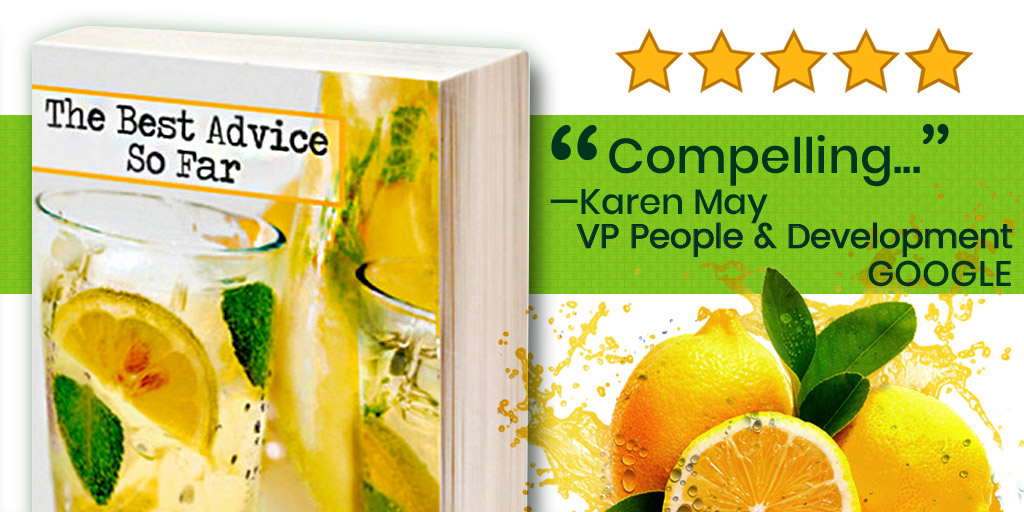
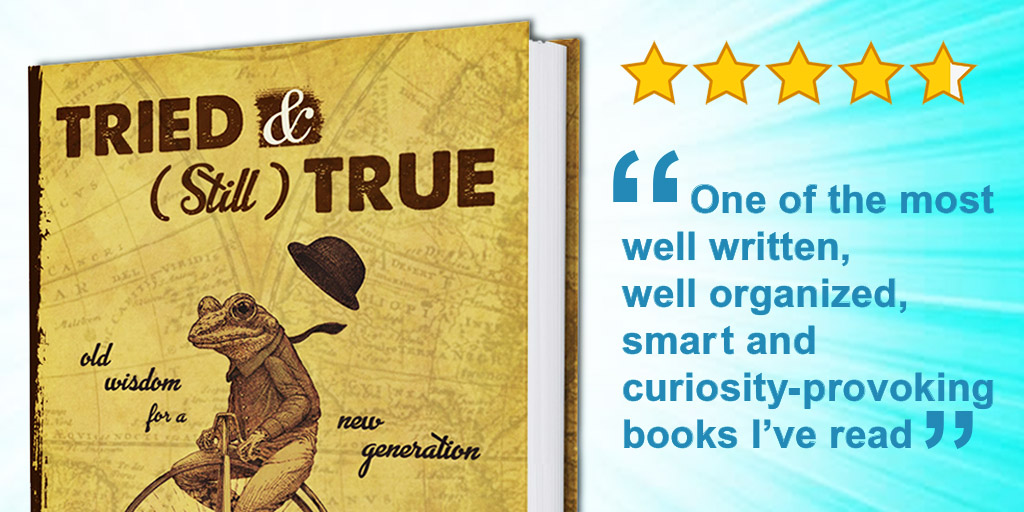
And those themes continue in new ways as I’m now in the process of writing my third book.
So it seems I’ve actually been helping people to be less lonely this whole time. Who knew?
Honestly, I did. I knew.
I knew because I’ve seen the results over and over in people’s lives for decades. As I said, I just didn’t have the science behind it until now.
Here’s some more good news. If you are feeling lonely, you really can do something about it. And as this new study shows, being less lonely isn’t reliant on having more people around (which is tough during the current extended pandemic). It’s something you can work on all by yourself. Today.
I encourage you to pick up one or both of my books. But I also understand that many people have been greatly affected by this pandemic and may not have money for extras right now. If you really want to read these books and simply can’t afford to, follow the links to the book titles above. You can get started reading a good deal of each of the two books using the download links I’ve provided there. And if you finish those and want to continue, drop me a message on my website’s contact form. Introduce yourself, let me know which book you’d like — and I will send you a full digital copy of either for free. No strings attached.
So why not start being less lonely right now?




big deal

This Thanksgiving held changes for my family.
My mom has been putting in long hours for a while now, caring for her own mother, so that my 93-year-old Nana can continue to enjoy the familiarity and comfort of living in her home of more than 60 years.
In addition to being plumb tuckered out most days, mom was also sick heading into Thanksgiving day.
So for the first time ever, we had our small family Thanksgiving out at a local restaurant instead of at my mom's house. No preparation. No dishes to do afterward. No leftovers to wrap and store. However odd it felt to set aside tradition this year, no one could refute the sense in it.
We were seated at a spacious, horseshoe booth at about 12:30. The meal was catered, buffet style.
Our server was a young woman named Kim. After making introductions around the table, I asked Kim if she would have any time after her shift ended to join her own family for Thanksgiving meal or desert. She paused, smiled in that way people so often do when they are trying to sound positive about something negative, and said, “All of my family has passed away.”
“Oh no…” I replied. “All of them? Or do you mean there's just no one local?”
Kim sighed, though her half-smile stayed in place. “Well, I have some distant relatives, cousins. But my own family are all gone now. I figured I’d work today so that people who do have families could be with them.”
I took a moment to just hold Kim's gaze and let that heavy disclosure stand in silence. Then I said, “Well, we will be your family for today. Let us be your comfortable table, no stress, OK?”
Kim was genuinely appreciative as she explained the buffet setup, then went to fill our drink order.
The meal was good. Plenty of offerings. And I was glad for my mother’s reprieve.
Kim stopped by many times to check on us. She was pleasant and did seem to relax and just be herself when she came to our table. After serving dessert, she brought the bill.
“Kim,” I said, “would you consider yourself an open person?”
Her eyes were curious. She nodded. “Yes, I think I am.”
I stood up to face her. “Good to know. Because I think you need a hug.”
No sooner were my arms opening than she was in them, hugging me back with all her might. She pressed her cheek into my shoulder. “I do need one. I really do. You have no idea…”
Then she just sobbed. “Thank you. You really have no idea.”
I did, though. I had an idea. And I went with it.
By the time she returned with the credit card, she’d collected herself. Her eyes still had that after-good-cry glassy look, and her cheeks were rosy. But something inside of her had shifted. Her smile was real. She just felt — lighter. She gave me one more tight squeeze as we prepared to leave. It felt like hugging a friend.
*****
I’m sometimes afraid when I share such stories that people will get the wrong impression — that it will come across like, “Aren’t I a wonderful person? Look how nice I am! Don’t you wish you could be me?”
I tell these stories in hopes that they will cause people to feel inspired, excited, hopeful and curious about the fun and possibilities of connecting with others. And I really do try to keep things in balance by sharing my failures as well. I want this to be a collective story about us, not just about me.
However, I’m sharing this particular story right now for another reason altogether.
Truth be told, I had no intention of ever writing about it at all.
Then my sister, Shannan, posted about it on social media:
My brother Erik gave to a woman yesterday during our Thanksgiving dinner at [a restaurant]… He didn't know her, she was our waitress… but he knew she needed it instinctively… and it left her in tears! But in a good way ❤️
❤️ 😇~ always be kind! Erik Tyler ❤️ ~ Thankful for the lessons that you are teaching me even today… Love you big brother!
Some responses to the post included these:
We need more people like you in the world, Erik.
I don’t think they make men like you anymore.
You are a rare breed.
The comments, as well as the post itself, were all very nice. However — and I’m being completely honest here — it all caught me rather off guard. To me, the fact that we were eating Thanksgiving dinner out at a restaurant instead of home was far and away more noteworthy than my hugging a girl who was feeling alone on a holiday.
When did showing kindness to a stranger become such a big deal?

*****
About ten years ago, I saw a movie called Children of Men. It’s apocalyptic. I hate apocalyptic movies, but I think I was tricked into seeing it by a friend. (Darn you, whoever you are!)
As I recall, the scene opens with a news station announcing a notable death, not of the oldest living person — but of the youngest. The deceased had been killed in a tavern brawl. The newscaster solemnly lists the young man’s name along with his age in years, months, days and hours. This is followed by the name of the new youngest person alive, also down to the hour.
For some reason, no one on earth had been able to conceive for over 20 years. Every elementary, middle and high school in the world was abandoned — overrun now with trees and wild animals.
As it turns out, a teen does become pregnant after all this time. No one knows why. Other nations hear about it somehow, and global war breaks out. Governments seek to gain control of this girl, to experiment on her with the knowledge that the country who discovers how to reintroduce conception will not only hold absolute power, but could also choose to be the sole nation to survive on the planet.
It’s all such an icky thought, I know, hence my loathing of apocalyptic films. So I’ll try to get to the point here quickly. (I do have one, I promise.)
There was something weird — creepy, unnerving — about birth being such a big deal.
Don’t miss this. It’s the crux of things.
Every birth is a big deal. But it’s not the rarity of the occasion that makes a pregnancy or delivery remarkable. We feel ooshy-gooshy about baby announcements because this one — no matter how many others came before — is special.
Each one touches people in different ways.
Each one reminds us once again of innocence and new starts.
Each one changes lives.
Trust me when I say, after having seen Children of Men, that there is a world of difference between joyfully welcoming another baby into the world for all the wonder it brings…
…and having the world gasp in astonishment because there is a baby at all.
*****
Like babies, every kind act is a big deal. And as with my sister's post, I think we should celebrate together when good happens in the world. I guess what I’m saying is that I just wish empathy, compassion and human connection didn’t draw attention to themselves merely on account of their scarcity.
I wish that, as with babies, we all were able to celebrate simple kindnesses in our lives, moment by moment, for both their individuality — and their abundance.
Wishing the world were different won’t change anything, though.
As Gandhi put it…
If we could change ourselves, the tendencies in the world would also change.
We need not wait to see what others do.


fake: part two

The week before last, I shared with you a post containing a bit of uncharacteristic rambling about fake things I like as well as a few I don’t personally care for. The central premise was that just because something is fake … doesn’t necessarily mean it’s bad.
Thing is, as I got toward the end of that post, some deeper thoughts began to tickle the fringe of my sleep-deprived mind. But they would have taken the post in a completely different direction (if I could have even managed to grab hold of them in that state). So I just decided to write a follow-up post.
Well, here we are. And so I shall.
In the comments section after that previous installment, there was quite a bit of interesting discussion about “fake people.” We all know them:
The too-loud laugher, or the guy with the glistening perma-smile that never quite creases the eyes.
The party guest who enters with fanfare, kisses the air beside both cheeks with an ostentatious *muah!* and always seems to be standing in camera-ready poses.
The co-worker who profusely issues compliments and nods heartily in agreement during conversations — and yet somehow always seems to be at the center of office gossip, drama and controversy.
Today, I’d like to offer some thoughts on fake people (and, quite possibly, ourselves). Let me be clear up front that my goal here will primarily be understanding and perspective, not necessarily solutions, though some of the latter may work themselves in.
the makings of fake

manipulation
I’ve made the claim often on this blog and in the book that virtually everything we do in life is done for a perceived gain. That gain is not always achieved, mind you, but our motivations remain in place.
Some of the nicest, kindest people you’ll ever meet are heroin addicts. They’ve mastered the art of penitent looks and crocodile tears. They give award-winning performances when they tell you that you’re the only person left who cares about them or explain the legitimate-sounding reason they need that loan from you.
Flirtation and insincere or surface compliments might be dished in hopes of scoring a rowdy romp, knowing before the first smile is flashed or eyebrow is lifted that it’s just for tonight.
The slickest apologies are often delivered by those who simply want you to stop talking about their faults, with never the slightest intention of actually changing.
Behaving in an outward manner that appears to be at odds with our inner self can be an effective way of getting what we want from people.
But don’t suck your teeth or point your finger at “those people” quite yet. If we’re honest with ourselves, we’ve all been guilty of me-centered insincerity at some point or other:
We've been more solicitous of a famous or influential person than we’d have been to the average Joe, in hopes that it may open doors for us down the line.
We've led into a conversation with a friend by telling them how wonderful they are, all the while knowing that it’s funneling down to asking them for a favor.
We've feigned sick or claimed to be busy with imaginary tasks, in order to get out of an awkward or tedious situation.
I’m not implying that we remain passive with manipulative people or let them off the hook. I’m simply suggesting that we strive to minimize disdain wherever possible, remembering the times we ourselves have given in to the temptation to use our acting skills for self gain.
attention
I know quite a number of people who, it seems, would shrivel up and cease to exist if they weren’t able to keep a mainline of attention flowing in.
This is the too-loud laugher at the party.
It’s the big spender — with the pile of credit card bills in the secret box at home.
It’s the limelight-stealer who always seems to have coincidentally just done something just a little more amazing than whoever spoke last.
It’s also that co-worker I mentioned earlier, or that one friend in the group, who’s everyone’s confidante — and the first to gossip in corners. Fanning flames and watching the sparks jump and catch in new locations is a fascination. Seeming to run to put them out as well feels heroic. All that’s important is remaining at the center of the action.
I’ve had countless opportunities to get past the surface with “fake” people of this variety. It often takes a long time and lots of patience, because the need for attention is every bit as much an addiction as drugs or alcohol. And withdrawal or detox are just as painful. Normal levels of attention feel the same as being invisible. And feeling invisible … feels like being dead.
Often, if you go back far enough, this brand of “fake” stems from feeling unloved. And along the way, attention in its many forms became the substitute: the close-enough. Ironically, while these people may occasionally get a short-lived fix, their approach usually leads to even more rejection and loneliness.
safety
For some, smiling, nodding in agreement and laughing at every joke feels safe. Social niceties, personal inquiries, stories and winks can come off as feeling rehearsed … because they are.
Unlike attention-fake, the safety-faker is generally well-liked. They're popular even — just not well-known.
Large groups actually feel safer to these people, because they can blend in and use their safety go-tos often without being discovered. They are the best party hosts — and yet the most insecure people.
These “fakers” don’t have malicious or deceptive intent. In fact, if you take the time to get to know them, you might be surprised to find that they’ll confess they are “terrible with people” or uncomfortable with conversation. Once their rehearsed stand-bys run out, they begin to feel stuck, even panicked, and will often withdraw.
Safety-fake can also be a substitute for love: "I know how to be what I think people want me to be. But I fear people wouldn't like the me that I really am inside."
This would also include the people pleasers (my former self included). People like happy, fun, entertaining people. So we learn to be happy and fun and entertaining — even when we’re crumbling inside.
etiquette
Many people I know were simply raised to smile and laugh warmly, despite how they might be feeling about a person or situation. Think of the classic Southern Belle (though this type of rearing is certainly not limited to any particular region).
And really, the problem isn’t with practiced cordiality itself. In fact, most of us put this into play at some time or other.
You’re at that gathering where you’ve been cornered by someone who’s been talking for the last half hour without pause about the different types of eyes used in puppet fabrication. (Yes, this really happened to me.) You’re starting to sweat and feel a tightness in your throat, panicking that you’ll still be standing there in another hour. Or two. Will anyone rescue you?
But what do you do? You raise your eyebrows, smile and say, “Uh-huh” or “Mmmm…” with much nodding of head — even after the words have turned to the horn sounds the adults made in the Peanuts cartoons.
What's the alternative if you can't get a word in edgewise? Run away in the middle and later claim that you had to throw up? Shout over them (at your friend's party, mind you) and tell them outright that you frankly don’t give a rip about whatever they’ve been talking about?
Sometimes, you just have to grin and bear it, reminding yourself that the present squirmy feeling won't matter in a year. (Though when I know the corner-trap guest is at a party, I always plan my escape with certain friends who stay on the lookout, ever ready for that rescue.)
Acting in contrast to how we may feel based on etiquette is different from doing so for reasons of safety. The former is based on “good breeding” (whether the instruction itself was balanced or not) and may be employed by confident people as a point of strength, whereas the latter is typically a coping strategy for dealing with insecurity.
sincerity
A couple of years ago, a change in health plans landed me with a new primary care doctor. Upon my very first visit, I found the usual questions taking a turn down an odd path. Do you smoke? and Any allergies? drifted into questions about family history of depression, spending habits and the like. Keep in mind that this was within five minutes of meeting me for the first time.
I stopped him mid-question and stated directly, “It seems to me that you’re attempting to diagnose me with mental illness, bipolar disorder if I had to guess.”
He stopped writing and bit his lip. Guilty.
“Well, if you want to know, yes. You do seem a bit too … happy.”
There have been times when I’ve invited someone to a gathering with my close circle of friends, and they’ve confided in me afterward, “They all seem great. But it felt … weird. Nobody is really that nice, for that long.”
And we aren't the only ones. I've known many wonderful people across a lifetime who've been labeled by some as "fake," but who I knew to simply and legitimately be that nice.
That excited.
That gregarious.
That happy to see their friends.
That interested in what others had to say.
Even if it’s perhaps not the norm or quite what you may be accustomed to.
*****
Just as with the first post on the topic, let me point out that perhaps what you see as “fake” may be more complex — less black-and-white — than you’ve been seeing it.
I might even go so far as to say that there are no fake people. There are only real people making real choices for specific reasons.
This also seems the perfect opportunity to reiterate one of the central pieces of advice from the book:
Focus on the person, not the problem.

Again, my goal here isn’t to suggest how to “fix” anyone. My hope is that in considering the why over the what, you may find ways to trade judgment for empathy a little more often.
And in the process, you may even gain some insight into your own choices where being fake is concerned, toward making different choices tomorrow.

what not to say

I always seem to have some crazy story or other to tell, don’t I?
I was asked a thoughtful question recently, as my birthday nears: “What would you like to see more of and less of in the year ahead. After The Zinc Fiasco of 2015/2016 and last month’s visit to Death’s door (aka, The Black Pill Debacle of 2017), my “less-of” response seemed a given”
I’d like to have less … in the way of health issues.
Don’t get me wrong. I consider myself very fortunate. Yet when birthday presents past include a medical dictionary marked with sticky strips on every page containing some strange malady I’ve encountered … one might have reason to suspect that something’s up.
And many have told me I’m the healthiest sick person they’ve met so far. (I suppose that’s true to my nature, being a lifelong “balance of extremes” as I call it.)
Well, wouldn’t you know, a week ago today (just after I finished writing last week’s post, in fact), I wound up adding another sticky to that medical dictionary of mine.
The hedge along the driveway had turned into a jungle; and the worker the landlord had hired to take care of it had just informed her that he’d have to postpone — until the second week of September. Well, that was just not an option. The drive would literally be impassable by then. So the landlord asked if I might consider taking care of tedious job for some cash. I agreed.
Picture it if you will:
- Eight-foot overgrown hedge
- Five-foot ladder on an uneven gravel drive
- Electric hedge trimmer
So there I was, tip-toeing on the second-to-last rung of the too-short ladder, stretching as far as I could over the top of the hedge to get those last few outcropping branches at the far side … when the ladder began to wobble.

I reached out instinctively to steady myself … on nothing … and in doing so, let go of the heavy, two-hand-operated saw …
… which dropped immediately to continue buzzing on into my left hand.
It’s hard to describe what you wind up thinking in a moment like that. One thing is for sure: you just know it’s bad.
I tossed the saw in the other direction and jumped (or, rather, fell and happened to land on my feet) as the ladder toppled.
Before I could manage to clutch the injury in a tight grip with my good hand, I got enough of a glimpse to see the gore. Blood bubbled up through the fingers that closed around it, dripping to the ground.
I couldn’t feel anything at first, of course. A small mercy at least. But my brain didn’t need to feel anything in order to imagine the worst.
Was it one finger or two? Were they still attached or was I just holding the pieces together?
I ran inside and knocked as hard as one can with an elbow on the landlord’s door.
No answer.
I was going to have to deal with this myself.
[Sinking feeling in pit of stomach.]
Now, I’m famously calm, cool and collected when it comes to dealing with other people’s injuries. But when it comes to my own … I just can’t manage the emotional distance necessary.
I got upstairs and ran the kitchen sink. The time had come. I’d have to look.
Quickly, I plunged my hand under the gushing stream of water, which turned pink as it gurgled and swirled its way down the drain. Part of my left index finger flapped up and down as the flow rushed over it.
Well, it was just one finger.
And it didn’t fall off in the sink.
This was good.
The pain was setting in now and, while the blood continued to pulse out, I was still able to assess that it was a deep, jagged cut. Between fluttering flesh and blood, I could see white or yellow.
This was not good.
I must’ve kept my finger under the water a full five minutes, squirting dish soap over everything often and trying to remember everything I’d learned in life thus far about serious wound care.
Make sure it’s clean.
Keep pressure on it.
It was probably time for that pressure. I grabbed a wad of paper towels and squeezed it around my finger with a vice grip using my other hand. I could feel it throbbing. Soon the paper towels were red. I changed them.
Keep it elevated above heart level.
Put ice on it.
I did these things.
Avoid infection at all cost.
I remembered something about salt. I filled a large bowl with water, more dish soap and copious amounts of salt, then sank my hand — bloody wrappings and all — into the bowl.
The Best Advice So Far: Don’t add copious amounts of salt to an open wound if it can at all be avoided.
It was a long afternoon and night.
Eight hours later, however, after doing everything right as far as I could figure, it was still bleeding pretty badly.
*sigh*
I hopped in the car, continuing to keep my mummified hand held high, and drove myself to the ER.
*****
Stick with me here. I promise — I’m not delirious from pain meds. There is a connection between my story and where I’m going with things next.
*****
Recently, I caught some episodes of the Netflix original series Luke Cage. It takes place in Harlem and centers on a main character who has found himself with unusual strength and impenetrable skin after being the subject of a prison experiment. I think it’s fair to say that 95% of the characters in the series are either black or Hispanic.
I found it a hugely entertaining show. Yet I do believe I heard the “N-word” more often by the end of the first episode than I’d heard in total during my lifetime to that point.
Thing is, while I’m sure many might debate this on several levels … it sort of fit. It wouldn’t have seemed as real if the writers and directors had had the street kids and kingpins of Harlem referring to one another as “African-Americans,” or calling their inner circle “Buddy” or “Pal.”
I’ve worked closely as a mentor with inner-city kids. Close friends in the black community really do call one another — even themselves — the “N word.” But take my advice: I wouldn’t try it if you’re white, no matter how much you may like someone.
I have gay friends who quite affectionately call one another … well, terms that I wouldn’t recommend you use if you’re a straight co-worker.
And while your spouse may look in the mirror, sigh in exasperation and say, “I’m getting chunky,” please — don’t take this as permission for you to sigh in exasperation and say, “Yes, you certainly are getting chunky.”
Debate it all you like. There are just some things that a person can say about himself or herself that others simply can’t (at least not without heaping woe upon your own head).
*****
There I was in the ER. During the many phases of check-in and registration, or as I chatted with others in the waiting room, I stayed as positive as I could for someone who still didn’t know the extent of my injury. I bolstered myself both mentally and aloud to others with such things as “I’m lucky. It could’ve been worse.”
But four hours later, when the receiving nurse finally called me in, I found myself a little put off when she greeted me with a joke (“At least it wasn’t your middle finger; you need that one”) followed by a statement of exactly what I’d been saying myself so many times to that point:
Well, it could’ve been worse.
You see, when I say it about myself, it’s encouragement and positivity.
But when someone else says it to me … it has the opposite effect. It invalidates my pain, my fear, my concern.
Other seemingly ubiquitous exclamations that I’d include in this category of “I-can-but-you-can’t”:
I know exactly how you feel. Why, when this happened to me …
I once knew a guy who [had something more horrific happen to him].
(About a break-up or divorce) Well, now that they’re gone, I can tell you that I never really liked him/her anyway.
The problem with each of these is that they minimize what the other person is feeling or experiencing.
So what do you say instead? Try:
Oh no … you poor thing.
I’m so sorry this happened to you.
I’m right here if you need me for anything.
This isn’t coddling. It’s not commiserating. It’s called empathy. And we’d each do well to know the difference.
In fact, genuine empathy doesn’t require words at all.
It’s looking someone in the eye with compassion.
It’s a shared grimace or a shoulder squeeze.
It’s letting silence be silence if need be.

*****
I was fortunate enough to have gotten a doctor who specialized in wound surgery. He commended me on how clean I’d managed to keep it. And he shook his head, mystified, that the cut was as deep and covered as much area as it did, and yet hadn’t disrupted any of the major “stuff” in such a tight space: bone, joint, tendon (all of which he could also see), artery, major nerves.
Given the location and jagged nature of the wound, he decided that going in with stitches might cause more problems than it solved. He used some powders and ointments that temporarily stopped the bleeding and applied liquid stitches (which I still think is just plain old SuperGlue), compression wrapped it, splinted it, and told me not to unwrap it, move it or get it wet for four days — unless, of course, the bleeding resumed.
I’m happy to say, while I’ll have nasty scar, the healing process is going remarkably well. Any loss of sensation is slight, and I have nearly full motion back.
I consider myself highly fortunate.
It could’ve been worse. Much, much worse.
But if you care about me, don’t be the one to tell me so.
*****
A few additional thoughts in closing:
I do believe that there’s a nebulous amount of time that passes after hard things, after which we might be able to agree with someone aloud about how lucky they are or how “it could have been worse” without being too insensitive. If you’re not sure how much time that is, don’t chance it and err on the side of caution.
I also think there are a select few people who, for them to say such things to one another even at the start, is almost the same as saying it yourself. This includes only the very closest of friends and family; if you’re not sure whether or not you hold that place with someone — you most likely don’t.
A rule of thumb I try to live by is this: only if I myself would feel completely loved, supported and validated were a specific other person to say such things to me, should I assume it’s OK for me to say such things to them.