

lights

The night was unusually dark and the water unusually warm as I walked along the beach. Very few houses within view were lit, and even the moon and stars were obscured by storm clouds. Even so, I was content to make my way by the intermittent flashes of heat lightning dancing overhead — and a bluish-green sparkle blinking here and there around my feet as I shushed through the shallow surf.
Bioluminescent algae.
I prefer the scientific name, which sounds more poetic: Noctiluca scintillans. “Night lights.”
As my eyes adjusted, I could make out a family of four ahead — two parents and two children, a boy and a girl, walking my way. Drawing closer, it became clear that they were rapt by the scintillations, evidently their first time seeing the phenomenon. The little girl looked entranced, eyes wide as she stared at the fairy perched on her upturned finger. Her brother, though clearly fascinated, looked a bit dejected, unable to “catch” one of his own.
I bent down and carefully scooped a small patch of sand, careful not to disturb the glowing particle atop it. I held it out toward the boy. He gladly accepted it, just as carefully joining me in the transfer from my finger to his own. He grinned sheepishly, thanking me with his eyes.
I continued my trek forward, and the family continued theirs in the opposite direction, the mom encouraging the boy to speak his appreciation for the gift I’d offered. “Thank you” he called back over his shoulder in a small but heartfelt voice, though his eyes never left the magic happening on his fingertip.
I walked on a bit further, feeling very much like a child myself as I spotted particularly bright specimens, sometimes stooping to scoop one up and examine it from a place a few inches in front of my nose.
At a certain point, I stopped, took a deep, contented breath and then turned and headed back the way I’d come.
Perhaps ten minutes later, I spotted my little friend where his family had paused to take in the display a while longer. The boy’s eyes met mine in recognition as I approached. I smiled broadly, calling “Hello again!” He returned the “hello” and the smile, adding a little wave of his hand — the kind of wave that only the very young can really pull off genuinely, without seeming comical.
I walked on. He returned to playing.
I will never see the boy again. Even if by some coincidence I did, I wouldn’t recognize him, nor he me. It had been too dark, the exchanges too fleeting — perhaps five seconds total, including to and from. A few blinks. And yet I couldn’t help but think that those brief moments were not insignificant.
Somehow, they mattered.
I had become part of that boy’s collective outlook on life. I’d provided proof that not all strangers are inherently bad, that not all darkness need be scary. I’d given him reason to believe that the world can be a good and kind and safe place.
Thing is, despite my being an adult, he had done the same for me.
You see, in the weeks leading up to my annual Florida vacation, I’d been experiencing a sort of dark shadow creeping in around the edges of the trip. I had a sense of what was causing it. Over the previous year, Florida had become a hotbed for political upheaval, division and outright meanness. Even the childlike simplicity of Disney had been marred by controversy and lawsuits borne of pettiness and spite. Some of my favorite places to visit were still in ruins, having been devastated by Hurricane Ian less than a year earlier. The news had continued to announce the record high ocean temperatures that were depleting the water of oxygen, endangering marine animals.
Despite a well-stocked emotional toolbox, I just couldn’t seem to shake the foreboding feeling. I believed as firmly as ever that “You always have a choice,” yet so much of what I now associated with Florida seemed beyond the scope of my choices. And that was tainting my expectations before I’d even arrived.
Once vacation had begun, I’d used the choices I did have well — choices concerning focus and perspective. Still, part of me was continually aware of that faint feeling of dread lurking just outside my constructed blinders.
And then a tiny light was passed between strangers. A joyful greeting. And suddenly, everything felt simple again.
I stood still a few moments longer, taking in the twinkling spectacle playing out along the water’s edge, reminded once more that a glimmer of hope or kindness shared may continue to ripple onward, outward — even across a lifetime.




it's a breeze

One day last week, I wished a friend of mine a happy birthday. He turned 30 and was feeling old. Interestingly enough, he was a sophomore in high school when I met him, and I was older than he is now. So I was able to paint a convincing picture for him as to just how young he still is.
As we talked about getting older, a famous quote came to mind:
“With age comes wisdom.”
Yet I’m inclined to agree with the second half of Oscar Wilde’s observation on the matter:
“… but sometimes age comes alone.”
I don’t need to look very far to find middle-aged adults who are just as petty, rash, irresponsible or egocentric as they were when they were teenagers. (Some, in fact, are even worse off now than when they were younger.) Likewise, I know many in their twenties who are quite well-adjusted and have exemplary character.
That is, wisdom comes not merely from experience but from intention to ponder that experiences. To learn from it. To make new choices.
To change.
Well, after this exchange with my still-young friend, my eye was immediately drawn to a seemingly trivial bit of movement in my living room—a sight so familiar to me that, if not for that particular conversation, it would certainly not have been noteworthy let alone served as the inspiration for a blog post.
At the open window, the edge of a sheer white curtain floated and fluttered in the spring air.
In that moment, I was transported to a particular night in February back when my birthday friend was still in high school. He and a dozen or so other guys his age were gathered in my home on a Monday night for our weekly meet-up. They crowded onto the olive green sectional or found space on the living room floor, happily munching on pizza, which was the norm.
The conversation that night coalesced around a theme. Many of them expressed that they invited change, that they wanted more for their lives, that they were open to deeper connection with others and a sense of real purpose. They came faithfully each week, ready to absorb. They were honest about who they were and where they excelled or struggled. They took part in discussions and read books. But they hadn’t seen the personal progress they’d expected “by now.” They still weren’t feeling or experiencing whatever it was they thought they should be feeling or experiencing.
One or two of them even hinted that they were disappointed that the other group members hadn’t gone to greater lengths in supporting them during the week between meetings.
Where was the magic that would grant them the life they were looking for?
As they continued sharing their thoughts, I got up and headed for the kitchen, presumably to grab another slice of pizza for myself. What no one noticed was that, on the way, I cranked the heat up another ten degrees.
Even at a moderate 70°, I can tell you that 15 teenage boys will heat up a room quickly. With the thermostat now at 80°, it wasn’t long before the sweat was trickling and they were begging for relief.
Instead of lowering the thermostat, I opened the two windows along one side of the room. “Let’s see if this cools things down quickly.” But even though it was a frigid winter night, the temperature in the room didn’t drop by even one degree. No air was coming in from those open windows.
“That’s not working,” they moaned. “Can you just turn the heat down?”
I had them where I wanted them. Breaking the current flow of conversation, I said, “The windows are wide open. Why do you think the cold air isn’t coming in?”
One of them held his hand up to a screen, as if he thought for a moment that maybe a tropical heat wave had mysteriously descended upon New England. I could see that they were thinking. Another offered, “Maybe there’s no wind tonight.”
After a minute or so more, when I was sure their minds were open, I got up without a word and disappeared down the short hall. I opened my bedroom door (which I knew they would hear). Twenty seconds later, I returned and stood in the center of the room. I pointed to the open windows and, as if I were a sorcerer, freezing air whooshed into the room. In less than a minute, they were bundling up in the hoodies they’d so recently discarded; and within two, they were shivering and had had enough.
I turned down the thermostat, closed one window, leaving the other open just an inch or so as I revealed to them how I’d gotten that air to come in—to transform a stagnant space with something new and refreshing.
My secret? I had opened another window.
Currently, every single person on the planet is affected in some way by the current coronavirus pandemic. Many are feeling fearful, worried, overwhelmed, tired, alone. But I’m just as convinced now as ever that the remedy is not to simply “sit by the window” in our stuffy little spaces, wondering when joy will start coming back into our lives.
Air only comes in when we open another window to let it flow back out. Likewise, I’ve found that life remains stagnant if we merely sit around wishing for fortune to smile upon us (and grumbling when it doesn’t meet our timetable). No, most often positivity comes into our lives only when we open windows that let it flow through us and out again.
I’m not talking solely about karma here (though I’m not debating it either). I’m talking about actionable cause-and-effect.
Are you waiting by the window for feelings of isolation to end? It’s easy to imagine that a virus or social distancing restrictions are the cause of those feelings. But they really aren’t. I know people who live in the same house and yet feel isolated. Conversely, I know people who haven’t seen one another in months or years, yet who sustain real connection. So actively seek to open windows of connection with others. It’s been my observation during the times I am out in public—grocery shopping, for instance—that the masks and gloves and six-foot rules are beginning to cause people to mistakenly see each other as the threat, rather than the actual virus. But we are not the enemy. We are allies, in this together. Yes, it may feel strange. But we’re all the same people we were before this began. So make eye contact. Say hello. Smile and wave to your next-door neighbor when you go out to check your mail. The best way to start feeling connected is to take the initiative and be a connector.
Are you in need of encouragement? Open windows to encourage others. Call and check in with someone. Send a text to share a fun memory with a friend or family member. You may be surprised how quickly you yourself begin to feel encouraged.
Are you feeling weighed down by the onslaught of information about all that seems wrong with the world? Turn off the news and go be the window to something right with the world.
Today, after food shopping, I pulled into a drive-through to get a breakfast sandwich. Another driver arrived from a different direction at the same time, but waved me on to go first. In return, I secretly paid for his order with my own (which cost me about two bucks). Each of us had played a small part in reminding the other of what’s right with the world. I drove away smiling—feeling connected, encouraged and cheerful.
Every one of us has something we can contribute to what’s right with the world. And we can do that right now. No need to wait for the pandemic to subside or restrictions to be lifted.
Are you a musician? Share a song or video concert for others to enjoy.
Do you bake or garden? Make a batch of cookies or pot a small plant, and leave it on someone’s doorstep along with a kind note. Really, any gift, however small, would go a long way. A little bag of birdseed for someone’s birdfeeder. A board game you don’t use anymore. A book you enjoyed.
Are you a carpenter? Build a birdhouse and give it away.
Spend a lot of time on social media? Go beyond hitting “like” or “share” and leave a personal comment or send an uplifting message. Be deliberate about sharing positive posts rather than negative news, controversial content or political persuasions.
Money is tight for many right now. But could you donate even just one dollar to a worthwhile charity that will help someone else in need?
Don’t have a dollar? Do you have enough spare change for a stamp you could use to mail a hand-written note to someone who might be feeling down or forgotten?
As an author and blogger, I’m using my words to promote hope and happiness where I’m able.
Here’s my “best advice”: stop sitting despondently by that same window, waiting for good things to start happening. Get up. Go open a few windows outward to the world. Before you know it, you’ll feel the winds of positive change beginning to stir.


big deal

This Thanksgiving held changes for my family.
My mom has been putting in long hours for a while now, caring for her own mother, so that my 93-year-old Nana can continue to enjoy the familiarity and comfort of living in her home of more than 60 years.
In addition to being plumb tuckered out most days, mom was also sick heading into Thanksgiving day.
So for the first time ever, we had our small family Thanksgiving out at a local restaurant instead of at my mom's house. No preparation. No dishes to do afterward. No leftovers to wrap and store. However odd it felt to set aside tradition this year, no one could refute the sense in it.
We were seated at a spacious, horseshoe booth at about 12:30. The meal was catered, buffet style.
Our server was a young woman named Kim. After making introductions around the table, I asked Kim if she would have any time after her shift ended to join her own family for Thanksgiving meal or desert. She paused, smiled in that way people so often do when they are trying to sound positive about something negative, and said, “All of my family has passed away.”
“Oh no…” I replied. “All of them? Or do you mean there's just no one local?”
Kim sighed, though her half-smile stayed in place. “Well, I have some distant relatives, cousins. But my own family are all gone now. I figured I’d work today so that people who do have families could be with them.”
I took a moment to just hold Kim's gaze and let that heavy disclosure stand in silence. Then I said, “Well, we will be your family for today. Let us be your comfortable table, no stress, OK?”
Kim was genuinely appreciative as she explained the buffet setup, then went to fill our drink order.
The meal was good. Plenty of offerings. And I was glad for my mother’s reprieve.
Kim stopped by many times to check on us. She was pleasant and did seem to relax and just be herself when she came to our table. After serving dessert, she brought the bill.
“Kim,” I said, “would you consider yourself an open person?”
Her eyes were curious. She nodded. “Yes, I think I am.”
I stood up to face her. “Good to know. Because I think you need a hug.”
No sooner were my arms opening than she was in them, hugging me back with all her might. She pressed her cheek into my shoulder. “I do need one. I really do. You have no idea…”
Then she just sobbed. “Thank you. You really have no idea.”
I did, though. I had an idea. And I went with it.
By the time she returned with the credit card, she’d collected herself. Her eyes still had that after-good-cry glassy look, and her cheeks were rosy. But something inside of her had shifted. Her smile was real. She just felt — lighter. She gave me one more tight squeeze as we prepared to leave. It felt like hugging a friend.
*****
I’m sometimes afraid when I share such stories that people will get the wrong impression — that it will come across like, “Aren’t I a wonderful person? Look how nice I am! Don’t you wish you could be me?”
I tell these stories in hopes that they will cause people to feel inspired, excited, hopeful and curious about the fun and possibilities of connecting with others. And I really do try to keep things in balance by sharing my failures as well. I want this to be a collective story about us, not just about me.
However, I’m sharing this particular story right now for another reason altogether.
Truth be told, I had no intention of ever writing about it at all.
Then my sister, Shannan, posted about it on social media:
My brother Erik gave to a woman yesterday during our Thanksgiving dinner at [a restaurant]… He didn't know her, she was our waitress… but he knew she needed it instinctively… and it left her in tears! But in a good way ❤️
❤️ 😇~ always be kind! Erik Tyler ❤️ ~ Thankful for the lessons that you are teaching me even today… Love you big brother!
Some responses to the post included these:
We need more people like you in the world, Erik.
I don’t think they make men like you anymore.
You are a rare breed.
The comments, as well as the post itself, were all very nice. However — and I’m being completely honest here — it all caught me rather off guard. To me, the fact that we were eating Thanksgiving dinner out at a restaurant instead of home was far and away more noteworthy than my hugging a girl who was feeling alone on a holiday.
When did showing kindness to a stranger become such a big deal?

*****
About ten years ago, I saw a movie called Children of Men. It’s apocalyptic. I hate apocalyptic movies, but I think I was tricked into seeing it by a friend. (Darn you, whoever you are!)
As I recall, the scene opens with a news station announcing a notable death, not of the oldest living person — but of the youngest. The deceased had been killed in a tavern brawl. The newscaster solemnly lists the young man’s name along with his age in years, months, days and hours. This is followed by the name of the new youngest person alive, also down to the hour.
For some reason, no one on earth had been able to conceive for over 20 years. Every elementary, middle and high school in the world was abandoned — overrun now with trees and wild animals.
As it turns out, a teen does become pregnant after all this time. No one knows why. Other nations hear about it somehow, and global war breaks out. Governments seek to gain control of this girl, to experiment on her with the knowledge that the country who discovers how to reintroduce conception will not only hold absolute power, but could also choose to be the sole nation to survive on the planet.
It’s all such an icky thought, I know, hence my loathing of apocalyptic films. So I’ll try to get to the point here quickly. (I do have one, I promise.)
There was something weird — creepy, unnerving — about birth being such a big deal.
Don’t miss this. It’s the crux of things.
Every birth is a big deal. But it’s not the rarity of the occasion that makes a pregnancy or delivery remarkable. We feel ooshy-gooshy about baby announcements because this one — no matter how many others came before — is special.
Each one touches people in different ways.
Each one reminds us once again of innocence and new starts.
Each one changes lives.
Trust me when I say, after having seen Children of Men, that there is a world of difference between joyfully welcoming another baby into the world for all the wonder it brings…
…and having the world gasp in astonishment because there is a baby at all.
*****
Like babies, every kind act is a big deal. And as with my sister's post, I think we should celebrate together when good happens in the world. I guess what I’m saying is that I just wish empathy, compassion and human connection didn’t draw attention to themselves merely on account of their scarcity.
I wish that, as with babies, we all were able to celebrate simple kindnesses in our lives, moment by moment, for both their individuality — and their abundance.
Wishing the world were different won’t change anything, though.
As Gandhi put it…
If we could change ourselves, the tendencies in the world would also change.
We need not wait to see what others do.


creative love

Due to an unexpected turn of events this week (a stolen wallet, fraudulent charges to my bank card and all that goes along with getting your life back to normal afterward — a topic about which I may write in more detail at a later time), I'm still not quite over the finish line where the audiobook release of The Best Advice So Far is concerned.
In the meantime, I thought I'd share one more audio chapter — Chapter 14: “Creative Love.”
This chapter has remained one of the most popular and most talked about chapters of the book. What's more, the chapter combines memories from 4th-of-July celebrations both recent and long past. So in honor of Independence Day, Tuesday here in the U.S., I thought sharing this chapter would be apropros.
Click the link below to listen to the official audiobook recording of Chapter 14: “Creative Love” (the full chapter text is below, if you'd like to follow along):

CHAPTER 14
CREATIVE LOVE
A year has passed since I got caught in that 4th-of-July traffic jam I told you about in the chapter on choosing positivity. Last night, I joined the best people for food and fireworks by the ocean. Unlike many towns, this one has taken to allowing private citizens to light their own fireworks along the shoreline. Not sparklers and bottle rockets, mind you. Real, honest-to-goodness fireworks. And lots of them.
Of course, this is all off the books. Fire and police officials “happen” to be very busy in remote parts of town at those hours, it seems — ::wink wink:: — but let's just keep that between ourselves, shall we?
As our little clan made our way along the sidewalks, the town was out in force. Patriotic music played strong and clear as we passed one yard, then seemed to garble like the tuning of a short-wave radio as we walked, only to gradually form itself into another solid tune as we approached the next yard — all accompanied by much boisterous and bad singing. Dogs strained at leashes, barking wildly at the cacophony. Children clustered together on quilts and blankets, bedecked with glowing bracelets and necklaces and halos, all wide-eyed and slack-jawed as they beheld the wonders in the sky.
The sea wall was packed, layers deep. No one seemed to mind. But I navigated my way through the crowd and down the concrete steps, then jumped from the wall to enjoy the spectacle from the rocky beach below. The nearest firework bundles and boxes were a mere twenty feet away from where I sat. Should be exciting.
The colors and assortment were dazzling, all fired quite low and seemingly right overhead. But what struck me most was the magnitude of sound. Whizzing. Screeching. Whirring. BOOMing. It was the loudest I could recall.
Ever.
At one point, it became overpowering. The sound — not the light — was actually hurting my eyes. So I closed them for a moment, placing my hands over them and pressing firmly with my fingertips. That's when the flashback hit.
Ricky.
It was the summer I had graduated from high school. I'd gotten a job at a school for the blind, and I had three “boys” assigned to my care, all of them in for a short-term summer program. In truth, they were each older than I was.
Ricky was 18. Aside from being blind, Ricky had pronounced Asperger's Syndrome. This was also accompanied by a form of echolalia. That is, Ricky's tendency was to copy or rephrase what other people said, rather than forming responses with any real personal meaning. So, if one asked Ricky, “Are you having a good day?” he might reply “I'm having a good day” — whether he was having a particularly good day or not.
Ricky was the best. Though he was a year older than I was, he had the affect and voice of a sweet-tempered six-year-old. I was fascinated, but even more determined to have actual communication with him. I was 17 and had no real training. What did I know. But I thought it odd that staff just fell into Ricky's patterns, asking predictable and repetitive questions to which they got his predictable and repetitive responses. One day early on, I tried something.
“Hi, Ricky,” I said.
Ricky smiled, weaving his head back and forth, which I already understood meant that he was excited and happy. “Hi. Hi, Ricky. Hi,” he replied.
“Did you have a good day today?” I asked.
“I had a good day today,” Ricky said.
“And what did you like about today?” I continued.
Ricky fell silent. He stopped swaying as if he were listening for something far off. Then he continued his dance, without answering me.
I tried again. “What did you like about today, Ricky?”
He paused again for a moment, then resumed his rhythmical bobbing. “It's nice,” he said.
I welled up (much as I'm doing even now as I recall it). Ricky had given a real answer!
I continued asking only questions which Ricky could not repeat or rephrase with ease. In what seemed a very short time, Ricky and I were having meaningful exchanges regularly.
I remember the day — or rather the night — that Ricky spoke first to me, without my having asked him anything. I had just tucked him into bed and he began to cry. “I'm sad,” he said. This was very unusual for someone like Ricky, to report on how he felt, however obvious.
“Why are you sad, Ricky?” I asked.
“Mom,” he said.
“You miss your mom?” I asked, again finding this peculiar behavior, even without any real training.
“I miss my mom,” he replied, giving in to his comfort zone of repeating. But that was all right. He'd already told me as much.
Ricky sobbed for a long time that night without any more talk. I stayed with him, lightly raking his hair with my fingertips or squeezing down his arm, which he enjoyed. After more than an hour, he finally fell asleep.
This same scenario played out for the next three nights. Ricky would cry when I put him to bed, and I would stay with him and get him to sleep. After a few days of contemplation at his bedside, I had concocted a plan. There was no way to be sure whether or not it would work, except to just try it and see what happened.
The next day was my day off. I picked up a painter's cap for $5.00. I chose it because it was soft and durable, and the lid was flimsy instead of hard. The following day, I tucked the hat inside my work bag. When bedtime came, sure enough, Ricky began to be homesick. I hated to think about the night before, because I knew the other staff member would not have stayed with him or comforted him. As Ricky began to cry, I took out the hat. I placed it into his hands and helped him feel it. “What do you think this is, Ricky?”
“A shirt,” he guessed.
“Nope. It's not a shirt. Good guess. Try again,” I urged.
“Try again,” he agreed. A few moments later, he said, “Underwear,” then scrunched his face up and giggled like he'd told a naughty joke.
Weeks ago, when Ricky had first arrived, I'd helped him unpack. He had exactly two pairs of yellowed underwear in which the elastic waistbands were stretched and torn. There were two undershirts and one pair of socks, all in similar repair, along with a couple of T-shirts, a pair of jeans and one pair of shorts. This was to last the whole summer. The following day, I had immediately gone shopping and later presented Ricky with a small but new wardrobe — one item at a time. And so it seemed he did remember the day I had given him the underwear, as he guessed at what lay in his hands now. The memory of Ricky's reddened face, giggling even as the tears of homesickness streamed down, is still very clear in my mind.
I laughed, too, and replied as if he'd really gotten me with his joke. “No, Ricky, it's not underwear, silly. It's a hat.”
“It's a hat,” he said, as if he'd thought of it himself. He felt around the opening and the rim again, trying to make sense of the new revelation.
“It's not just any hat, though,” I said mysteriously. “It's a magic hat.”
He didn't reply this time, just listened. I had his attention.
“Here's how it works. You say out loud all of the things you miss and love about home, and the hat remembers them. Then, you put on the hat, and it helps you think good things about what you miss, so you won't be sad while you fall asleep. So, here we go. Let's hold the hat together in our hands and think of as many things as we can think of that you love about home. What's first?”
“Mom,” Ricky said, sniffling.
“Good one! And what else do you love about home?” I prompted.
He scrunched his eyes, which were always closed, as if considering. “Cookies.”
“Cookies? Nice! And what else?”
“Books.” (I hadn't realized before then that, of course, he might like a bedtime story. But I didn't interrupt.) Ricky had already stopped crying as he thought. Before long, his answers became mumbles that meant he was drifting off . I took the hat from his hands.
“OK, now let's put the hat on you, so you can think about all those things you love about home,” I said as I pulled the hat over his mop of brown hair. He reached up and touched it, then pulled the covers up and fell asleep. “Good night, Ricky,” I said.
The plan had worked. And it continued to work every night thereafter at bedtime.
The 4th of July fell on a Saturday that year, and most parents had come on Friday to get their children for the weekend. Ricky's parents lived in New York, and so had not come. I offered to take Ricky to fireworks that night, even though I was not on shift. This was met with much debate. Bringing a blind student with multiple needs to an event like fireworks? Too upsetting. And you're not even working. But no one could argue that Ricky trusted me and was calmer when I was on. And I had clearance to drive the vans. My taking Ricky for the night would also mean that other staff would not have to stay on duty for one student.
And so, we went.
Now, I honestly can't remember how the next turn of events came about. But my sister Shannan wound up coming along. She was sixteen at the time, and had absolutely no experience with special needs. Still, she came. I wondered how she would be with Ricky.
Ricky grew very anxious as the crowds thickened approaching the main event. Shannan and I told him that fireworks would sound very loud and scary, but that it was the fun kind of scary. “It's fun,” he said, but he didn't seem too sure. Patriotic music played somewhere close by. My sister, without hesitation, asked Ricky if he would like to dance. Ricky's whole life was a dance, in a way — rocking and bobbing and doing the two-step. And so he accepted her offer. She helped him up and fell right into his little two-step, as if it were the cool kids' dance. “You're a really good dancer, Ricky,” she said.” He laughed his giddy laugh. “I'm a good dancer!” he shouted, elated to be dancing with a real live girl.
Soon, the first “test” rockets fired, and Ricky was clearly nervous. We sat down on the grass, my sister on one side, and I on the other, pressing in tight on either side so that Ricky would feel safe. “This is going to be a lot of fun!” I assured him. “All of the sounds will be different, because the fireworks look different.”
For Ricky, there would be no bursts of color. No designs in the air. No light — only sound. Ricky tilted his face upward in expectancy, as he waited for whatever would happen next, somehow understanding that the noise had come from above him.
Then my sister said something which I'd forgotten until the memory resurfaced last night: “I'll draw pictures on your back of what it looks like.”
It was brilliant, really. And moving.
The first legitimate explosions rained overhead. Ricky gasped, but he didn't seem anxious now. I squeezed his hand and said, “Wow! This is scary! Sometimes, it's fun to be scared!” Ricky smiled, with red light shining on his upturned face. Shannan got up and knelt behind Ricky, then wiggled her fingertips over his back in an outward motion approximating what was happening in the sky. The next one screeched out five separate rockets that spiraled away at the end. Ricky squeezed my hand tighter. My sister drew arcs with curly-Qs up Ricky's back, one at a time. And so it continued.
I really believe that Ricky was having all the fun of going to a scary movie with good friends. He began to laugh out loud, or crouch smaller at the bigger booms, giggling. All the while, I squeezed his hand as my sister drew forms.
THE BEST ADVICE SO FAR: Tenacious love expressed with creativity can work wonders.
Another shattering *BOOM* brought me back to the present, where I sat there with my fingertips still pressed over my eyes. A few tears escaped as I remembered Ricky and the events of that night.
I wondered where he was, and what he might be doing today.
I wondered if he still had the magic hat.
I wondered if he remembered me, or that night when he'd danced with a girl who smelled nice.
I wondered if he might be at fireworks somewhere even tonight, smiling, squeezing his hand tighter and feeling imaginary fingertips drawing pictures across his back.
What I did not need to wonder about — what I was certain of — was that time, creative energy and love had been well spent all those years ago.

kindness

Last week, I shared with you the first fully mixed and mastered chapter from the forthcoming audiobook version of The Best Advice So Far. This past Friday, my best friend Dib came over to record the Foreword, which she wrote. And once that's edited, I should have no more to do before giving wings to a project that's taken just about 120 hours to complete.
Then ... it's into the next book. (:: deep breathe ::)
For now, I'm still reeling (and celebrating!). With brain-buzz still in effect, I almost decided to skip posting this week. But instead, I thought I'd share one more short audio chapter with you. It's one of my favorites, "Chapter 10: Kindness."

You can listen to "Chapter 10: Kindness" by clicking the audio link below. (The full text follows underneath.)
And again ... if you haven't yet got your summer reading list lined up, I invite you to pick up a copy of either the print version of Kindle version at Amazon.

CHAPTER 10
KINDNESS
In the early 1990s, the term “Random Acts of Kindness” was all the rage when a book by the same name was released. Everyone was abuzz about it, as if this were the first time anyone had thought to be nice to anyone and — gasp! — for no apparent reason! As I recall, the challenge was also to try to remain anonymous, so that you weren't doing it just for the rush of being thanked.
I considered myself a pretty nice guy, but even I was inspired. I was just thinking about it more, I guess. Looking for opportunities to jump on the RAK bandwagon. I remember being at an amusement park, in a line for food behind two teenage girls. They were trying to figure out how both of them could eat on four dollars and change — no mean feat at amusement park prices. I had a little extra money, so I pulled out a ten, folded it until it fit in my palm, and tapped one of the girls on the shoulder. “Here,” I said, holding out my downturned fist. She looked at me as if I were going to drop a scorpion in her hand. I flicked the folded bill into my fingertips like a magic trick and added, “Get something to eat.” They took it, still a little spooked. I walked away (it was the closest I could come to remaining anonymous under the circumstances). As I was leaving, I heard them excitedly chattering about what they could now eat. It felt good.
Some years later, Random Acts of Kindness got a facelift with the “Pay It Forward” movement. Another book was behind the push, followed by a movie where we got to see the creepy “I see dead people” kid in a less creepy role. Unless you count ending the movie with the kid getting shot in a Random Act of Violence as creepy. No one could blame you.
The twist with Paying It Forward was that you were supposed to do the nice thing with the understanding that the next person had to do something nice for someone else, and so on and so on.
Within a year, in 2001, the Twin Towers were attacked. It rocked America to the core. And, once again, people remembered to be kind to one another. Neighbors who hadn't ever introduced themselves stood side by side along streets, holding candles and talking about things that mattered.
That was all so long ago. Ah, the droll days of yesteryear, when kindness was cool.
Wait.
Hasn't it always been cool? Isn't it still kind of cool?
THE BEST ADVICE SO FAR: Kindness still works.
We get in this mindset that, if Oprah is talking about it, we just have to try it. But next month, it will be the new no-diet-no-exercise weight-loss pill. Or taking your dog to some guy who whispers to it.
But kindness is not a fad. It's a choice. It's a mindset. It's a lifestyle.
“Yes,” you protest, “but all the good acts of kindness, like paying for the person behind you in the drive-thru or at the toll booth, have been done to death.”
And I reply with a hearty, “So?” Can kindness really be overdone? I've heard of killing someone with kindness, but I hadn't considered it an actual threat.
I still try to make Random Acts of Kindness a regular practice. It is not a duty, mind you. It's fun. I like it. It energizes me.
So, I'm driving through at the local coffee shop, and I say, “I'm feeling a random act of kindness right now. Please ring in the order of the person behind me along with mine.” The teller smiles and is perhaps inspired to look for her own opportunities. But for now, I share the fun of the experience at hand by letting her deliver the news. And I can assure you that whoever gets to the window next is not thinking, “Oh brother. That is so 1995.” I love to do this and then just imagine the response. As I play it out, the woman has had a long, hard day and felt unappreciated. She gets the news that her coffee is on the house, courtesy of a stranger. She smiles broadly and is reminded of what is right with the world instead of wrong. She puts on her radio and, as luck would have it, her favorite song from her youth is just starting to play.
Hey, it could happen. The point is, I enjoy the possibilities. It causes me to have a brighter outlook and an impish sort of Christmas spirit all year long.
Chad, who attended Penn State, started an organization called The Clown Nose Club. (Don't wince; it has nothing to do with actual clowns.) Their philosophy and mission are written specifically, but the For Dummies version goes something like this: “to go out of your way to let people know they matter.” That's it? That's the stated goal of a whole club? Yes. Yes, it is. And you would not believe the response. No sooner had this club started than stories were hitting the newspaper, and radio shows were asking my friend to talk about it to their listeners. In its fledgling months in existence, the club drew more than 80 members.
They say that bad news sells. I'm here to tell you that good news and happiness sell, too. People can't get enough of a good thing. Kindness doesn't go out of style. Truth is, kindness not only helps others, it improves your own outlook on life. And that just makes the world a better place.

lemonade: for the ears

At the end of February, I finished recording the tracks for The Best Advice So Far. And at that time, I posted one of the audio recordings here on the blog —"Chapter 2: Negativity."
Well, I had set a goal for myself to have everything mixed and mastered by June 1. It turned out to be far more than I had bargained for — over 100 hours altogether. Wearing headphones for hours on end, listening for "poppy" Ps and "tappy" Ts and "slushy" SHs, all while watching jagged sound waves on a screen. Listening to every facet of my own voice, up close and personal. Let's just say it was no picnic.
But now I can have a picnic. Because I did meet my goal. At long last — it's done!
And I am inviting you to my picnic.
The audiobook version should be available July 1, if all goal according to schedule (just waiting to have my best friend Dib come this Friday and record the Foreword). In the meantime, however, since we're past Memorial Day and into the unofficial start of summer, I thought I'd share another chapter with you. In fact, it's the chapter that inspired the cover of the book itself, as well as all of the branding for The Best Advice So Far.
You can listen to "Chapter 39: Lemonade" by clicking the audio link below.

And ... if you haven't yet got your first beach read of the season picked out quite yet, you can grab a copy of either the print version of Kindle version at Amazon (again, with the audiobook soon to join the lineup).

two and five
My brain has been in a perpetual fog for the latter half of this week. Any semblance of a regular sleep schedule has been obliterated since Wednesday, when I made the choice to stay up all night. I had my reasons. They seemed good reasons at the time. But the result was that I wound up going about 36 hours without sleep. Since then, I’ve been wide awake when I should be sleeping — and tired only when I can’t be.
Being this off kilter when it comes to sleep makes me feel “buzzy,” like my skin has a low-level electrical current passing through it. It’s particularly annoying in my head and face. This is paired with the sensation that the world is what I call “slidey” — that things in my peripheral vision are sneaking around, dashing back to where they were only when I look directly at them.
Some people think writing — particularly writing a blog post — is easy. I can only say … it’s not. I would estimate that each blog post takes an average of three-and-a-half hours to complete, and that’s only from the time I start typing. It doesn’t account for all of the mental planning that goes on during the week about what to say and how, an ongoing process that takes considerable time and energy all on its own.
Last night was another largely sleepless night. I went to bed at 11:00 (quite early for me), with the hopes of getting at least a solid six hours. But not even three hours in, I woke up with a start and was wired. My mom admonished me to just stay in bed when this happens. I tried. I really did. But it was just not going to happen. So I got up, threw on some shorts and a tank, and headed to the gym for a workout.
I thought about what I would write today while I drove to the gym.
During my workout.
On the drive back.
I have had a lot happen in the last week — things that would make for interesting, fun and even sensational(istic?) blog posts. I had images created for three such ideas. But in my current state, I just couldn’t find the wellspring from which to write any of them.
My writer friends will understand what I’m about to say. But writing — particularly writing of the kind I do — requires being in a certain state of mind and creativity. It’s not like going to the gym and working out, which can generally be done with sheer discipline if need be. While there certainly is an element of discipline to writing, if you aren’t in the right brain space, you just can’t write. At least not anything good. Sure, discipline will get words on a page. But it’s flat. Lifeless. You don’t even want to publish it.
People have suggested that I consider starting a file with blog posts written ahead of schedule, when I do have plenty of energy and focus, and then drawing from those at times when I’m not feeling it. But this wouldn’t work very well for me. It could be all in my head, but I believe that I have to be connected in the moment to what I’m writing or it just won’t connect deeply with readers. If it’s not coming from a place of … urgency, for lack of a better word … I just don’t feel it would reach its goal.
These were the thoughts going round and round in my head as I drove away from the gym about 6:30 this morning. What to write … what to write … c’mon, man … THINK!
I rehashed the blog ideas I had started, but I just couldn’t “find that place” with them. Think of something you love to do and that you’re good at. Now consider how it might be trying to make yourself do it within a half hour of awaking from anesthesia. That’s the closest I can come to describing how I was feeling. I still knew what I knew. I had ideas and could think of words or phrases. I just couldn’t pull it all together into anything.
I decided to grab breakfast on my way home. I stopped at a place about 10 minutes from the gym. There was one other car in the lot, but the people were still inside the vehicle. I hopped out and checked the sign on the door for hours. Sure enough, they didn’t open until 7:00. It was 6:42.
Funny — even in my upside-down frame of mind, I found my own advice popping into my head, as it often does:
“You always have a choice.”
“Patience is still a virtue.”
“Cultivate silence.”
I’d just finished exercising my body. I figured this was a good time to exercise my patience, to keep it limber. And maybe, in this 20 minutes or so of silence, I’d find a meaningful and “alive” connection to a topic for this week’s post.
So I sat. I watched the sky change colors. I listened to the birds. It was really quite peaceful and enjoyable. But I was still hitting the wall as far as writing was concerned.
At 7:01, the lights came on inside the restaurant and a server came to unlock the door. I’d be the first customer of the morning.
I ordered an orange juice, an egg-white omelet with spinach, tomatoes and salsa, and a side of fruit. A healthy start to the day. But it wasn’t helping a lick with inspiration.
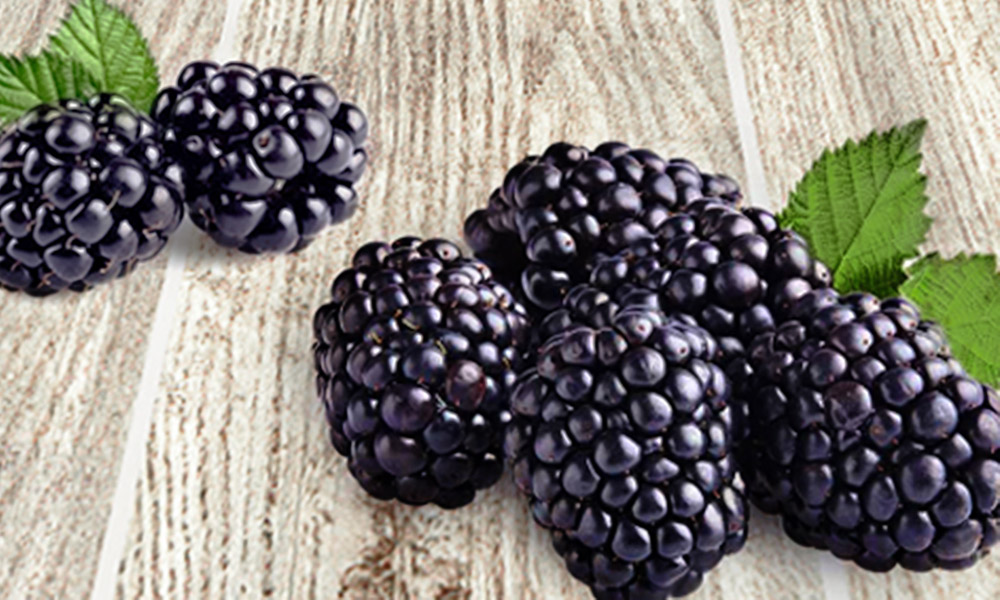
Soon, the older couple from the other vehicle that had been parked outside made their way in and were seated kitty-corner to me on the left. The same server I’d had took their order. I wasn’t eavesdropping, but I couldn’t help overhearing, seeing that we were the only people yet in the diner. The woman began to place her order first, holding up the “Specials” menu and pointing to the stack of blackberry pancakes that dominated the page. Before a word had ushered from her mouth, however, the server made an apologetic face and sucked air in through her teeth. “Oh, I’m sorry, we don’t have any blackberries …”
Though she continued to smile graciously, the elderly woman emitted a slow and mewling “Oooooh” of disappointment. Her husband patted her hand and then translated for the server: “That’s too bad. She was very excited. Blackberries are her favorite.”
The server offered other suggestions. “We have raspberries, strawberries, blueberries, bananas, peaches … can I interest you in any of those?”
The woman acquiesced, still visibly deflated. “I’ll just have … yes, blueberries will be fine, thank you.”
Her husband ordered and the server bustled around the corner to the kitchen, then back again to deliver my own spread.
I’d stopped thinking about what I would write for the blog. I was smiling despite myself. An idea for something else had taken over and I was working out the details of my plan.
At seventeen minutes past the hour, I was done eating and had paid my bill. The older couple’s plates were just being placed on their table. I wouldn’t have much time if I were going to be able to pull this off …
I thanked the server and walked out as quickly as I could without drawing attention. There was a supermarket just a stone’s throw away across the street. I hoped that they were open.
I hopped into my car, zigzagged over, and parked again. They were open. And wouldn’t you know it, the first thing I saw as I entered was a display, offering the very item I’d come for: blackberries. What’s more, they were on sale. Just $2.00 per container.
I snatched one up, adrenaline flowing and the adventure going swimmingly. There was no line at the register, and I was back in my car in no time.
At 7:22, I was parked back at the diner and making my way through the door. I smiled at the greeter, who didn’t stop me, most likely assuming I’d come to retrieve something I’d forgotten.
As I made my way over to the older couple’s table, they saw me coming and must’ve recognized me. Might’ve been the bright turquoise shirt. Both of them turned toward the booth I’d left five minutes earlier, eyes darting about to help me find whatever it was I’d left behind.
They looked a little confused when I stopped at their table. But a smile goes a long way to setting people at ease. And I was smiling. Big.
“Hi, I’m Erik,” I began. “I couldn’t help overhearing earlier when you ordered the blackberry pancake special and found that they didn’t have any. I love blackberries as well! And the thought of you not having some blackberries with your breakfast was just more than I could bear.” I brought my hand out from behind my back where I’d been holding it. “So I got you a little present.”
I placed the small container of blackberries on the table in front of her, as if I were a waiter in a five-star Parisian restaurant and she were the honored guest.
Both of their faces lit up. In that moment, they were both children again, wide-eyed and full of wonder.
“Oh!” the woman exclaimed, her eyes moist. She worked herself over to the edge of the bench and rose as quickly as she could, using the edge of the table for support. Then she spread her arms wide and give me a hug tight enough to surprise me, planting a big kiss on my cheek, as her husband patted my forearm affectionately, grinning.
“Thank you! Thank you so much! That is so sweet of you! Ohhh …” the woman gushed, as if I’d presented her with the winning lotto ticket rather than a two-dollar package of blackberries.
Goes to show you: Even the smallest of choices has the power to change the course of a day for the better.

I left with a bounce in my step, feeling wide awake. For the price of two dollars and five minutes of time, I’d taken part in a worthwhile and fun moment of human connection I won’t soon forget.
And … I had my next blog post.

reverse

We’ve all seen those bumper stickers:
HOW’S MY DRIVING?
555-123-4567
Ever called the number to report that the driver is, in fact, currently driving respectfully and obeying all traffic laws?
After all, the sticker doesn’t say, “Call if I’m driving unsafely or otherwise annoying you.” Yet isn’t that how we tend to read it?
(Yes, I really do think about these things.)
“I want to speak to a manager.”
“Let me talk to your supervisor.”
“I’m going to email your teacher.”
In my experience, these statements are rarely followed by …
“… to let them know what a great job you (or they) are doing.”
It seems to me that perhaps many of us have become naturals when it comes to complaining, while becoming more and more uncomfortable with giving praise where praise is due.
In my last post, where I wrote about crying during a late workout, I mentioned incidentally that there was only one other person in the gym at the time: the overnight employee on duty.
Well, his name is Joe. Let me tell you a bit about him.
If you’ve ever worked the night shift, then you know … it’s no picnic. It takes an exponential toll on you. Yet Joe always smiles and says hello when I walk in. It’s genuine. You can just tell.
In talking with Joe here and there, I’ve learned that he’s an interesting guy with a lot of life behind him, despite his young age. He served in the military. He’s seen more of the world than most. Yet here he is, working a low-wage job without complaint.
And by “working,” I don’t mean simply doing his time and collecting his paycheck. Every time I drive in, I see Joe from a distance before he sees me:
Outside squeegeeing windows.
Inside toting a vacuum pack that makes him look like Dan Aykroyd in Ghostbusters.
Just emerging around the corner from the bathrooms, donning blue surgical gloves (best not to ask).
Keep in mind that this is all going down between 1:00 and 3:00 AM. There’s no manager on shift. Often, there’s not another soul around. Yet there’s Joe, hard at work when he could easily be spinning circles in a desk chair, staring at the ceiling.
No supervisor to keep him on his toes.
But that also means there is no supervisor to notice what an exceptional job Joe is doing, night after night — no one to give him an attaboy, even if only every once in a while.
I think many of us would have no problem picking up the phone and calling to speak to someone if we felt Joe was inattentive or dishonest, or if we felt he’d been rude. But who’s calling to applaud the jobs-well-done by the Joe’s of the world?
I am, that’s who.
And because griping is the norm, I’ve taken to calling this practice “reverse complaining.”
It’s a lot of fun. I highly recommend giving it a try.
*****
Here’s how reverse complaining might look at, say, a local coffee shop where an employee has greeted me with a smile and genuine enthusiasm, then prepared my order quickly and correctly:
Me: Is there a manager I could speak with?
Employee [terrified and tentative]: Yes … was there a problem?
Me: Nope. That’s why I need the manager.
Manager [looking serious and apologetic before I’ve even started]: Hello, sir. I’m the manager. Was there a problem with your order?
[NOTE: The wide eyes, bitten lips, tight jaws or held breath of employees and supervisors alike is further confirmation that complaints abound while compliments are a rarity.]
Me: No, no problem at all. I actually wanted to speak to you to reverse complain about Laura.
Manager [looks confused].
Me: I’ve noticed that Laura has greeted every single customer, including me, with a big smile and warm welcome. There have been some complicated orders, yet she’s somehow gotten them all made quickly and correctly. It’s people like her that make me want to come here rather than going to some other coffee shop.
At this point, the employee will typically beam, blush or gasp, while the manager will have trouble finding the next words.
Manager [after a few beats]: Yes, I agree. Laura is great! We love her. [Pause] Sorry for the delayed reaction there, it’s just so infrequently that anyone calls me over to say something positive.
Warm (and well-deserved) fuzzies ensue.

Back to Joe.
The night before last, as I was leaving the gym, I asked Joe who his manager was and if that manager had a card. Joe, like most, looked worried. I quickly assured him that I wanted the information in order to reverse complain about him. He grabbed a card off a nearby desk and passed it along to me.
There was no email address.
As fate would have it, I had previously contacted the owner of the gym for a different reason. So I looked up our last exchange and, using the format of her email address, created six versions using the manager’s name — one of which I hoped would work.
Then I sat down and wrote an email, reverse complaining at length about Joe.
Within a minute or two of sending, I got the dreaded “MAILER DAEMON” reply — six of them, in fact — tipping me off that Joe’s manager, Danny, must not have had a corporate email address after all.
OK, so reverse complaining isn’t always easy.
I then Forwarded the email to the gym owner, whose email address I was sure of, asking her to get the message to the location manager, Danny.
I’m not sure what will come of it. At least I know the gym owner will know who Joe is and that he’s doing a bang-up job. I’d like to think Joe’s manager will also get the message and share the positive feedback with Joe.
Just to be sure, I also called Joe over last night to tell him all the positive things I’d noticed about him.
If I’m not mistaken, there were more of those warm fuzzies on the scene.
*****
There’s an old saying:
“You’ll catch more flies with honey than with vinegar.”
I’m not quite sure about the fly analogy, but it doesn’t seem to be new news that praise works better than punishment toward fostering authentically positive behavior.
Think about it. Which motivates you more: acknowledgement of a job well done … or continual criticism?
What’s more, while reverse complaining certainly stands to encourage others, there’s also something in it for you. (And I don’t mean that others will think you’re a paragon of positivity, which is actually a precarious reason to do much of anything).
What I mean is that being intentional about building habits like reverse complaining helps us keep our own focus positive. Without a doubt, there are instances where speaking up is necessary. However, most complaining tends to be a symptom of a me-problem — essentially a declaration that I didn’t get what I wanted, precisely when and how I wanted it.
Reverse complaining, on the other hand, causing us to be more adept at noticing what is right with the world, with people and with our lives — instead of what’s wrong with them.
If you ask me, that’s a win-win practice worth pursuing.

the good old days

Ah, the good old days.
The simpler ways of bygone eras have become an indelible part of our collective consciousness, stirring a sense of wistfulness at their passing, whether we actually lived through them or not.
Neighbors leaned from open windows or across picket fences to chat, and thought nothing of asking to borrow an egg or a cup of sugar. Newcomers were welcomed with a jingle of the doorbell and a proffered platter of freshly made cookies or a Bundt cake. And it was assumed that all were invited to the backyard barbecue.
During trips to the local grocer or druggist, owners and customers greeted each other by name, never in too much of a hurry to ask about the children or that recent vacation. And partings were peppered with give-my-best-tos.
Young people helped the elderly across busy intersections, offered to carry their bag a few blocks, and climbed trees to rescue their kittens.
Sinewy men slung a tattooed arm around their buddy’s neck as they crowded together around diner booths — some sitting, some standing with one foot propped on the edge of a seat — swapping outrageous and animated stories with other guys from town.
People took leisurely strolls down shady streets, played chess in the park, had picnics on Saturdays and impromptu dance parties on the beach. No one dreamed of whizzing by a kid’s lemonade stand without stopping.
Friends threw dress-up dinner parties, and guests offered small gifts upon arrival, as well as following up with a thank-you card by mail a few days later. Just as likely might be a game night during which participants played Twister, eventually collapsing into a heap upon one another and laughing until their cheeks hurt.
Wholesome stories and images abound, combining to weave a sort of glorious fairy tale — one continuous happily-ever-after.
Of course, we tend to overlook the historical backdrops that fostered a sense of connection and interdependence: the Great Depression, two World Wars, the beginning of the Cold War era. And story lines played out on tube model televisions, between commercials for Pepsodent and Py-o-My, were unlikely to depict the less idyllic realities of those decades.
But be that as it may, I have to ask: Why must all things good, simple or wholesome be circumscribed to the realm of nostalgia? Why can’t the present be just as good … as ‘the good old days’?
Do windows no longer open through which to call out a hello to the neighbor as she works in the garden?
Do families moving in next door no longer enjoy baked goods or a friendly welcome?
Midway through writing this, I took a stroll uptown along shady streets. There were no newfangled signs forbidding me to do so.
I greeted people walking the opposite direction. They smiled and greeted me back.
As I entered the corner store and coffee shop in the center, I observed lines of anonymous people ordering. Checking out. Eye contact was fleeting at best. Names were not asked, offered or used. Clerks asks in rehearsed tones, “Will there be anything else?” to which they received various mumbled versions of “no” as patrons scrolled through cell phones.
When I approached the counter, I greeted Trish and then Brett by name. Eyebrows and cheeks immediately lifted, straight-line mouths forming into smiles as each in turn hailed me by name, asking how I’d been. At slower times, it’s not infrequent for workers to step out from behind the counter for a hug, as well. I joked and made good-natured conversation with the others waiting in line for coffee and donuts — an older woman, a father with a small boy riding his shoulders — each of whom smiled back and engaged all too happily.
What was it that transformed this otherwise mundane scene into something out of an episode of The Andy Griffith Show?
Had I stumbled upon some sort of temporal vortex back to ‘the good old days’?
Nope.
In fact, for the most part, living in a modern Mayberry is possible for anyone, of any age, at any time, and regardless of where you live.
Those of you who know me or have read much of my writing at all know exactly what’s coming next, don’t you?
That’s right. It all comes down to that magical little thing … called choice.
You see, there’s nothing about when you happen to have been born or where you happen to live that determines your ability to be welcoming or inviting to those around you each day.
Whether you can take a walk, plan a picnic lunch, or dance on the beach.
Whether you can speak to the cashier by name and offer your own, write a thank-you card, or help someone in need.
You needn’t be able to make aspic in order to have friends over for dinner.
And they even still make Twister.
Silent Generation to Gen Z.
Mayberry to Metropolis.
Scooter to subway.
None of it has a lick to do with whether or not you can smile or say hello.
The life we live and the world we live it in are largely products of our own creation, constructions built choice by choice over time.
So grab yourself a root beer float, wave to your neighbor — and decide what you want your ‘good old days’ to look like, starting today.


say my name

When’s the last time you had a real honest-to-goodness “aha!” moment? For me, it was quite recently. It was so simple that I wondered how I’d missed it up until now. And yet it was so profound that I actually felt the perspective shift happen and knew at once that it would change things moving forward.
I don’t know if you’ll find it as revelatory as I did or not. I suspect some of you will. For others, perhaps, it will serve as a timely reminder of something you’ve merely forgotten for too long.
If you’ve read my book, The Best Advice So Far, or if you’ve been reading along on this blog for any length of time, you know that I devote a good deal of focus to the importance of using people’s names often, whether it be with the cashier at the convenience store, with the other patrons working out around you at the gym – or even with sketchy neighbors. Most of my stories of cool personal interactions with strangers begin with our having exchanged names. I mentioned in one post that I make a point to ask homeless people their names (just as I would with anyone else), and recounted having met one woman who hadn’t heard her own name spoken in so long, she’d actually forgotten what it was.