
lights

The night was unusually dark and the water unusually warm as I walked along the beach. Very few houses within view were lit, and even the moon and stars were obscured by storm clouds. Even so, I was content to make my way by the intermittent flashes of heat lightning dancing overhead — and a bluish-green sparkle blinking here and there around my feet as I shushed through the shallow surf.
Bioluminescent algae.
I prefer the scientific name, which sounds more poetic: Noctiluca scintillans. “Night lights.”
As my eyes adjusted, I could make out a family of four ahead — two parents and two children, a boy and a girl, walking my way. Drawing closer, it became clear that they were rapt by the scintillations, evidently their first time seeing the phenomenon. The little girl looked entranced, eyes wide as she stared at the fairy perched on her upturned finger. Her brother, though clearly fascinated, looked a bit dejected, unable to “catch” one of his own.
I bent down and carefully scooped a small patch of sand, careful not to disturb the glowing particle atop it. I held it out toward the boy. He gladly accepted it, just as carefully joining me in the transfer from my finger to his own. He grinned sheepishly, thanking me with his eyes.
I continued my trek forward, and the family continued theirs in the opposite direction, the mom encouraging the boy to speak his appreciation for the gift I’d offered. “Thank you” he called back over his shoulder in a small but heartfelt voice, though his eyes never left the magic happening on his fingertip.
I walked on a bit further, feeling very much like a child myself as I spotted particularly bright specimens, sometimes stooping to scoop one up and examine it from a place a few inches in front of my nose.
At a certain point, I stopped, took a deep, contented breath and then turned and headed back the way I’d come.
Perhaps ten minutes later, I spotted my little friend where his family had paused to take in the display a while longer. The boy’s eyes met mine in recognition as I approached. I smiled broadly, calling “Hello again!” He returned the “hello” and the smile, adding a little wave of his hand — the kind of wave that only the very young can really pull off genuinely, without seeming comical.
I walked on. He returned to playing.
I will never see the boy again. Even if by some coincidence I did, I wouldn’t recognize him, nor he me. It had been too dark, the exchanges too fleeting — perhaps five seconds total, including to and from. A few blinks. And yet I couldn’t help but think that those brief moments were not insignificant.
Somehow, they mattered.
I had become part of that boy’s collective outlook on life. I’d provided proof that not all strangers are inherently bad, that not all darkness need be scary. I’d given him reason to believe that the world can be a good and kind and safe place.
Thing is, despite my being an adult, he had done the same for me.
You see, in the weeks leading up to my annual Florida vacation, I’d been experiencing a sort of dark shadow creeping in around the edges of the trip. I had a sense of what was causing it. Over the previous year, Florida had become a hotbed for political upheaval, division and outright meanness. Even the childlike simplicity of Disney had been marred by controversy and lawsuits borne of pettiness and spite. Some of my favorite places to visit were still in ruins, having been devastated by Hurricane Ian less than a year earlier. The news had continued to announce the record high ocean temperatures that were depleting the water of oxygen, endangering marine animals.
Despite a well-stocked emotional toolbox, I just couldn’t seem to shake the foreboding feeling. I believed as firmly as ever that “You always have a choice,” yet so much of what I now associated with Florida seemed beyond the scope of my choices. And that was tainting my expectations before I’d even arrived.
Once vacation had begun, I’d used the choices I did have well — choices concerning focus and perspective. Still, part of me was continually aware of that faint feeling of dread lurking just outside my constructed blinders.
And then a tiny light was passed between strangers. A joyful greeting. And suddenly, everything felt simple again.
I stood still a few moments longer, taking in the twinkling spectacle playing out along the water’s edge, reminded once more that a glimmer of hope or kindness shared may continue to ripple onward, outward — even across a lifetime.



scam

Most people who read my blog know me first and foremost as an author. So they are surprised when they learn that I do other things as well. (And conversely, those whose first dealings with me center on one of those other areas are always surprised to find that I’m also an author.)
Well, one of those other things I do is designing information systems. I’ve done this since I was a child and home computers first came out. But as far this story is concerned, here’s the simple version: I build fancy stuff with spreadsheets. Often, it’s stuff that few other people can figure out. And for that reason, I always have clients who seek me out and pay me well for this work (which I fit in between my writing and marketing and mentoring and…)
You might think these two worlds are incongruous, but in my mind, they’re just different ways of helping people. And I am passionate about infusing both with core values such as kindness.
To that end, I choose to donate a little time each week as I’m able to helping answer posts on a couple of free online forums. Typically, I can only volunteer about a half hour or so per week; but I can get a lot done in that time, considering that the forums are designed to help people with relatively small stuff. A little knowledge sharing here. A formula tweak there.
Recently, I read a forum post from someone who appeared to be located in Romania, and who was requesting spreadsheet help. But in assessing things, what he required wasn’t small stuff. It was a highly customized, time-intensive solution (i.e., real work).
Usually, I’ll just pass over such posts or suggest that the person consider hiring a developer. In this particular case, however, I made the choice to “break my rule” and try to help the guy out anyway. You see, I’ve been especially aware lately of the need for tenacious worldwide kindness. And while it wouldn’t bring about world peace, going the extra mile for this stranger in Bucharest seemed a good opportunity to put feet to my convictions.
Still, it was a bit tricky. Sharing complex solutions on a free forum would create unrealistic future expectations for site visitors. In addition, I can’t offer in a free public forum the same level of complex work that my private clients pay me for.
But my mind was made up. I was going to help this guy (I’ll call him “Ivo” here).
Since Ivo’s shared spreadsheet contained his email address, I reached out to him privately rather than through the public forum. I introduced myself. I explained essentially what I’ve shared with you here: that I am a longtime forum contributor, that the help he required went beyond what I could provide through the free forum, but that I was willing to help him at no cost if he would simply share a copy of the sample spreadsheet with me.
Some hours later, his email reply popped up.
As I try to keep this blog family friendly, I’ll have to do some censoring:
“You bet. You [#&%@!] poor [*!@~$] scammer, eat [&$^#%]. Maybe that’s more useful to support your laughable existence.”
Here, I’d offered him free work —work I’d have charged any other client $150 for—and this was his response?
What would you have done at this point, if you had been me?
*****
I won’t lie. My initial reaction was to bristle. Hey, I’m human, just like you.
I mean, I owed this guy nothing. I didn’t need to help him in the first place. He wasn’t a paying client. And I would certainly have been well within my “rights” to dismiss him at this point. Just one more self-absorbed, entitled jerk in the world.
Shrug it off. Press “Delete.” Move on. Right?
Instead, right after that initial sense of self flared up at Ivo’s response—in the next moment, where choice begins—I was given a good dose of my own advice from previous books:
“Humility is a strength, not a weakness.”
“Focus on the person, not the problem.”
“Kindness still works.”
Add to this that I’m just about to release my third book, Alternate Reality (just released: April 2022!). As part of the editing process, I’ve read through the entire thing about ten times by now. And that has meant being intensely confronted with even more of my own words, including this new piece of shared advice:
“Instead of thinking the worst about people,
wonder the best.”
Right about the time I was reading Ivo’s email, you might imagine that I was applying this bit of advice to him. “Wow, here I am going the extra mile to be kind to a stranger, and he replies with such rudeness, accusing me of being a scammer?” But rather than thinking in terms of his choices, I found myself considering my own.
Would I think the worst of this guy based on his rude response? Or would I practice what I preach and make the choice to wonder the best about him?
I chose to wonder the best. I shifted my focus from what he had done—to why he might have done it. And that brought a new response: empathy.
I responded to Ivo’s email. I told him that I understood why he might be skeptical; after all, the world is a weird place sometimes. I offered him four different means of verifying who I was, for his own peace of mind, and again extended the offer of help.
I’d like to tell you that the clouds parted, that birds started chirping and that a swell of rhapsodic music began to play. Alas, it did not. My heartfelt email was ignored.
Surely, now was the time to dust off my hands and forget about this guy. I mean, you can lead a horse to water, but you can’t make him drink. And I want to be exceedingly clear here: that is true. As had been the case from the start, I owed this stranger nothing. I would not have been a bad person to walk away. And on the flip side, I wasn’t earning any cosmic brownie points if I chose to stick with it. All I can tell you is that, at the time, I felt compelled to try once more.
After a few days, I emailed Ivo again. I told him that I wondered if his skepticism was based in personal circumstances that had burnt him. And so, rather than continuing with my request for a shared spreadsheet, I worked out the entire complex formula in a spreadsheet of my own and then copied and pasted it directly into the email for him. I carefully explained how to implement it on his own sheet, asking only that he not post the formula publicly, so that I would not have that conflict of interest with other paying clients. I ended the email expressing my hope that this act of kindness might help restore his faith in humanity, even if only in some small way.
No birds chirping. No clouds parting. No music playing.
Instead, Ivo took my formula and did exactly what I’d asked him not to do: he posted it on the public forum. What’s more, he asked the larger community of volunteers there to confirm his earlier assumption that I was a scammer, and that this was malicious code. And to top it off, he implied in this public forum that I’d tried to get money out of him.
I’ll admit, my resolve to be kind was fraying around the edges at this point.
But I replied to his now public commentary as gently (yet directly) as I could. I reminded him that he could click my name link and be taken to the same profile I’d already sent him via email as one of four different means of verification. I asserted that I’d made very clear that my offer of help was free with no strings attached. I told him that I felt he was now just digging his heels in, committed to somehow proving that his initial assumption about me was true: that I was, in fact, a scammer. I told him that I couldn’t recall ever having worked so hard to give someone a free gift.
And then I remembered another piece of advice from The Best Advice So Far:
“Tenacious love expressed with creativity
can work wonders.”
It doesn’t always. But it can.
Allowing that "love" can be applied in both an individual and humanitarian sense, I determined to do the least likely thing.
I set aside my self-imposed rule of not posting complex work on the public forum, went into his publicly shared spreadsheet and implemented my full solution for him there, so that he could see with his own eyes that it was producing exactly the complex result he was hoping for.
I added one more comment, once again wishing him well and hoping that this might somehow restore in him a little faith in humanity.
And then, satisfied that I’d truly done all that was within the realm of my own choice to do, I let it go and moved on.
*****
The next day, I got a ding alerting me that Ivo had replied in the forum.
“Your solution works perfectly. I misread you and your motives. I owe you an apology.”
I’ll admit, I wasn’t expecting that.
Yet as nice as that was, something still felt unresolved. Empathy kicked in again. I was aware that if other forum contributors read the exchange, they might avoid offering Ivo help on any future posts of his. So I offered a path to a “clean slate”—figuratively and literally. I suggested that he back through all of his comments and delete them, after which I would do the same. I’d already spent five times my weekly allotment of donated forum time on this one issue, but this seemed important.
Within a day, he had done just that: deleted all of his comments. I followed suit. Clean slate achieved.
Cue the singing birds.
But it didn’t stop there.
Two days later, I received an email reply from Ivo. Turns out, he’s from Latvia, not Romania. He apologized again and asked if he might get a second chance to undo that negative first impression he’d made.
He said he actually considered himself to be a kind and helpful person. He recalled to me the story of a woman he’d helped at a coffee shop late one night. In his words:
She told me she was an Uber driver and had just crashed. For some reason, she had no money and no phone. In addition to losing her only means of income, she mentioned that she also had cancer in her legs, and at one point she started crying. She asked for some cash and promised that she would give it back the next day at the nearby museum where she worked as a guard. We ended up walking to the ATM together, and I withdrew a hundred bucks. I gave it to her and she cried again a little, hugged me and thanked me enormously. It felt very good to be helpful to somebody in a great need!
And he never saw her again. No such person worked at the museum.
It had all been a scam.
Oh, and in case you're wondering (as I did) about how Uber and "bucks" match up with Latvia, this all happened to Ivo during his first and only trip to the United States. It happened in Washington, D.C.—where Ivo had had to make an emergency diversion to the Latvian embassy. You see, upon arrival in California, thieves had broken into Ivo's car and stolen everything they could get at, including his passport. Still, despite his own troubles, there he was trying to help this "poor woman" at the coffee shop.
You see, Ivo really wasn’t an awful, self-centered, ungrateful person. He was a nice guy who had just been hurt one time too many before I came along.
But the kindness I’d shown actually had turned the tide inside him. Again in his own words:
I think this experience will stick with me and will teach me a good lesson in the future as well.
Ivo and I have been talking back and forth for a little while now, having terrific conversations about stuff that matters. As it turns out, we have a lot in common. Yet we’re also learning from one another. Stretching our perspectives. And we’re just having fun getting to know one another.
Is kindness always rewarded with a happily-ever-after ending? Nope.
Will some people turn out to be as mean as they at first appeared? Yes.
Are scammers still out there scamming? They are.
But what, then? Should we all decide to live within the confines of our own little self-protective bubbles?
To never show spontaneous kindness again, because of those who might take advantage of it?
To just give up on hope? On humanity?
To me, that seems like the biggest scam of all.
Here’s another tidbit from The Best Advice So Far:
“Whatever you choose to do,
do it without expectations,
simply because you believe in doing it.”
Where that limit lies for each person and in each situation will vary. But my encounter with Ivo serves as yet another reminder that “you always have a choice.”
A choice to look beyond the what to the why.
A choice to focus on the person and not the problem.
A choice to trade thinking the worst for wondering the best.
Quite often, I’ve found, those “best wonderings” will be closer to the truth.

less lonely

We’ve heard it a million times: “Bad news sells.” And we’ve certainly had more than our fair share of it lately, haven’t we?
As someone who takes my own advice perhaps more than anyone, and ever keeping in mind that central theme of mine — “You always have a choice" — I went beyond simply turning off the bad news to making an active search of good news.
Would you believe that there is actually a whole news site called Good News Network?
There I read an article that not only held true to the claims of offering good news, but that introduced me to something I've suspected was true for some time, yet for which I had no proof.
Until now.
I encourage you to read that article for yourself. But the short version is that researchers from California and Italy teamed up to conduct a study which reveals that people with greater empathy and wisdom are less lonely.
Conversely, as you might have guessed, that means people with less empathy and wisdom are more lonely.
Well, that seems easy enough, right?
Just get more wisdom.
Get more empathy.
Be less lonely.
Phew! Glad we solved that one so quickly.
Hmmm…

In reality, those two qualities — wisdom and empathy — are a bit hard for most people to nail down. After all, how do you measure something like wisdom? How do you gain more of it, for that matter? If it were a matter of merely reading the array of inspirational memes that endlessly scroll across our social media accounts all day and pressing the “Like” button, we’d all have wisdom to spare. None of us would ever be lonely.
Likewise, if empathy were gained simply by being around other people, or commenting on their posts, or hitting the sad emoticon button when they post that they just broke up with their boyfriend again, empathy would be the norm (and, therefore, loneliness the exception).
Alas, not so.
Here's a quick self-check for wisdom:
1.) Do you listen as well as you speak?
2.) Are you known for being patient and tolerant?
3.) Are you comfortable with and intentional about silence and self-assessment?
4.) Have you honed the awareness skills necessary for noticing what is going on around you?
5.) Do you live as an agent of choice, not merely a victim of circumstance?
And now, for empathy:
1.) Do you listen as well as you speak? (Sound familiar?)
2.) Do you know how to ask the right kind of questions at the right time?
3.) Is it the norm for you to consider others, whether they are physically present or not (and, in fact, even if you may not know them at all)?
4.) Have you accepted with peace the fact that not everything is about you?
5.) Do you regularly practice tangible acts of kindness?
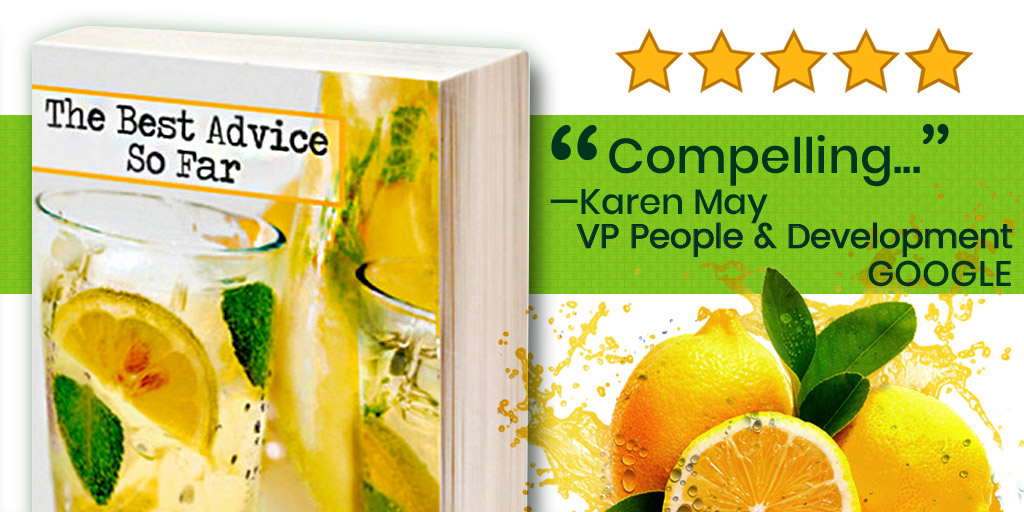
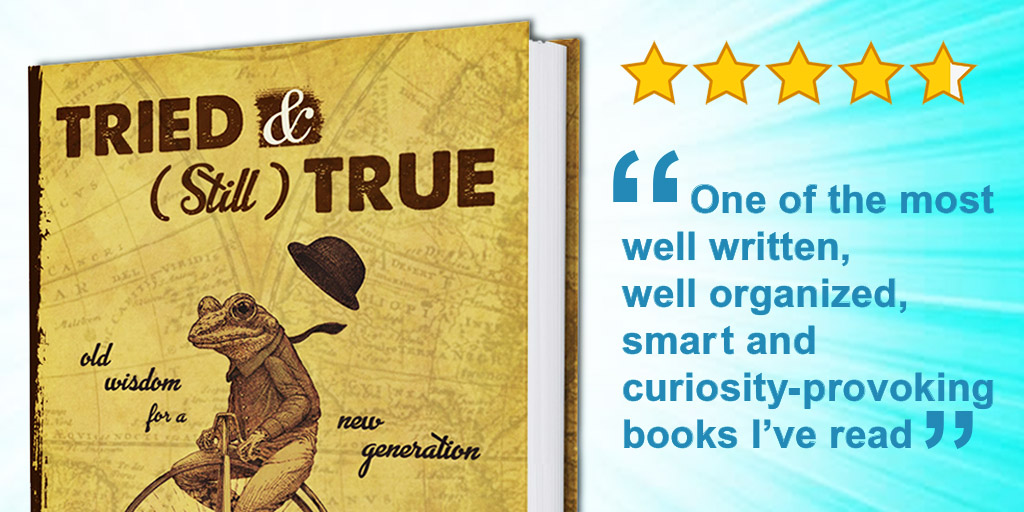
Well, at risk of being accused of shameless promotion, helping people increase empathy and wisdom are the main goals of my mentoring, speaking, this blog and both of my books.
And those themes continue in new ways as I’m now in the process of writing my third book.
So it seems I’ve actually been helping people to be less lonely this whole time. Who knew?
Honestly, I did. I knew.
I knew because I’ve seen the results over and over in people’s lives for decades. As I said, I just didn’t have the science behind it until now.
Here’s some more good news. If you are feeling lonely, you really can do something about it. And as this new study shows, being less lonely isn’t reliant on having more people around (which is tough during the current extended pandemic). It’s something you can work on all by yourself. Today.
I encourage you to pick up one or both of my books. But I also understand that many people have been greatly affected by this pandemic and may not have money for extras right now. If you really want to read these books and simply can’t afford to, follow the links to the book titles above. You can get started reading a good deal of each of the two books using the download links I’ve provided there. And if you finish those and want to continue, drop me a message on my website’s contact form. Introduce yourself, let me know which book you’d like — and I will send you a full digital copy of either for free. No strings attached.
So why not start being less lonely right now?

it's a breeze

One day last week, I wished a friend of mine a happy birthday. He turned 30 and was feeling old. Interestingly enough, he was a sophomore in high school when I met him, and I was older than he is now. So I was able to paint a convincing picture for him as to just how young he still is.
As we talked about getting older, a famous quote came to mind:
“With age comes wisdom.”
Yet I’m inclined to agree with the second half of Oscar Wilde’s observation on the matter:
“… but sometimes age comes alone.”
I don’t need to look very far to find middle-aged adults who are just as petty, rash, irresponsible or egocentric as they were when they were teenagers. (Some, in fact, are even worse off now than when they were younger.) Likewise, I know many in their twenties who are quite well-adjusted and have exemplary character.
That is, wisdom comes not merely from experience but from intention to ponder that experiences. To learn from it. To make new choices.
To change.
Well, after this exchange with my still-young friend, my eye was immediately drawn to a seemingly trivial bit of movement in my living room—a sight so familiar to me that, if not for that particular conversation, it would certainly not have been noteworthy let alone served as the inspiration for a blog post.
At the open window, the edge of a sheer white curtain floated and fluttered in the spring air.
In that moment, I was transported to a particular night in February back when my birthday friend was still in high school. He and a dozen or so other guys his age were gathered in my home on a Monday night for our weekly meet-up. They crowded onto the olive green sectional or found space on the living room floor, happily munching on pizza, which was the norm.
The conversation that night coalesced around a theme. Many of them expressed that they invited change, that they wanted more for their lives, that they were open to deeper connection with others and a sense of real purpose. They came faithfully each week, ready to absorb. They were honest about who they were and where they excelled or struggled. They took part in discussions and read books. But they hadn’t seen the personal progress they’d expected “by now.” They still weren’t feeling or experiencing whatever it was they thought they should be feeling or experiencing.
One or two of them even hinted that they were disappointed that the other group members hadn’t gone to greater lengths in supporting them during the week between meetings.
Where was the magic that would grant them the life they were looking for?
As they continued sharing their thoughts, I got up and headed for the kitchen, presumably to grab another slice of pizza for myself. What no one noticed was that, on the way, I cranked the heat up another ten degrees.
Even at a moderate 70°, I can tell you that 15 teenage boys will heat up a room quickly. With the thermostat now at 80°, it wasn’t long before the sweat was trickling and they were begging for relief.
Instead of lowering the thermostat, I opened the two windows along one side of the room. “Let’s see if this cools things down quickly.” But even though it was a frigid winter night, the temperature in the room didn’t drop by even one degree. No air was coming in from those open windows.
“That’s not working,” they moaned. “Can you just turn the heat down?”
I had them where I wanted them. Breaking the current flow of conversation, I said, “The windows are wide open. Why do you think the cold air isn’t coming in?”
One of them held his hand up to a screen, as if he thought for a moment that maybe a tropical heat wave had mysteriously descended upon New England. I could see that they were thinking. Another offered, “Maybe there’s no wind tonight.”
After a minute or so more, when I was sure their minds were open, I got up without a word and disappeared down the short hall. I opened my bedroom door (which I knew they would hear). Twenty seconds later, I returned and stood in the center of the room. I pointed to the open windows and, as if I were a sorcerer, freezing air whooshed into the room. In less than a minute, they were bundling up in the hoodies they’d so recently discarded; and within two, they were shivering and had had enough.
I turned down the thermostat, closed one window, leaving the other open just an inch or so as I revealed to them how I’d gotten that air to come in—to transform a stagnant space with something new and refreshing.
My secret? I had opened another window.
Currently, every single person on the planet is affected in some way by the current coronavirus pandemic. Many are feeling fearful, worried, overwhelmed, tired, alone. But I’m just as convinced now as ever that the remedy is not to simply “sit by the window” in our stuffy little spaces, wondering when joy will start coming back into our lives.
Air only comes in when we open another window to let it flow back out. Likewise, I’ve found that life remains stagnant if we merely sit around wishing for fortune to smile upon us (and grumbling when it doesn’t meet our timetable). No, most often positivity comes into our lives only when we open windows that let it flow through us and out again.
I’m not talking solely about karma here (though I’m not debating it either). I’m talking about actionable cause-and-effect.
Are you waiting by the window for feelings of isolation to end? It’s easy to imagine that a virus or social distancing restrictions are the cause of those feelings. But they really aren’t. I know people who live in the same house and yet feel isolated. Conversely, I know people who haven’t seen one another in months or years, yet who sustain real connection. So actively seek to open windows of connection with others. It’s been my observation during the times I am out in public—grocery shopping, for instance—that the masks and gloves and six-foot rules are beginning to cause people to mistakenly see each other as the threat, rather than the actual virus. But we are not the enemy. We are allies, in this together. Yes, it may feel strange. But we’re all the same people we were before this began. So make eye contact. Say hello. Smile and wave to your next-door neighbor when you go out to check your mail. The best way to start feeling connected is to take the initiative and be a connector.
Are you in need of encouragement? Open windows to encourage others. Call and check in with someone. Send a text to share a fun memory with a friend or family member. You may be surprised how quickly you yourself begin to feel encouraged.
Are you feeling weighed down by the onslaught of information about all that seems wrong with the world? Turn off the news and go be the window to something right with the world.
Today, after food shopping, I pulled into a drive-through to get a breakfast sandwich. Another driver arrived from a different direction at the same time, but waved me on to go first. In return, I secretly paid for his order with my own (which cost me about two bucks). Each of us had played a small part in reminding the other of what’s right with the world. I drove away smiling—feeling connected, encouraged and cheerful.
Every one of us has something we can contribute to what’s right with the world. And we can do that right now. No need to wait for the pandemic to subside or restrictions to be lifted.
Are you a musician? Share a song or video concert for others to enjoy.
Do you bake or garden? Make a batch of cookies or pot a small plant, and leave it on someone’s doorstep along with a kind note. Really, any gift, however small, would go a long way. A little bag of birdseed for someone’s birdfeeder. A board game you don’t use anymore. A book you enjoyed.
Are you a carpenter? Build a birdhouse and give it away.
Spend a lot of time on social media? Go beyond hitting “like” or “share” and leave a personal comment or send an uplifting message. Be deliberate about sharing positive posts rather than negative news, controversial content or political persuasions.
Money is tight for many right now. But could you donate even just one dollar to a worthwhile charity that will help someone else in need?
Don’t have a dollar? Do you have enough spare change for a stamp you could use to mail a hand-written note to someone who might be feeling down or forgotten?
As an author and blogger, I’m using my words to promote hope and happiness where I’m able.
Here’s my “best advice”: stop sitting despondently by that same window, waiting for good things to start happening. Get up. Go open a few windows outward to the world. Before you know it, you’ll feel the winds of positive change beginning to stir.


the builders

I was wakened from a sound sleep by the ungodly grinding of a saw cutting through what sounded like concrete or metal right outside my bedroom wall. The whole place shook, setting the nearby jar candles to skittering. It was immediately clear that this was not going to be a situation solved by fingers in the ears or pillows over the head. So I got up.
Just when I thought things couldn’t get any worse, there was a loud crunching and a thunk.
That sounds like it’s right in the house, I thought. And then the noise suddenly cut off. Moments later there was a knock at the door. I opened it to find one of the construction guys there wearing grubby jeans, a tank top and a backward ball cap. His ears were studded and gauged, and one tattooed arm leaned against the wall of the stairwell that leads up to my floor. “Hey, um… what’s on the inside of the wall we’re working on?”
I knew something very bad had happened. “My bedroom,” I informed him. “Bedroom closet to be exact.”
I led him through the entryway and into the bedroom. I live in an old farmhouse with open closets, so I had used the bedroom closet for storage, placing a low white bench with drawers and storage cubbies in front of it on top of which a full-length mirror leaned back against the door opening. I took down the mirror.
The workers had broken through the outside wall into the room, a five-foot strip of the wall revealing daylight beyond. But that wasn’t what caused the sharp inhale or widening of my eyes.
It was the horde of ants covering the walls… and everything else inside. Coolers. Lawn chairs. Luggage. Bedding. I could get at none of it until I removed the plastic storage bins. But those, as it happened, were impaled on a large bolt that had come through the wall. Meanwhile, the ants were happily beginning to explore outside the closet.
As this isn’t really about the incident, I’ll montage. Cracked bins ripped through. Running back and forth to the fire exit stairs with closet contents, even as ants ran up my arms and dropped into the other rooms. Workers doing impromptu extermination with a shop-vac. The cloying fog of Raid fumes permeating.
Throughout the ordeal, I’ll admit that I growled aloud more than once. And since the construction worker was doing his best to contain the situation, I wanted to be clear that my irritation was with the situation and not with him. I said as much to him, followed by stating aloud some of my own advice (more for my sake than his): “These are the times when I have to ask myself, ‘Will this matter in a year?’ And if the answer is no—which it is in this case—then it’s not worth wasting time in the present getting up in arms about it.”
Thus began my conversation with the builder.
If you were to have driven by my house and seen this guy standing outside on his ladder, swinging his hammer, you probably wouldn’t have given him much thought. Just another common laborer. And if you had noticed him beyond this peripheral glance, you might have made assumptions about him based on his job, clothes and tattoos—assumptions about his background, lifestyle, intelligence, education level, worldview.
But allow me to tell you what I learned about him.
As I say, the temporary crisis didn’t matter in the grand scheme of things. However, mere minutes into our interaction together, we found ourselves talking openly about stuff that did matter.
His name is Zach. He’d been raised by two women. One was his mother. The other was his grandmother, a woman for whom he now happily served as a primary caregiver. Every day. Like clockwork. His expression of love and respect for his mom and grandmother, and his happiness to help, were among the first things he told me.
Zach shared with me some of the pain he experienced growing up and the problems it led to in his early adulthood. But he’d worked hard to overcome those issues.
He’s a voracious reader who enjoys deep conversations about life.
In fact, he’s been having an ongoing conversation online with a young Muslim man from the Middle East. This distant friend had shared his desire to visit the United States, but expressed his concerns about how he might be treated because of his ethnicity or religion. Zach was honest with him. “Some people here will be suspicious and act on fear. But many, many won’t.” He invited the young man to stay with him personally should he make the trip, promising to introduce him to good people and places.
Zach is educated. Prior to being a builder, Zach had been the director of a public school program for kids on the autism spectrum or with other behavior-related challenges. He told me about some of his students over the years, adding that he’d finally decided he needed to take a break because his compassion for the kids was starting to get the better of him even during his off time. He felt he needed to do something a little more physical and less emotional for a while.
This had led to his current job. And his favorite part of that job… was the math. I’m sure he’s told me five or six times during our conversations in the last couple of days, smiling despite himself each time, “I love numbers almost as much as I love people!”
Two mornings later, Zach and a co-worker were back bright and early to continue repairs. I threw on jeans and some flip-flops and ran out to tell them that the exterminator was due back at 8:00 and might be spraying from the exterior, which would mean that construction might be delayed a couple hours.
As we all stood around awaiting more information by phone, we got to talking once again. The other worker was a stocky, heavily bearded guy with his knit cap pulled low. Even wearing his dusty mechanic-blue jacket, tattoos were clearly visible, rivaling Zach’s. If not for his clothing, you could easily imagine him having been a Viking downing tankards of grog at some alehouse of yore. He flicked the ash off his cigarette and took another puff.
I introduced myself. His name is Doug. He shook my hand and the three of us chatted for a few minutes.
Zach and Doug then took off for a bit as the exterminator arrived and did his thing. Once they returned, Zach went into the bedroom to assess what needed to happen inside the closet. A few days earlier, based on our conversation, I’d given him a copy of my first book, The Best Advice So Far; and I’d just handed him a copy of the newly-released TRIED & (Still) TRUE. Doug was immediately curious. “You write books? Cool. What’s it about? Where can I get one?” As Zach continued with his tape measure, Doug and I got another chance to talk a bit.
Here again, one might make assumptions about the kinds of things “someone like Doug” might talk about in the few minutes standing with a stranger in a hallway while on a job. You’d likely be wrong.
I could immediately tell that Doug has a quick wit and sense of humor. Once we got to talking, he laughed often.
Doug also plays in a band. If you went only by his black “DOOM” T-shirt, depicting what looks like someone trying to pull demons out of hell, you probably wouldn’t guess that his primary instrument is upright bass or that his band, Cactus Attack, finds it tricky to schedule their tours on account of two of his other band mates being full-time teachers.
I handed Doug his own copies of the books. He read the backs, brows intent. “This is my favorite kind of book. I love philosophy. Thanks, man.” From there, Doug shared with me his observations about how people too often seem to be looking for differences between themselves and others rather than similarities. "I talk to people about this all the time,” he said. “You’ve got to slow down and make time to get to know people and their story before you make judgments. Even people who do things you might strongly disagree with usually have a reason that makes sense to them, and I think it’s valuable for us to be able to understand those reasons.” We talked about religious cults, terrorists and factions within modern feminism, with Doug passionately making the case for empathy and education at each turn.
Later, when the three of us were in the mix again talking, I suggested the word “malapropism” to describe a habit Zach said he sometimes falls into, at which point Doug interjected, “Actually, with you, Zach, it’s usually malaphors, not malapropisms.” This was interspersed with his thoughts on Socrates and Plato, peppered with other underused words such as pedagogy.
There was clearly much more to both of these great guys than might at first meet the eye.
Though I say this often, it’s worth repeating: names matter. By asking someone’s name and giving your own, you open doors of possibility. So often, if we aren’t careful, we can get to treating people as little more than background noise, obstacles to overcome or means to achieving an end. Names serve as a reminder that the other people all around us are just that—real people, with lives as full, interesting, meaningful and complex as our own.
In addition, while most of us would agree if asked that one should “never judge a book by its cover,” it takes intention and consistency to actually live it. And it’s been my observation that the standard most used in judging book covers is little more than “does that cover look enough like my own?” I’ll quote Doug here from our conversation: “What a boring and small life it is to surround yourself only with people who are exactly like you.”
To quote Bill Nye the Science Guy, “Everyone you will ever meet knows something you don’t.” If we truly embrace this, the world and the people in it become an endless source of connection, fascinating stories, learning and growth.
My friend Chad often says, “Follow your natural curiosity.” I agree, 100%. However, I think so often anymore that we forget how to be curious. We leave it behind, somewhere back in the ether of childhood. As we get older, we allow that natural curiosity to be replaced with fear. Yet the more we give in to this, the smaller our worlds become.
In fact, if there were one takeaway here, it would be to rediscover your curiosity. And then follow it.

You’ll encounter new stories and change your own story in the process. Zach and Doug are two recent reminders of the benefits of doing this, here in my own little corner of the world. Now I encourage you to go find out who your own next surprise might be.
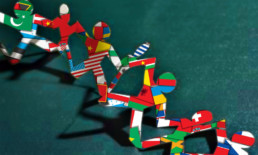
we are the world

My new book, TRIED & (Still) TRUE, just launched this past week. It’s been cause for much celebration.
It’s also been cause for a major lack of sleep.
And staying in sweats all day.
And not showering some days (which, if you knew me, is really saying something).
And, if I’m being completely honest, I even realized after 4:00 PM one day that I hadn’t even brushed my teeth yet.
So Sunday afternoon, when I ventured out for a trip north to visit my cousin, it felt strange to have the sun on my face, to feel the gravel of the drive crunch under my shoe-clad feet, which during the last few days had been bare.
Driving along the winding bucolic roads, passing apple farms and waterfalls that had iced over in motion, and with the sun playing like an old-fashioned projector light through the bare tree branches, I found myself singing aloud at the top of my lungs a song that’s been stuck in my head for the last few days:
We are the world
We are the children
We are the ones who make a brighter day, so let's start giving
There's a choice we're making
We're saving our own lives
It's true we'll make a better day, just you and me
If you don’t recognize it, it’s because didn’t live through the ‘80s or at least weren’t old enough to remember what was going on in 1985. “We Are the World” brought together some of the most well-known pop stars of the day to sing what would become the fastest-selling and highest-grossing single in American history, as well as the first song to ever be certified Multi-Platinum (Quadruple Platinum, in fact, selling over 20 million copies).
If you missed it in 1985, you may have heard it in 2010, when another all-star ensemble reprised the song to raise money for the victims of the devastating Haiti earthquake.
Anyway, there I was belting the song in my car. When I reached my destination, I was still humming it. And I got to wondering why. Why was this 35-year-old song stuck in my head? I hadn’t heard it recently nor talked about it with anyone. (As I say, I’d been holed up in my home for days around the book launch.) So why was this particular song burgeoning inside of me on this particular day?
Before I’d even reached the door, I’d figured it out.
I’ve had hundreds of interactions with people during the first few days since TRIED & (Still) TRUE launched. Calls, texts, emails, blog comments. I’ve read each Amazon and GoodReads review. And I couldn’t help but notice that much of the positivity and praise has been shared alongside a common counterpoint that took this basic form:
“It’s so refreshing to read this encouraging, uplifting book with the world being so negative, divided and scary lately.”
I totally get it. I’ve placed myself on total news blackout for long stretches and turned on ad-blockers so that I can’t even see sidebar headlines when I check my email. If anyone in my friend group happens to mention certain names or events, eyes widen and bodies tense, as if Bloody Mary is on her way through the magic mirror. It’s easy to give in to the sense that “the world” is broken beyond repair. That this is it. The End.
But I don’t believe that.
As I wrote this new book, I delved into the lives of the people who brought us some of the most famous proverbs from history. I didn’t just talk facts. I talked lives, reminding readers constantly that those who penned the words that have become part of our literary legacy were real people just like you and me. They weren’t giants or superheroes. The most famous of them wouldn’t have been known by more of the population than the average person today connects with via social media. They were us. We are them.
And I’m here to tell you—they went through some things.
Subjugation by tyrannical emperors.
Religious purges.
Mysterious and gruesome plagues that killed millions.
Natural disasters on a scale not seen before or since.
They had no running water. No hot water on demand. No showers or baths. No porcelain toilets or toilet paper. No sewage system.
They did not have prenatal care plans and epidurals. Their anesthetic for anything from dentistry to amputation was a few swigs of whiskey and biting down on a stick. There was no counseling or medications for depression and anxiety. No pills to control blood pressure.
No multi-vitamins. No toothpaste and toothbrushes. No Tylenol. No dry skin cream.
In many places and times throughout history, people weren’t out drinking with friends and celebrating on their 21st birthday. They were quietly reflecting on the notion that their life was likely more than halfway over. Living to the age of 40 seemed to them as living to 100 might to us now.
And yet, somehow “the world” continued on, no matter how bad things seemed in the midst of tragedy and hardship.
Here’s a snippet taken from page 26 of my new book:
One thing I have learned is that worry serves no purpose other than to waste otherwise good moments in the present.
I am also convinced, however, that we always have a choice. I cannot choose for a society, or even for a single other person. But I can choose what I myself will do, how I will live—right now.
Let me break down a few lines from that earworm of mine—“We Are The World”—in hopes of reminding us of some simple truths that will help us all resist the urge to give on the human race quite yet.
“We are the world”
Have you ever seen these memes?
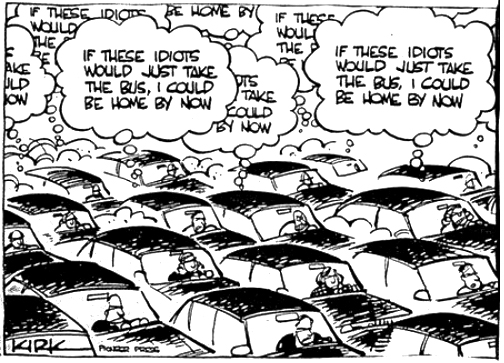

Often, we can get to talking about “the world” and its problems as if we are… well, from some other planet. But just like the traffic we groan in, we are the world. If there is a problem, we are each part of it—as well as each being part of the solution.
“We are the children”
The year following the release of “We Are the World,” a book by the name of All I Really Need to Know I Learned in Kindergarten was released. I’ve long said that adults are just kids in older bodies. That means we already know how to draw on the best of our child-selves to solve the world’s problems, ever keeping in mind that there is a world of difference between being childish… and being child-like.
A few lines from the book:
Share everything.
Play fair.
Don't hit people.
Put things back where you found them.
Clean up your own mess.
Don't take things that aren't yours.
Say you're sorry when you hurt somebody.
Learn some and think some.
Hold hands, and stick together.
I imagine a young boy of five years old in his kindergarten class. I’ll name him Ty. And I imagine that he is of Jamaican and Dominican heritage and he has his family’s accent. His classmate, Cara, is fair-skinned with freckles and fire-red hair in pigtails. She is missing her front teeth and talks with a lisp. They are building a block house together. At times they giggle. You see, they don’t yet know what a Republican or a Democrat or and Independent are. They don’t yet know that skin color and cultural markers like Ty’s cornrows. They don’t yet know that the sound of a person’s voice is supposed to make us ridicule or judge them. And so they build together and help each other and share.
So many simple solutions come naturally if we let our child-selves respond to life.
“We are the ones who make a brighter day”
No one of us can fix a global problem. Nor can we control the future. But what we each can do is to find simple ways to make where we are in this day a little brighter than it would have been otherwise.
When you are kind to the neighbor’s kid, you are potentially thwarting a future school shooting. After all, every kid who goes down that path was someone’s neighbor’s kid.
When you control your gossip and speak uplifting words into the world instead, you cause those around you to look at hate speech in high places differently.
Don’t allow yourself to be overwhelmed by the immensity of problems on the world stage. Do what you can do. It’s a lot more than you think.
“So let’s start giving”
It’s so easy to get to a place in our lives where all we do is talk about how bad “the world” is, expecting someone to come along and console us. And we do need to console and encourage one another, absolutely! But we can’t just be siphons. We need to give consolation and hope and encouragement. Not only does it help others stand up and start moving again, it helps us see firsthand the difference that one person really can make.
What’s more, there will always be ways you can give in order to “make a brighter day.”
Right now, as the wildfires rage in Australia, you can DONATE.
Two years ago, I witnessed firsthand the devastation along the Florida coasts while on vacation, as unprecedented levels of the toxic red tide continually washed more marine animals large and small ashore. Flies proliferated. Disease spread. And there was no debate: the red tide algae crisis was man-made as government officials shook hands under the table with local businesses, allowing them to pump chemicals and sewage into the Florida swamps. I found myself getting fatalistic about the levels of garbage in the world’s oceans.
Then I happened across a short video. After watching it, I bought a $20 bracelet made from recycled plastic pulled from the ocean, and which would help the continuing effort of those who have the time and skills to do actual clean-up. But did my $20 matter in the big scheme of things? Was it really helping?
And the answer is a resounding yes.
The organization, 4Oceans, was started by two regular guys who had no intention of starting a movement. They were just out surfing the waves of the world. And they saw a problem that was bigger than two guys could fix. So they thought, “Let’s start small and make some bracelets to raise awareness and money to do a little more.” And selling one bracelet at a time, they’ve been able to organize pulling over 2 billion tons of trash from worldwide oceans.
I helped them do that. So can you.
Think of any issue that troubles you. Then Google the name of that issue along with "how can I help."
“We are the world… so let’s start giving.”
“There’s a choice we’re making”
I’ve said it over 10,000 times as best I can figure: “You always have a choice.”
That choice is an ongoing one. You are making it. And the collective decisions being made right now—including yours—are shaping our future.
Decrying the problems of “the world” while somehow removing ourselves from culpability or responsibility is what got us all in trouble in the first place. And making new choices as individuals is the only way to get ourselves out.
“We’re saving our own lives”
When we help one another, we help ourselves. We build alliances. And we fill our own lives with hope, whereas inaction only feeds despair.
“It’s true”
For centuries, loud and prominent people proclaimed that the earth was the center of the cosmos. They publicized it. They indoctrinated children with it. They even demanded that people publicly agree, killing those who said otherwise. But for all their fervency, it just wasn’t true. It never has been. The earth has simply never been the center of the universe. Many of those who held so tightly to the notion meant well. They were sincere. But they were sincerely wrong nonetheless.
We as humans are great at self-deception. We trick ourselves into thinking that the firmness of our belief somehow influences truth.
It doesn’t.
Denying that you are part of “the world” and thus its problems—and solutions—might be comfortable. Or less work. But you “are the world” all the same. Truth is truth. The choice you must make ever-now is what you will do with it. You can't change the truth. But you can influence outcomes. Right now.
“We’ll make a better day for you and me”
Notice this time around the word “make.”
Not wait for.
Not wish for.
Not hope for.
Make.
Hope without action is little more than despair by a different name.

It’s easy to turn off the news and be glad that our “neck of the woods” isn’t Australia (unless it is) or that the most recent mass shooting “wasn’t too close to here.”
But again “we are the world.”
One person matters.
What you choose to do matters.
Every large-scale change is no more than the collection of choices made by individuals.
I recently saw the new Disney animated film Frozen II with my sister.

I’ll share with you in closing some of the lyrics from what I found to be the most memorable song:
I've seen dark before, but not like this
This is cold, this is empty, this is numb
The life I knew is over, the lights are out
Hello, darkness, I'm ready to succumb
…
Just do the next right thing
Take a step, step again
It is all that I can to do
The next right thing
I won't look too far ahead
It's too much for me to take
But break it down to this next breath, this next step
This next choice is one that I can make
So I'll walk through this night
Stumbling blindly toward the light
And do the next right thing
And, with it done, what comes then?
When it's clear that everything will never be the same again
Then I'll make the choice to hear that voice
And do the next right thing.
even though

I was talking with a friend recently. I’ll call him Ralph here. Ralph’s relationship with his brother has been on the outs of late, and he was trying to understand what had happened and what he might be able to do at this point to improve the relationship.
I asked a series of questions. This revealed that the rift had started when Ralph had voiced his stand (e.g., opinions, religious views, moral position and, dare I say, judgment) on some of his brother’s recent personal decisions.
I asked Ralph, “How do you think you’d handle it if you were in the mix with a flamboyant gay guy?”
At first, Ralph looked bewildered, like he thought I hadn’t heard him clearly or that I was having a flashback to my famed Amnesia Episode of 1999. But trusting that I usually have a point to my rabbit trails, he answered. “Well, a few years ago, I actually was in the mix with a flamboyant gay man that I needed to interact with at an annual event. And we got along great.” It was clear from the phrasing that this was one of very few such people Ralph had ever known, if not the sole example.
I continued, “So, would you say it would feel comfortable for you to use the words ‘even though’ in describing your relationship with that person? For instance, could you easily complete this sentence, ‘I liked the guy even though…’?”
Ralph straightened up, answering quickly and confidently. “Yes, absolutely. I feel comfortable saying that I liked him even though he was gay, flamboyant and married to a man.”
The slump to his shoulders told me that he wasn’t expecting what I said next.
“I thought that might be the case, Ralph. And that’s a problem.”
*****
I love words.
There’s an inherent power in words. The right word or phrasing used at the right time can earn a first date or seal the impossible business deal. Likewise, a word used carelessly or at the wrong time can start a war.
My curiosity is continually piqued by connotation: the implied meaning or feelings that become associated with a word or phrase over time among a particular group of people. One example I cite often is rocking chair. Here’s the dictionary listing:
rock·ing chair
/ˈräkiNG ˌCHe(ə)r /
noun
a chair mounted on rockers or springs, so as to rock back and forth
Nothing particularly earth-shattering for a native speaker to learn there.
However, answer the following questions to yourself:
- What is a rocking chair made of?
- What color is a rocking chair?
- Who sits in a rocking chair?
Cultural connotation all but guarantees that the majority of people will form an instant mental image paired with the following connotations:
- Rocking chairs are made of wood.
- Rocking chairs are brown or white.
- Elderly people (usually “grandmothers”) or young mothers sit in rocking chairs.
If you “saw” something different, it’s either because you yourself had or have a rocking chair that came to your mind—or because you are simply trying to be contrary.
However, there is nothing about the actual definition of rocking chair that in any way prohibits it from being plastic, being purple with green polka-dots, or being used by a teenaged boy.
Ignoring the connotations of language causes us to falter in our communication (or to choose willful deceit).
With this in mind, let’s dig a little deeper into that two-word transitional phrase that had my friend Ralph feeling so confused: “even though.”

*****
Looking up “even though” in a dictionary, here’s basically what you’ll find:
e·ven though
/ˈe ˌvən ˈTHō /
conj. phrase
despite the fact that
Not very helpful.
Here’s where diving a little deeper gets interesting. And please know…I realize that not everyone is a linguistic nerd like I am, so I’ll try not to get too crazy here.
At the most basic level, “even though” shows contrast. In this way, it fits into the family of meanings similar to “but” in logical flow.
Here’s the example sentence given by Merriam-Webster:
“She stayed with him even though he often mistreated her.”
We have two facts here:
- He often mistreated her.
- She stayed with him.
The phrase “even though” is used to join the two facts while adding a logical (or in this case illogical) connection.
What would be considered the parallel or expected or natural course of action resulting from “He often mistreated her”? I think most of us would consider it to be something along the lines of “She left him.”
By pairing the two facts with “even though,” we show a contrast between the actions of the two people—and, in fact, between the people themselves. We’re not concerned in this sentence with exploring why she acted as she did. But by using “even though,” we’ve essentially created opposites:
abuser / victim
too mean / too nice
As such, while it’s not expressly stated in the sentence, “even though” asserts the following strong implication:
She did not often mistreat him.
In other words, if the speaker of the sentence knew that the woman had also mistreated the man, to use “even though” would have been an intentional act of deceit aimed at making it seem that she had not.
Coming full circle, I’ll say it again: “even though” shows contrast.
Opposite qualities or expectations.
Yeah, so?
Well, let’s revisit Ralph’s reply to my probing question:
“Yes, absolutely. I feel comfortable saying that I liked him even though he was gay, flamboyant and married to a man.”
And here’s the diagnostic element. Since using “even though” felt comfortable to Ralph, he had set up a foundational separation between himself and the other man. In fact, he’d created logical opposites, not merely “differences.”
Make sure you grasp that. It’s key.
When we say (or think, or would feel comfortable saying or thinking)…
“I [nice / positive / right thing] even though that person ________________,”
…we’ve revealed that we believe whatever fills that blank is not nice / not positive / not right.
We are in short saying, “I am good but you are bad.”
Certainly, in some cases, that dichotomy is true and accurate:
“Nora loved her brother even though he had murdered a man.”
It would be good and kind and noble of Nora to continue to love her brother. And we would consider that her brother was, at least in this regard, not good or kind or noble.
Or consider this one:
“I love my kids even though they are messy.”
That’s terrific. But make no mistake: a contrast—an opposite comparison—is being made here. I am not messy (which, by implication, is the right way to be), so it’s mighty big of me to overlook the flaws of my kids. The use of “even though” casts me in a favorable light and, therefore, my kids in an ugly one.
The problem comes in when we deceive ourselves into thinking that our expressions of love or acceptance for someone “even though”… is somehow an indicator that we’ve become a beacon of true equality. In fact, it reveals quite the opposite about us.
So when someone who identifies as Christian says, “I get along fine with my neighbors, even though they are Muslim,” it’s really saying…
“I am right and good and so big a person that I can get along with those wrong and bad people.”
And when my friend Ralph expressed, “I liked him even though he was gay, flamboyant and married to a man,” he was really saying…
“I—being a straight person of reserved demeanor whose family is doing things the only correct and acceptable way—am by default the moral standard; and yet I'm such a good person that I found it within myself not to mention the flaws and wrongness of that other morally depraved person who really should change to be more like me.”
Still not convinced? Then please accept a challenge.
If you don’t think this type of comparison is being made when you have an “even-though” view of others—if your claim is that it does somehow reflect true equality and that I'm just nitpicking—try flipping your statements around so that you are on the other side of “even though”:
“My kids love me even though I…”
“The Muslim family next door gets along with me even though I…”
(And if you're a teen, or you are Muslim, put your parent or Christian neighbor first in those examples.)
When I asked Ralph to swap the order of his “even though,” here’s how he completed it:
“My flamboyantly gay associate liked me even though I…am a self-righteous and judgmental jerk.”
Kudos to you, Ralph. You’re on the road to enlightenment.
The fact is, “even though” statements feel bizarre where a mindset of true equality exists. Consider:
“We have been friends since childhood even though she has brown hair.”
Weird, right? But why? Well, the reason such a statement likely feels off to you is that, in your heart of hearts, you truly don’t care about hair color. You may notice it. You may even appreciate or admire it. But at the core of your being, where truth lies, hair color simply holds no connotations of right or wrong, good or evil. It just is.
True equality draws no lines. But neither does it draw attention.
True equality is invisible to itself. It forgets that it even exists.

“Even though” isn’t just about the words you happen to say aloud.
It’s an attitude, a mindset, a revelation of self.
"Even though" is a worldview.
And true equality finds little use for it.

unplug (kindly)

Let me say up front that this post may not be for you. Who is it for then? Well, it’s for people like me:
- who love people and whose natural tendency is to talk with and listen to others
- who tend to have high interpersonal output most of the time
- who sometimes find themselves running on fumes
- who need ways to unplug without resorting to becoming a recluse
If this sounds like you, read on.
There’s a funny thing about me. (Well, there’s a list, but I’ll tell you about one of them.) It’s actually the cause of much astonishment and incredulous shaking of heads in my circles.
People talk to me.
I mean they really talk to me.
I don’t know why exactly, but I could be the ninth person in the checkout line at a convenience store and every interaction in front of me will be some form of predictable script:
A: “How are you?”
B: “Good ‘n’ you?”
A: “Fine thanks. Is there anything else I can get for you today?”
B: “No that’s all, thanks.”
Not so when I reach the counter. I feel like I technically say the same things: “How are you today?” and the like. But the responses are anything but predictable. Let me give you an example in context.
Just last week, I didn’t go into two different convenience stores I otherwise frequent, for the sheer fact that I was unusually busy and pressed for time. Oh, sure, I had time to run in and grab a protein shake and run out. But that just isn’t the way things go, and I know it. A “quick” stop into such a place might have me leaving an hour or more later.
As it happened, however, I noticed that a couple of tires were running low on air. And the only place I knew where I could fill them at that moment…was one of the aforementioned convenience stores I was purposefully avoiding. Still, I needed the air.
I figured it was OK, since I didn’t actually need to go into the store in order to use the air pump. So off I headed on smushy tires for what I couldn’t image being more than a five-minute ordeal.
Well, the air pump requires four quarters. And while I have a large bag full of change sitting right in the armrest of my car, do you think I could find a measly four quarters?
:: rummage rummage rummage ::
Nope.
Alas, only three to be found. I’d have to go in.
Well, no sooner had the sliding apertures parted to bathe me in harsh fluorescent light than the twenty-something store clerk spotted me. And despite the small line waiting to check out, he dashed around the counter toward me, arms spread, joyfully shouting my name: “E-r-i-i-i-i-i-k!”
This culminated in a bear hug, accompanied by some variety of what I can only call “snuggle noises.”
After releasing me, he jogged back to continue ringing out the waiting line of customers. Soon, the queue had dwindled and I was ready to ask for my quarters for the air pump. (You do remember the air pump, right?)
“So anyway…” the clerk started in, as if we’d only momentarily been distracted from an in-depth conversation to which he was now returning. “I’m going to visit my family out of state soon. I haven’t seen them in a while. But I really need to, because I’ve been depressed. You remember my transgender ex-roommate, right? Well, I don’t know if you know this, but she literally tried to kill me. I still think I’m dealing with all of that drama…”
Thing is, this type of interaction isn’t especially unusual for me. In fact, it’s the norm. Again, why that is, I can’t say exactly. It just is. And so typically, I’d listen and ask questions—and leave an hour later with my quarters.
This particular night, however, two out-of-the-ordinary responses were at work inside of me:
1. While the information the clerk was divulging to me wasn’t the least bit funny, I had the most overpowering urge to burst out laughing at the relative absurdity of the situation from anyone else’s perspective.
2. I realized that I was not only too busy to get into a long conversation at the moment, I was also low on mental energy. So I felt a tinge of impeding panic at the thought of having my limited reserves tapped by either a deep and lengthy conversation or by the energy required to tactfully extricating myself from one.
I don’t want to get ahead of myself here by telling you just yet how I managed to leave two minutes later with my quarters. But some of you know exactly what I’m talking about, don’t you?
Please don’t get me wrong. I have a lot to say in my book The Best Advice So Far on the topic of “ducking” (i.e., changing your course in life to avoid awkward interactions with people from the past). What I’m talking about here is not “ducking.” I really like the people I interact with at “my places.” I enjoy the sense of community that I’ve invested in building. Ironically, that’s part of the problem.
One of the main topics of this blog and the accompanying book is ways to engage with the other people around you. To go a little deeper. To see people as people and not merely as background noise to our own busy lives.
However, the reality is that there are also times when we need to step back. Sometimes, you just have to take the gracious out for the sake of self-preservation.
As Dib and Holly so often reprise in the words of their mom, Carlotta…
“Save yourself.”
In The Best Advice So Far, I go into a fair amount of detail exploring techniques for expanding upon a conversation. It stands to reason, then, that doing the opposite will work to keep things short when necessary. Today, I’d like to offer four strategies for disengaging, while still treating others with kindness.

*****
Unplug Strategy #1: Keep things "closed."
Open-ended questions have an unlimited set of responses, whereas closed-ended questions have a limited set of responses:
“What have you been up to lately?” [Open-ended question. The reply is unpredictable and may be just about anything.]
“Isn’t it a beautiful day today?” [Closed-ended question. The reply is predictable and limited to a small set.]
Open-ended questions are terrific tools for keeping a conversation going.
However, if you need to keep things short, stick to closed-ended questions.
By the way…
While “How are you?” functions as a closed-ended question most of the time (with a set of replies limited to variations on {good, bad, so-so} ), for those of us who have that je ne sais quoi which usually results in preternatural empathy and connection with others, it most certainly winds up being an open-ended question, I’ve found. If you need to save time or conserve energy, don’t ask. (Better alternatives follow.)
Similarly, in The Best Advice So Far, I explain how noticing (i.e., observing out loud) and reflecting (i.e., repeating back key pieces of information another person has shared) can draw a person out. But the truth is, they can be used in a closed-ended way. This still allows you to connect, to be kind, and to be others-focused, while not inviting a full-on conversation:
“Wow, that’s quite a shiner you’ve got there.” (Open-ended noticing. This encourages the person to tell you the story behind the black eye.)
“Blue looks good on you.” (Closed-ended noticing. Here, I’m complimenting—perhaps on the shirt the person is wearing—while being careful to choose a topic that isn’t likely to have a long backstory.)
“Vacation, huh?” (Open-ended reflection. The person has just told you they are going on vacation. Reflecting it back this way invites them to tell you more: when, where, what they plan to do, etc.)
“I’m glad you’re getting a vacation. So important.” (Closed-ended reflection. I’m still reflecting back that I’ve listened and heard their excitement about the vacation, but in a way that naturally terminates the conversation.)
Unplug Strategy #2: Announce your exit up front.
This one might best be shown simply by giving a few examples:
- “Hi, Jeremy! Nice to see you. Man, I can hardly catch my breath today. I’m lucky I could find time to run in and grab these items quick.”
- [Starting a phone call:] “Hey, Karen. I’ve got just about five minutes here before I have to run, but I wanted to be sure to use the little bit of free time I had to give you a ring back regarding your voicemail message.”
In the case of my exuberant and divulging store-clerk friend, here was my response:
- “Oh, I’m so happy for you that you’ll get to have a little vacation with your family. You deserve it. Hey, listen, I hate to cut things short, but my car is actually running out in the parking lot by the air pumps. Could you change a dollar for quarters?”
Unplug Strategy #3: Don’t divulge.
The more you tell about your own life and times, the more conversation points you introduce. You’ll notice in the examples from the previous point that I didn’t tell the person what is keeping me so busy or why I have to run in five minutes.
This is a lifesaver!
Unplug Strategy #4: Greet…Period.
A genuine “Hello!” with a smile goes a long way. In fact, if this comes naturally to you, it’s easy to forget just how rare, and therefore special, it is these days. Let it be enough. Feel free to further personalize and connect by adding the person’s name and perhaps a “Great to see you.”
And leave it at that.
*****
No need pull up the hood, don the sunglasses or avoid eye contact. You can still be friendly while keeping things short. One of the best pieces of advice I’ve heard and shared is this: “Saying no isn’t mean, it’s saying yes to something else.” And especially for those who are givers by nature, it’s a good thing to say “yes” to yourself as well.

choice: the wall

In my last post, I invited you to celebrate with me the successful completion of a yearlong writing goal I’d set for myself in 2017.
Since that post, I’ve allowed myself a break from all things blog. It was strategic. I knew that if I were to just continue on writing at the previously set “goal pace,” I would have felt locked into it rather than having been able, as I did, to have closure on that goal—and to then begin a new one.
Well, today is the day I begin that new goal where this blog is concerned.
As my focus turns toward writing the next book—currently entitled Tried and (Still) True—I want to be sure that I continue to give the concepts in The Best Advice So Far adequate development. They are, after all, timeless—just as true and life-changing now as they were at the start of things.
I imagine it’s much the same as having a second or third child: being sure, with all the time and attention that the new addition requires, to continue to love and foster and invest in the firstborn.
An idea coalesced during my short writing break: Why not revisit the advice in every chapter of The Best Advice So Far again, but from an as-yet-unexplored angle or with new stories?
As soon as the notion hit me, it just felt somehow right. Familiar and yet at the same time fresh and exciting. And so, for most if not all of 2018, that will be my new goal and focus. I’m not committing myself to stick stringently to plan, if something outside the express realm of the first book should happen along the way and burn to be told. But I believe it will make for a good guiding force.
*****
Sometime back in the early fall, I caught wind of a great deal on a three-day cruise out of Miami to the Bahamas. Little did I know at the time, when I booked a cabin for the MLK holiday weekend, that winter in New England would be plunging the region into weeks of sub-zero temperatures. During the worst of it, temperatures dropped to -19°F with wind chill affecting -35°F. Attempting such simple tasks as pumping gas (should one have run out of the house quickly without donning gloves) was not only painful but downright dangerous. And try as I might—whether by standing awkwardly with my toes tucked under the old-fashioned radiators in my home, or standing in the shower several times a day for no other reason than warming up—I was never quite able to thaw the blocks of ice that had replaced my feet.
So when the day finally came, I was beyond ready to walk barefoot on sun-warmed grass or sand, to squint with hand-shaded eyes at a too-bright sky—and to bask in the profligate luxury of feeling too hot.
As it turned out, the day I left for Florida, my own home area had a freakish warm streak approaching 60°, while Florida saw a relative cold spell, with one night dipping into the 40s. Still, their “chilly” was shorts-and-flip-flops weather for me.
The cruise was all I had hoped it would be, a real soul restorer. And yet, again, I was surprised by the abundance of generally bad behavior around me.
Before we even set sail, during the mandatory safety drills which required that all hands (and guests) be on deck, many people were disruptive and outright rude to the staff: crying out angrily in the middle of instructions that it was taking too long, or that they were bored, or that the (extremely patient) muster leaders were keeping them from the bar and drinks they had paid for.
I frequently passed people grumbling (to whom, I wondered) about the overcast sky.
Several cruisers with whom I tried to engage in friendly small talk while waiting in a line or on a transfer ferry (not, God forbid, keeping them from the bar or their drinks) were unnecessarily aloof—even dismissive.
Late one night, after a full day of fun on shore and a posh dinner in the formal dining room, I came up to the main deck and slid, smiling, into one of the large hot tubs. I asked the two other guests sharing the spa—a father and his college-aged daughter—how they were enjoying their cruise. They immediately began to complain:
…about the weather,
…about the “small” size of the (eleven-story) ship,
…about the “inferior quality” of the food.
Within fifteen minutes, able to tolerate it no longer, I politely extricated myself from the conversation in search of cheerier company.
Mind you, there were numerous dining options available at all times, each allowing all-you-can-eat access to, I dare say, several hundred varied and exquisitely prepared foods.
You’ll have to trust me when I say that I’m being generous to a fault as I describe the rude behavior of many aboard the ship. More than once, it was not only sad but uncomfortable, even for me.
*****
On Sunday morning, we docked in Nassau, Bahamas.
It’s not a beach sort of place. Rather, you exit the ship and are immediately greeted by a cacophony of urgent voices crying out from just beyond the iron fence:
“You! You! Taxi! Taxi!”
“City tour! Come now! I show you the best places only!”
“Beads! Necklaces! Good price, mon!”
Security guards usher cruise guests out of the melee and into a long, narrow—and carefully presented—strip of shopping options, where one can buy anything from Gucci watches and handbags to Vera Wang shoes at prices that hint at (if not outright tout) the use of slave labor.

Walking beyond the shops funnels the wayward invariably toward Queen’s Staircase.


The tall, steep set of stairs leads upward to—more shops on the periphery of what alleges to be the central attraction: Fort Fincastle.

For those who chose to look only as far as the wall or back toward the port, it’s idyllic:

But turn the other direction—to where the majority of the island lay beyond that wall—and the illusion quickly evaporates.
I stood on the barricade and hopped down a few feet to a square landing made of cracked concrete. From this perch, drifts of garbage became visible, piling up yards high against the wall. Peering through the nearest thicket of palms, I was able to just make out a shanty. A young woman slumped on the porch, watching a naked child and a chicken totter about in the dirt. A rope drooped low to the ground, laden with a few articles of clothing hung out to air.
I had no interest in the veneer that had been set up for tourists. I wanted to know the real people of the island. So it was that my travel companion and I decided to venture over the wall and into the real Bahamas.
I can only describe the change as immediate and stark.
Whereas shops along the main drag by the port bustled with the day’s visitors, every building that appeared to have at one time been a place of business was dilapidated, defaced, boarded up. Closed.
It appeared at first that the other structures were abandoned as well. Crumbling walls. Trees through roofs. Bushes and tall grass growing up through rusted jalopies. Here or there, a scrawny chicken scratched at the dust. Feral cats rubbed skeletal ribs along graffiti-covered walls.
Where were the people?


A little further in and there began to be signs of life—voices of beauty heard and strong spirits felt, before their owners ever came into view.


Then, at long last, they emerged: the real people of the island.
A thin man with dreadlocks plodded off course and toward us on unsteady feet. It was the first islander to make contact, and we were in another country, outside the bounds deemed “safe” for travelers. What did he want?
When he reached us, he grinned warmly and offered an outstretched fist for a “bump.” We bumped.
::bump bump::
“Welcome to Bahamas, mon! Have a nice day!” he bellowed. We wished him the same and off he went to continue his trek.
A brightly dressed woman and child were next. My guess was that they were on their way to church. Again, they smiled and welcomed us to their island.
A young man waved from a doorway across the street.
Further in we went.
Before long, a police car pulled up alongside us. The window rolled down. The officer smiled. “You came from port?” We confirmed that, yes, we had. The officer continued, “I would suggest you turn back soon. This is a high crime area. Not safe, you know.” We thanked him for the information and on he drove.
Not wishing to tempt fate, we turned down a parallel side street.
We met Kenneth, who told us much about the recent political race in the Bahamas and about his love of American football.
The next street was blocked off with makeshift barricades, as broken pavement gave way to packed dirt and mud. Side-stepping deep puddles, we continued down the road anyway.
A few more strides brought us upon two elderly ladies with shorn heads and dressed in their night clothes, chatting with one another in the middle of the street. No sooner did they spy us than their faces cracked with beaming smiles with many missing teeth. “Hallo!” they cried, one of them reaching her hands out to take ours. “Welcome to Bahamas! A lovely day!” And we felt welcome.
We told them that we’d happened upon their little street when the police had warned us to turn back. “Bah!” cried the first woman, who introduced herself as Shari. “Bah!”
Her friend waved a dismissive hand. “The news lady, she tells the world that we are criminals” (this last bit sounding like creamy-nose). “She say that we are bad people. But we are not bad people.”
The first joined in again, addressing us with emphatic voice and large gestures. “You walk far, yes?”
“Yes, quite a ways,” we agreed.
“And did anyone harm you?”
We shook our heads, smiling.
“Did anyone rob you? Ask you for money or something? Are we robbing you now?”
“No, not at all,” we concurred. “Everyone has been very friendly and kind, including you both.”
“Yes! You see then. We are not criminals, bad people. We are nice people. We don’t care who comes here, what color is their skin or nothing. We just want people to be happy!” Shari’s raspy voice pealed, her final word stretched triple length:
Haaaaah-peeeee!
We all laughed aloud together as she continued to grip our hands as if she were our own grandmother.
“And look around you. Is this so terrible? This is a nice neighborhood we have! You see it with your own eyes, yes?”
We surveyed our surroundings once more. You would never see such poverty and unfit living conditions even in the worst of places in the United States.
“It’s a beautiful place with nice people and good neighbors like yourselves living here. Thank you for welcoming us and being so kind to us, even though we’re visitors.”
“Bah!” Shari cried again, beaming. “There are no strangers here. Only friends!”
I promised them that I would tell you all about them, their kindness and their beautiful island. And though they’ll never know it, I’m making good on that promise.
*****
Now, how is it that those with enough leisure time and excess money to take a luxury cruise with bountiful cuisine and endless entertainment—those who have everything—can find endless reasons for rudeness, disappointment and griping…
…while those who are among the poorest of the poor—those who have nothing—can live as though they have everything, exclaiming that their lives are filled with beauty and that everyone is their friend?
“You always have a choice.”
Therein lies the wall.


big deal

This Thanksgiving held changes for my family.
My mom has been putting in long hours for a while now, caring for her own mother, so that my 93-year-old Nana can continue to enjoy the familiarity and comfort of living in her home of more than 60 years.
In addition to being plumb tuckered out most days, mom was also sick heading into Thanksgiving day.
So for the first time ever, we had our small family Thanksgiving out at a local restaurant instead of at my mom's house. No preparation. No dishes to do afterward. No leftovers to wrap and store. However odd it felt to set aside tradition this year, no one could refute the sense in it.
We were seated at a spacious, horseshoe booth at about 12:30. The meal was catered, buffet style.
Our server was a young woman named Kim. After making introductions around the table, I asked Kim if she would have any time after her shift ended to join her own family for Thanksgiving meal or desert. She paused, smiled in that way people so often do when they are trying to sound positive about something negative, and said, “All of my family has passed away.”
“Oh no…” I replied. “All of them? Or do you mean there's just no one local?”
Kim sighed, though her half-smile stayed in place. “Well, I have some distant relatives, cousins. But my own family are all gone now. I figured I’d work today so that people who do have families could be with them.”
I took a moment to just hold Kim's gaze and let that heavy disclosure stand in silence. Then I said, “Well, we will be your family for today. Let us be your comfortable table, no stress, OK?”
Kim was genuinely appreciative as she explained the buffet setup, then went to fill our drink order.
The meal was good. Plenty of offerings. And I was glad for my mother’s reprieve.
Kim stopped by many times to check on us. She was pleasant and did seem to relax and just be herself when she came to our table. After serving dessert, she brought the bill.
“Kim,” I said, “would you consider yourself an open person?”
Her eyes were curious. She nodded. “Yes, I think I am.”
I stood up to face her. “Good to know. Because I think you need a hug.”
No sooner were my arms opening than she was in them, hugging me back with all her might. She pressed her cheek into my shoulder. “I do need one. I really do. You have no idea…”
Then she just sobbed. “Thank you. You really have no idea.”
I did, though. I had an idea. And I went with it.
By the time she returned with the credit card, she’d collected herself. Her eyes still had that after-good-cry glassy look, and her cheeks were rosy. But something inside of her had shifted. Her smile was real. She just felt — lighter. She gave me one more tight squeeze as we prepared to leave. It felt like hugging a friend.
*****
I’m sometimes afraid when I share such stories that people will get the wrong impression — that it will come across like, “Aren’t I a wonderful person? Look how nice I am! Don’t you wish you could be me?”
I tell these stories in hopes that they will cause people to feel inspired, excited, hopeful and curious about the fun and possibilities of connecting with others. And I really do try to keep things in balance by sharing my failures as well. I want this to be a collective story about us, not just about me.
However, I’m sharing this particular story right now for another reason altogether.
Truth be told, I had no intention of ever writing about it at all.
Then my sister, Shannan, posted about it on social media:
My brother Erik gave to a woman yesterday during our Thanksgiving dinner at [a restaurant]… He didn't know her, she was our waitress… but he knew she needed it instinctively… and it left her in tears! But in a good way ❤️
❤️ 😇~ always be kind! Erik Tyler ❤️ ~ Thankful for the lessons that you are teaching me even today… Love you big brother!
Some responses to the post included these:
We need more people like you in the world, Erik.
I don’t think they make men like you anymore.
You are a rare breed.
The comments, as well as the post itself, were all very nice. However — and I’m being completely honest here — it all caught me rather off guard. To me, the fact that we were eating Thanksgiving dinner out at a restaurant instead of home was far and away more noteworthy than my hugging a girl who was feeling alone on a holiday.
When did showing kindness to a stranger become such a big deal?

*****
About ten years ago, I saw a movie called Children of Men. It’s apocalyptic. I hate apocalyptic movies, but I think I was tricked into seeing it by a friend. (Darn you, whoever you are!)
As I recall, the scene opens with a news station announcing a notable death, not of the oldest living person — but of the youngest. The deceased had been killed in a tavern brawl. The newscaster solemnly lists the young man’s name along with his age in years, months, days and hours. This is followed by the name of the new youngest person alive, also down to the hour.
For some reason, no one on earth had been able to conceive for over 20 years. Every elementary, middle and high school in the world was abandoned — overrun now with trees and wild animals.
As it turns out, a teen does become pregnant after all this time. No one knows why. Other nations hear about it somehow, and global war breaks out. Governments seek to gain control of this girl, to experiment on her with the knowledge that the country who discovers how to reintroduce conception will not only hold absolute power, but could also choose to be the sole nation to survive on the planet.
It’s all such an icky thought, I know, hence my loathing of apocalyptic films. So I’ll try to get to the point here quickly. (I do have one, I promise.)
There was something weird — creepy, unnerving — about birth being such a big deal.
Don’t miss this. It’s the crux of things.
Every birth is a big deal. But it’s not the rarity of the occasion that makes a pregnancy or delivery remarkable. We feel ooshy-gooshy about baby announcements because this one — no matter how many others came before — is special.
Each one touches people in different ways.
Each one reminds us once again of innocence and new starts.
Each one changes lives.
Trust me when I say, after having seen Children of Men, that there is a world of difference between joyfully welcoming another baby into the world for all the wonder it brings…
…and having the world gasp in astonishment because there is a baby at all.
*****
Like babies, every kind act is a big deal. And as with my sister's post, I think we should celebrate together when good happens in the world. I guess what I’m saying is that I just wish empathy, compassion and human connection didn’t draw attention to themselves merely on account of their scarcity.
I wish that, as with babies, we all were able to celebrate simple kindnesses in our lives, moment by moment, for both their individuality — and their abundance.
Wishing the world were different won’t change anything, though.
As Gandhi put it…
If we could change ourselves, the tendencies in the world would also change.
We need not wait to see what others do.
