

payback

It's hard to believe, but this is my 100th blog post. I have to say, I'm feeling a teensy bit proud of sticking with it. What's more, I could not have concocted a more amazing "adventure" than the one I'm able to share with you today to celebrate the occasion.
A few nights ago, I was driving through an inner-city area with one of the teen guys I hang out with. We were on our way to pick up another of the boys in this circle of friends with the plan of getting some ice cream together (shocker, I know). But due to some major road construction including a stretch of street lights being out, I missed a turn. I pulled up a short side road and into an abandoned gas station in order to turn around.
What I didn't realize in the dark was that the entire lot of the gas station had been dug out and planed. My car dove off a squared 10-inch cliff, crunching loudly into what amounted to a shallow swimming pool. The noise of it alone announced that the car had sustained significant damage.
Fortunately, there was a section of the lot where gravel graded upward making a sort of ramp. I clunked up and out into the dirt street.
My car was already old and not in the best shape. With inspection due next month, the list of necessary repairs was already – I'll use the euphemism "challenging." Now, the car trembled with a deafening sound, as if an entire pack of motorcycles were passing on both sides. The exhaust had severed. Somewhere within the din, I was aware of a clank and rattle, as well. Would I lose the entire muffler? As we emerged from the construction zone onto more level pavement, the wheel shimmied violently. Axle damage.
Well, we found our friend (his whole neighborhood heard us coming) and we went right ahead and had our ice cream anyway, laughing together at our predicament. Well aware of my philosophy on finding the positive, Ben suggested that my broken muffler made my car sound like it had a souped-up modification. I added that at least I would not have to worry about the muffler going before inspection -- because now it had already blown.
Afterward, I called John in a cry for help. If you don't know who John is by now, do click the link and read about our connection; it's important to the story. But the short version is that I took John in about 20 years ago and we recently reconnected. He is now a mechanic with his own shop.
John saw me immediately. In addition to the exhaust and axle damage, he pointed out the myriad other problems the car had – both those that would need to be fixed before I'd pass inspection, and those that were causing other issues. Among them were CV joints, wheel bearings, rusted gas tank connector, seized pulleys, sensors, bracings. The list went on and on. I knew there were issues. He made it clear exactly how many there really were. I asked him if he could just fix what needed to be fixed for now, and I'd find the money to make it work.
The next day, John asked me to come down so he could explain the work. He was in the middle of replacing an axle. He took me around the car and showed me all of the things he had already fixed – many of them certainly not necessities. I began to secretly sweat a little as my mental cash register starting chinging figures. At the same time, I noticed a sign in the shop:
CASH ONLY
NO CHECKS OR CREDIT CARDS
I had less than $100 in the bank.
As nonchalantly as I could, I asked him what the bill might look like so that I could have the cash ready the next day. I secretly held my breath.
"Well, I'll give you a bill, but you won't pay what it says. That's just so you have a record for all the warrantied parts."
He'd used new parts instead of used or reconditioned. I sucked in a slow breath and my heart rate picked up as that mental register kept cha-chinging.
"Ok," I said. "Well, can you give me a ballpark on the bill."
"You have it," he said matter-of-factly.
I literally looked down at my hands. Had he given me a bill and I'd forgotten? Scary.
No bill.
"I don't understand," I admitted, feeling a bit swimmy.
"You have it," he repeated more emphatically, looking right at me with a sly little smile.
For some reason, it wasn't kicking in. I still thought he was trying to tell me that he was giving me a labor discount or even perhaps free labor, which would have been too much. "John, don't discount this. You have to make a living."
"Listen, Erik – shut up," John said. "You took me in for years. Paid for my rent, food, transportation, books. You took me to movies and out to eat more times than I could count over the course of five years. You need to let me do this. I want to. So stop arguing and just accept it."
Then it dawned on me. John had done thousands of dollars of work on my car and was charging me nothing.
No labor.
No parts.
Free.
Of course, I welled up. So did he. I hugged him – he in his grease monkey suit covered in oil and I in my white T-shirt. I didn't care. I wanted that grease on me. I planned to proudly wear that shirt with those stains as long as its threads held together.
Today, I picked up the car. I thanked him as profusely as I could. A few things remain to be done, involving parts that will arrive next week. As I drove away, I was overwhelmed with emotion again. Then, hitting the highway, I laughed – full and hard. Why the sudden outburst? I realized that I was hearing something I hadn't heard for many years while driving that car.
Silence.
There was not one knock, ting, rattle, whir or chirrup. No vibration in the wheel. No galumph as I went over bumps in the road. It was as solid as the day I bought it.
I don't know how long John spent on it. I suspect he stayed into the night yesterday and came early today. I know that he set aside all work on other customers' cars. John had not only fixed the musts but a whole host of wish-list items – things I'd never even dreamed of having done. Tightened screws and bolts and belts. Everything. To say I was overwhelmed is truly an understatement. I felt elated.
I felt loved.
I do not believe we should ever give to get something in return. But sometimes – we do get payback. I can't adequately describe the joy I felt, realizing that kindness I'd given freely 20 years ago had come around at such a perfect time and in such a wonderfully unexpected way.
As always, I'd love to hear your thoughts, stories or questions. I invite you to leave your comments below.




web

Earlier this morning, I was helping my young friend Evan get a jump start on Chemistry before he starts the school year. Many high school students view chemistry as tedious numbers and formulas; but for me, it's always been fascinating. Of particular interest today was one of the non-essential side inserts in the book. Here is an excerpt (let the wonder begin!):
Strands in a spider web are about one tenth the diameter of a human hair. Yet ... the silk in the [golden orb spider] web's frame and spokes is stronger than steel, more elastic than nylon, and tougher than rubber. Scientists are always looking for lightweight materials with these properties, but they cannot set up farms to harvest spider silk, because a spider will fight to defend it's territory.
Instead, scientists use biotechnology to produce spider silk. Scientists have identified the spider genes that contain the instructions for producing silk. When these genes are transferred to goats, the goats produce milk containing spider silk. Scientists separate the silk from the milk, purify it, and then spin it into fibers.
©2008 Prentice Hall Chemistry, p. 43
OK, first of all … what the heck? Who knew such things were going on in the world, on both a natural and perhaps not-so-natural level? Furthermore, if you were not convince heretofore not to kill spiders, know all the more the wondrous little factory you are squashing if you do.
That said, getting this inside scoop on spider webs got me thinking back to last night. I was online around 11:00 when one of the kids I mentor popped up in a chat. We got to talking and, next thing we knew, we were heading off on a whim to see the after-midnight showing of Rise of the Planet of the Apes (which, by the way, was a pleasant surprise). Without giving too much away, there is one graphic in the movie that attempts to depict the exponential effects of a medical phenomenon. A dot of yellow light appears on a grid of sorts and from it, arms shoot off in all directions like spider legs. Where each leg touches down, another dot appears, growing new offshoots of its own, and so on. Soon, zooming out from the grid, the "spiders" and their legs have become a giant, interlaced web.
Recently, Pinocchio was turning up at every turn in my life. Now spider webs. What's the deal?
Rather than questioning, I decided to just with it.
I saw Chad off to Penn State this past Saturday. But during the summer, we had several talks about something that also reminded me of spider webs. Chad's musings went something like this:
Imagine if I could zoom out on my life and see a map of the world that accounted for both space and time. What if I were just one dot on this map, but I could see all of the strands that connected me to people I've positively affected in some direct way. Then imagine that I could see the strands from each of those people to other people that they have positively affected due in some small part to my influence, and so on. I wonder what I'd see – how far reaching in space and time one person's influence really is.
As I considered this would-be map of my own life, I thought with wonder that it very well might look something like a spider web or the grid graphic from Apes. It was a happy and humbling realization.
I'm convinced that when we allow ourselves to focus too much on our own little "dot" through me-centered thinking, investing most of our energies into making sure it glows brightest on the grid of our life, we actually leave a much smaller impression on the world than if we shine our light on the other "dots" around us.
Mother Teresa comes immediately to mind. She gave little thought to her own needs or even her appearance, so focused was she on devoting herself to serving the poor, hungry, homeless and diseased of Calcutta. She did not intend to make an impression or to "grow her web," as it were. She did not sit home thinking of what deep or wise thing she could say the next time the press were around. Her only thought was to help one more. And one more. And then one more. And yet, never thinking of herself, none can deny the influence she has had – and continues to have – on people the world over.
What do you see when you imagine the "web" of your own life? Do you envision it as small and sparse? Or expansive and inspiring?
You have enormous potential for positive influence. What may in the moment seem like only the smallest act of gentleness, kindness, encouragement or good will may have an immeasurable effect. Consider this until you believe it. Then, like Mother Teresa, look around you for just "one more."

returns
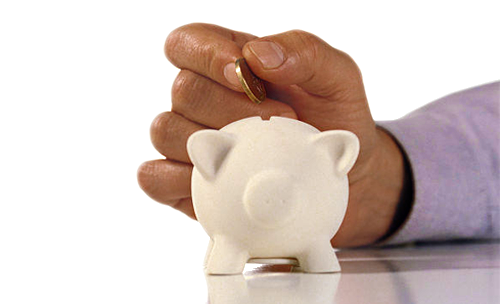
There's been a lot of focus on the stock market lately. I have to confess -- I don't know much about it. I've never owned stock, and so all of the uproar goes on largely unnoticed by me, since my day is not affected whether things go up or down. Just the same, it got me to thinking.
I talk quite a bit about investing in people. It's a phrase I and those closest to me use so often that I assume it's meaning to be generally understood. Yet it occurred to me recently that this may well not be the case.
In the typical sense of investment, one gives with the hope – and perhaps expectation – of gaining something of greater value in return. I invest $10 and I get back $20. Something to this effect.
Moreover, an investment at its best is assumed to be mutually beneficial. I lend you something you need now, and you return it to me with a percentage increase later. I help you succeed up front, and you share that success with me down the road.
Of course, as recent trends will confirm, investment always involves risk, as well. I give, as I said, hoping or expecting something in return – but knowing full well that I may get nothing in return. If you lose, I lose. It's par for the course.
In financial investments, there is research involved. I check you out, as it were. I only invest in those areas where the chances of a good return are relatively solid. However, once in a while, I invest in a new venture with no track record, because I believe in its merit and ability to succeed, though this has in no way been proven to me.
Investing in people is similar in many ways. Yet it differs on some key points, as well.
While I expect nothing, I do hope for a return and increase when I invest in people. But I do not expect to keep the profits. In a way, it's like taking some of the seed for my garden and tossing it over the fence into my neighbor's barren yard. While I hope to look over that fence and see growth begin, the benefit is not experienced in my own yard, in terms of personal increase.
At its best, investing in others is also mutually beneficial. By investing in friends, I develop solid relationships with people who are also willfully investing in me. Additionally in my case, by investing in teens, I have gained some invaluable adult friendships over the years, some that I know will last a lifetime.
There is also a now-and-later principle at work in interpersonal investments. Sometimes, I invest in a teen for quite a long time before seeing positive change really take root and flourish. In addition, there are many times when I am low on commodities such as perspective or peace, and friends "lend" me some of theirs. Later, when they are running low, I can give them some of my own. Sharing a good meal or favorite movie or late-night talk with a friend is of value any time, to be certain. But it does seem to have even greater returns when the particular timing of it helps to lift you out of a pit.
The returns when investing in people are not always direct. I don't give love to get love back. I may get love back. How wonderful when this happens! But even if it does not, there is still a return of love in a different way – that is, I have better learned to love. I have multiplied my own ability to love, making future successful investments all the more profitable. Likewise, though someone may not respond as I had hoped to my investment of patience or kindness, I have learned to become more patient all the same. More kind. More diverse and creative in my approach. And these things are always of great value.
As with finances, there is a risk involved when investing in another person. Those thrown seeds may not take root and grow. They may grow and be torn up as weeds. Or they may get nearly to fruition, only to be neglected, unwatered, left to be sun scorched. And this is always sad to watch.
Once in a great while, I do cut my losses, as it were. While I can honestly say that I have never given up on someone in whom I have invested, I have made the choice to withhold certain "revenues" where there have been deliberate acts of waste. For instance, I will not invest years of consistent time and energy into an addict who does not want to change. If you've been following the blog for a while, you may recall that I did this at one time with John, a young man I took in for a while, but who willfully chose to continue using and lying about it. For both our sakes, I had to make the heart-wrenching choice to put him out (I'm happy to say again here that he made it and is now a successful, grounded adult).
In such cases, however, I continue to invest my love and care. I cannot count the times I have had to say, "I can't help you any more right now, because you won't invest in helping yourself. But I will come and be with you where you are, cry with you in the gutter, or visit you in prison if that's how it must be for a while."
However, the wonderful truth is that, unlike money, personal investment banks don't deplete.
First, I can invest all of my love in each of several markets. It's really rather amazing, that I can love someone with all the love I have and also love someone else with the same amount of love. Countless parents with several children will concur.
What's more, though I may invest love in many human directions, whether that "love stock" skyrockets or plummets, I will not run out. There will always be more love I can choose to give. More patience. More encouragement. More hope. And so, I can invest fully, confident that no matter what happens, I will have more to invest the next time, if I so choose.
extra-extra

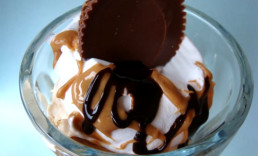
It's surprising how far sharing a peanut butter cup sundae with great people will go toward improving your day.
All right – maybe it's not all that surprising. But I'd still like to tell you about it (you can just act surprised).
Last night, I was sitting in a restaurant, treating myself to a wonderful dinner of panko haddock with summer veggies in white wine garlic sauce over linguini.
Incidentally – it's surprising how far treating yourself to a wonderful dinner of panko haddock with summer veggies in white wine garlic sauce over linguini will go toward improving your day.
Well, as I pondered how just how improved my day had been over a bite of perfectly-cooked asparagus, I got a whim. What would happen if I did the unpardonable and *gasp* had ice cream right after having had pasta for dinner? Shameless, I know.
I called a couple of high school guys that I hang out with and asked if they wanted to get that ice cream with me. They were all too happy to oblige. I picked them up at exactly ten o'clock PM and we arrived at the ice cream place by ten-fifteen.
We were met with the most jovial greeting I can recall at a restaurant – and it was 100% sincere. Heather, who was wearing many hats at this late hour, reminded me more of Mrs. Claus or a Swiss baker in a children's movie (minus the Pippi Longstocking braids). She was a treat all by herself.
After some serious consideration over what to get – followed by some more serious consideration after finding that our first choices were all unavailable – what wound up being placed in front of us were three peanut butter cup sundaes. The boys both got extra peanut butter cups. One got extra cups, extra chocolate sauce, extra peanut butter sauce – the works. I demurred somewhat, exchanging the sauces for banana wheels instead.
Watching teenagers really enjoy ice cream is one of the best things in my life. As we ate, they talked excitedly about their day together, the sleepover, and the "sick" plan they had cooked up for the next day: getting up very early (for teens, that is 7:00), hitting the skate park for a while, heading to the mall and then heading back to the skate park! Does it get any better than this? Not if you ask these two. And listening to them chatter about it, all keyed up and wide-eyed, made it feel like it just might actually be "all that."
After cleaning our "plates" as it were, we headed back out to the car. Stepping out into a perfect summer evening, one of the guys shouted excitedly, "Hey! Do you have 'Love You Like A Love Song' on your iPod?"
As a matter of fact, I did have the song. I had the whole album. And I had it for the sole reason that this boy had previously confessed to me, head to head in hushed tones, that he and his best friend (the other kid in our trio that night) had dubbed it "their summer song" as a kind of private joke between them. So, in anticipation of the right moment, I had it all loaded up and waiting, and was all too happy to oblige.
When I announced with a knowing smirk and raised eyebrow that I did have the song, they reacted as if they'd won the biggest game of the season, jumping in the air and pumping their fists. "Yes!"
In the car, we rolled the windows down and cranked the song as we drove – with extra bass boost at their request. They sang out the lyrics, ostentatiously off-pitch as the song thumped along, waving their hands rhythmically in the wind.
Now, the song is by Selena Gomez, a young female artist in the dance-pop genre. Strike one against your average teen boy.
Said artist is currently dating Justin Bieber. Strike two.
They were actually singing it together. Loudly. (I added some harmonies on the parts I knew.) Strike three.
And none of us could have cared less. We weren't thinking about what we should or shouldn't like or do. We just did what felt happy to do in that moment.
I smiled so big it hurt.
When the track ended, they asked if we could listen to one more track on the album: "Who Says (You're Not Beautiful)." Realizing that we were almost to their house, they asked if we could just drive around a little longer while they listened and sang.
A few minutes after I finally dropped them off, texts were exchanged all around:
"I love you! You're awesome."
"What a great night!"
"Thanks so much!"
Being with good people. Free.
Singing at the top of your lungs and being silly. Free.
Sharing your love and appreciation for friends. Free (discounting for text rates, if you choose that mode).
Listening to your favorite song. Unlimited free use after 99-cent purchase.
Driving with the windows down and your hands waving in the wind. Less than 75 cents in gas.
A perfect summer night.
The "big ticket item" was three peanut butter cup sundaes with extra-extra toppings, which still came in at under twenty bucks.
It all got me to thinking, once again, that money really isn't the key to happiness.

the little things
Inevitably, in social circles, the question arises: If you were on a deserted island and could only eat one thing for the rest of your life, what would it be?
My answer is simple: a good fruit salad.
When I dine out for breakfast, I will nearly always check to see if fruit salad is offered. Some of you might cringe, but this typically results in a detailed conversation with the server.
Is the fruit salad prepared here in the restaurant? (Canned, jarred or frozen fruit meets with a kind no-thanks.)
What fruits are included? (Too much grapefruit sours the whole thing. If it's mainly grapes, I'll pass. Fresh berries are a big plus.)
Are the fruits cut fresh to order, or have they been sitting? (I want crisp apples and firm bananas, thank you.)
Seems a lot of ado over something that will come to under $4.00, I know.
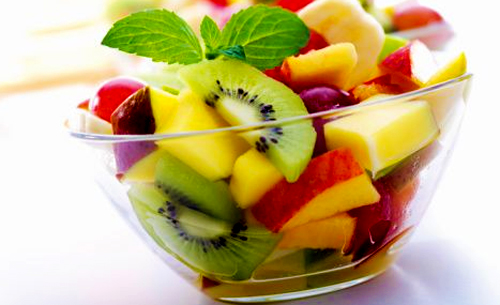
Take another look at the image that heads this post. Now click here and take a look at another fruit salad. Which do you want to eat? I suppose I might eat either, under certain circumstances. But give me a choice? I'm all about the one you see above.
For starters, the color variety in Exhibit A makes my mouth water, while the blandness of Exhibit B causes me to think it is the kind of thing served in hospitals, or restaurants catering to patrons of a certain age.
The freshness of Exhibit A is apparent. The texture is a perfect blend. My mouth already feels that, though I'm only looking. On the other hand, Exhibit B brings certain pseudo-words to mind – for instance, smooshy, goobery and fwaah – and this is never good.
Exhibit A is served in a glass bowl, the size and shape of which actually make the contents even more appealing. Exhibit B appears to have been slopped – not placed – into a plastic cup.
And let's not underestimate that sprig of mint on top of Exhibit A! I can't even say "sprig of mint" without wanting to eat whatever is underneath. Exhibit B, however, offers only some questionable flecks, which I choose to presume are seeds of some kind, but which leave me frowning dubiously nonetheless.
As my dear friends Holly and Dibby would say, the first one is "right" while the second one is "just wrong."
Call me a food snob all you want. You know that I'm onto something here. Namely, details matter.
In working with teens, many people have the mindset that details don't matter. Again on the food train of thought, I can't tell you the number of times I've heard it said, "Oh, it doesn't matter what you give them; they'll eat anything." And that might be true – because teens are hungry. And forgiving. But plopping down oddly-colored "bug juice," generic soda with keen names like Mountain Lightning, or frozen pizza that chews like cardboard – it sends a message, if you ask me. So I shop for bargains on name brand drinks and I work out deals with restaurants in providing fresh, quality food for groups of kids.
Some may argue that this is teaching materialism. I disagree. My lifestyle tells them what I think of materialism. My sacrificing a few extra dollars – tells them what I think about them as people.
Being thoughtful in the details applies to much more than fruit salad and teens. Taking the time for that little extra can go a very long way in relationships of any kind.
Filling up the car before going on a date.
Writing a letter by hand instead of typing it, or sending a postal card instead of an e-card.
Holding doors for friend and stranger alike (yes, it's still considered polite).
Addressing people by their first name whenever possible.
Writing a short thank-you or compliment on a restaurant check.
Insisting on a kiss before anyone leaves for work or school.
Taking thought for the wrapping of a gift as well as what's inside (though I have to admit that certain friends and I have made brown paper bags and newspaper somehow feel more meaningful than good wrapping).
Smiling genuinely and making eye contact with people.
Introducing people when someone new enters a social mix, however briefly.
Sharing those little, kind thoughts whenever they come to mind.
Hugging friends like you mean it every time.
Be creative. However you decide to do so, putting thought into the little things has far-reaching effects in communicating a sense of worth to the people around you.

telepathy

I've shared with you recently my suspicion that many people, upon hearing some of my stories, lean toward thinking I'm just making the whole thing up. I'm going to go even further today. Much further, in fact. I'm going to tell you something that I don't often tell anyone at all.
I am telepathic.
I don't mean that I have a better-than-average ability to "read" people. I mean that I have the actual ability to "push" thoughts from my mind and plant them in the mind of another person, and to accurately relay pictures from someone else's mind to my own. I realize that this is likely controversial; but in order for you to know me for who I am, you must eventually know this about me.
There is a popular notion in circulation that humans use only a small percentage of the brain (usually in the vicinity of 10%). This same thinking draws the conclusion that, if we could somehow master more of our brain's potential, we would be capable of extraordinary things. Things like super memory. Things like telekinesis.
Things like telepathy.
Well, I do not believe this myth. We are using our brain capacity fairly well. We just aren't using it optimally. The truth is, as I have finally revealed about myself here, you too have telepathic abilities.
Don't believe me? I do understand your hesitation. It's a lot to take in at first. But set aside your skepticism for a moment. I am prepared to prove to you the staggering potential you have right now to transport thought in vivid detail between your mind and another person's.
I need not even be present with you to do so. The reality is that thought transcends time and space. It is on another plain.
For those who are willing, let's begin the experiment. Prepare to be amazed.
I am thinking of something as I type. That is, I am holding a detailed picture of it in my mind. Now relax and breathe deeply. Don't close your eyes (since you'd lose the ability to follow my instructions), but just let the tension in your body go as best you can. Open yourself and all of your facilities. Create a blank, white screen in the front of your perception. It will now receive the thought from my mind.
A shiny red apple with a faint patch of green at the top around the stem.
You see? I have proven my point. We are both telepathic. I was imagining a shiny red apple with a faint patch of green at the top around the stem. And, through focused use of my mind, I was able to transfer that image into your mind almost instantaneously.
I told you that you'd be amazed.
Oh, I see. You think I cheated. That's not telepathy, you're saying with a roll of eyes and wagging of head. You just told me what to picture!
Uh huh. And why do you think that this is not telepathy?
Is either of us looking at a real apple right now? I'm not. Are you?
We aren't in close proximity to one another. I'm at my desk, and I don't know where you are. But I'm certain you are not here and that I am not there.
Furthermore, it is absolutely true that I was holding an image of said apple in my mind, all the way over here at my house. Then, not by random chance, but according to an act of my will and yours, your mind absorbed and held the same image that my mind had formed. How is this not telepathy?
I think we are routinely dulled to the immense wonder that we have in language. In essence, language exists as a means of thought transference. Telepathy. Causing pictures and ideas to hop from one mind to another.
Let the magnitude of that sink in. We are mind readers. Why do we find it any less wondrous due to the fact that we happen to utter noises or make a series of curves and lines while we're doing it?

I made the assertion earlier that most of us aren't using our minds optimally. I stand by that. For some reason, though endowed with this freakish power to transfer detailed information to other people, we go about not using this ability with the other telepaths all around us – at least not anywhere near our potential.
So often, wonderful thoughts enter our mind:
Feel that sunshine. Today is a ten kind of day.
This is the most delicious meal I've had in weeks.
I have the coolest mom in the world!
How did I get so lucky to have such caring friends?
It's so nice to come home after a hectic day at the office. It's peaceful here.
He's still awfully cute to me, even after all these years.
These thoughts enter, and then they fade away, heard only within the confines of our own mind for a moment in time. What a shame when, by simple use of words and will, we can instantly transfer these thoughts to the minds of the other people around us – people I'm certain would be all too happy to share in our power of telepathy.

contagious
It's said that misery loves company. Some might take this to mean that negative people have a knack for finding one another. My own observations, however, lead me to the conclusion that negative people actually spread their funk to others.
They go about looking for fires to throw their wet blankets upon.
They bring their rain machines to parades.
They crash parties and … poop them. Whatever this might mean in the specific, we can be certain it isn't what a good party needs.
However, I don't want to talk about the naysayers here.
I've had much to say about choosing positivity. About being kind. Making time for stillness. Cultivating a sense of wonder. My hope is that some readers are going beyond imagining what such a life would be like – to actually taking the steps to live it. But it doesn't end there. Becoming a more positive, kind, peaceful, imaginative and loving person is only the beginning.
The people I love and admire most have an almost magical effect on others. When they walk into a room, the lights seem to gain wattage. Angry people quickly forget what they'd been so upset about earlier. Stick-tight people get to laughing despite themselves. Driven and worrisome people breathe.
In other words, positivity is just as contagious as negativity. Misery may love company, but I've found that people will choose the company of the genuinely positive over the miserable or mundane every time.
The genuinely positive hand out jumbo umbrellas at rainy parades.
They dry wet blankets in sunshine while gently blowing on the tenuous embers beneath, until they once more get to crackling with warmth.
They turn up the music and un-poop parties.
The exciting truth of it is that this isn't all that difficult to do. The hard part is doing the personal work, making the choices that result in becoming a genuinely positive person, as opposed to a negative or even a neutral person. From there, it's a breeze. All that remains to becoming "contagious" – is engaging. Going beyond your peaceful garden or your quiet walk on the beach, and getting in the mix with the real people all around you.
Germs don't try to spread. They just spread, when people get together. It's what they do by nature.
The same is true of positivity. Only people won't mind being in close quarters with you.

treats

I'm staying at my mom's house tonight. We are planning to head off at 5:00 AM on a 15-hour road trip to see my brother in North Carolina. That will mean getting up at 3:30. But at the moment, I am waiting for laundry to finish. And writing.
Earlier this evening, we took her husband's jeep out for a spin, to keep it up to snuff while he is serving another tour in Iraq. Even close to 8:00 PM, it was 85 degrees outside. So, rather than just ride around, we used it as an excuse to get an ice cream. Here I was at the drive-thru, a full-grown adult with my full-grown adult mom, ordering two soft-serve vanilla cones in a monster truck. Gotta love it.
As we drove away, taking the first licks from our ice creams, I thanked her (she paid the $2.14) and said, "Driving out for an ice cream cone—it sure brings back memories." And it did. Honestly, to this day, I still treat myself to ice cream cones just for the nostalgia. And because I can. Since I was a kid, I've never gotten over the thrill that I can go out anytime I want and buy an ice cream cone with my own money! Life is good.
The ice cream excursion brought back another memory. My friend Dib's son, Sam, was five or six at the time. It was a hot and sticky summer day, and Sam was wilting. His freckled face was all flushed and sweat beaded his forehead under his copper curls. Sam was always a nervous fellow, and so it was with timidity that he approached his mom and asked with many a pause, "Um … mom … um … do you think I could … well … maybe have a Popsicle?" In my mind's eye, he looks as if he's asked for a million dollars instead of a mere frozen treat. Dib gave him an appraising look, with narrowed eyes and a finger thoughtfully tapping her chin. Sam wilted all the more. Then she delivered her verdict: "You know what? I think you should probably have two Popsicles." A wide grin took over Sam's shy face and his nostrils flared. It was all very Charlie Brown. He felt like two million dollars.
Even the smallest of gifts do wonders for the soul. By their very nature, they say, "You are important to me."
I have found that the best gifts are the simple ones. Dib and I have taken to calling these little thoughtful, impromptu or creative gifts "treats." Treats don't have to cost much, if anything at all. Here are some treats I've received and cherished:
A smooth beach stone with a ring around it (which my friends call "ring rocks").
Sea glass.
A retro gym T-shirt from the $5.00 clearance rack.
An iced coffee, just the way I like it.
A framed montage of all the ticket stubs from movies a friend and I had seen together.
Coupons to an eatery I frequent.
Coins from a trip abroad.
A timely fried egg sandwich on toasted, buttermilk bread.
A car full of balloons, each with a hand-written note inside.
A used ottoman with a sticky note tacked to it, containing the words "my love" (don't ask).
Recent treats I have given have included a tulip, a book I enjoyed, a doughnut, a poem, and exfoliating scrub. It's truly an endless list of possibilities.
And the thing about treats is—they don't require any reason at all beyond "You were on my mind," making them yet another fun and easy way to create others-centered moments.
the making of mad
Yesterday, in a post entitled "red balloon," I talked a little more about the idea that no one can make you happy. I hope you'll take a minute to read that first, because a lot of important groundwork is laid for what follows here. Today, I want to talk about an equally important truth:
No one can make you mad.
I was talking about one of the chapters in my book, "The Best Advice So Far," with a friend of mine yesterday. He seemed to have no trouble accepting the idea that no one can make you happy, that you have to take responsibility for that choice yourself. But when I introduced the idea that no one can make you mad, he balked. He huffed. He puffed. (But he really didn't blow this house down, because it stands up to some pretty good huffing and puffing.)
I had sushi with a new friend in Boston later that evening, and this idea came up yet again. My friend said that a particular public view advertised on a billboard made him angry. He had a similar reaction to my friend's from earlier that day, when I suggested that no one can make us angry.
It seems this is territory that many people feel strongly about protecting.
I certainly don't claim to have all the answers. And I do think there is room for debate about whether the initial feelings associated with anger are within our control, or whether they are more akin to a pain response when we get hit. But I believe that either way that coin lands, the responsibility for being angry – maybe not "getting" angry, but being angry – still lies with us.
Hear me out.
I was staying with a friend a couple of years ago. I was in another room, when suddenly, a ruckus erupted elsewhere in the house. Someone had knocked at the front door. My friend let them in and began yelling. A girl's voice protested. My friend escalated. And soon thereafter, the door slammed. I heard my friend stomp to his room, muttering loudly. I gave it a few minutes, then went to see what had happened.
I knocked lightly on his door. I heard him sigh on the other side. "Yeah … come in." He was still fuming.
I poked my head in. "Hey, are you OK? What happened?"
He launched in, and I could tell that he truly believed that he'd been in the right with the altercation. He explained that his girlfriend had come by. Apparently, after knocking for a minute or so without his answering the door, she had called his phone to tell him she was outside. He said she had been irritated that he wasn't letting her in. "I left the [expletive] door open for her! How stupid do you have to be to not try turning the [expletive] knob before you stand out there knocking for a [expletive] hour! And then, she treats me like I'm the idiot – like I somehow forgot she was coming." He growled, screwing his eyes closed. "She just makes me so mad!"
I have the kind of relationship with this friend where we can usually just say it like it is. So I went there.
"Let me ask you something," I said. "If it had been another friend" – I suggested the name of a teen we both know – "and she did the same thing exactly, would you have responded the same way?"
The air rushed out of him with a lot of the heat, and I could see him coming back. "Uggh. No."
I continued. "How do you think you would have felt or handled it, if it had been her? Same scenario."
"I … probably would have just opened the door and apologized that I didn't hear her." There was a short pause, then he added, "I'm an idiot." He shook his head at the sudden realization and actually smiled. "I don't know why I get so mad when it's her."
When I get so mad. Ah … progress.
We talked for a while, about how we become comfortable – sometimes too comfortable – with those closest to us. We take them for granted. We stop treating them with the common courtesy we would give to most anyone else. But the real core of this talk was what was introduced above. No one can make you mad. My friend had realized here, based on the scenario where he imagined it had been another friend, that he could control his response. His girlfriend wasn't making him do anything. And that leaves only one option.
We choose our responses.

Whether with a girlfriend or with the guy in front of us who is driving too slow for our liking, we choose.
As I said regarding the idea of anyone making us happy, it is certainly easier with some people to choose to be happy. So it is with anger. It is easier with some people than with others to choose not to give in to anger. But in the end, whether easy or hard, the choice is still ours.
If we can accept this, while it will require some real work in order to change our responses, it offers a level of freedom and personal peace that is well worth the effort.

trip talk
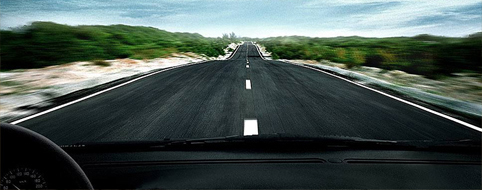
Last week, I made a whirlwind trip to get Chad from Penn State after his last final. By "whirlwind," I mean eight hours up on Thursday, arriving at midnight, and hitting the road again Friday by 3:00 to head back.
I love road trips. I'm no college kid anymore, but I still love them. Travel of any kind reminds me how much is going on in the world beyond my usual circles. I really do think, every time I travel, "I could just pick up and travel -- or even move -- any time I want!" That's not at all to say that I'm looking to move or that I'm unhappy or that I've got the wanderlust bug. New England is very much home to me, and I love my life. Travel simply reminds me of the many choices and options I have open to me all the time. And that helps me stay open to possibility where I am.
So, I had eight hours to myself on the way to PSU. I had my iPod loaded with all kinds of retro music I hadn't listened to in decades (yes, I said decades). But honestly, I spent more time with the music off than on, enjoying the space to let thoughts roam. Or settle. In fact, one of the chapters I've already completed for the book is about the value of cultivating silence in our lives.
However, I don't want to talk about the trip there just now. I want to talk about the trip back.
Often when people travel together, they listen to music much of the time. Or they take turns driving while the others try to catch as much of a nap as possible, between being jostled by lane shifts and using a wadded shirt as a pillow. This was not the case with Chad and me. We talked. The entire eight hours. I'm not kidding. And by "talked," I don't mean punch-buggy or the license plate game. Sure, we joked around some and shared new music we'd discovered; but a good seven hours of the eight were spent in real conversation about life. Stuff that matters.
At one point, we found ourselves talking about the meaning of normal. We all label others as "not normal" in many ways every day. I mean, it just seems obvious to us. He's an odd duck. She's too thin. He's a little lazy. She's super smart.
Chad and I came to the conclusion that what we really mean when we say these things is, "That person is not like me." Think about it. Isn't that what we are really saying? Aren't we setting ourselves as the standard for what is to be considered normal?
By way of example, let's talk about a towel.
That morning, before we had headed back from Penn State, I was getting ready to take a shower at Chad's apartment. In the interest of packing light, I hadn't brought a towel, so I asked if I could borrow one. Chad pointed to a yellow towel and a green towel hanging over one another on the corner of one of the doors, up high. "I've been using those, and I can't remember the last time I actually washed them with finals and everything, but you're welcome to use one of them." He smirked.
Stop. Some of you just made scrunchy face. But why?
Chad's roommate, also a friend, stepped in and offered one of his own towels. "Here," he said, "use mine. I only used it a couple of times."
You just made scrunchy face again, didn't you.
The truth is, the towel I used was dry. Fine. Did the job. Wasn't even stinky. So why the scrunchy face? "Because," you protest, "that's ... just ... gross!" But don't you really mean that you yourself would not do it, and therefore it "isn't normal"?
Years ago, I visited San Luis, Mexico. We had gone to bring shoes to a village where dwellings were constructed from junkyard scraps: tires, wire, cardboard. We could not drink the water there. For the moment, imagine that you live here. You own no shoes. You live in one of these single-room, make-shift houses with many views to the stark outside, where seams between the garbage that constructs your walls do not meet. Six other members of your extended family live here, as well, sleeping on the dirt floor.
Introduce the towels offered to me at Chad's college apartment.
In San Luis, do these towels seem normal? No. But is it for the same reason that elicited your scrunchy face earlier? No.
In San Luis, one might wonder, "What do you do with it?" If you explained that you use it to dry water off your body after a hot shower, they would be no more enlightened. Shower? Hot water? And you do this ritual every day, sometimes more than once?
How odd. How "not normal" it all seems.
By the standards of most of the world, a towel is a luxury. More like magic. And if you do happen to own one, you certainly aren't washing it after every use. Or every week of use.
Of course, it's about more than towels. It's about making value judgments on anyone for any reason. You see, the best we can ever really say without being egocentric is, "That person is different from me. They are doing this differently from how I would do it." It is no worse or better. Just different.
I remember now what led us to this discussion. Chad had asked if I thought that, deep down, everyone really wanted to do the right thing. He was thinking specifically about a young man he had counseled in a prison. I suggested that the right thing can only mean the right thing as I define "right." How can someone really want, deep down, to "work a nine-to-five job and earn an honest living" when they've only ever known selling pills on the street? When that is what his father sent him out to do in junior high school, and what made his father proud of him when he'd sell them all and bring home the money he collected? "A real job" would seem much like that towel would seem showing up in San Luis. "Don't you want this towel? How could you not want this towel? I know that deep down, you must really want this towel!"
What the heck is a towel?
One of the chapters I have slated for The Best Advice So Far will be about treating people as people and not as props -- as background features in the world of me. I think I'll include some of the thoughts Chad and I shared on this trip. Don't misunderstand me. I'm not saying that we should have no standards in life, or that we should be moral relativists, or that we should not try to help people move beyond their current station. I'm simply saying I think we would all do well to remember that there are countless real and valid perspectives in the world beyond our own.