

lights

The night was unusually dark and the water unusually warm as I walked along the beach. Very few houses within view were lit, and even the moon and stars were obscured by storm clouds. Even so, I was content to make my way by the intermittent flashes of heat lightning dancing overhead — and a bluish-green sparkle blinking here and there around my feet as I shushed through the shallow surf.
Bioluminescent algae.
I prefer the scientific name, which sounds more poetic: Noctiluca scintillans. “Night lights.”
As my eyes adjusted, I could make out a family of four ahead — two parents and two children, a boy and a girl, walking my way. Drawing closer, it became clear that they were rapt by the scintillations, evidently their first time seeing the phenomenon. The little girl looked entranced, eyes wide as she stared at the fairy perched on her upturned finger. Her brother, though clearly fascinated, looked a bit dejected, unable to “catch” one of his own.
I bent down and carefully scooped a small patch of sand, careful not to disturb the glowing particle atop it. I held it out toward the boy. He gladly accepted it, just as carefully joining me in the transfer from my finger to his own. He grinned sheepishly, thanking me with his eyes.
I continued my trek forward, and the family continued theirs in the opposite direction, the mom encouraging the boy to speak his appreciation for the gift I’d offered. “Thank you” he called back over his shoulder in a small but heartfelt voice, though his eyes never left the magic happening on his fingertip.
I walked on a bit further, feeling very much like a child myself as I spotted particularly bright specimens, sometimes stooping to scoop one up and examine it from a place a few inches in front of my nose.
At a certain point, I stopped, took a deep, contented breath and then turned and headed back the way I’d come.
Perhaps ten minutes later, I spotted my little friend where his family had paused to take in the display a while longer. The boy’s eyes met mine in recognition as I approached. I smiled broadly, calling “Hello again!” He returned the “hello” and the smile, adding a little wave of his hand — the kind of wave that only the very young can really pull off genuinely, without seeming comical.
I walked on. He returned to playing.
I will never see the boy again. Even if by some coincidence I did, I wouldn’t recognize him, nor he me. It had been too dark, the exchanges too fleeting — perhaps five seconds total, including to and from. A few blinks. And yet I couldn’t help but think that those brief moments were not insignificant.
Somehow, they mattered.
I had become part of that boy’s collective outlook on life. I’d provided proof that not all strangers are inherently bad, that not all darkness need be scary. I’d given him reason to believe that the world can be a good and kind and safe place.
Thing is, despite my being an adult, he had done the same for me.
You see, in the weeks leading up to my annual Florida vacation, I’d been experiencing a sort of dark shadow creeping in around the edges of the trip. I had a sense of what was causing it. Over the previous year, Florida had become a hotbed for political upheaval, division and outright meanness. Even the childlike simplicity of Disney had been marred by controversy and lawsuits borne of pettiness and spite. Some of my favorite places to visit were still in ruins, having been devastated by Hurricane Ian less than a year earlier. The news had continued to announce the record high ocean temperatures that were depleting the water of oxygen, endangering marine animals.
Despite a well-stocked emotional toolbox, I just couldn’t seem to shake the foreboding feeling. I believed as firmly as ever that “You always have a choice,” yet so much of what I now associated with Florida seemed beyond the scope of my choices. And that was tainting my expectations before I’d even arrived.
Once vacation had begun, I’d used the choices I did have well — choices concerning focus and perspective. Still, part of me was continually aware of that faint feeling of dread lurking just outside my constructed blinders.
And then a tiny light was passed between strangers. A joyful greeting. And suddenly, everything felt simple again.
I stood still a few moments longer, taking in the twinkling spectacle playing out along the water’s edge, reminded once more that a glimmer of hope or kindness shared may continue to ripple onward, outward — even across a lifetime.




scam

Most people who read my blog know me first and foremost as an author. So they are surprised when they learn that I do other things as well. (And conversely, those whose first dealings with me center on one of those other areas are always surprised to find that I’m also an author.)
Well, one of those other things I do is designing information systems. I’ve done this since I was a child and home computers first came out. But as far this story is concerned, here’s the simple version: I build fancy stuff with spreadsheets. Often, it’s stuff that few other people can figure out. And for that reason, I always have clients who seek me out and pay me well for this work (which I fit in between my writing and marketing and mentoring and…)
You might think these two worlds are incongruous, but in my mind, they’re just different ways of helping people. And I am passionate about infusing both with core values such as kindness.
To that end, I choose to donate a little time each week as I’m able to helping answer posts on a couple of free online forums. Typically, I can only volunteer about a half hour or so per week; but I can get a lot done in that time, considering that the forums are designed to help people with relatively small stuff. A little knowledge sharing here. A formula tweak there.
Recently, I read a forum post from someone who appeared to be located in Romania, and who was requesting spreadsheet help. But in assessing things, what he required wasn’t small stuff. It was a highly customized, time-intensive solution (i.e., real work).
Usually, I’ll just pass over such posts or suggest that the person consider hiring a developer. In this particular case, however, I made the choice to “break my rule” and try to help the guy out anyway. You see, I’ve been especially aware lately of the need for tenacious worldwide kindness. And while it wouldn’t bring about world peace, going the extra mile for this stranger in Bucharest seemed a good opportunity to put feet to my convictions.
Still, it was a bit tricky. Sharing complex solutions on a free forum would create unrealistic future expectations for site visitors. In addition, I can’t offer in a free public forum the same level of complex work that my private clients pay me for.
But my mind was made up. I was going to help this guy (I’ll call him “Ivo” here).
Since Ivo’s shared spreadsheet contained his email address, I reached out to him privately rather than through the public forum. I introduced myself. I explained essentially what I’ve shared with you here: that I am a longtime forum contributor, that the help he required went beyond what I could provide through the free forum, but that I was willing to help him at no cost if he would simply share a copy of the sample spreadsheet with me.
Some hours later, his email reply popped up.
As I try to keep this blog family friendly, I’ll have to do some censoring:
“You bet. You [#&%@!] poor [*!@~$] scammer, eat [&$^#%]. Maybe that’s more useful to support your laughable existence.”
Here, I’d offered him free work —work I’d have charged any other client $150 for—and this was his response?
What would you have done at this point, if you had been me?
*****
I won’t lie. My initial reaction was to bristle. Hey, I’m human, just like you.
I mean, I owed this guy nothing. I didn’t need to help him in the first place. He wasn’t a paying client. And I would certainly have been well within my “rights” to dismiss him at this point. Just one more self-absorbed, entitled jerk in the world.
Shrug it off. Press “Delete.” Move on. Right?
Instead, right after that initial sense of self flared up at Ivo’s response—in the next moment, where choice begins—I was given a good dose of my own advice from previous books:
“Humility is a strength, not a weakness.”
“Focus on the person, not the problem.”
“Kindness still works.”
Add to this that I’m just about to release my third book, Alternate Reality (just released: April 2022!). As part of the editing process, I’ve read through the entire thing about ten times by now. And that has meant being intensely confronted with even more of my own words, including this new piece of shared advice:
“Instead of thinking the worst about people,
wonder the best.”
Right about the time I was reading Ivo’s email, you might imagine that I was applying this bit of advice to him. “Wow, here I am going the extra mile to be kind to a stranger, and he replies with such rudeness, accusing me of being a scammer?” But rather than thinking in terms of his choices, I found myself considering my own.
Would I think the worst of this guy based on his rude response? Or would I practice what I preach and make the choice to wonder the best about him?
I chose to wonder the best. I shifted my focus from what he had done—to why he might have done it. And that brought a new response: empathy.
I responded to Ivo’s email. I told him that I understood why he might be skeptical; after all, the world is a weird place sometimes. I offered him four different means of verifying who I was, for his own peace of mind, and again extended the offer of help.
I’d like to tell you that the clouds parted, that birds started chirping and that a swell of rhapsodic music began to play. Alas, it did not. My heartfelt email was ignored.
Surely, now was the time to dust off my hands and forget about this guy. I mean, you can lead a horse to water, but you can’t make him drink. And I want to be exceedingly clear here: that is true. As had been the case from the start, I owed this stranger nothing. I would not have been a bad person to walk away. And on the flip side, I wasn’t earning any cosmic brownie points if I chose to stick with it. All I can tell you is that, at the time, I felt compelled to try once more.
After a few days, I emailed Ivo again. I told him that I wondered if his skepticism was based in personal circumstances that had burnt him. And so, rather than continuing with my request for a shared spreadsheet, I worked out the entire complex formula in a spreadsheet of my own and then copied and pasted it directly into the email for him. I carefully explained how to implement it on his own sheet, asking only that he not post the formula publicly, so that I would not have that conflict of interest with other paying clients. I ended the email expressing my hope that this act of kindness might help restore his faith in humanity, even if only in some small way.
No birds chirping. No clouds parting. No music playing.
Instead, Ivo took my formula and did exactly what I’d asked him not to do: he posted it on the public forum. What’s more, he asked the larger community of volunteers there to confirm his earlier assumption that I was a scammer, and that this was malicious code. And to top it off, he implied in this public forum that I’d tried to get money out of him.
I’ll admit, my resolve to be kind was fraying around the edges at this point.
But I replied to his now public commentary as gently (yet directly) as I could. I reminded him that he could click my name link and be taken to the same profile I’d already sent him via email as one of four different means of verification. I asserted that I’d made very clear that my offer of help was free with no strings attached. I told him that I felt he was now just digging his heels in, committed to somehow proving that his initial assumption about me was true: that I was, in fact, a scammer. I told him that I couldn’t recall ever having worked so hard to give someone a free gift.
And then I remembered another piece of advice from The Best Advice So Far:
“Tenacious love expressed with creativity
can work wonders.”
It doesn’t always. But it can.
Allowing that "love" can be applied in both an individual and humanitarian sense, I determined to do the least likely thing.
I set aside my self-imposed rule of not posting complex work on the public forum, went into his publicly shared spreadsheet and implemented my full solution for him there, so that he could see with his own eyes that it was producing exactly the complex result he was hoping for.
I added one more comment, once again wishing him well and hoping that this might somehow restore in him a little faith in humanity.
And then, satisfied that I’d truly done all that was within the realm of my own choice to do, I let it go and moved on.
*****
The next day, I got a ding alerting me that Ivo had replied in the forum.
“Your solution works perfectly. I misread you and your motives. I owe you an apology.”
I’ll admit, I wasn’t expecting that.
Yet as nice as that was, something still felt unresolved. Empathy kicked in again. I was aware that if other forum contributors read the exchange, they might avoid offering Ivo help on any future posts of his. So I offered a path to a “clean slate”—figuratively and literally. I suggested that he back through all of his comments and delete them, after which I would do the same. I’d already spent five times my weekly allotment of donated forum time on this one issue, but this seemed important.
Within a day, he had done just that: deleted all of his comments. I followed suit. Clean slate achieved.
Cue the singing birds.
But it didn’t stop there.
Two days later, I received an email reply from Ivo. Turns out, he’s from Latvia, not Romania. He apologized again and asked if he might get a second chance to undo that negative first impression he’d made.
He said he actually considered himself to be a kind and helpful person. He recalled to me the story of a woman he’d helped at a coffee shop late one night. In his words:
She told me she was an Uber driver and had just crashed. For some reason, she had no money and no phone. In addition to losing her only means of income, she mentioned that she also had cancer in her legs, and at one point she started crying. She asked for some cash and promised that she would give it back the next day at the nearby museum where she worked as a guard. We ended up walking to the ATM together, and I withdrew a hundred bucks. I gave it to her and she cried again a little, hugged me and thanked me enormously. It felt very good to be helpful to somebody in a great need!
And he never saw her again. No such person worked at the museum.
It had all been a scam.
Oh, and in case you're wondering (as I did) about how Uber and "bucks" match up with Latvia, this all happened to Ivo during his first and only trip to the United States. It happened in Washington, D.C.—where Ivo had had to make an emergency diversion to the Latvian embassy. You see, upon arrival in California, thieves had broken into Ivo's car and stolen everything they could get at, including his passport. Still, despite his own troubles, there he was trying to help this "poor woman" at the coffee shop.
You see, Ivo really wasn’t an awful, self-centered, ungrateful person. He was a nice guy who had just been hurt one time too many before I came along.
But the kindness I’d shown actually had turned the tide inside him. Again in his own words:
I think this experience will stick with me and will teach me a good lesson in the future as well.
Ivo and I have been talking back and forth for a little while now, having terrific conversations about stuff that matters. As it turns out, we have a lot in common. Yet we’re also learning from one another. Stretching our perspectives. And we’re just having fun getting to know one another.
Is kindness always rewarded with a happily-ever-after ending? Nope.
Will some people turn out to be as mean as they at first appeared? Yes.
Are scammers still out there scamming? They are.
But what, then? Should we all decide to live within the confines of our own little self-protective bubbles?
To never show spontaneous kindness again, because of those who might take advantage of it?
To just give up on hope? On humanity?
To me, that seems like the biggest scam of all.
Here’s another tidbit from The Best Advice So Far:
“Whatever you choose to do,
do it without expectations,
simply because you believe in doing it.”
Where that limit lies for each person and in each situation will vary. But my encounter with Ivo serves as yet another reminder that “you always have a choice.”
A choice to look beyond the what to the why.
A choice to focus on the person and not the problem.
A choice to trade thinking the worst for wondering the best.
Quite often, I’ve found, those “best wonderings” will be closer to the truth.

less lonely

We’ve heard it a million times: “Bad news sells.” And we’ve certainly had more than our fair share of it lately, haven’t we?
As someone who takes my own advice perhaps more than anyone, and ever keeping in mind that central theme of mine — “You always have a choice" — I went beyond simply turning off the bad news to making an active search of good news.
Would you believe that there is actually a whole news site called Good News Network?
There I read an article that not only held true to the claims of offering good news, but that introduced me to something I've suspected was true for some time, yet for which I had no proof.
Until now.
I encourage you to read that article for yourself. But the short version is that researchers from California and Italy teamed up to conduct a study which reveals that people with greater empathy and wisdom are less lonely.
Conversely, as you might have guessed, that means people with less empathy and wisdom are more lonely.
Well, that seems easy enough, right?
Just get more wisdom.
Get more empathy.
Be less lonely.
Phew! Glad we solved that one so quickly.
Hmmm…

In reality, those two qualities — wisdom and empathy — are a bit hard for most people to nail down. After all, how do you measure something like wisdom? How do you gain more of it, for that matter? If it were a matter of merely reading the array of inspirational memes that endlessly scroll across our social media accounts all day and pressing the “Like” button, we’d all have wisdom to spare. None of us would ever be lonely.
Likewise, if empathy were gained simply by being around other people, or commenting on their posts, or hitting the sad emoticon button when they post that they just broke up with their boyfriend again, empathy would be the norm (and, therefore, loneliness the exception).
Alas, not so.
Here's a quick self-check for wisdom:
1.) Do you listen as well as you speak?
2.) Are you known for being patient and tolerant?
3.) Are you comfortable with and intentional about silence and self-assessment?
4.) Have you honed the awareness skills necessary for noticing what is going on around you?
5.) Do you live as an agent of choice, not merely a victim of circumstance?
And now, for empathy:
1.) Do you listen as well as you speak? (Sound familiar?)
2.) Do you know how to ask the right kind of questions at the right time?
3.) Is it the norm for you to consider others, whether they are physically present or not (and, in fact, even if you may not know them at all)?
4.) Have you accepted with peace the fact that not everything is about you?
5.) Do you regularly practice tangible acts of kindness?
Well, at risk of being accused of shameless promotion, helping people increase empathy and wisdom are the main goals of my mentoring, speaking, this blog and both of my books.
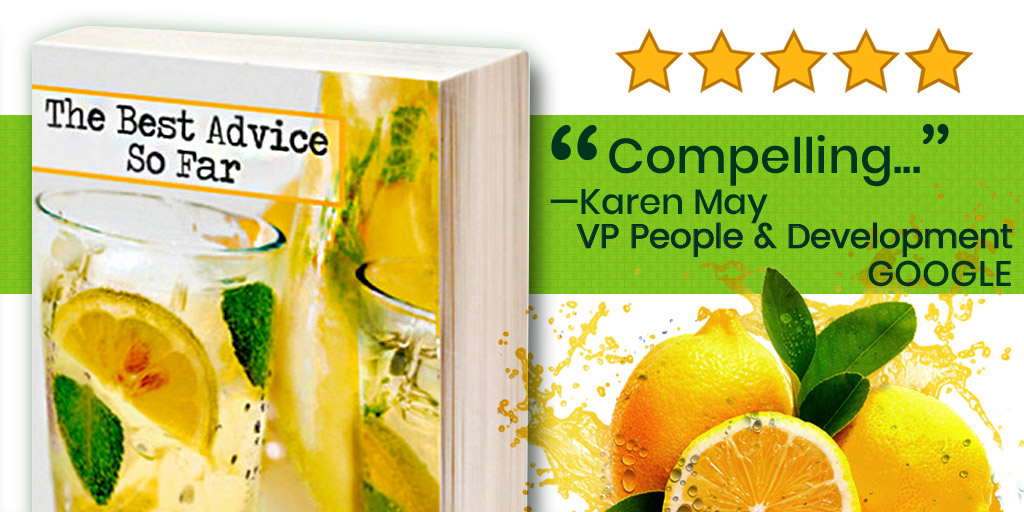
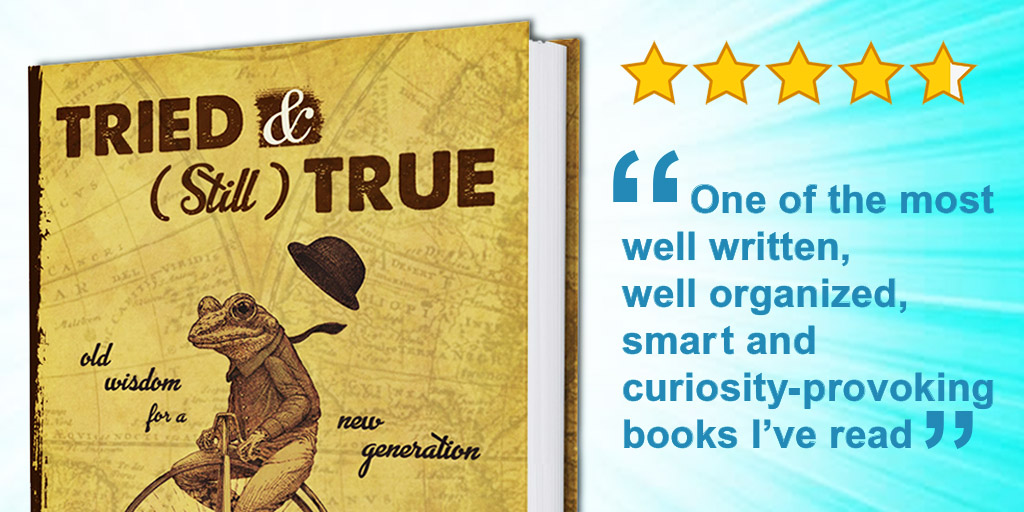
And those themes continue in new ways as I’m now in the process of writing my third book.
So it seems I’ve actually been helping people to be less lonely this whole time. Who knew?
Honestly, I did. I knew.
I knew because I’ve seen the results over and over in people’s lives for decades. As I said, I just didn’t have the science behind it until now.
Here’s some more good news. If you are feeling lonely, you really can do something about it. And as this new study shows, being less lonely isn’t reliant on having more people around (which is tough during the current extended pandemic). It’s something you can work on all by yourself. Today.
I encourage you to pick up one or both of my books. But I also understand that many people have been greatly affected by this pandemic and may not have money for extras right now. If you really want to read these books and simply can’t afford to, follow the links to the book titles above. You can get started reading a good deal of each of the two books using the download links I’ve provided there. And if you finish those and want to continue, drop me a message on my website’s contact form. Introduce yourself, let me know which book you’d like — and I will send you a full digital copy of either for free. No strings attached.
So why not start being less lonely right now?

it's a breeze

One day last week, I wished a friend of mine a happy birthday. He turned 30 and was feeling old. Interestingly enough, he was a sophomore in high school when I met him, and I was older than he is now. So I was able to paint a convincing picture for him as to just how young he still is.
As we talked about getting older, a famous quote came to mind:
“With age comes wisdom.”
Yet I’m inclined to agree with the second half of Oscar Wilde’s observation on the matter:
“… but sometimes age comes alone.”
I don’t need to look very far to find middle-aged adults who are just as petty, rash, irresponsible or egocentric as they were when they were teenagers. (Some, in fact, are even worse off now than when they were younger.) Likewise, I know many in their twenties who are quite well-adjusted and have exemplary character.
That is, wisdom comes not merely from experience but from intention to ponder that experiences. To learn from it. To make new choices.
To change.
Well, after this exchange with my still-young friend, my eye was immediately drawn to a seemingly trivial bit of movement in my living room—a sight so familiar to me that, if not for that particular conversation, it would certainly not have been noteworthy let alone served as the inspiration for a blog post.
At the open window, the edge of a sheer white curtain floated and fluttered in the spring air.
In that moment, I was transported to a particular night in February back when my birthday friend was still in high school. He and a dozen or so other guys his age were gathered in my home on a Monday night for our weekly meet-up. They crowded onto the olive green sectional or found space on the living room floor, happily munching on pizza, which was the norm.
The conversation that night coalesced around a theme. Many of them expressed that they invited change, that they wanted more for their lives, that they were open to deeper connection with others and a sense of real purpose. They came faithfully each week, ready to absorb. They were honest about who they were and where they excelled or struggled. They took part in discussions and read books. But they hadn’t seen the personal progress they’d expected “by now.” They still weren’t feeling or experiencing whatever it was they thought they should be feeling or experiencing.
One or two of them even hinted that they were disappointed that the other group members hadn’t gone to greater lengths in supporting them during the week between meetings.
Where was the magic that would grant them the life they were looking for?
As they continued sharing their thoughts, I got up and headed for the kitchen, presumably to grab another slice of pizza for myself. What no one noticed was that, on the way, I cranked the heat up another ten degrees.
Even at a moderate 70°, I can tell you that 15 teenage boys will heat up a room quickly. With the thermostat now at 80°, it wasn’t long before the sweat was trickling and they were begging for relief.
Instead of lowering the thermostat, I opened the two windows along one side of the room. “Let’s see if this cools things down quickly.” But even though it was a frigid winter night, the temperature in the room didn’t drop by even one degree. No air was coming in from those open windows.
“That’s not working,” they moaned. “Can you just turn the heat down?”
I had them where I wanted them. Breaking the current flow of conversation, I said, “The windows are wide open. Why do you think the cold air isn’t coming in?”
One of them held his hand up to a screen, as if he thought for a moment that maybe a tropical heat wave had mysteriously descended upon New England. I could see that they were thinking. Another offered, “Maybe there’s no wind tonight.”
After a minute or so more, when I was sure their minds were open, I got up without a word and disappeared down the short hall. I opened my bedroom door (which I knew they would hear). Twenty seconds later, I returned and stood in the center of the room. I pointed to the open windows and, as if I were a sorcerer, freezing air whooshed into the room. In less than a minute, they were bundling up in the hoodies they’d so recently discarded; and within two, they were shivering and had had enough.
I turned down the thermostat, closed one window, leaving the other open just an inch or so as I revealed to them how I’d gotten that air to come in—to transform a stagnant space with something new and refreshing.
My secret? I had opened another window.
Currently, every single person on the planet is affected in some way by the current coronavirus pandemic. Many are feeling fearful, worried, overwhelmed, tired, alone. But I’m just as convinced now as ever that the remedy is not to simply “sit by the window” in our stuffy little spaces, wondering when joy will start coming back into our lives.
Air only comes in when we open another window to let it flow back out. Likewise, I’ve found that life remains stagnant if we merely sit around wishing for fortune to smile upon us (and grumbling when it doesn’t meet our timetable). No, most often positivity comes into our lives only when we open windows that let it flow through us and out again.
I’m not talking solely about karma here (though I’m not debating it either). I’m talking about actionable cause-and-effect.
Are you waiting by the window for feelings of isolation to end? It’s easy to imagine that a virus or social distancing restrictions are the cause of those feelings. But they really aren’t. I know people who live in the same house and yet feel isolated. Conversely, I know people who haven’t seen one another in months or years, yet who sustain real connection. So actively seek to open windows of connection with others. It’s been my observation during the times I am out in public—grocery shopping, for instance—that the masks and gloves and six-foot rules are beginning to cause people to mistakenly see each other as the threat, rather than the actual virus. But we are not the enemy. We are allies, in this together. Yes, it may feel strange. But we’re all the same people we were before this began. So make eye contact. Say hello. Smile and wave to your next-door neighbor when you go out to check your mail. The best way to start feeling connected is to take the initiative and be a connector.
Are you in need of encouragement? Open windows to encourage others. Call and check in with someone. Send a text to share a fun memory with a friend or family member. You may be surprised how quickly you yourself begin to feel encouraged.
Are you feeling weighed down by the onslaught of information about all that seems wrong with the world? Turn off the news and go be the window to something right with the world.
Today, after food shopping, I pulled into a drive-through to get a breakfast sandwich. Another driver arrived from a different direction at the same time, but waved me on to go first. In return, I secretly paid for his order with my own (which cost me about two bucks). Each of us had played a small part in reminding the other of what’s right with the world. I drove away smiling—feeling connected, encouraged and cheerful.
Every one of us has something we can contribute to what’s right with the world. And we can do that right now. No need to wait for the pandemic to subside or restrictions to be lifted.
Are you a musician? Share a song or video concert for others to enjoy.
Do you bake or garden? Make a batch of cookies or pot a small plant, and leave it on someone’s doorstep along with a kind note. Really, any gift, however small, would go a long way. A little bag of birdseed for someone’s birdfeeder. A board game you don’t use anymore. A book you enjoyed.
Are you a carpenter? Build a birdhouse and give it away.
Spend a lot of time on social media? Go beyond hitting “like” or “share” and leave a personal comment or send an uplifting message. Be deliberate about sharing positive posts rather than negative news, controversial content or political persuasions.
Money is tight for many right now. But could you donate even just one dollar to a worthwhile charity that will help someone else in need?
Don’t have a dollar? Do you have enough spare change for a stamp you could use to mail a hand-written note to someone who might be feeling down or forgotten?
As an author and blogger, I’m using my words to promote hope and happiness where I’m able.
Here’s my “best advice”: stop sitting despondently by that same window, waiting for good things to start happening. Get up. Go open a few windows outward to the world. Before you know it, you’ll feel the winds of positive change beginning to stir.


unmentionables

I’ve always thought it a little strange that we as a culture are conditioned to believe that certain topics are taboo.
Unmentionables, if you will.
I’m not sure who decided what made The List. Perhaps it was the same unmentionable “they” who are so often referred to in cultural lore:
“They say people hide razor blades in caramel apples.”
“They say you shouldn’t swim within thirty minutes after you eat.”
“They say the average person swallows eight spiders a year while sleeping.”
Pure poppycock, of course. But such things have been passed on for so long now that they feel true; and so we continue to live in their shadow, crouching in corners from boogeymen of our own making.
It seems much the same process accounts for what “should” or “should not” be spoken about with others:
Don’t get into it with politics.
You might come up against someone who doesn’t see the world the way you do, and that would surely lead to fisticuffs. Worse still, someone may calmly and rationally introduce an idea you hadn’t considered before, challenging your dyed-in-the-wool stance; and, frankly, that kind of thinking could only be catastrophic. Conversing, after all, is about debating and being right. And your favorite news station will always tell you that you’re right. So play it safe.
Don’t breathe a word about your family struggles.
It’s a real drag for everyone else (whose relationships are perpetual bliss) to have to hear about it. Seeking help or input is a sign of weakness; better to seem strong in your weakness than to show your weakness and potentially gain strength. Just bite your tongue, tough it out and hope for the best.
Don’t talk about aging or dying, yours or anyone else’s.
It’s sad and it’ll bring people down. Yes, we will all eventually arrive there. Perhaps, even now, you’re caring for declining parents and facing that inevitable goodbye. But talking about it—big no-no. Regardless of your thoughts and feelings and worries and wonderings, it’s best to keep them to yourself and maintain the unspoken illusion that you’re at perfect peace with it all—as if it’s nothing more than walking off into the beautiful golden sunset, just like in the movies.
This list of unmentionables could go on and on.
It seems a shame that we’ve bought into this notion that we are such frail beings that we’d surely turn to dust if we stirred up much beyond pleasantries and platitudes. That we’ve been lulled into the mundane rhythm of talking about little more than the weather or the big game or what we thought of the latest film.
That said, ironically, I’m going to tell you what I thought of the latest film.
It was A Beautiful Day in the Neighborhood, in which Tom Hanks brings to vibrant life the true story of Mister Rogers and his relentless empathy for a struggling young journalist. It truly is a beautiful film. But that beauty transcends “the story,” underscoring the power of vulnerability, the magic of a thoughtful question and the wisdom of giving people the space to feel what they feel.
Without giving away too much, there is one point where members of a family fall into an awkward silence when one of them acknowledges aloud his own serious illness. Fred Rogers is in their company. Of note, he allows that silence to remain unbroken for quite a while, aware that he is a guest who is merely visiting this deeply personal moment. His eyes move around the circle, stopping on each person there. Most quickly look down or away. One however meets his gaze with glassy eyes, a quirk of mouth seeming to convey, Sorry you got stuck in the middle of this.
Eventually, Mister Rogers draws in a slow breath, smiles, then speaks with quiet assurance about the “taboo” reality they are all facing together:
“This is human." Downcast eyes flick toward him, hungry for hope, as he continues. "If it's human, it's mentionable. And anything mentionable is manageable.”
Then, as if to be sure they understand him, he repeats the last part once more…
“Anything mentionable is manageable.”

And with those words, the heavy chokehold breaks.
Please understand, I’m not in any way against friendly chit-chat. By all means, exclaim what a lovely day it is when the sun is shining. Root, root, root for the home team. Inquire about the holidays or weekend plans. I do. And I enjoy it.
Nor am I saying that we should let concerns or struggles or unpleasantness consume our thoughts or conversations. Sometimes, in fact, the healthiest thing might even be to set them aside for a time.
I’m simply suggesting, along with Mister Rogers, that we ought not continue to subscribe to this dodgy notion of “unmentionables”—keeping our mouths sealed for fear of spiders in the night.
A fear-driven life is a terribly small one indeed.
even though

I was talking with a friend recently. I’ll call him Ralph here. Ralph’s relationship with his brother has been on the outs of late, and he was trying to understand what had happened and what he might be able to do at this point to improve the relationship.
I asked a series of questions. This revealed that the rift had started when Ralph had voiced his stand (e.g., opinions, religious views, moral position and, dare I say, judgment) on some of his brother’s recent personal decisions.
I asked Ralph, “How do you think you’d handle it if you were in the mix with a flamboyant gay guy?”
At first, Ralph looked bewildered, like he thought I hadn’t heard him clearly or that I was having a flashback to my famed Amnesia Episode of 1999. But trusting that I usually have a point to my rabbit trails, he answered. “Well, a few years ago, I actually was in the mix with a flamboyant gay man that I needed to interact with at an annual event. And we got along great.” It was clear from the phrasing that this was one of very few such people Ralph had ever known, if not the sole example.
I continued, “So, would you say it would feel comfortable for you to use the words ‘even though’ in describing your relationship with that person? For instance, could you easily complete this sentence, ‘I liked the guy even though…’?”
Ralph straightened up, answering quickly and confidently. “Yes, absolutely. I feel comfortable saying that I liked him even though he was gay, flamboyant and married to a man.”
The slump to his shoulders told me that he wasn’t expecting what I said next.
“I thought that might be the case, Ralph. And that’s a problem.”
*****
I love words.
There’s an inherent power in words. The right word or phrasing used at the right time can earn a first date or seal the impossible business deal. Likewise, a word used carelessly or at the wrong time can start a war.
My curiosity is continually piqued by connotation: the implied meaning or feelings that become associated with a word or phrase over time among a particular group of people. One example I cite often is rocking chair. Here’s the dictionary listing:
rock·ing chair
/ˈräkiNG ˌCHe(ə)r /
noun
a chair mounted on rockers or springs, so as to rock back and forth
Nothing particularly earth-shattering for a native speaker to learn there.
However, answer the following questions to yourself:
- What is a rocking chair made of?
- What color is a rocking chair?
- Who sits in a rocking chair?
Cultural connotation all but guarantees that the majority of people will form an instant mental image paired with the following connotations:
- Rocking chairs are made of wood.
- Rocking chairs are brown or white.
- Elderly people (usually “grandmothers”) or young mothers sit in rocking chairs.
If you “saw” something different, it’s either because you yourself had or have a rocking chair that came to your mind—or because you are simply trying to be contrary.
However, there is nothing about the actual definition of rocking chair that in any way prohibits it from being plastic, being purple with green polka-dots, or being used by a teenaged boy.
Ignoring the connotations of language causes us to falter in our communication (or to choose willful deceit).
With this in mind, let’s dig a little deeper into that two-word transitional phrase that had my friend Ralph feeling so confused: “even though.”

*****
Looking up “even though” in a dictionary, here’s basically what you’ll find:
e·ven though
/ˈe ˌvən ˈTHō /
conj. phrase
despite the fact that
Not very helpful.
Here’s where diving a little deeper gets interesting. And please know…I realize that not everyone is a linguistic nerd like I am, so I’ll try not to get too crazy here.
At the most basic level, “even though” shows contrast. In this way, it fits into the family of meanings similar to “but” in logical flow.
Here’s the example sentence given by Merriam-Webster:
“She stayed with him even though he often mistreated her.”
We have two facts here:
- He often mistreated her.
- She stayed with him.
The phrase “even though” is used to join the two facts while adding a logical (or in this case illogical) connection.
What would be considered the parallel or expected or natural course of action resulting from “He often mistreated her”? I think most of us would consider it to be something along the lines of “She left him.”
By pairing the two facts with “even though,” we show a contrast between the actions of the two people—and, in fact, between the people themselves. We’re not concerned in this sentence with exploring why she acted as she did. But by using “even though,” we’ve essentially created opposites:
abuser / victim
too mean / too nice
As such, while it’s not expressly stated in the sentence, “even though” asserts the following strong implication:
She did not often mistreat him.
In other words, if the speaker of the sentence knew that the woman had also mistreated the man, to use “even though” would have been an intentional act of deceit aimed at making it seem that she had not.
Coming full circle, I’ll say it again: “even though” shows contrast.
Opposite qualities or expectations.
Yeah, so?
Well, let’s revisit Ralph’s reply to my probing question:
“Yes, absolutely. I feel comfortable saying that I liked him even though he was gay, flamboyant and married to a man.”
And here’s the diagnostic element. Since using “even though” felt comfortable to Ralph, he had set up a foundational separation between himself and the other man. In fact, he’d created logical opposites, not merely “differences.”
Make sure you grasp that. It’s key.
When we say (or think, or would feel comfortable saying or thinking)…
“I [nice / positive / right thing] even though that person ________________,”
…we’ve revealed that we believe whatever fills that blank is not nice / not positive / not right.
We are in short saying, “I am good but you are bad.”
Certainly, in some cases, that dichotomy is true and accurate:
“Nora loved her brother even though he had murdered a man.”
It would be good and kind and noble of Nora to continue to love her brother. And we would consider that her brother was, at least in this regard, not good or kind or noble.
Or consider this one:
“I love my kids even though they are messy.”
That’s terrific. But make no mistake: a contrast—an opposite comparison—is being made here. I am not messy (which, by implication, is the right way to be), so it’s mighty big of me to overlook the flaws of my kids. The use of “even though” casts me in a favorable light and, therefore, my kids in an ugly one.
The problem comes in when we deceive ourselves into thinking that our expressions of love or acceptance for someone “even though”… is somehow an indicator that we’ve become a beacon of true equality. In fact, it reveals quite the opposite about us.
So when someone who identifies as Christian says, “I get along fine with my neighbors, even though they are Muslim,” it’s really saying…
“I am right and good and so big a person that I can get along with those wrong and bad people.”
And when my friend Ralph expressed, “I liked him even though he was gay, flamboyant and married to a man,” he was really saying…
“I—being a straight person of reserved demeanor whose family is doing things the only correct and acceptable way—am by default the moral standard; and yet I'm such a good person that I found it within myself not to mention the flaws and wrongness of that other morally depraved person who really should change to be more like me.”
Still not convinced? Then please accept a challenge.
If you don’t think this type of comparison is being made when you have an “even-though” view of others—if your claim is that it does somehow reflect true equality and that I'm just nitpicking—try flipping your statements around so that you are on the other side of “even though”:
“My kids love me even though I…”
“The Muslim family next door gets along with me even though I…”
(And if you're a teen, or you are Muslim, put your parent or Christian neighbor first in those examples.)
When I asked Ralph to swap the order of his “even though,” here’s how he completed it:
“My flamboyantly gay associate liked me even though I…am a self-righteous and judgmental jerk.”
Kudos to you, Ralph. You’re on the road to enlightenment.
The fact is, “even though” statements feel bizarre where a mindset of true equality exists. Consider:
“We have been friends since childhood even though she has brown hair.”
Weird, right? But why? Well, the reason such a statement likely feels off to you is that, in your heart of hearts, you truly don’t care about hair color. You may notice it. You may even appreciate or admire it. But at the core of your being, where truth lies, hair color simply holds no connotations of right or wrong, good or evil. It just is.
True equality draws no lines. But neither does it draw attention.
True equality is invisible to itself. It forgets that it even exists.

“Even though” isn’t just about the words you happen to say aloud.
It’s an attitude, a mindset, a revelation of self.
"Even though" is a worldview.
And true equality finds little use for it.

choice: the wall

In my last post, I invited you to celebrate with me the successful completion of a yearlong writing goal I’d set for myself in 2017.
Since that post, I’ve allowed myself a break from all things blog. It was strategic. I knew that if I were to just continue on writing at the previously set “goal pace,” I would have felt locked into it rather than having been able, as I did, to have closure on that goal—and to then begin a new one.
Well, today is the day I begin that new goal where this blog is concerned.
As my focus turns toward writing the next book—currently entitled Tried and (Still) True—I want to be sure that I continue to give the concepts in The Best Advice So Far adequate development. They are, after all, timeless—just as true and life-changing now as they were at the start of things.
I imagine it’s much the same as having a second or third child: being sure, with all the time and attention that the new addition requires, to continue to love and foster and invest in the firstborn.
An idea coalesced during my short writing break: Why not revisit the advice in every chapter of The Best Advice So Far again, but from an as-yet-unexplored angle or with new stories?
As soon as the notion hit me, it just felt somehow right. Familiar and yet at the same time fresh and exciting. And so, for most if not all of 2018, that will be my new goal and focus. I’m not committing myself to stick stringently to plan, if something outside the express realm of the first book should happen along the way and burn to be told. But I believe it will make for a good guiding force.
*****
Sometime back in the early fall, I caught wind of a great deal on a three-day cruise out of Miami to the Bahamas. Little did I know at the time, when I booked a cabin for the MLK holiday weekend, that winter in New England would be plunging the region into weeks of sub-zero temperatures. During the worst of it, temperatures dropped to -19°F with wind chill affecting -35°F. Attempting such simple tasks as pumping gas (should one have run out of the house quickly without donning gloves) was not only painful but downright dangerous. And try as I might—whether by standing awkwardly with my toes tucked under the old-fashioned radiators in my home, or standing in the shower several times a day for no other reason than warming up—I was never quite able to thaw the blocks of ice that had replaced my feet.
So when the day finally came, I was beyond ready to walk barefoot on sun-warmed grass or sand, to squint with hand-shaded eyes at a too-bright sky—and to bask in the profligate luxury of feeling too hot.
As it turned out, the day I left for Florida, my own home area had a freakish warm streak approaching 60°, while Florida saw a relative cold spell, with one night dipping into the 40s. Still, their “chilly” was shorts-and-flip-flops weather for me.
The cruise was all I had hoped it would be, a real soul restorer. And yet, again, I was surprised by the abundance of generally bad behavior around me.
Before we even set sail, during the mandatory safety drills which required that all hands (and guests) be on deck, many people were disruptive and outright rude to the staff: crying out angrily in the middle of instructions that it was taking too long, or that they were bored, or that the (extremely patient) muster leaders were keeping them from the bar and drinks they had paid for.
I frequently passed people grumbling (to whom, I wondered) about the overcast sky.
Several cruisers with whom I tried to engage in friendly small talk while waiting in a line or on a transfer ferry (not, God forbid, keeping them from the bar or their drinks) were unnecessarily aloof—even dismissive.
Late one night, after a full day of fun on shore and a posh dinner in the formal dining room, I came up to the main deck and slid, smiling, into one of the large hot tubs. I asked the two other guests sharing the spa—a father and his college-aged daughter—how they were enjoying their cruise. They immediately began to complain:
…about the weather,
…about the “small” size of the (eleven-story) ship,
…about the “inferior quality” of the food.
Within fifteen minutes, able to tolerate it no longer, I politely extricated myself from the conversation in search of cheerier company.
Mind you, there were numerous dining options available at all times, each allowing all-you-can-eat access to, I dare say, several hundred varied and exquisitely prepared foods.
You’ll have to trust me when I say that I’m being generous to a fault as I describe the rude behavior of many aboard the ship. More than once, it was not only sad but uncomfortable, even for me.
*****
On Sunday morning, we docked in Nassau, Bahamas.
It’s not a beach sort of place. Rather, you exit the ship and are immediately greeted by a cacophony of urgent voices crying out from just beyond the iron fence:
“You! You! Taxi! Taxi!”
“City tour! Come now! I show you the best places only!”
“Beads! Necklaces! Good price, mon!”
Security guards usher cruise guests out of the melee and into a long, narrow—and carefully presented—strip of shopping options, where one can buy anything from Gucci watches and handbags to Vera Wang shoes at prices that hint at (if not outright tout) the use of slave labor.

Walking beyond the shops funnels the wayward invariably toward Queen’s Staircase.


The tall, steep set of stairs leads upward to—more shops on the periphery of what alleges to be the central attraction: Fort Fincastle.

For those who chose to look only as far as the wall or back toward the port, it’s idyllic:

But turn the other direction—to where the majority of the island lay beyond that wall—and the illusion quickly evaporates.
I stood on the barricade and hopped down a few feet to a square landing made of cracked concrete. From this perch, drifts of garbage became visible, piling up yards high against the wall. Peering through the nearest thicket of palms, I was able to just make out a shanty. A young woman slumped on the porch, watching a naked child and a chicken totter about in the dirt. A rope drooped low to the ground, laden with a few articles of clothing hung out to air.
I had no interest in the veneer that had been set up for tourists. I wanted to know the real people of the island. So it was that my travel companion and I decided to venture over the wall and into the real Bahamas.
I can only describe the change as immediate and stark.
Whereas shops along the main drag by the port bustled with the day’s visitors, every building that appeared to have at one time been a place of business was dilapidated, defaced, boarded up. Closed.
It appeared at first that the other structures were abandoned as well. Crumbling walls. Trees through roofs. Bushes and tall grass growing up through rusted jalopies. Here or there, a scrawny chicken scratched at the dust. Feral cats rubbed skeletal ribs along graffiti-covered walls.
Where were the people?


A little further in and there began to be signs of life—voices of beauty heard and strong spirits felt, before their owners ever came into view.


Then, at long last, they emerged: the real people of the island.
A thin man with dreadlocks plodded off course and toward us on unsteady feet. It was the first islander to make contact, and we were in another country, outside the bounds deemed “safe” for travelers. What did he want?
When he reached us, he grinned warmly and offered an outstretched fist for a “bump.” We bumped.
::bump bump::
“Welcome to Bahamas, mon! Have a nice day!” he bellowed. We wished him the same and off he went to continue his trek.
A brightly dressed woman and child were next. My guess was that they were on their way to church. Again, they smiled and welcomed us to their island.
A young man waved from a doorway across the street.
Further in we went.
Before long, a police car pulled up alongside us. The window rolled down. The officer smiled. “You came from port?” We confirmed that, yes, we had. The officer continued, “I would suggest you turn back soon. This is a high crime area. Not safe, you know.” We thanked him for the information and on he drove.
Not wishing to tempt fate, we turned down a parallel side street.
We met Kenneth, who told us much about the recent political race in the Bahamas and about his love of American football.
The next street was blocked off with makeshift barricades, as broken pavement gave way to packed dirt and mud. Side-stepping deep puddles, we continued down the road anyway.
A few more strides brought us upon two elderly ladies with shorn heads and dressed in their night clothes, chatting with one another in the middle of the street. No sooner did they spy us than their faces cracked with beaming smiles with many missing teeth. “Hallo!” they cried, one of them reaching her hands out to take ours. “Welcome to Bahamas! A lovely day!” And we felt welcome.
We told them that we’d happened upon their little street when the police had warned us to turn back. “Bah!” cried the first woman, who introduced herself as Shari. “Bah!”
Her friend waved a dismissive hand. “The news lady, she tells the world that we are criminals” (this last bit sounding like creamy-nose). “She say that we are bad people. But we are not bad people.”
The first joined in again, addressing us with emphatic voice and large gestures. “You walk far, yes?”
“Yes, quite a ways,” we agreed.
“And did anyone harm you?”
We shook our heads, smiling.
“Did anyone rob you? Ask you for money or something? Are we robbing you now?”
“No, not at all,” we concurred. “Everyone has been very friendly and kind, including you both.”
“Yes! You see then. We are not criminals, bad people. We are nice people. We don’t care who comes here, what color is their skin or nothing. We just want people to be happy!” Shari’s raspy voice pealed, her final word stretched triple length:
Haaaaah-peeeee!
We all laughed aloud together as she continued to grip our hands as if she were our own grandmother.
“And look around you. Is this so terrible? This is a nice neighborhood we have! You see it with your own eyes, yes?”
We surveyed our surroundings once more. You would never see such poverty and unfit living conditions even in the worst of places in the United States.
“It’s a beautiful place with nice people and good neighbors like yourselves living here. Thank you for welcoming us and being so kind to us, even though we’re visitors.”
“Bah!” Shari cried again, beaming. “There are no strangers here. Only friends!”
I promised them that I would tell you all about them, their kindness and their beautiful island. And though they’ll never know it, I’m making good on that promise.
*****
Now, how is it that those with enough leisure time and excess money to take a luxury cruise with bountiful cuisine and endless entertainment—those who have everything—can find endless reasons for rudeness, disappointment and griping…
…while those who are among the poorest of the poor—those who have nothing—can live as though they have everything, exclaiming that their lives are filled with beauty and that everyone is their friend?
“You always have a choice.”
Therein lies the wall.


candy canes

I finally got my tree this week.
The front lot at Hanson’s Farm up the road glistened with new-fallen snow. They had fewer than a dozen trees left, having started with nearly two hundred just three weeks ago. This actually worked in my favor, given my longstanding tradition of choosing the Charlie-Browniest tree I can find — the one least likely to be picked due to some flaw or other.
Some I had to rule out on account of their being too tall or too fat to fit in the space, nestled between a window, the bookshelf and the low pitched ceiling in that corner of my second-story farmhouse living room.
Yet even with the further reduced selection, they all seemed perfect. Too perfect.
I gave them a second looking over and then a third, before deciding on the only one that appeared to have any gap at all in the branches — a little Fraser fir.
The owner, a kind-faced farmer with weathered skin and calloused hands, sold me the tree for just twenty dollars, including trimming the trunk by half an inch and settling my purchase into the trunk of my car.
It started to snow again on the drive home — that kind of gentle snow that looks like tiny perfect circles and falls straight down.
Once home again, I hoisted the tree onto one shoulder and edged my way up the narrow, steep stairs, seemingly without losing a single needle. As I settled the base of the tree into the heavy cast-iron stand, I noticed that the trunk was actually bent. I’d have to work a bit to get it to stay upright. I smiled. I’d chosen the right tree after all.
Lying on my back, branches outspread above me, I steadied the tree with one hand while turning the three keys bit by bit.
Check.
Tighten this one three times.
Check.
Loosen that one twice.
As I worked, my face mere inches from the stand, something rather magical happened. So cold was the tree still that, though the room was plenty warm and cozy, I could see my frosty breath.
At last, the tree was standing plumb.
I gave the frigid tree a day for its branches to settle. And by the next morning, the house was already permeated with the rich scent of evergreen. All of the water I’d poured just the night before was gone, having slaked the thirsty tree, and so I added more.
It was time to string the lights.
My lights are white, never the colored variety. No LEDs. No blinking. No fading. Just the old-fashioned, steady white bulbs — the kind where the whole strand goes out if one of them fizzles.
It’s very important that the lights wind deep inside the tree as well as to the tips of branches, as opposed to simply wrapping them round and round the outside. It gives the tree depth. And as much as possible, wires should be strategically hidden, since they break the magical effect.
Once the lights were in place — with just the right number remaining to weave into the wicker star on top — I gave myself an evening to enjoy the tree in that simple state.
Friday night, serenaded by Bing Crosby and the Andrews Sisters, I decorated the tree with ornaments spanning a lifetime.
A set of six intricately painted Fabergé-style eggs, unpacked from their rectangular, satin-lined case.
Cookie-cutter shapes — a holly leaf, a stocking, a gingerbread man and others — each made by hand with nothing but applesauce and generous amounts of cinnamon, and smelling exactly as you might expect them to.
Classic glass bulbs, their crackled gold paint casting multiple reflections.
And, of course, the candy canes.
Actually, the candy canes are the first to adorn the tree. There are only five left from the set of twelve that first decorated the tiny tree in my dorm room during my freshman year of college.
That makes them exactly three decades old this year.
And, yes — they are real candy canes.
When Chad was still in high school, I had a group of his peers over around Christmas time. The crowd was bigger than anticipated, so I ran out quickly to grab some more food. When I returned, Chad told me, a look of comical disgust on his face, “I think something’s wrong with your candy canes. I ate one of them. It tasted gross and it was chewy, like gum.”
That was ten years ago.
I struggled to remove them from their box this year. They were stuck to the cardboard in multiple places, their stripes barely recognizable any longer, having long since broken through their cellophane wrappers. I have to be careful about where I place them on the tree, as they do tend to slowly ooze down onto the branches beneath them.
On the heels of last week’s post, as well as comments I’d left in response to another recent post by my friend Sean, I found myself wondering … why do I feel compelled to keep these gooey, thirty-year-old candy canes in circulation?
I stared into the mesmerizing lights of this year’s tree for nearly two hours last night, contemplating this question.
Historically, I’m a perfectionist. I suppose I’ve done other things in life simply to keep an unbroken record. Even so, the deteriorating condition of the candy canes themselves ruled out this reasoning.
Next, I considered whether some remnant of OCD from years gone by might be the culprit. But all of my Christmas trappings are stored in a four-cubic-foot cubby. And I’m certain that, if someone were to suggest to me with any seriousness at all that they thought it might be hoarding or the like, I’d throw those candy canes away in a heartbeat, if only to spite them.
Was I holding onto the past in an unhealthy way? Yet as I regarded each collection of ornaments, it was immediately clear that none of them came from “happy golden days of yore.”
The eggs had been a gift from my friend Leigh Anne in 1992, one of the most difficult years of my life. Likewise, the cinnamon set was made by my friend Wendy and given to me in 1999 — another year fraught with major upheaval.
The tarnished gold bulbs had hung on the trees of my childhood — a period characterized in large part by fear and turmoil.
And the candy canes? Although I was a star student, the truth is I hated college. In fact, every single semester, I packed up all my things with no intention of ever going back, and only returning at the insistence of my mother who had some foresight at a time when I myself did not.
Was I attempting to sterilize a painful past, then? No, that wasn’t it. I can remember it all in vivid detail and call it what it was, though it has no real hold on me in the present.
So … what then? Why were those candy canes (or, for that matter, any of the other ornaments from hard times past) still decking my tree now?
At last, I arrived at an answer that felt like the truth.
My eyes wandered from the tree to the surrounding room.
On a window sill, a mason jar filled with nothing but curls of brown paper, a message tied around the lid with green-and-white-striped twine: “Unconditional Love.”
A miniature replica of the Eiffel Tower, which glows with multicolored lights when turned on.
Two cookbooks written by dear friends.
Everywhere I looked were tokens of love. And within that context, the reason for the candy canes became clear.
Whatever life has brought my way, I’ve chosen to hold onto the good in spite of the bad.
I’ve made consistent choices to surround myself with reminders of the wonderful people at each stop along the way, the diamonds among the coal, the proof that I’ve made it through — and that I will continue to do so, come what may.
And so I’ll keep those drippy candy canes as long as I’m able.
Why?
Simply put, because I choose joy.


losing track of why
Saturday afternoon, I cheated.
Well, OK. What I mean is that I cheated on my self-imposed low-carb diet and got a ham, egg and cheese breakfast sandwich at a local joint. With bread. English muffin, to be exact.
It was snowing like gangbusters, and my feet were wet and cold. So sue me if I wanted something warm and salty — and crunchy. I definitely craved the crunch.
I know. I was weak. You may sneer and/or jeer at will.
I’d placed my order (which included a hot decaf peppermint-mocha with milk) and had moved to the far end of the counter to wait. From where I was standing, I could see through a rectangular window-like opening into the kitchen area, where an earnest young guy was making my salty-crunchy indulgence.
He plucked a couple of plastic gloves from a nearby box. One, he wadding into the palm of his left hand, holding it in place with his ring finger and pinky. With the remaining two fingers and thumb, he attempted to pull the other glove down over his right hand. His brow furrowed with the effort, swiping fingers over the entirety of the glove repeated until, after much ado, he was finally able to get it in place.
With his now-covered right hand he moved to uncrumple the remaining glove, which had been wadded up in his left hand the whole time. He fumbled it and the glove spiraled downward to land on the floor.
The greasy, filthy, wet floor.
Hey, it was already covered in hand sweat and germs. Why not add to the cocktail, right?
He bent down and retrieved the glove, shaking it a couple of times before managing to don it —
— and then proceeded to handle my food.
Suddenly, “salty-crunchy” was seeming a lot more like … “scuzzy-grungy.”
The thing is, I really believe the kid meant to do a good job. He’d been very polite, more nervous and flustered than anything.
I could almost hear his mental dialog:
Oh, crap! That line’s getting long out there. Why aren’t these gloves going on? Stop shaking! The manager says we have to wear gloves each and every time we make food, and I don’t want to get in trouble. Plus, I know all those customers can see me. Have no fear, folks! I’m puttin’ it on … got it right here, see? … just need to get this #@&*% thing … *ugh* FINALLY! Thank God … *deep breath* … OK, now what’d I do with that Canadian bacon?
By hook or by crook, he got those gosh-darned gloves on like he was told. So as far as he was concerned, all was well and pass the cheese.
I was curious to know what he might have said if anyone had asked, “But why are you required to wear gloves when you handle food products?” I honestly wondered if he thought the reason had something to do with keeping his own hands from being contaminated — rather than realizing that his hands were the contaminant. And so when the one glove landed on the floor, was he thinking, Meh, whatever. It’s so busy right now, and I don’t think the inside of the glove touched anything gross, so I should be safe.
The bell dinged and another worker plopped my bag onto the counter top. I thanked them, took my food and left without making a scene. I figured, Hey, I’ve been served plenty of things the world over that I’ve still never managed to identify, and some in conditions that would make a cockroach quail. It won’t kill me to eat this sandwich.
Now, before we set about wagging our heads or fingers too vehemently in this young man’s direction, let’s consider how often we ourselves lose track of why we’re doing whatever it is we’re doing, even while continuing to do it.
Later the same afternoon, I was dashing through the snow to pick up a prescription that was waiting for me at the pharmacy. By the time I’d parked, the lot was already covered in inches of sodden slush. As soon as I opened the car door, I heard the familiar ding-a-ling-a-ling coming from the direction of the store entrance.
Standing beside the red Salvation Army kettle, a young woman jangled the bell, hunching her shoulders and blinking against the wind-whipped sleet. She caught my eye as I approached.
“Hello,” I called over. “I’ll grab some money inside and catch you on the way out.”
Something about the shape of her weary smile made it obvious that she’d heard versions of that promise too many times — words spoken with no intent to follow through. “Thank you. Merry Christmas,” she replied, stuffing her other hand deeper into her coat pocket.
Twenty minutes later, I emerged.
Ding-a-ling-a-ling …
I slid a sidelong glance in the ringer’s direction. “I forgot,” I apologized with a sheepish grin.
“That’s OK,” she said, “Merry Christmas.”
“I’ll be right back …” I replied, sloshing back toward my car.
Once there, I quickly snatched a plastic bag full of change out from the hinged center armrest and jogged back to the woman, dumping the small heap of coins over the opening in the collection pot and shuffling them around until they’d all gone through.
“Thank you so much,” the attendant repeated. “Merry Christmas.”
As I made the slow drive home over winding and unplowed roads, I thought back to the kid with the dirty gloves who seemed to have lost track of his why. And I found myself considering the interaction I’d just had with the Salvation Army worker. Why had I given that bag of change?
So I thought about it.
Some might give because they believe in the mission and goals of the Salvation Army.
Some might give out a vague sense of helping the poor, because it makes them feel like a good person.
Some may get a sense of holiday spirit at a time of giving and generosity.
Some certainly give out of awkwardness or pressure or guilt.
For some, it might simply be tradition — something they’ve done year after year since they were a child, because their parents did, and their grandparents before that.
As I created the space to ask the question and really listen to the honest answer that echoed back, I realized why I had made the choice to give this time. And it was for none of the above reasons.
Perhaps you'll think it odd, but I’m not going to tell you what that reason was, only that I was content with it once it surfaced. Why am I not telling you? Well, because I want this to be about you —not me.
Some may argue that why is largely irrelevant. For instance, the money collected by a charity will presumably help people regardless of the reason it was given. And if we were to leave the agent out of the equation, focusing only on the recipient, that might be true.
But being a champion of choice, I do believe that our why matters every bit as much as our what.
Sometimes — even more.

Considering the why seems to me to be the difference between true choice and mere habit. Between passion and drudgery. Between character and a lack thereof.
Losing track of why leads to many an engaged couple arguing, crying and being downright mean over disagreements concerning their wedding plans.
Losing track of why lands many a young person who at first set out to change the world settling into jobs they hate doing things they don’t care about.
Losing track of why causes friends and lovers to grow unappreciative, demanding or distant.
Losing track of why allows B.E.A.S.T.s (“Big Energy-Absorbing Stupid Things”) to settle in, gobbling up more and more time and energy and thought and joy until we wake up one day to realize we no longer like our lives (please — read this past post if you haven't already; it could very well change your life).
Losing track of why produces begrudging writers motivated more by deadlines than love of the craft.
Losing track of why creates bitter holiday party planners, cynical and ineffectual teachers, buyable politicians, and families at perpetual odds with one another.
I’m not proposing that we should subject each of our actions and reactions to scrutiny, placing them under a microscope, nor that spontaneity is to be avoided. I love spontaneity. What's more, I do see plenty of evidence of what’s been dubbed “analysis paralysis”: doing so much thinking that you get nothing done.
I’m simply suggesting that we stop to consider our motives every so often along the way, especially where the big stuff is concerned; and if we discover that we’ve lost track of our why somewhere along the way — that we set a plan in motion to find it again.
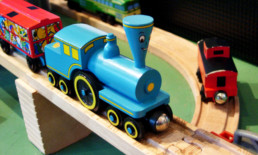
i think i can

In July, I completed the recording, editing and mastering of the audiobook version of The Best Advice So Far, right on schedule.
By mid-August, the audiobook had been submitted to Audible, approved and officially released.

From the very start — before I’d ever even penned a word of it — I knew that I eventually wanted The Best Advice So Far released in digital, print and audiobook formats. At long last, that vision had become a reality.
Within days of that milestone, and while still on vacation in Florida, I’d begun outlining my next book. And by September 12, I had completed the preface.
It felt strange, after all that had gone into the first book, to be at the very beginning again with a completely new book. Yet I’m excited about it. I can envision, even from here, what it will become.
Thing is, it wasn’t “becoming” very quickly.
Here we are at the beginning of December, and I don’t have even a single completed chapter to show for it.
All the while, I’ve grown increasingly aware that lots of stuff I’d set out to do — some for more than a year now — also hadn’t gotten done. Instead, they continued to scritch-scritch-scritch like proliferating mice inside the walls of my brain.
Well, a week or so back, I declared that enough was enough. It was time to figure out why I was stalemated on so many personal goals.
I’m not lazy. In fact I stay quite busy. So that was definitely not the culprit. I'd even go so far as to say that most people who know me would describe me as downright tenacious.
In fairness to myself, I had attempted early on to get somewhere with several of the tech-related tasks (such as getting the “Like” button to function on my blog posts, a feature that has not worked since the site went live). But I’d been stonewalled or left hanging by every representative I’d contacted. Still, I thought during my recent ponderings, I’m smarter than the average bear. I designed my entire website myself, having learned everything I know about coding on my own over the years. So I knew that, ultimately, these problems were not beyond my ability to solve, whether anyone else helped me or not.
I’m creative, as well as clear on what I’d like to accomplish. For instance, where the new book is concerned, the outline is finished. I’ve got plenty of ideas, which often play themselves out in great detail inside my head throughout the day. And, as I say, I’m plenty interested in and motivated by the topic. Yet for all of that, I was still perpetually finding myself with nothing to show for it.
Furthermore, I’m not a procrastinator. As a matter of fact, I’ve said or typed the following statement about myself so often that it feels almost cliché: I’ve never missed a deadline to which I’ve agreed. And that is absolutely true. (Well, except for that one time I forgot to get on a plane for a major event I was supposed to be running — sorry, Steve — but that wasn’t so much missing a deadline as having sincerely mucked up the date somehow).
That’s when it hit me — the reason so many things in my life had remained undone for so long.
When I decided to write the first book, I gave myself a year to complete it. I typed the final period on the very last day of that year.
The same held true for designing the website. It was time intensive. Numerous obstacles arose throughout. But I’d drawn a line in the sand. I had decided that the site would be completed, come hell or high water, before an upcoming speaking engagement at Penn State. My cousin died tragically the day before the event. And even into the wee hours of the morning of my flight, I was on the phone with the hosting company trying to resolve issues on their end. Still, you’d best believe that site was up and running like gangbusters before I rolled my luggage out the door.
The audiobook recording was a 120-hour ordeal. Some perfectly good material had to be thrown out simply because my voice tone didn’t match the rest. At one point, due to a software glitch, I lost twelve fully recorded chapters. My heart sank. Honestly, I cried. Then came the painstaking editing phase. Headphones begin to feel like granite. Your eyes go buggy from watching endless neon-green sound waves scroll by, as you seek out every breath and spit crackle and poppy-P, and suppress it manually. And you think you hate the sound of your own voice now? Try listening to it at close range for days on end. Nonetheless, as with every other goal I’d set for myself along the way, I’d wrapped up that recording by the allotted target date.
What’s more, I’ve published a blog post each and every Sunday by midnight for 50 consecutive weeks now. How the heck could I be writing like clockwork in one area, all while watching the new book lie dormant for months? I’m sure you’re catching my drift here.
I’ve heard the mantra often: “If you believe it, you can achieve it.” Thing is, if you’d asked me prior to this revelation whether I believed I’d eventually accomplish the many waylaid goals in my abandoned Jenga pile, I’d have told you unequivocally, “Yes, without a doubt” — even as I expressed my frustration surrounding the mystery of why they hadn’t already been met.
The Little Engine That Could came to mind: “I think I can, I think I can, I think I can.” Well, I’m sorry to break it to you, but to quote Shel Silverstein…

The truth is … I knew I could.
I’d been telling friends as much for a while, and in specific terms. And yet still — nothing was getting done.
Here's the secret. That Little Engine didn’t just think she could.
Looking up is a start. But alone, belief and a great attitude still leave you looking up … from the bottom of the mountain.
Everyone seems to remember “I think I can, I think I can, I think I can.” Yet the magic lies in one, small seemingly insignificant tidbit that seems to get lost in the all the (lo?)commotion:

In other words, the Little Engine That Could didn’t reach her goal on “I think I can.”
She had a deadline.
I’m famous for telling people, “A goal without a plan is just a wish.” Wishing doesn’t get you anywhere. I know this all too well. All the same, it somehow came as a surprise once again — and only as the result of much consideration of late — that my sole barrier in many areas was the lack of a clear deadline.
So I set some deadlines.
I told friends, “I am going to do this specific thing by this precise date.”
And — wonder of wonders — stuff has started getting done again. It’s a real live Christmas miracle, I tell you.
(Speaking of which … did you notice the nifty new Subscribe options and “Like” button?)
