

why we do: part two
In yesterday's post, "why we do: part one," I told you about my life-saving efforts with three baby birds and the questions this raised. If you haven't yet read that post, I would suggest reading it before this one, so as to make the most sense of things.
When I was in college, I did some interning with a youth program. That's where I met Brandon. At the time, Brandon was 12 years old. I don't think I ever saw him without a black, death metal T-shirt on. He smoked anything you could smoke. He drank -- the hard stuff. He bragged about girls in their 20s who thought he was, too. His teeth were bad. His mouth was worse. He was a punk. A troublemaker. A real tough guy with a raging mullet, and a southern accent so thick you couldn't understand him at times, especially when he was upset and going off, which was often.
I loved that kid.
The second week after meeting Brandon, he and his friend Mike were stuck for a ride, and I offered to give them a lift home. Both boys lived with grandparents who were their caretakers. After explaining who I was, the grandparents had agreed to allow me to take the boys for ice cream before dropping them off. You'd have thought the two of them had died and gone to heaven. They clearly didn't go out much, at least not for normal kid stuff.
When I brought Mike home, I introduced myself to his grandparents. His grandmother was quiet, but his grandfather was a force to be reckoned with. He questioned me like a detective might. I actually appreciated it – appreciated that he cared enough to find out who was spending time with his grandson. After about twenty minutes, I had passed the test, and set out to get Brandon home.
On the short drive, Brandon said, "Can I tell you something?" It was clearly something big.
"Yeah, of course," I answered. "Anything."
"Well …" he began. We were already turning down his street. "Can we park out front for a minute?"
I was a little nervous about the delay already, having stayed so long at Mike's. And I didn't like the idea of sitting out front of Brandon's house in the car too long, being an unknown adult. But we parked. I turned toward him. He was looking down, fidgeting with his hands. I looked right at him. "Brandon, look at me." He looked at me sideways, eyes wide and his face drawing down as if he were ashamed. "Whatever it is you want to tell me, I want to let you know before you even say it that I'm going to like you just the same, and I will keep it to myself, OK?"
Recall that this was the second time I'd ever seen Brandon.
He exhaled and looked away again. "I know," he said quietly. "I know you will."
Brandon told me he'd been molested. Not once, but four times. And by different people. Most recently in a car. At gunpoint. Brandon explained what the man had made him do, and how he had managed during the act to open the car door and roll out and down a hill, escaping. This man was currently in prison, but would be released in another four years. Brandon was already afraid. "Why does this keep happening to me?" he said. "Am I sending out some kind of signal?" Tears streamed down freely. There was no "tough guy" in him as he sat there, drowning in shame and relief.
I bit my tongue. Literally. I was welling up, but I didn't want to let the tears actually fall, possibly making this worse for him. Here I was, a new guy showing up in Brandon's life. The last guy had lured kids to his place with free video games and pizza. I'd just taken him for free ice cream. What must he be thinking?
"Brandon – can you look at me one more time?" He looked. "I know you have absolutely no reason to believe me when I tell you this, but I'm going to tell you anyway," I said softly. "I am not going to do that to you. I am never going to do that."
"I know," he said. "I don't think that. I just … wanted you to know."
He looked away, and I put my hand on his shoulder quickly. He looked back. "And there is nothing wrong with you," I added. "Now, let's go meet your grandmother."
When I got Brandon to the door, he tried to convince me not to come in. "Granny'll be in bed. She's tired. Her nappy head is always in bed." I knew he felt uncomfortable about my coming in. Still, I wanted to set his grandmother's mind – and Brandon's – at ease. I convinced Brandon that it was OK to let me in, and that he didn't need to be embarrassed or make excuses.
When he opened the door, white smoke billowed out. If I hadn't known the smell of cigarette smoke, I'd honestly have thought there was a legitimate fire. Within the cloud, sparse and matted grey hair was just visible above the back of a dilapidated, brown leather recliner. A frail hand hung over the side holding the last of a cigarette over a crowded ashtray that spilled onto the floor. A televangelist was pacing and ranting on the small, tube television. "Brandon! Close that door!" came a crackling voice, before he'd even gotten a word out.
"Shut yo nappy head up, granny!" Brandon retorted. "I got Erik here!"
I quickly tried to ameliorate the situation, coming around to the side of the chair and squatting down. "Hi, Mrs. Clay. I'm Erik. Thanks for taking a chance and letting me take Brandon out. We had a great time. Now ... I'm sure you have questions for me."
She turned her head slowly toward me, shaking, her lips working around missing teeth. She looked medicated. She appeared to be in her late 70s. I was to find years later that she'd only been in her 50s. "Hi," she said, sounding more like a grandmother now. "Thank you for taking Brandon home. I can't get him. I'm sick and I don't drive."
"That's no problem, Mrs. Clay. I'm happy to help and to spend time with Brandon. He's a great kid."
She looked over to where Brandon was sitting on a small couch. I felt as if she were trying to ask him something in that glance. Did he …?
I addressed her wordless concern. "Now, you don't know me at all, I realize. So I want to do everything I can to set your mind at ease. I'd like to give you some references of families whose kids I've known for years. And I'll also be happy to fill out a CORI form and have it mailed to you. And here's my phone number. And my mom's phone number. Sometimes, talking to someone's mom helps."
Looking back now, I probably overdid it. But then again, I was only nineteen.
She took the piece of paper from me and placed it beside the ashtray. She turned toward Brandon again.
"I told him," Brandon said bluntly.
His grandmother took it from there. "Brandon's had so many people hurt him."
"I know," I said gently. "I know. And that's why I want you to feel extra safe with me. So we'll get those references and CORI to you for starters."
We chatted a bit more, but then I had to go. Brandon walked me outside, closing the door behind him. He thanked me over and over for the ride and the ice cream, and for talking to his grandmother and giving her all that information. I could tell there was something else though, something he wasn't saying. I made it easy for him. "You have something else on your mind. You've already told me the hard part tonight. So just … say it."
He kicked the step a couple of times, then just sort of fell forward into me. Instinctively, I hugged him. "I love you," he said into my shoulder.
I hadn't expected that. My mind raced. How do you respond to that, especially given all of the circumstances here?
"I love you, too," was all I could come up with. And honestly, I felt it.
Brandon's grandmother did call my mom, and that did seem to set her mind at ease. Before long, I'd learned even more about Brandon.
His mother had gotten pregnant with him while overseas in the military. Germany. She'd called her mother, Mrs. Clay: "I'm pregnant. Either you take it or I'm having an abortion." She had delivered Brandon in the States. He was born with fetal alcohol syndrome. And that was the last time his mother had seen him, though she called from time to time, to ask her own mother to send money -- money that was clearly not there to send. I was at the house during one of those calls. Brandon was arguing with his grandmother about something, as she was telling her daughter that she had no money. Again. Back and forth she went, between the phone and Brandon. "No, no I can't … Brandon, Brandon! Be quiet! … I told you, you know I'm on welfare … I can't hear, now hush yo mouth!" Then she held out the phone to Brandon, announcing in a scolding tone, "You're momma wants to talk to you!"
Brandon's anger crystallized. He grabbed the phone. The woman on the line must have said something. Brandon replied, in colorful language, "You can't [expletive] tell me what to do! And you aren't my [expletive] momma! You think you can just call here and [expletive] tell me what to do after you threatened to kill me or leave me in [expletive] Germany?"
That was the first time Brandon had spoken to his mother.
I learned that he had two uncles who lived about an hour away. They never visited. But occasionally, Mrs. Clay would call one of them and ask them to come down and "belt" Brandon for something he'd done or said. And at an unannounced time, a man would show up and beat Brandon, throwing him into walls and leaving marks.
There was also Mrs. Clay's ex-husband, an alcoholic who lived on the streets. He would sometimes show up and steal something or threaten her to give him money or cigarettes. One night, Brandon called my dorm room, speaking in panicked whispers I had to strain to understand. "He's here. He's got granny. And a gun. I'm under the bed."
I immediately called the police and then headed over. I'd get there first. To this day, I don't know what came over me, but I walked right in that front door. Louis had Mrs. Clay, and now Brandon, in a corner of her bedroom. I was completely calm. I felt strong. It was as if I were watching it all on television instead of living it. I walked over to them and stood between the end of the gun and the two hostages. Louis was clearly beyond drunk. "Louis," I began in a calm but forceful voice, "the police will be here any minute. So you can leave now, or you can go back to jail until you die." After a brief bluster of nonsense, he lowered the weapon and staggered quickly out the front door. The police had arrived and arrested him as he exited. As soon as it was over, no part of me remained calm or collected. The whole of it swept over me and my knees buckled.
It all seemed a very odd life to me. For Brandon, it was the usual.
In the next couple of years, Mrs. Clay signed waivers to allow me to advocate for Brandon in her stead -- at school, with police and in other legal matters. Brandon and I became very close. I saw him nearly every day for the rest of college, and he came to stay with me for a couple weeks on summer breaks. As graduation neared, I spent the entire year preparing Brandon, now 15, for my departure. For life afterward.
Graduation came and went. I moved back home. I talked to Brandon daily and did my best to advocate for him from a distance. I remember getting a call once from Patrick, another boy I knew from the area. Patrick was clearly drugged out. He and Brandon were at the home of an older woman, Dolores, who supplied them with drugs, alcohol and sex. I could hear Brandon screaming as if he were on fire in the background. I somehow got Dolores on the line. My mother, a nurse, spoke firmly to her. "What did he take and how much, Dolores?" my mother asked clinically. I listened as best I could. "He's toxic, Dolores. You need to call 9-1-1. If you don't, he could die. And then it will be worse for you."
This is how it went. Then, a few months later, I got a call from one of the uncles. Mrs. Clay had had a stroke and was in the hospital. She'd asked if I would take custody of Brandon until she got well. Which might be never. I said I would. I was 22.
Brandon lived with me for nearly a year-and-a-half. Slowly, he adapted to structure. Very slowly. Between arson, running up phone bills, and continued struggles with drinking and drug use, I got a run for my money. At one point, in a rage because I'd followed through on a restriction, Brandon spit in my face and told me he hated me and that I wasn't his father. He apologized in tears two days later. I adapted. He adapted. But he was never "fixed."
His second summer with me, I sent him back down to Virginia to visit with his grandmother, who was doing better. That was the last time I saw Brandon. He was implicated in a shooting, arrested and questioned without his grandmother's or my knowledge or consent. He was tried and sentenced to 50 years in prison, where he remains today. He was 16 when he went in.
So what does this have to do with baby birds?
A similar question arises in both cases here. If all of your efforts don't produce the desired result, is it worth it? Or is it just wasted time and energy?
I can't help but recall one of Carlotta's pieces of wisdom: "If you're expecting someone else to make you happy, you never will be." It seems to apply to Brandon and to birds. To life. If we are expecting people's reactions or responses to make us happy, we will frequently be disappointed.
If I help only because I expect praise or a certain reaction, then I'm setting myself up for disappointment. If I help for the joy of helping, then I am satisfied even if my help is unappreciated or unnoticed.
If I give, feeling entitled to something in return, then I may become bitter. If I give because I see a need and it is enough to have met it, then I am content in the giving.
If I save baby birds, somehow feeling that my efforts deserve to pay off, I may feel the world is cruel if the birds do not survive.
On this point, in fact, later that evening, the mother bird threw the three babies from the nest again. Once more, they all survived. Two came. Then a few hours later, in a storm, the third was thrown, wet and weak. As it turned out, a woman named Cherokee, who lived a few houses up, came by and agreed to care for the birds until she could find a home for them. How wonderful. But I knew, especially in the case of the last baby bird, that they still may not survive. And yet, I would do it all again. Why? Because they deserved a chance. And because it kept my compassion limber. Strengthened my character.
In Brandon's case, it certainly had more of an emotional impact than the birds did. He was like my own son. I just cannot feel that my time, energy or love were wasted. He was given an oasis in his life, where he knew what it meant to be safe. To be loved unconditionally. That is never wasted. And in my life – I couldn't begin to tell you in short order how my time with Brandon changed me for the better.
Whatever you choose to do, do it because you believe in doing it and for no other reason. Let go of expectations and demands. You will be the happier for it.




why we do: part one
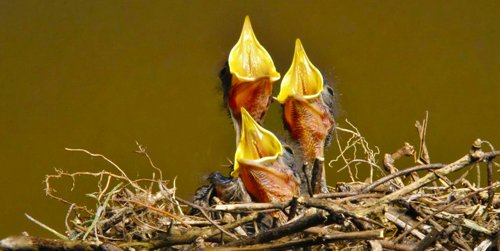
It's my last full day in North Carolina. I was awakened at just past 8:00AM to the sound of my nephew crying. I heard chatter downstairs, indicating that he may need to go to the ER for a severe earache, so I got out of bed despite the clear need for more sleep. It turned out that over-the-counter remedies were working. No hospital run would be necessary. After a nice breakfast of bacon, eggs and toast, I excused myself and headed back to bed for what I hoped might be a couple more hours.
The rest decided to hit a flea market while I slept. I didn't wake until after 1:00PM when the phone rang. It was my niece. They were calling to ask me to take the dog out for a walk. Still in a bit of a fog, I slid into some shorts and slipped my sandals on. The dog was whining, eager to get outdoors. Opening the front door was like opening the door to an oven. It had to be 100 degrees.
Once outside, my mom's schnauzer made fast work of the perimeter of the house and its bushes, then headed for the large central pin oak. As he clawed the grass, pulling against his leash, I stumbled, having nearly stepped on something. A toy? A mushroom? Whatever it was, something told me it shouldn't be trampled.
Upon closer inspection, I noticed three of these yet unidentified clumps, spread out over about a square foot of lawn. Quickly, I realized what they were. Baby birds. Frail and new. Feathers had only begun to form, and the pinkish, goosebumped skin was clearly visible. The eyes were bulbous and closed in narrow slits. Were they alive?
I placed a finger gently under the beak of the nearest one. Immediately, its tiny neck stretched upward like a jack-in-the-box, its tiny yellow mouth opening instinctively. It's head wobbled precariously, as if it were a marionette on a string instead of a living thing. I touched the other two, and each responded in kind. They had survived the fall. But they would not survive much longer unaided.
I quickly let the dog finish his business and then brought him inside, returning to the tree to assess the situation. I looked up. About fifteen feet overhead, I saw the nest. It was out quite far, hanging at an angle – further along the branch than would bear my full weight, even if I could manage to climb the tree. Even the closest limbs were more than eight feet up the trunk.
You'll recall from my post entitled "wonder" that my mom had always known what to do when it came to baby animals when we were growing up. I gave her a ring. She was still out at the flea market, and it didn't seem they would be home soon enough. I had to do something myself. And I had to do it now.
I found some gloves in my brother's garage, unsure of whether it were truth or urban myth that you can't touch baby birds or the mother will disown them. I'd rather not take chances. Still, gloves were great, but what was the plan here?
I decided that trying to return the birds to the nest was the best bet. My brother did not appear to have a ladder. But I gathered a few more things I might be able to use. I emptied plastic Easter eggs out of a canvas bag I'd found in my nephew's closet. I attached two long dog leashes to one another, thinking I may be able to use it as a hoist with the bag. Into the bag, I placed a shallow bowl.
Across the street, I saw a woman enter her house. Her garage door was open. I ran up to the house and rang the bell. She and her teenage daughter came to the door, looking skeptical.
"Hi, I'm staying with my brother across the street there," I began, "and some baby birds have fallen from the tree in front of his yard. I'm hoping to get them back into the nest, and I was wondering if you had a ladder I could borrow."
The mom paused, appraising. "Is this a joke?" she asked.
I smiled as disarmingly as I could. "No, no joke. You can come and see them if you like." I gestured toward the tree.
"This seems like one of those scary reality shows. You look like a nice guy, but you could be a murderer," she replied.
I was at a loss. "I'm … not a murderer," I said still smiling. "I promise. It's that yard right over there with the red jeep."
"Oh! The Boston fan!" she replied, seeming more at ease. "Yes, we have a ladder. It's only six feet. Will that be tall enough?"
"I think it just might!" I said. "Thank you so much."
In a few moments, she produced a red ladder and off I went.
I set the ladder up under the tree. It was immediately doubtful that it would, in fact, reach. But maybe it would get me close enough.
The first task would be to right the nest. I climbed up the ladder, gloves tucked into the back of my shorts. Even on the top rung of the ladder, I could just barely reach the nest. It would have to do. It certainly was near 100 degrees. I was sweating profusely.
Bits of bark rained down into my eyes, sticking to my skin, as I grasped branches for stability. I had to squeeze between other branches to reach the one on which the damaged nest rested, pushing them out of the way using my back. It became painfully clear to me why this tree was called a pin oak. I knew I'd have scratches to deal with after this was done.
Stretching upward caused the ladder to wobble underneath. As it was, I'd had to place the base of the ladder so that it straddled where the birds dotted the lawn. If the ladder or I fell, some of them would certainly be crushed. I regained my footing and stretched again. I donned one of the gloves and then did my best to level and reform the nest, then pushed it deeper into the crook of the branch. Once it seemed it would hold, I backed down the ladder.
I tilted my head up to assess my work, shielding my eyes from the glaring sun. Looked solid. But that ladder was not going to be tall enough nor stable enough to complete the rest of the task before me.
Just then, I saw another neighbor boy come out of his door with some recyclables. I asked if his dad was home, and he said that, yes, he was. I knocked. The man extracted an eight-foot ladder from his garage and handed it to me over boxes and around vehicles. This one should just do the trick.
I collapsed the red ladder and set up the new yellow one. Then I knelt on the ground and, using the gloves, I pulled grass from the lawn and placed it into the bowl. I figured this might make for an easier time scooping them up without hurting them, once I'd gotten the birds into the bowl. Finally, I picked up each bird with great care, placing them into the bowl. Of course, each touch, bump or move caused the jack-in-the-box reflex to kick in, punctuating the urgency to get them back into that nest where they might finally be fed again.
Climbing the ladder wearing gloves and carrying a bowl of birds was no easy task. The mother bird was back, hopping furiously from branch to branch, squawking stridently at me. I considered it a good sign. She wanted them.
Slowly, I made my way back to the top of the ladder, one hand holding the bowl of birds and one grasping overhead branches. This wouldn't work. I needed both hands to get the birds back into the nest. I couldn't just dump them in. I had to stand on the very top rung of the ladder to get high enough. This alone was daunting, and I was beyond hot by this time, as well. Sweat stung my eyes. I stooped down slowly, carefully, and set the bowl of birds on the ladder top next to my foot. So many things could go awry with this scene.
Still grasping the branch overhead, I managed to get one of the birds into my gloved fingers and then pulled myself upward, at the same time pulling the branch down a bit. I realized I was holding my breath. With painstaking care, I placed the first of the birds back into the nest.
Hope filled me, pushing me onward with renewed energy.
I stooped again, repeating the process for each of the remaining birds. The mother bird continued to watch with growing interest and mounting eagerness. At last, they were all back to safety. I'd done it!
As I stepped off the top of the ladder and made my way back down, I breathed a sigh of relief. Just as I got back to the ground, a car appeared around the bend, pulling into the driveway. They were home.
I returned the ladders and then told everyone about the ordeal. My nephew and niece thought I was quite the hero. And I felt just a little like one, too.
Hours passed and I rechecked the lawn. As I opened the door, the mother bird flew off. I hoped it was for food. Perhaps more food. All of the birds remained in the nest. She hadn't discarded them.
At the same time, I realized that she very well could abandon them still. They might make it. But they might not. If they did, then my hard work and ingenuity would not have been in vain. But if they didn't?
This got me thinking about other things. Other sacrifices we make. Expectations. Calculations. Why we do what we do.
How many things in life do we engage in, only to feel disappointed or cheated -- that we'd "wasted our time" -- if they don't turn out as we had hoped? In fact, is our time and effort wasted if the desired outcome isn't achieved?
Part two tomorrow ...

wishes

Today marks the end of my first month of blogging. It feels like it's been much longer, not in a rueful way, but in that there seems to have been more thoughts and words than a month could have held! I've connected and reconnected with many, and shared real discussion that matters. I sincerely want to thank you for walking alongside me this far.
As I set into month two, these are my wishes:
I wish to continually strive to exemplify in my own life the ideals set forth here.
I wish to be seen as genuine rather than merely smart or informative.
I wish to stay connected to readers in personal ways.
I wish for you to see the world and the people around you through new eyes.
I wish for you to better understand and practice the power of choice in your life.
I wish to inspire real change. I would rather have a handful of people's lives truly change because of what they have read here, than a thousand who visit but remain the same.
I wish that each reader might not only live differently because of what they have read, but encourage others within their sphere of influence to do the same.
I wish that positive change in your life would be real, continual and lasting.
Onward, forward! Here's to another month of
wonder
curiosity
humor
positivity
imagination
motivation
inspiration
choice
and change.
being right
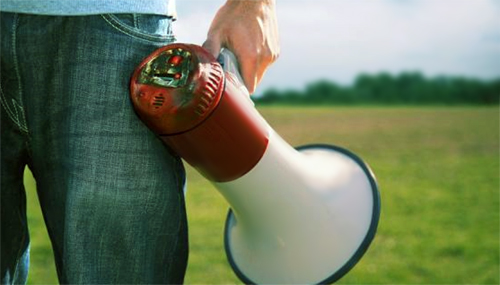
Each of us has our own perspective on the world, a unique voice. But what are we saying with that voice?
I know people who love to argue and debate. Why this movie was award worthy and that one was drivel. Which leisure activities are constructive and which are utter wastes of time and intellect. What will happen in the afterlife.
Religion. Politics. Sports. Pop culture. Extraterrestrials. As far as I can tell, the topic isn't important as long as, at the end of the day, someone is wrong and someone is right. Or more right. Or, at the very least, louder.
In yesterday's post, I introduced one of my favorite quotes: "The only prize for being the most miserable is … Congratulations! You're the Most Miserable!" Similarly, in the context of social debate, I find myself wondering, what is the prize for being right? I'm a firm believer that human beings do virtually nothing without a perceived gain. If that is true, what is the gain in winning an argument?
I am not speaking from some lofty soap box here. In my younger years, I was quite the debater. There were times when I chose to lose sleep in order to continue arguing a point into the wee hours, because I hadn't quite backed my opponent entirely into the corner yet. And I could back them into the corner given enough time. Logic. Vocabulary. Verbal ability. I had them in spades. I could ask the most clever questions, trap you in your own words, or even get you to think that you had somehow agreed with me all along. But I'm really trying to remember … Why did I care?
I don't like the answers that surface. They're ugly.
Power.
Domination.
Superiority.
Control.
Pride.
Some might argue (no surprises there) that it's no more than harmless entertainment. Or that it's a necessity in keeping people aware of important issues. Or a tool for staying mentally sharp. And I can see each of these having validity.
If they were true.
My own observation, however, has been that most people who engage in social arguments exhibit signs that such innocuous or altruistic motives may not be forefront. They become stressed. Preoccupied. Obsessed. Angry. Arrogant. Demeaning.
Mean.
Do an honest assessment. When you argue, are these things true of you? And if they are, is it really "harmless"?
Is stress or anger really the best way to keep your brain limber and prevent senility?
And as for changing the views of society on important matters, how's that going for you? Who is the last opponent you converted to your viewpoint? And even if you did manage, by sheer volume of your words, to elicit a concession – did it change the person or their world view for the better?
So again I ask, what is the gain?
I'm writing a book and a blog. Clearly, I believe in exercising a voice in the world. And don't get me wrong – I believe there is a place for discussion and even respectful disagreement. There's a lot to be learned through such things. But I wonder if going beyond that, to asserting we are unequivocally right in our thinking, is all that worthy an undertaking. Or is there more value to be found in building tolerance for viewpoints other than my own.
To ask more than I tell.
To listen more than I talk.
To find common ground rather than differences.
To shine the spotlight on others more than myself.
To be kind rather than to be right.
You decide. I won't argue with you.

planning not to
I had paid the $50 bail and signed the forms twenty minutes ago. I sat in a chunky, wooden chair with a pea-green "cushion" that crinkled and reminded me of a swimming pool tarp. An infomercial played on the small, tube-model TV that was bolted to a swiveling stand high up in one corner of the stark room. The volume was too low to make anything out, and the hazy picture made it feel more like 3:00Am than just before midnight. Occasionally, the overly enthusiastic hosts would fold into accordion pleats or blip or roll upward on the screen. Sometimes, I took to watching the thin, red seconds hand on the industrial clock make its steady rounds as I waited.
Finally, John came around the corner, escorted by a middle-aged officer with a quirked mouth and a raised eyebrow, causing me to feel as if I too had done something wrong. John smiled sheepishly at me. I smiled back.
I thanked the officer and clerk, then headed outside with John. "Thanks for doing this," he said. I gave his shoulder a quick squeeze.
Once in the car and on our way, I asked the obvious question: "So what happened?"
John began by explaining that all of the police in the town had made it their sole purpose in life to stalk him and make his life miserable. But, yes, he admitted, he had been drinking. And, yes, he'd been in a car with other boys who'd been drinking. He became more animated as he told the details about how they'd been pulled over, and how panicked they had been, and how the car had been towed. After his story ended, I let the silence speak for a while. John seemed to be listening. "I wasn't planning to get in trouble," he said finally. "It just … happened."
As a mentor, I have had up-close and personal dealings with hundreds of kids over the years. Maybe even a thousand by now. And it would be impossible to calculate the number of times I've heard this same refrain: "I wasn't planning to!"
And my reply is always the same. "You can't just 'not plan to' get in trouble. You have to plan not to get in trouble."
Going through life "not planning to get in trouble" usually leaves us … in a lot of trouble. Trouble is out there. It's lurking, waiting to entice the unwary. Trouble thrives on those who are "not planning to."
Before you nod in agreement, envisioning your wayward nephew or the kid on your block, this doesn't apply merely to teens who are sowing their wild oats.
It applies to dieters who are serious about weight loss.
It applies to married adults who just happen to have that cute, younger coworker – one who thinks you are incredibly witty and interesting.
It applies to parents who often go to bed with a knot in their stomach, wondering again why so many conversations with their teen end in an argument.
Really, it applies to each of us. Planning not to get in trouble requires being self aware and honest enough to know our weaknesses, and then making the difficult choices to put escape routes in place.
Maybe it will mean asking a parent or responsible friend to call and check in with you frequently that night.
Maybe it will mean telling a confidante what you will eat at that party and asking her to keep you to it.
Maybe it will mean saying no to a certain lunch or phone call with that coworker.
Maybe it will mean initiating a week-long "mutual respect" pact with your son or daughter, admitting that you need as much help with it as they do.
In short, planning not to get in trouble is expecting that trouble will come – because it will – and being ready for it when it does.

small kindnesses

In the weeks after the Twin Towers collapsed, something interesting happened. People started remembering to be nice to one another.
I'm still not quite sure of the connection between being faced with danger or death, and treating others better. Maybe it's a religious nudge some people feel, that they need to try to even out some cosmic scale they've neglected. Maybe it's that being threatened makes us feel vulnerable, and vulnerability gives way to emotions or sentiments we don't think serve our daily goals well. Maybe the stories of people pulling together and acting in courage inspire us. Whatever the reasons, I only wish they weren't so short lived.
At core, kindness is borne of the belief that others are worthwhile. Family members. Friends. Strangers. And while there is virtually no end to the extravagant forms kindness can take, I think it's the little things that really change us and others for the long haul.
Last week, I had lunch with a new friend. He offered to pay the bill, a kindness in itself. But what stood out was the tip. The check came to twenty-one dollars and change. My friend scribbled in a five-dollar tip. I smiled.
Now work this out. If the bill was $21.00, a 20% tip would have been $4.20. My friend gave $5.00. Why is this such a big deal? It's an 80-cent difference. Are you more inclined to leave a 15% tip? That would be $3.15 – a $1.85 difference. Is a dollar or two really going to make or break our financial situation? If it is, we likely ought not to be having lunch out. But what does this small kindness do for your server? It's only a dollar or two. But it serves as an encouragement to someone in a very trying job.
Opportunity for low- to no-cost kindnesses are endless:
Leave notes for your kids or spouse to tell them how proud you are of a specific quality of theirs.
Pick your kids up from school one day instead of their taking the bus, and get an ice cream cone on the way home.
Send a no-reason postal letter or greeting card to a friend you value (there's still something special about getting nice snail mail). In fact, what if you were to mail a card or note to someone who lives in your home? What would the reaction be?
Hold the door for someone to enter before you and greet them as they pass.
Take time to remember your waiter's name and use it every time you address him. Ask what he enjoys doing outside of work.
Call the number on the "Am I Driving Safely?" sticker to report that, yes, in fact vehicle X is driving safely.
Ask to speak to the manager and then praise the counter worker who smiled and was friendly as they processed your order.
Pick up the tab for the coffee order of the stranger behind you in the coffee shop drive-thru.
With the attitude that people are worthwhile at the forefront of your mind when you start your day, and just a little creativity, kindness can be a way of life rather than the exception.
of cheesecake and choices

In my recent post entitled "wannabe," I included this short paragraph:
Ah, good old humility. It didn’t go the way of the dinosaur. It’s still as effective as it ever was, if we give it a dusting.
It seems to me that the idea of humility is most often greeted with groans of resistance. Or shame. In my opinion, it's gotten a bum rap. I suspect this has something to do with idiomatic speech:
"Despite her humble beginnings, she overcame the odds and soared to stardom."
"He had to eat humble pie when his accusations against his wife were proven to be untrue."
"I felt humiliated by your behavior at the party."
It seems the word "humility" in all its forms has somehow fallen into purely negative connotation. And so humility winds up feeling like a punishment – something forced upon us by life or by the jeering crowd who wish us the worst.
In fact, humility like most anything else, is a choice. What's more, I believe it is a choice made from a position of strength, not weakness.
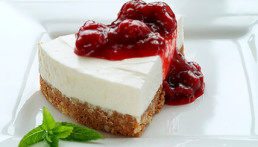
Let's suppose it's Thursday. I buy myself a delicious piece of gourmet cheesecake. My intent is not to eat it at the bakery or cafe, but rather to save it for tomorrow night, to celebrate having kept to my writing goals for the week. If I can finish one more chapter by then, I will take that cheesecake out of my fridge and enjoy my reward. Motivation.
It's tough, but I stay up into the early hours of Friday morning writing, staying focused. When I start to feel like I just can't finish, I go to the fridge and look at the cheesecake awaiting me. I pick it up. I smell it. Mmmm. Then I put it back and start typing.
Somehow, between everything else in my day Friday, I manage to finish that chapter. And it's a good one. Cheesecake, here I come!
The door bell rings. It's one of the kids I mentor. The cheesecake will have to wait. I let him in and invite him to choose a can of soda from the several varieties I keep stocked in the fridge at all times (this has become a tradition among the kids entering my home, one which makes them feel instantly special and at ease). He calls out from the kitchen, "Woah! This cheesecake looks amazing! Is it leftovers?"
I have a choice to make.
But first, let me ask you, do I have a right to say no to this kid? Do I have a right to eat the cheesecake myself later? I mean, I bought it with my own money. What's more, I did the hard work of keeping to my writing goals so that I could fully enjoy the prize of eating it. But, even had I not met my goals, do I not have the right to withhold the cheesecake and keep it for myself?
Let's go a step further with it. Would it be considered unreasonable for me to keep it for myself? Couldn't I simply say, "Hey, no, it's not leftovers. I bought it to motivate myself to keep writing this week. And I did! So, I'm gonna have it a little later to celebrate." Perfectly understandable, is it not?
The truth is, I do in fact have every right to the cheesecake. And it would be perfectly reasonable for me to exercise that right.
I'd like to suggest that humility be defined this way:
"fully realizing my right to something, and then willfully giving up that right in order to honor another person."
Give that a minute to sink in.
If this is how we define "humility," is it coming from a position of weakness or strength?
Now, true humility knows it's rights. But it does not proclaim them. Imagine that I say to the teen, "Well, you know, I bought that cheesecake for myself as a reward, and I really wanted to enjoy it later. But, yes, you can have it." While I may still be giving away the cheesecake, I've muddied things by proclaiming my right to it. In some ways, I've not really given up my rights to it. I've sort of transferred them in a way that may make my friend feel as if he "owes" me if he eats it. Even if my payoff is that I want the teen to think I'm a better person because of what I'm doing, I've traded my rights to the cheesecake for the right to his thanks or respect. I haven't honored him so much as I've honored myself for being such a good person.
I may feel that I must give up my right to the cheesecake in order to be liked. Or that, because someone else asked, I no longer deserve (i.e., have a right) to keep the cheesecake for myself. Here, I am not giving something willfully. I am acting in fear that I will lose love or affection. Or I believe that my right has somehow been taken from me by someone more worthy. I would proffer that neither of these is real humility. I am not so much honoring someone else as dishonoring myself.
With true humility, I know my rights. And I know that I can claim them. Then, fully realizing this, I choose to forgo my rights, because I see the value in someone else, and want to honor them by giving them what was rightfully mine to claim. So, I say to my young friend, "You know what? I would love for you to eat that cheesecake. Have at it!"
And then I sit back and truly enjoy his enjoyment of "my right" to the cheesecake.
Just for the record, I don't need to wait for this guy to notice the cheesecake. Maybe, during the course of chatting with him, I realize that he is feeling down. Tarnished. Un-special. Imagine the impact if I remember my cheesecake and set aside my right to it, seeing it as a tool to help give this kid a sense of his value in the world. He is worth having my special cheesecake! I am no less worthwhile, but I'm not struggling with that at the moment. He is. So I make that choice.
Consider giving humility its good name back. Imagine it as polished steel rather than a wet sponge. Color it cobalt blue in your mind, instead of pale yellow. And then put it into practice – not as a punishment, but as a privilege.

what vs. why
This turned out to be my longest post yet! But I promise you won't be sorry if you take the time to read it.
Last Fall, I was invited to be a guest speaker at a university. I introduced the central theme of The Best Advice So Far, which is that, while we cannot always choose our circumstances, we can always choose our response. Our "what next." Building on this foundation, I talked about choosing positivity over negativity, and about being others-centered instead of me-centered. As part of the talk, I told a story which has become a clear favorite over time. I'd like to share that story with you here.
This story is about Jerry.
I met Jerry when I was working in an inner-city high school program. The program met in the basement of the school and was funded on a grant as an experiment. The kids in the program were teens on parole or probation, or who were in gangs, or who were otherwise students at high risk for truancy. The aim of the program was to find ways to keep them in school.
My first day on site, I pored over files, choosing out my first students. My goal was to choose those I felt were at critical risk level from among the already high risk population. Jerry was a clear frontrunner.
Jerry was 17. They'd told him he was a Junior; but as far as actual credits, he was only in high school because of his age and the special nature of this program. Jerry was on a strict, court-ordered probation for a number of crimes. He had already done time. One of the stipulations of his probation – the only thing preventing him from going immediately back to lock-up – was that he attend school daily. He was to obey the rules. He was to attend all classes assigned to him.
The problem was, Jerry could not read.
Jerry's file showed that he had received years of state-funded special services in reading and math. Yet, his last available test scores from only a few years earlier showed that he was still on a first-grade reading level. My priority with Jerry would not be counseling. It would not even be academic support, per se. My goal had to be to try to teach this near-man to read past "Do you like my little dog?"
I knew I could succeed – that he could succeed – if I could get him in the chair. My roster was complete. I went to meet the kids. Jerry was my first visit. I entered a classroom, where the teacher lounged with his feet up on his desk, and students looked at the pictures and stats of sports teams in daily papers strewn across tables. Heat began to rise in my chest. I hoped this was some sort of break time and not the norm. "I'm here to see Jerry," I announced.
Heads turned toward a lanky African-American boy, with half-closed eyes that said at once that he trusted no one. Jerry's eyebrows raised self-consciously but his face remained a stone. He did not look toward the doorway where I stood. I felt for him immediately. "Hi, everyone. Hi, Jerry. Why don't you at least come out in the hall for a second so I can tell you why I'm here to see you." He pushed himself up roughly, the waist of his pants hanging just above his knees and the rest pooling about his sneakers in seeming bolts of denim. He sauntered to the door with a look of defiance, almost threatening. He still would not look at me, his eyes seeming to trace an invisible, zigzag line on the floor. Once he was outside the classroom, I quietly closed the door. Even leaning against the wall in a slouch, staring straight ahead, he towered over me.
I felt confident. Excited. I was going to teach this kid to read. More importantly, I was determined to help him see his own worth as a person. I had my work cut out for me.
"Hey, Jerry. I'm Erik. It's my first day. Listen -- I read your file. So I know a little about you. But I don't know you. I hope I will. But right now, I want to ask you to take a risk with me. Look at it as a sort of dare."
He glanced toward me, though not quite at me. At least it was something. I kept going. "I want you to give me two weeks, an hour each day, to work with you on reading."
That was it. He was already shaking his head and gesturing vehemently, an acrid look on his face. "Naw, naw, naw. I'm not [expletive] going to your [expletive] retard classes, man!"
The window was closing. I had to act fast. I pushed forward. "Jerry, it won't be the same as before. I promise. Give me two weeks. Just ten days. And if you don't feel like you are reading much better by then, you can quit."
"I can already quit," he countered. "You can't make me do nothin'."
He started walking away down the hall. I drew in a breath, gearing for the big guns. I hated to have to use them, but I knew it was for his best. I followed him. "Jerry, your file says you are on probation and that you have to go to classes and follow the rules. If you don't come to my class, I will have to call your probation officer and tell him that you aren't following the program."
He stopped.
You could feel the air change, almost crackle. He spun on his heels to face me and looked me dead in the eyes for the first time. "Aight. " It sounded like a question. A menacing challenge more than an assent.
"Good decision," I said. "You won't be sorry. I promise." I turned and started down the L-hallway to the end, where my room was. Jerry followed. I tried to make small talk about what he liked to do outside of school or if he played basketball. He didn't reply. At least I would get him in the door.
I walked in and set down my things on a table. The room was stark, the walls made of large, yellowed cinder blocks that appeared to have been trying to pass for white at one time. The floors were badly chipped linoleum, with many tiles cracked or missing altogether. I thought to myself, This isn't a far cry from what he had in lock-up.
I turned around to invite Jerry to a seat. Jerry was squatting with his hands placed fingers inward on his thighs for support. His head was down, as if he were going to vomit. Then I realized what was happening. He wore his jeans low to begin with, but his boxers were now pulled down as well. His bare thighs were visible between them and the hem of his XXL jersey. Something dropped to the floor.
Jerry was taking a dump.
Right there on my classroom floor and in front of me, Jerry was relieving himself. After leaving his last deposit, he unceremoniously hoisted his boxers back up and straightened his shirt. His face was all smug self-satisfaction. "That's what I thinka your [expletive] readin' class, boy!"
Now, this story could be used to illustrate a number of things I feel passionately about, and which are topics discussed in "The Best Advice So Far" by way of advice. The fact that, regardless of our circumstances, we always have a choice. The benefits -- and challenges -- of choosing positivity over negativity. Seeing people as people and not as problems. The idea that no one can make you mad. But here, I want to use it to talk about something else.
Motive.
In those few seconds, I had some decisions to make. I was certainly well within my rights to be furious with this kid! I could have called his probation officer on the spot and had him sent back to lock-up, or sent him on the run until they found him. I could have called school security and had him removed. Heck, I could have called the police to come and arrest him, adding another charge to his record for exposing himself in public, and leaving him branded as a sex offender for the rest of his life. No one would have seen it as retaliation. Everyone would have understood and seen any of these choices as perfectly reasonable.
But I chose not to see the problem in front of me. I chose to see the person. The young man. The boy.
It was not important to me what he had done in that moment. It was more important to consider why he had done it. And that seemed obvious. This kid didn't hate me. He hated himself. He hated his failure. And he wasn't about to allow himself to be humiliated. Not anymore. And so he was willing to go to this extreme -- seeing defecating in public as less shameful than how he had felt up until now in his life branded as "stupid."
I spoke in an even tone, even kindly. "Well, Jerry, unfortunately, I'll have to give you a detention. Please come back at 3:15."
He seemed defeated that I hadn't given him more of a reaction for all his effort. But he was still defiant. He began to shuffle toward the door. "I ain't coming to your [expletive] detention."
As he exited, I made sure he heard me: "Then you'll leave me with no choice but to call your probation officer. I'd hate to see that happen. You decide, though."
I did not report the incident. Other students who came down to see me all noticed the "present" Jerry had left. But I didn't give him away. I simply said, "Oh, yeah, one of the kids had an accident. I'm going to clean it up later." One kid, strangely, didn't even notice!
After school, I wondered whether I'd see Jerry. But I was prepared, in the event that he did show. 3:15 – no Jerry. I waited.
At 3:25, Jerry came around the corner and immediately noticed that his – statement – was where he had left it all those hours earlier. Beside it were gloves, a bucket with soap and water, disinfectant spray, bleach, paper towels and a red biohazard bag. I noticed the slightest hint of shame come across his face. Then it was gone. He straightened up. Hardened up. "I'm not cleaning that up," he informed me.
"I'm not asking you to," I said, moving toward the supplies and donning the gloves. I cleaned up the mess as quickly as I could, while being thorough. It took less than five minutes. Jerry didn't say anything. But he didn't walk away either.
"Your detention is over, Jerry. See you tomorrow morning for reading. Have a good night."
The next morning, Jerry showed up to my classroom on time for his lesson. He said nothing. I didn't mention the episode the day before. "Hey, Jerry! Good morning. Glad to see you. Let the two weeks begin! Trust me on this – you're going to be reading before you know it."
Jerry sat down. But for the entire hour, he said nothing. This was a challenge, since teaching reading usually requires that the student read aloud. And we were working at the phonetic level. I had no idea if this was going to work. But I talked for the hour, giving myself the proper responses that Jerry should have been giving me. When the time was up, I thanked him for coming and told him I hoped to see him the next morning.
He came back. For two weeks he came back. And each day, he said nothing. Not a word. He slouched in his chair, with those half-closed eyes, looking sullen. Never looking at me. But he came. On the last day of the two-week period I'd challenged him with, I told him, "Well, Jerry, I told you that if you couldn't read better after two weeks, you could quit. The problem is … I don't know whether you can read better or not yet. But I'm going to leave the choice up to you. There are other students who need the help, and if you don't want to come tomorrow, I'll try to find someone else. But I hope you will come back. I like you. And I know you can do this."
To my surprise, Jerry came back the next day. And the next. At the end of the third week, I told him how proud I was of him for coming. He literally had not spoken to me in three weeks! But I cared a lot about this kid all the same.
Week four, Jerry showed up. Keep in mind that not only had Jerry come to my class all this time – it meant he had also showed up to school every day for weeks. By now, I was used to giving the instruction and the response for the hour. But today, mid-way through the lesson, Jerry spoke up. His voice sounded strange to me, not having heard it in all that time. He spoke loudly, almost belligerently. "Why'd you clean up my sh*t?!"
I remember that my eyes stung. All this time he'd been coming, thinking about this every day in silence. "I cleaned it up because I care about you. And because I've messed up many times in life, too, and been forgiven. And I wanted to do that for you."
He nodded, as if in acceptance. That was it.
I continued with my instruction. Only this time, he answered me. He still slouched, leaning on one fist with half-closed eyes. But he answered. What's more, he was right.
Four months later, Jerry was reading on a high school level. He was a different person. He had an insatiable desire to learn. He wanted to know everything. He began reading magazines. Then books. He wanted to know how to spell and write. And he was like a bodyguard to me, walking beside me proudly down halls, as if daring anyone else to mess with me.
Go back to Jerry's first day in my classroom. Consider what would have surely happened if I'd focused on the what instead of the why – on the problem instead of the person. Better yet, think of it in reverse. Look at what did happen because someone chose to see Jerry in terms of why and not what.
Now think about your own life. Do you tend to react to what people around you do, without considering why? I'm convinced that, if we will choose to take the time to understand the why, the what will no longer bother us so much.
the making of mad
Yesterday, in a post entitled "red balloon," I talked a little more about the idea that no one can make you happy. I hope you'll take a minute to read that first, because a lot of important groundwork is laid for what follows here. Today, I want to talk about an equally important truth:
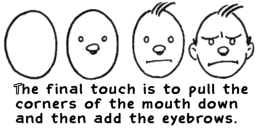
No one can make you mad.
I was talking about one of the chapters in my book, "The Best Advice So Far," with a friend of mine yesterday. He seemed to have no trouble accepting the idea that no one can make you happy, that you have to take responsibility for that choice yourself. But when I introduced the idea that no one can make you mad, he balked. He huffed. He puffed. (But he really didn't blow this house down, because it stands up to some pretty good huffing and puffing.)
I had sushi with a new friend in Boston later that evening, and this idea came up yet again. My friend said that a particular public view advertised on a billboard made him angry. He had a similar reaction to my friend's from earlier that day, when I suggested that no one can make us angry.
It seems this is territory that many people feel strongly about protecting.
I certainly don't claim to have all the answers. And I do think there is room for debate about whether the initial feelings associated with anger are within our control, or whether they are more akin to a pain response when we get hit. But I believe that either way that coin lands, the responsibility for being angry – maybe not "getting" angry, but being angry – still lies with us.
Hear me out.
I was staying with a friend a couple of years ago. I was in another room, when suddenly, a ruckus erupted elsewhere in the house. Someone had knocked at the front door. My friend let them in and began yelling. A girl's voice protested. My friend escalated. And soon thereafter, the door slammed. I heard my friend stomp to his room, muttering loudly. I gave it a few minutes, then went to see what had happened.
I knocked lightly on his door. I heard him sigh on the other side. "Yeah … come in." He was still fuming.
I poked my head in. "Hey, are you OK? What happened?"
He launched in, and I could tell that he truly believed that he'd been in the right with the altercation. He explained that his girlfriend had come by. Apparently, after knocking for a minute or so without his answering the door, she had called his phone to tell him she was outside. He said she had been irritated that he wasn't letting her in. "I left the [expletive] door open for her! How stupid do you have to be to not try turning the [expletive] knob before you stand out there knocking for a [expletive] hour! And then, she treats me like I'm the idiot – like I somehow forgot she was coming." He growled, screwing his eyes closed. "She just makes me so mad!"
I have the kind of relationship with this friend where we can usually just say it like it is. So I went there.
"Let me ask you something," I said. "If it had been another friend" – I suggested the name of a teen we both know – "and she did the same thing exactly, would you have responded the same way?"
The air rushed out of him with a lot of the heat, and I could see him coming back. "Uggh. No."
I continued. "How do you think you would have felt or handled it, if it had been her? Same scenario."
"I … probably would have just opened the door and apologized that I didn't hear her." There was a short pause, then he added, "I'm an idiot." He shook his head at the sudden realization and actually smiled. "I don't know why I get so mad when it's her."
When I get so mad. Ah … progress.
We talked for a while, about how we become comfortable – sometimes too comfortable – with those closest to us. We take them for granted. We stop treating them with the common courtesy we would give to most anyone else. But the real core of this talk was what was introduced above. No one can make you mad. My friend had realized here, based on the scenario where he imagined it had been another friend, that he could control his response. His girlfriend wasn't making him do anything. And that leaves only one option.
We choose our responses.

Whether with a girlfriend or with the guy in front of us who is driving too slow for our liking, we choose.
As I said regarding the idea of anyone making us happy, it is certainly easier with some people to choose to be happy. So it is with anger. It is easier with some people than with others to choose not to give in to anger. But in the end, whether easy or hard, the choice is still ours.
If we can accept this, while it will require some real work in order to change our responses, it offers a level of freedom and personal peace that is well worth the effort.

trip talk
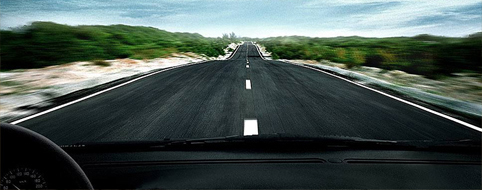
Last week, I made a whirlwind trip to get Chad from Penn State after his last final. By "whirlwind," I mean eight hours up on Thursday, arriving at midnight, and hitting the road again Friday by 3:00 to head back.
I love road trips. I'm no college kid anymore, but I still love them. Travel of any kind reminds me how much is going on in the world beyond my usual circles. I really do think, every time I travel, "I could just pick up and travel -- or even move -- any time I want!" That's not at all to say that I'm looking to move or that I'm unhappy or that I've got the wanderlust bug. New England is very much home to me, and I love my life. Travel simply reminds me of the many choices and options I have open to me all the time. And that helps me stay open to possibility where I am.
So, I had eight hours to myself on the way to PSU. I had my iPod loaded with all kinds of retro music I hadn't listened to in decades (yes, I said decades). But honestly, I spent more time with the music off than on, enjoying the space to let thoughts roam. Or settle. In fact, one of the chapters I've already completed for the book is about the value of cultivating silence in our lives.
However, I don't want to talk about the trip there just now. I want to talk about the trip back.
Often when people travel together, they listen to music much of the time. Or they take turns driving while the others try to catch as much of a nap as possible, between being jostled by lane shifts and using a wadded shirt as a pillow. This was not the case with Chad and me. We talked. The entire eight hours. I'm not kidding. And by "talked," I don't mean punch-buggy or the license plate game. Sure, we joked around some and shared new music we'd discovered; but a good seven hours of the eight were spent in real conversation about life. Stuff that matters.
At one point, we found ourselves talking about the meaning of normal. We all label others as "not normal" in many ways every day. I mean, it just seems obvious to us. He's an odd duck. She's too thin. He's a little lazy. She's super smart.
Chad and I came to the conclusion that what we really mean when we say these things is, "That person is not like me." Think about it. Isn't that what we are really saying? Aren't we setting ourselves as the standard for what is to be considered normal?
By way of example, let's talk about a towel.
That morning, before we had headed back from Penn State, I was getting ready to take a shower at Chad's apartment. In the interest of packing light, I hadn't brought a towel, so I asked if I could borrow one. Chad pointed to a yellow towel and a green towel hanging over one another on the corner of one of the doors, up high. "I've been using those, and I can't remember the last time I actually washed them with finals and everything, but you're welcome to use one of them." He smirked.
Stop. Some of you just made scrunchy face. But why?
Chad's roommate, also a friend, stepped in and offered one of his own towels. "Here," he said, "use mine. I only used it a couple of times."
You just made scrunchy face again, didn't you.
The truth is, the towel I used was dry. Fine. Did the job. Wasn't even stinky. So why the scrunchy face? "Because," you protest, "that's ... just ... gross!" But don't you really mean that you yourself would not do it, and therefore it "isn't normal"?
Years ago, I visited San Luis, Mexico. We had gone to bring shoes to a village where dwellings were constructed from junkyard scraps: tires, wire, cardboard. We could not drink the water there. For the moment, imagine that you live here. You own no shoes. You live in one of these single-room, make-shift houses with many views to the stark outside, where seams between the garbage that constructs your walls do not meet. Six other members of your extended family live here, as well, sleeping on the dirt floor.
Introduce the towels offered to me at Chad's college apartment.
In San Luis, do these towels seem normal? No. But is it for the same reason that elicited your scrunchy face earlier? No.
In San Luis, one might wonder, "What do you do with it?" If you explained that you use it to dry water off your body after a hot shower, they would be no more enlightened. Shower? Hot water? And you do this ritual every day, sometimes more than once?
How odd. How "not normal" it all seems.
By the standards of most of the world, a towel is a luxury. More like magic. And if you do happen to own one, you certainly aren't washing it after every use. Or every week of use.
Of course, it's about more than towels. It's about making value judgments on anyone for any reason. You see, the best we can ever really say without being egocentric is, "That person is different from me. They are doing this differently from how I would do it." It is no worse or better. Just different.
I remember now what led us to this discussion. Chad had asked if I thought that, deep down, everyone really wanted to do the right thing. He was thinking specifically about a young man he had counseled in a prison. I suggested that the right thing can only mean the right thing as I define "right." How can someone really want, deep down, to "work a nine-to-five job and earn an honest living" when they've only ever known selling pills on the street? When that is what his father sent him out to do in junior high school, and what made his father proud of him when he'd sell them all and bring home the money he collected? "A real job" would seem much like that towel would seem showing up in San Luis. "Don't you want this towel? How could you not want this towel? I know that deep down, you must really want this towel!"
What the heck is a towel?
One of the chapters I have slated for The Best Advice So Far will be about treating people as people and not as props -- as background features in the world of me. I think I'll include some of the thoughts Chad and I shared on this trip. Don't misunderstand me. I'm not saying that we should have no standards in life, or that we should be moral relativists, or that we should not try to help people move beyond their current station. I'm simply saying I think we would all do well to remember that there are countless real and valid perspectives in the world beyond our own.