
lights

The night was unusually dark and the water unusually warm as I walked along the beach. Very few houses within view were lit, and even the moon and stars were obscured by storm clouds. Even so, I was content to make my way by the intermittent flashes of heat lightning dancing overhead — and a bluish-green sparkle blinking here and there around my feet as I shushed through the shallow surf.
Bioluminescent algae.
I prefer the scientific name, which sounds more poetic: Noctiluca scintillans. “Night lights.”
As my eyes adjusted, I could make out a family of four ahead — two parents and two children, a boy and a girl, walking my way. Drawing closer, it became clear that they were rapt by the scintillations, evidently their first time seeing the phenomenon. The little girl looked entranced, eyes wide as she stared at the fairy perched on her upturned finger. Her brother, though clearly fascinated, looked a bit dejected, unable to “catch” one of his own.
I bent down and carefully scooped a small patch of sand, careful not to disturb the glowing particle atop it. I held it out toward the boy. He gladly accepted it, just as carefully joining me in the transfer from my finger to his own. He grinned sheepishly, thanking me with his eyes.
I continued my trek forward, and the family continued theirs in the opposite direction, the mom encouraging the boy to speak his appreciation for the gift I’d offered. “Thank you” he called back over his shoulder in a small but heartfelt voice, though his eyes never left the magic happening on his fingertip.
I walked on a bit further, feeling very much like a child myself as I spotted particularly bright specimens, sometimes stooping to scoop one up and examine it from a place a few inches in front of my nose.
At a certain point, I stopped, took a deep, contented breath and then turned and headed back the way I’d come.
Perhaps ten minutes later, I spotted my little friend where his family had paused to take in the display a while longer. The boy’s eyes met mine in recognition as I approached. I smiled broadly, calling “Hello again!” He returned the “hello” and the smile, adding a little wave of his hand — the kind of wave that only the very young can really pull off genuinely, without seeming comical.
I walked on. He returned to playing.
I will never see the boy again. Even if by some coincidence I did, I wouldn’t recognize him, nor he me. It had been too dark, the exchanges too fleeting — perhaps five seconds total, including to and from. A few blinks. And yet I couldn’t help but think that those brief moments were not insignificant.
Somehow, they mattered.
I had become part of that boy’s collective outlook on life. I’d provided proof that not all strangers are inherently bad, that not all darkness need be scary. I’d given him reason to believe that the world can be a good and kind and safe place.
Thing is, despite my being an adult, he had done the same for me.
You see, in the weeks leading up to my annual Florida vacation, I’d been experiencing a sort of dark shadow creeping in around the edges of the trip. I had a sense of what was causing it. Over the previous year, Florida had become a hotbed for political upheaval, division and outright meanness. Even the childlike simplicity of Disney had been marred by controversy and lawsuits borne of pettiness and spite. Some of my favorite places to visit were still in ruins, having been devastated by Hurricane Ian less than a year earlier. The news had continued to announce the record high ocean temperatures that were depleting the water of oxygen, endangering marine animals.
Despite a well-stocked emotional toolbox, I just couldn’t seem to shake the foreboding feeling. I believed as firmly as ever that “You always have a choice,” yet so much of what I now associated with Florida seemed beyond the scope of my choices. And that was tainting my expectations before I’d even arrived.
Once vacation had begun, I’d used the choices I did have well — choices concerning focus and perspective. Still, part of me was continually aware of that faint feeling of dread lurking just outside my constructed blinders.
And then a tiny light was passed between strangers. A joyful greeting. And suddenly, everything felt simple again.
I stood still a few moments longer, taking in the twinkling spectacle playing out along the water’s edge, reminded once more that a glimmer of hope or kindness shared may continue to ripple onward, outward — even across a lifetime.



(re)view

My mom joined me for the first two weeks or so of my extended vacation to Naples, Florida. One of the many outings we enjoyed together was a three-hour tour (just like Gilligan’s Island!) by boat through the Ten Thousand Islands of the Everglades mangrove forests to a remote island where we could go shelling for a while before returning.
Before I tell you more about our day, I’m going to share with you a review someone left online of this very same tour they’d taken just a day or so earlier:
Nothing special
Probably the most disappointing [cruise we’ve taken]. We spent most of the time traveling to the remote island that really was no different than the beach at our condo. When we arrived at the island, we were on our own to explore, so if there was anything special there, we missed it.
We saw a few dolphins and some shore birds. That’s it. This cruise was a bust. I would not recommend this tour.
Now, let me share with you my own review:
Perfect Morning with Mom
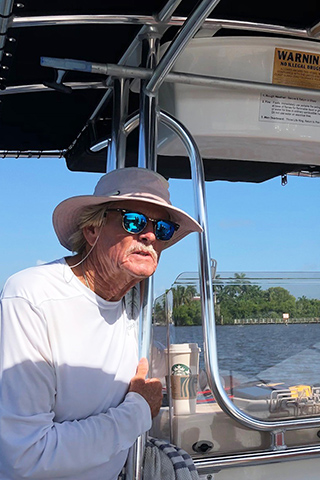
The staff and crew were energetic and personable. We had good personal conversations with several, and they love what they are doing, which makes a difference. Our captain (Dave) and mate (Jack) were terrific.
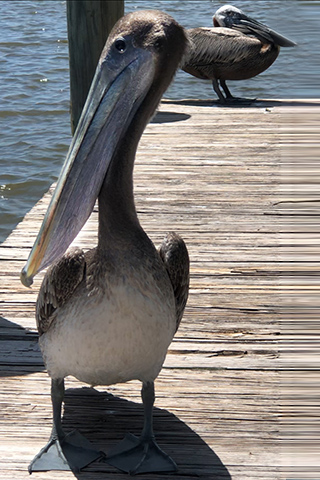
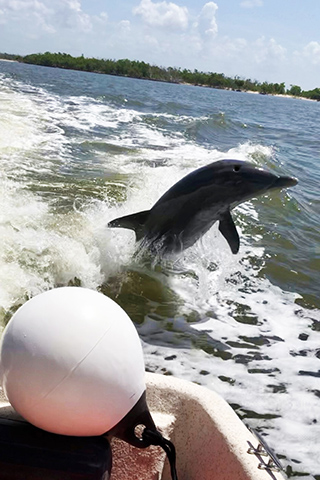
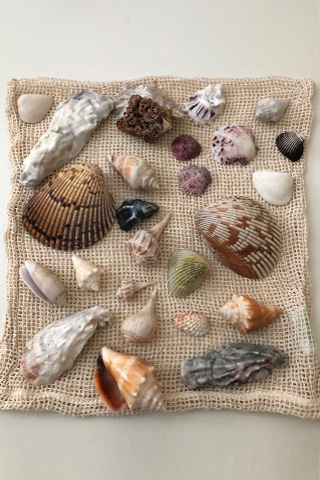
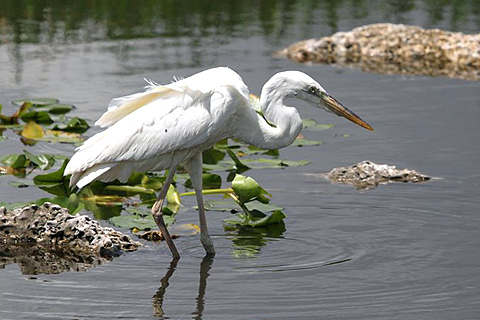
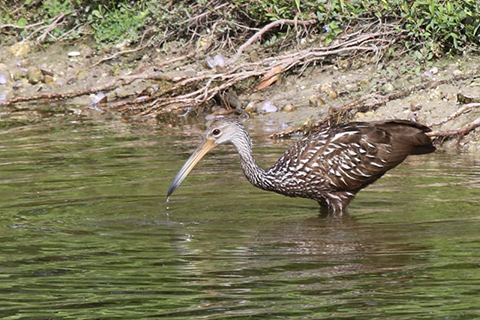
We saw lots of wildlife, and Captain Dave stopped often for us to get great views, photos and videos. On our tour, we saw burrowing owls, snowy egrets, herons, cormorants, pipers, skimmers, limpkins, pelicans, osprey and pink spoonbills; three manatees; skates; and a huge pod of dolphins that were not shy, many of which swam and jumped in our wake or beside us for a while. We had enough time on the island to collect a good assortment of “keeper” shells, one of which I’d never found before.
Even without the wildlife and shell haul, the boat ride itself was fun, relaxing and surrounded by beautiful views.
I went with my mom, and we both had an excellent time.
How is it that such a dismal review and a raving review could both have been written about the same tour?
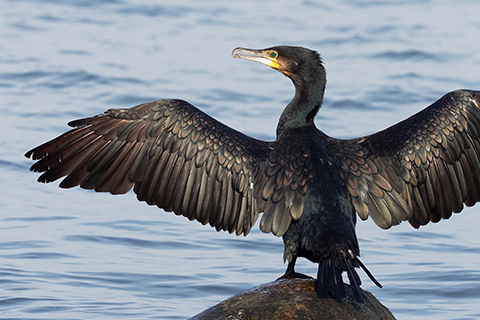
Before I answer that, so that you don't think I was just being overly kind in my review, allow me to share some pictures with you of what my mom and I experienced (click to enlarge individual pics on mobile):





First, I submit to you that both reviews were TRUE—true for the person who wrote them.
What’s incredible to consider, however, is that the actual tour itself—the ride, the views, the wildlife, the crew, the island—were likely just about the same for both reviewers.
That leaves only one explanation for the difference in experience.
Perspective.
Unfortunately, the word “life-changing” has been so overused at this point that it’s lost any real meaning. I can only say that to master the art of changing one’s perspective is central to changing one’s life. What’s more, changing our perspective lies entirely within the realm of our own choice. And that means that whether you live a one-star life or a five-star life, for the most part, is up to you.
You can’t blame it on the boat captain (or anyone else) if you miss out on the special moments all around you, wherever your little island in life happens to be.
Please know that I'm not claiming to be somehow better than the other reviewer. I've simply put in the time and practice to become better at something—a particular life skill that anyone can learn.
In April, I released my third book: Alternate Reality: The Better Life You Could be Living. Let me end this post where that book begins:
introduction
IT SEEMS TO ME that the potential for happiness or misery exists in about equal proportion in the world. No one is immune from either. Likewise, I see people experiencing what seem on the surface to be parallel circumstances and yet exhibiting very different reactions to them. One man is whistling merrily as he strolls along a busy sidewalk while another is scowling with hands stuffed into his pockets. The couple to my left is sharing baby photos and laughing warmly with a stranger at a restaurant, while the one to my right is grumbling about the wait. The third-grade teacher in Room A is excited for her students to try out the new math game she created last night, while the teacher in Room B across the hall is sighing and counting down the minutes until the end of the school day. This family’s bonds tighten when their mother passes away, while that family frays and falls apart in the face of their own such loss.
There’s an endless body of evidence around us, pointing to the conclusion that life is not merely about what is, but about how we choose to tune our attentions.
I know some great photographers. And I know some not-so-great ones. As with most art, I’ve found that the difference between the great and the not-so-great does not lie in the sophistication of the available equipment. Pictures taken by one photographer with a disposable camera can be breathtaking, while those taken by another with a top-of-the-line setup can fall flat. Rather, the difference lies in the use of fundamental skills. In a creative eye. And in a certain amount of patience.
In life, we are all photographers. We are not handed the images that must fill our pages. We can walk around a situation, setting up the composition of the shot we’d like to capture. We can wait for clouds to shift so that a particular light will fall on a subject. We can choose to take up the frame with more of this and less of that. To zoom in on one thing and not another. And, as with a camera lens, the choices we make will cause some things to become clearer, while others blur into the background.
It’s a matter of focus.
As far as I’ve ever seen (and I know an awful lot of people), there is no reward for choosing to focus on the negative in life. Granted, there are perceived gains—pity, attention, martyrdom. But they are a sad bouquet, if you ask me, in comparison with the perennial garden of wonder, joy, contentment and hope that we plant when we choose to focus on the positive.
As with photography, getting good at it takes work. New techniques must be learned. Skills honed.
The subject or scenery may not change, so you learn to change your perspective. It may take hundreds of shots of the same thing at times, spurred on by the unwavering belief that there is something beautiful hiding there.
This book is a collection of real-life stories, essays, observations and challenges designed to pique curiosity and promote just such a change in perspective. You’ve turned your camera on by opening these pages and making the choice to read. So you’re ready. Now stay alert. Study the landscapes you find here. Try out new lenses as you move through your own terrain. Take lots of snapshots. Some may turn out blurry, garish or underwhelming. That’s OK. Keep switching up the angle. Catch the changing light. Be patient. Slowly but surely, it will come—the ability to see what others do not, what you yourself had once missed.
The artistry.
The new book, ALTERNATE REALITY, is available now at Amazon.com.

hope z

For as long as I can remember, my usual workout time has been between midnight and 3:00 AM. A couple of weeks back, two young guys—Josh and DaeDae—started working the overnight shift at my gym.
I’ve been chatting with them here and there—when I arrive, when I leave or whenever they happen to be cleaning nearby. Nice guys. But until recently, it’s been mostly small talk.
Friday morning, on my way out, I decided to go a little deeper with them. I wanted to ask about something that’s been on my mind quite a lot lately, especially where Gen Z is concerned.
You see, I’ve noticed a distinct change in people’s mind sets over the last five or six years. I suspect it’s been brought about by a perfect storm of political upheaval, a pandemic, a stark rise in hate crimes and a 24-hour news cycle (or pseudo-news cycle, in many cases) where strong personalities seem bent on peddling controversy and worst-case scenarios in exchange for ratings or personal social-media followings.
Meanwhile, we’re being continually bombarded with click bait—video and article titles that are intentionally vague, misleading, skewed or outright false. If they’re to be believed, everything we know and love is a hair’s breath away from being torn away from us. Our freedom. Our democracy. Our safety. Our health.
Our very existence as a species on planet earth.
And the result has been an outbreak of fear, anxiety, depression and doom every bit as widespread, infectious and devastating as COVID-19.
So I stopped and asked Josh and DaeDae this question: “How do you feel when you think about your future?”
And in stereophonic unison, they immediately replied.
Excited.
Not much surprises me, but I admit that this did.
And it encouraged me.
And piqued my curiosity.
I continued. “That’s great to hear. So… what do you do when you hear all the bad news about, like, the United States maybe not surviving, or climate change, or meteors that might wipe out all life on earth or whatever?”
Josh took a few beats then said this:
“I can’t worry about all that. All of that stuff is outside of my control. I can only control my own choices. So I just make the best choices I can today. That’s all I can do. If the rest of that stuff happens, you just have to deal with it as it comes.”
DaeDae jumped in. “Exactly. Worrying won’t change anything. Nothing. So you just do what you can do, and you choose to be happy and believe that the future will be good. I’ve never been more excited about the future than I am right now.”
I promise, I’m not putting words in their mouths. To the best of my recollection, this is precisely what they said and how they said it.
This is remarkable in and of itself. It very nearly sums up the contents of my entire first three books.
But let me take things up a notch by telling you a little more about Josh and DaeDae.
Josh is Puerto Rican. DaeDae is black. Both are 19. Both are out of high school now and working the overnight at a low-wage job that mostly consists of restocking paper towels, mopping floors and cleaning bathrooms.
And they’ve never been more excited about their future than they are right now.
In case you’re starting in with your yes-buts, please don’t chalk their positive outlook up to youth or naivety. They’ve experienced firsthand the inherent inequities in the system. They’re well aware of racism and race-related violence. And where we older generation practiced fire drills in school, Josh and DaeDae practiced armed-intruder drills from first grade on.
These two Gen Z guys have already managed to figure out something vitally important to peace, happiness and success—something that many, many others with more years, more privilege, more money seem to miss.
All of that stuff is outside of my control. I can only control my own choices. So I just make the best choices I can today. That’s all I can do.
I’ll add a few thoughts of my own to those of Josh and DaeDae:
What you consider to be your sources of news—and how much time you devote to watching them—is your choice.
How far you go down the rabbit hole of sensationalistic internet articles, social media and online videos is your choice.
Which conversations you get into and with whom is your choice.
If politics worries you—vote. Write letters to your congressperson. Financially support the candidates you believe in.
If climate change worries you, recycle. Find ways to reduce your carbon footprint. Get involved in activism. Donate to worthy, well-vetted causes.
If you feel helpless, help someone in need. Appreciate the many good things you do have in the present rather than dwelling on those you don't have, or which you may or may not have at some nebulous later date.
These are all choices you can make.
Conversely, worry is no more than wasting time, thought and emotion on choices you cannot make. That is the very definition of futility. And futility breeds hopelessness.
From The Best Advice So Far:
Worry serves no purpose
but to ruin the present.
I do hope you will take both courage and encouragement from Josh and DaeDae’s wisdom and outlook, and that you too will be able to join them in saying,
I’ve never been more excited about the future
than I am right now.
P.S. If you or your discussion group are looking for a personal, practical and experiential approach to rediscovering what’s right with your life, the world and the people in it, I invite you to check out my new book, Alternate Reality.

scam

Most people who read my blog know me first and foremost as an author. So they are surprised when they learn that I do other things as well. (And conversely, those whose first dealings with me center on one of those other areas are always surprised to find that I’m also an author.)
Well, one of those other things I do is designing information systems. I’ve done this since I was a child and home computers first came out. But as far this story is concerned, here’s the simple version: I build fancy stuff with spreadsheets. Often, it’s stuff that few other people can figure out. And for that reason, I always have clients who seek me out and pay me well for this work (which I fit in between my writing and marketing and mentoring and…)
You might think these two worlds are incongruous, but in my mind, they’re just different ways of helping people. And I am passionate about infusing both with core values such as kindness.
To that end, I choose to donate a little time each week as I’m able to helping answer posts on a couple of free online forums. Typically, I can only volunteer about a half hour or so per week; but I can get a lot done in that time, considering that the forums are designed to help people with relatively small stuff. A little knowledge sharing here. A formula tweak there.
Recently, I read a forum post from someone who appeared to be located in Romania, and who was requesting spreadsheet help. But in assessing things, what he required wasn’t small stuff. It was a highly customized, time-intensive solution (i.e., real work).
Usually, I’ll just pass over such posts or suggest that the person consider hiring a developer. In this particular case, however, I made the choice to “break my rule” and try to help the guy out anyway. You see, I’ve been especially aware lately of the need for tenacious worldwide kindness. And while it wouldn’t bring about world peace, going the extra mile for this stranger in Bucharest seemed a good opportunity to put feet to my convictions.
Still, it was a bit tricky. Sharing complex solutions on a free forum would create unrealistic future expectations for site visitors. In addition, I can’t offer in a free public forum the same level of complex work that my private clients pay me for.
But my mind was made up. I was going to help this guy (I’ll call him “Ivo” here).
Since Ivo’s shared spreadsheet contained his email address, I reached out to him privately rather than through the public forum. I introduced myself. I explained essentially what I’ve shared with you here: that I am a longtime forum contributor, that the help he required went beyond what I could provide through the free forum, but that I was willing to help him at no cost if he would simply share a copy of the sample spreadsheet with me.
Some hours later, his email reply popped up.
As I try to keep this blog family friendly, I’ll have to do some censoring:
“You bet. You [#&%@!] poor [*!@~$] scammer, eat [&$^#%]. Maybe that’s more useful to support your laughable existence.”
Here, I’d offered him free work —work I’d have charged any other client $150 for—and this was his response?
What would you have done at this point, if you had been me?
*****
I won’t lie. My initial reaction was to bristle. Hey, I’m human, just like you.
I mean, I owed this guy nothing. I didn’t need to help him in the first place. He wasn’t a paying client. And I would certainly have been well within my “rights” to dismiss him at this point. Just one more self-absorbed, entitled jerk in the world.
Shrug it off. Press “Delete.” Move on. Right?
Instead, right after that initial sense of self flared up at Ivo’s response—in the next moment, where choice begins—I was given a good dose of my own advice from previous books:
“Humility is a strength, not a weakness.”
“Focus on the person, not the problem.”
“Kindness still works.”
Add to this that I’m just about to release my third book, Alternate Reality (just released: April 2022!). As part of the editing process, I’ve read through the entire thing about ten times by now. And that has meant being intensely confronted with even more of my own words, including this new piece of shared advice:
“Instead of thinking the worst about people,
wonder the best.”
Right about the time I was reading Ivo’s email, you might imagine that I was applying this bit of advice to him. “Wow, here I am going the extra mile to be kind to a stranger, and he replies with such rudeness, accusing me of being a scammer?” But rather than thinking in terms of his choices, I found myself considering my own.
Would I think the worst of this guy based on his rude response? Or would I practice what I preach and make the choice to wonder the best about him?
I chose to wonder the best. I shifted my focus from what he had done—to why he might have done it. And that brought a new response: empathy.
I responded to Ivo’s email. I told him that I understood why he might be skeptical; after all, the world is a weird place sometimes. I offered him four different means of verifying who I was, for his own peace of mind, and again extended the offer of help.
I’d like to tell you that the clouds parted, that birds started chirping and that a swell of rhapsodic music began to play. Alas, it did not. My heartfelt email was ignored.
Surely, now was the time to dust off my hands and forget about this guy. I mean, you can lead a horse to water, but you can’t make him drink. And I want to be exceedingly clear here: that is true. As had been the case from the start, I owed this stranger nothing. I would not have been a bad person to walk away. And on the flip side, I wasn’t earning any cosmic brownie points if I chose to stick with it. All I can tell you is that, at the time, I felt compelled to try once more.
After a few days, I emailed Ivo again. I told him that I wondered if his skepticism was based in personal circumstances that had burnt him. And so, rather than continuing with my request for a shared spreadsheet, I worked out the entire complex formula in a spreadsheet of my own and then copied and pasted it directly into the email for him. I carefully explained how to implement it on his own sheet, asking only that he not post the formula publicly, so that I would not have that conflict of interest with other paying clients. I ended the email expressing my hope that this act of kindness might help restore his faith in humanity, even if only in some small way.
No birds chirping. No clouds parting. No music playing.
Instead, Ivo took my formula and did exactly what I’d asked him not to do: he posted it on the public forum. What’s more, he asked the larger community of volunteers there to confirm his earlier assumption that I was a scammer, and that this was malicious code. And to top it off, he implied in this public forum that I’d tried to get money out of him.
I’ll admit, my resolve to be kind was fraying around the edges at this point.
But I replied to his now public commentary as gently (yet directly) as I could. I reminded him that he could click my name link and be taken to the same profile I’d already sent him via email as one of four different means of verification. I asserted that I’d made very clear that my offer of help was free with no strings attached. I told him that I felt he was now just digging his heels in, committed to somehow proving that his initial assumption about me was true: that I was, in fact, a scammer. I told him that I couldn’t recall ever having worked so hard to give someone a free gift.
And then I remembered another piece of advice from The Best Advice So Far:
“Tenacious love expressed with creativity
can work wonders.”
It doesn’t always. But it can.
Allowing that "love" can be applied in both an individual and humanitarian sense, I determined to do the least likely thing.
I set aside my self-imposed rule of not posting complex work on the public forum, went into his publicly shared spreadsheet and implemented my full solution for him there, so that he could see with his own eyes that it was producing exactly the complex result he was hoping for.
I added one more comment, once again wishing him well and hoping that this might somehow restore in him a little faith in humanity.
And then, satisfied that I’d truly done all that was within the realm of my own choice to do, I let it go and moved on.
*****
The next day, I got a ding alerting me that Ivo had replied in the forum.
“Your solution works perfectly. I misread you and your motives. I owe you an apology.”
I’ll admit, I wasn’t expecting that.
Yet as nice as that was, something still felt unresolved. Empathy kicked in again. I was aware that if other forum contributors read the exchange, they might avoid offering Ivo help on any future posts of his. So I offered a path to a “clean slate”—figuratively and literally. I suggested that he back through all of his comments and delete them, after which I would do the same. I’d already spent five times my weekly allotment of donated forum time on this one issue, but this seemed important.
Within a day, he had done just that: deleted all of his comments. I followed suit. Clean slate achieved.
Cue the singing birds.
But it didn’t stop there.
Two days later, I received an email reply from Ivo. Turns out, he’s from Latvia, not Romania. He apologized again and asked if he might get a second chance to undo that negative first impression he’d made.
He said he actually considered himself to be a kind and helpful person. He recalled to me the story of a woman he’d helped at a coffee shop late one night. In his words:
She told me she was an Uber driver and had just crashed. For some reason, she had no money and no phone. In addition to losing her only means of income, she mentioned that she also had cancer in her legs, and at one point she started crying. She asked for some cash and promised that she would give it back the next day at the nearby museum where she worked as a guard. We ended up walking to the ATM together, and I withdrew a hundred bucks. I gave it to her and she cried again a little, hugged me and thanked me enormously. It felt very good to be helpful to somebody in a great need!
And he never saw her again. No such person worked at the museum.
It had all been a scam.
Oh, and in case you're wondering (as I did) about how Uber and "bucks" match up with Latvia, this all happened to Ivo during his first and only trip to the United States. It happened in Washington, D.C.—where Ivo had had to make an emergency diversion to the Latvian embassy. You see, upon arrival in California, thieves had broken into Ivo's car and stolen everything they could get at, including his passport. Still, despite his own troubles, there he was trying to help this "poor woman" at the coffee shop.
You see, Ivo really wasn’t an awful, self-centered, ungrateful person. He was a nice guy who had just been hurt one time too many before I came along.
But the kindness I’d shown actually had turned the tide inside him. Again in his own words:
I think this experience will stick with me and will teach me a good lesson in the future as well.
Ivo and I have been talking back and forth for a little while now, having terrific conversations about stuff that matters. As it turns out, we have a lot in common. Yet we’re also learning from one another. Stretching our perspectives. And we’re just having fun getting to know one another.
Is kindness always rewarded with a happily-ever-after ending? Nope.
Will some people turn out to be as mean as they at first appeared? Yes.
Are scammers still out there scamming? They are.
But what, then? Should we all decide to live within the confines of our own little self-protective bubbles?
To never show spontaneous kindness again, because of those who might take advantage of it?
To just give up on hope? On humanity?
To me, that seems like the biggest scam of all.
Here’s another tidbit from The Best Advice So Far:
“Whatever you choose to do,
do it without expectations,
simply because you believe in doing it.”
Where that limit lies for each person and in each situation will vary. But my encounter with Ivo serves as yet another reminder that “you always have a choice.”
A choice to look beyond the what to the why.
A choice to focus on the person and not the problem.
A choice to trade thinking the worst for wondering the best.
Quite often, I’ve found, those “best wonderings” will be closer to the truth.

less lonely

We’ve heard it a million times: “Bad news sells.” And we’ve certainly had more than our fair share of it lately, haven’t we?
As someone who takes my own advice perhaps more than anyone, and ever keeping in mind that central theme of mine — “You always have a choice" — I went beyond simply turning off the bad news to making an active search of good news.
Would you believe that there is actually a whole news site called Good News Network?
There I read an article that not only held true to the claims of offering good news, but that introduced me to something I've suspected was true for some time, yet for which I had no proof.
Until now.
I encourage you to read that article for yourself. But the short version is that researchers from California and Italy teamed up to conduct a study which reveals that people with greater empathy and wisdom are less lonely.
Conversely, as you might have guessed, that means people with less empathy and wisdom are more lonely.
Well, that seems easy enough, right?
Just get more wisdom.
Get more empathy.
Be less lonely.
Phew! Glad we solved that one so quickly.
Hmmm…

In reality, those two qualities — wisdom and empathy — are a bit hard for most people to nail down. After all, how do you measure something like wisdom? How do you gain more of it, for that matter? If it were a matter of merely reading the array of inspirational memes that endlessly scroll across our social media accounts all day and pressing the “Like” button, we’d all have wisdom to spare. None of us would ever be lonely.
Likewise, if empathy were gained simply by being around other people, or commenting on their posts, or hitting the sad emoticon button when they post that they just broke up with their boyfriend again, empathy would be the norm (and, therefore, loneliness the exception).
Alas, not so.
Here's a quick self-check for wisdom:
1.) Do you listen as well as you speak?
2.) Are you known for being patient and tolerant?
3.) Are you comfortable with and intentional about silence and self-assessment?
4.) Have you honed the awareness skills necessary for noticing what is going on around you?
5.) Do you live as an agent of choice, not merely a victim of circumstance?
And now, for empathy:
1.) Do you listen as well as you speak? (Sound familiar?)
2.) Do you know how to ask the right kind of questions at the right time?
3.) Is it the norm for you to consider others, whether they are physically present or not (and, in fact, even if you may not know them at all)?
4.) Have you accepted with peace the fact that not everything is about you?
5.) Do you regularly practice tangible acts of kindness?
Well, at risk of being accused of shameless promotion, helping people increase empathy and wisdom are the main goals of my mentoring, speaking, this blog and both of my books.
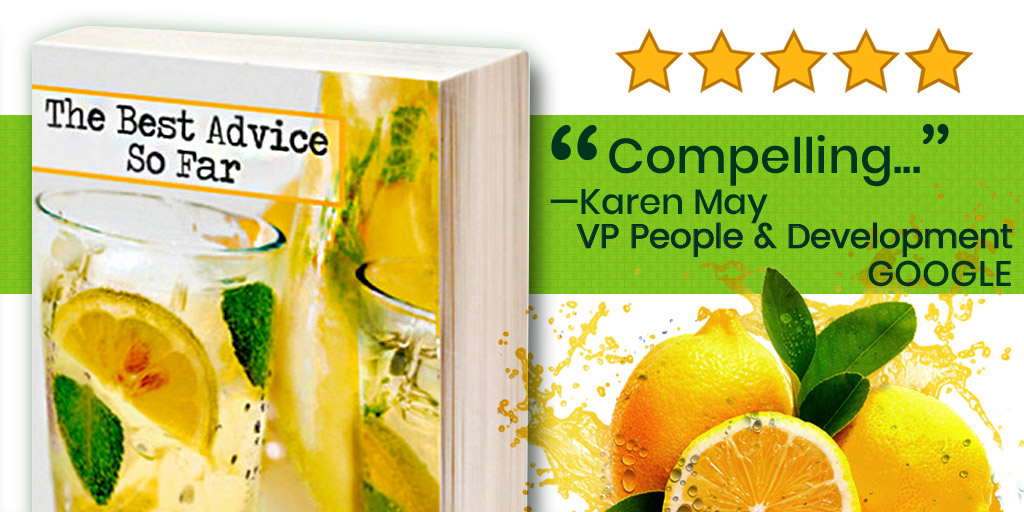
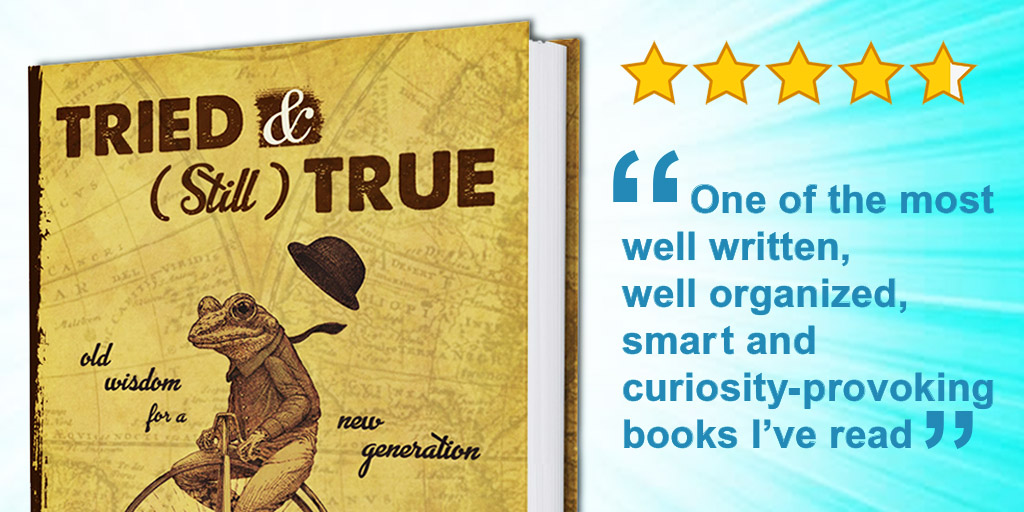
And those themes continue in new ways as I’m now in the process of writing my third book.
So it seems I’ve actually been helping people to be less lonely this whole time. Who knew?
Honestly, I did. I knew.
I knew because I’ve seen the results over and over in people’s lives for decades. As I said, I just didn’t have the science behind it until now.
Here’s some more good news. If you are feeling lonely, you really can do something about it. And as this new study shows, being less lonely isn’t reliant on having more people around (which is tough during the current extended pandemic). It’s something you can work on all by yourself. Today.
I encourage you to pick up one or both of my books. But I also understand that many people have been greatly affected by this pandemic and may not have money for extras right now. If you really want to read these books and simply can’t afford to, follow the links to the book titles above. You can get started reading a good deal of each of the two books using the download links I’ve provided there. And if you finish those and want to continue, drop me a message on my website’s contact form. Introduce yourself, let me know which book you’d like — and I will send you a full digital copy of either for free. No strings attached.
So why not start being less lonely right now?
it's a breeze

One day last week, I wished a friend of mine a happy birthday. He turned 30 and was feeling old. Interestingly enough, he was a sophomore in high school when I met him, and I was older than he is now. So I was able to paint a convincing picture for him as to just how young he still is.
As we talked about getting older, a famous quote came to mind:
“With age comes wisdom.”
Yet I’m inclined to agree with the second half of Oscar Wilde’s observation on the matter:
“… but sometimes age comes alone.”
I don’t need to look very far to find middle-aged adults who are just as petty, rash, irresponsible or egocentric as they were when they were teenagers. (Some, in fact, are even worse off now than when they were younger.) Likewise, I know many in their twenties who are quite well-adjusted and have exemplary character.
That is, wisdom comes not merely from experience but from intention to ponder that experiences. To learn from it. To make new choices.
To change.
Well, after this exchange with my still-young friend, my eye was immediately drawn to a seemingly trivial bit of movement in my living room—a sight so familiar to me that, if not for that particular conversation, it would certainly not have been noteworthy let alone served as the inspiration for a blog post.
At the open window, the edge of a sheer white curtain floated and fluttered in the spring air.
In that moment, I was transported to a particular night in February back when my birthday friend was still in high school. He and a dozen or so other guys his age were gathered in my home on a Monday night for our weekly meet-up. They crowded onto the olive green sectional or found space on the living room floor, happily munching on pizza, which was the norm.
The conversation that night coalesced around a theme. Many of them expressed that they invited change, that they wanted more for their lives, that they were open to deeper connection with others and a sense of real purpose. They came faithfully each week, ready to absorb. They were honest about who they were and where they excelled or struggled. They took part in discussions and read books. But they hadn’t seen the personal progress they’d expected “by now.” They still weren’t feeling or experiencing whatever it was they thought they should be feeling or experiencing.
One or two of them even hinted that they were disappointed that the other group members hadn’t gone to greater lengths in supporting them during the week between meetings.
Where was the magic that would grant them the life they were looking for?
As they continued sharing their thoughts, I got up and headed for the kitchen, presumably to grab another slice of pizza for myself. What no one noticed was that, on the way, I cranked the heat up another ten degrees.
Even at a moderate 70°, I can tell you that 15 teenage boys will heat up a room quickly. With the thermostat now at 80°, it wasn’t long before the sweat was trickling and they were begging for relief.
Instead of lowering the thermostat, I opened the two windows along one side of the room. “Let’s see if this cools things down quickly.” But even though it was a frigid winter night, the temperature in the room didn’t drop by even one degree. No air was coming in from those open windows.
“That’s not working,” they moaned. “Can you just turn the heat down?”
I had them where I wanted them. Breaking the current flow of conversation, I said, “The windows are wide open. Why do you think the cold air isn’t coming in?”
One of them held his hand up to a screen, as if he thought for a moment that maybe a tropical heat wave had mysteriously descended upon New England. I could see that they were thinking. Another offered, “Maybe there’s no wind tonight.”
After a minute or so more, when I was sure their minds were open, I got up without a word and disappeared down the short hall. I opened my bedroom door (which I knew they would hear). Twenty seconds later, I returned and stood in the center of the room. I pointed to the open windows and, as if I were a sorcerer, freezing air whooshed into the room. In less than a minute, they were bundling up in the hoodies they’d so recently discarded; and within two, they were shivering and had had enough.
I turned down the thermostat, closed one window, leaving the other open just an inch or so as I revealed to them how I’d gotten that air to come in—to transform a stagnant space with something new and refreshing.
My secret? I had opened another window.
Currently, every single person on the planet is affected in some way by the current coronavirus pandemic. Many are feeling fearful, worried, overwhelmed, tired, alone. But I’m just as convinced now as ever that the remedy is not to simply “sit by the window” in our stuffy little spaces, wondering when joy will start coming back into our lives.
Air only comes in when we open another window to let it flow back out. Likewise, I’ve found that life remains stagnant if we merely sit around wishing for fortune to smile upon us (and grumbling when it doesn’t meet our timetable). No, most often positivity comes into our lives only when we open windows that let it flow through us and out again.
I’m not talking solely about karma here (though I’m not debating it either). I’m talking about actionable cause-and-effect.
Are you waiting by the window for feelings of isolation to end? It’s easy to imagine that a virus or social distancing restrictions are the cause of those feelings. But they really aren’t. I know people who live in the same house and yet feel isolated. Conversely, I know people who haven’t seen one another in months or years, yet who sustain real connection. So actively seek to open windows of connection with others. It’s been my observation during the times I am out in public—grocery shopping, for instance—that the masks and gloves and six-foot rules are beginning to cause people to mistakenly see each other as the threat, rather than the actual virus. But we are not the enemy. We are allies, in this together. Yes, it may feel strange. But we’re all the same people we were before this began. So make eye contact. Say hello. Smile and wave to your next-door neighbor when you go out to check your mail. The best way to start feeling connected is to take the initiative and be a connector.
Are you in need of encouragement? Open windows to encourage others. Call and check in with someone. Send a text to share a fun memory with a friend or family member. You may be surprised how quickly you yourself begin to feel encouraged.
Are you feeling weighed down by the onslaught of information about all that seems wrong with the world? Turn off the news and go be the window to something right with the world.
Today, after food shopping, I pulled into a drive-through to get a breakfast sandwich. Another driver arrived from a different direction at the same time, but waved me on to go first. In return, I secretly paid for his order with my own (which cost me about two bucks). Each of us had played a small part in reminding the other of what’s right with the world. I drove away smiling—feeling connected, encouraged and cheerful.
Every one of us has something we can contribute to what’s right with the world. And we can do that right now. No need to wait for the pandemic to subside or restrictions to be lifted.
Are you a musician? Share a song or video concert for others to enjoy.
Do you bake or garden? Make a batch of cookies or pot a small plant, and leave it on someone’s doorstep along with a kind note. Really, any gift, however small, would go a long way. A little bag of birdseed for someone’s birdfeeder. A board game you don’t use anymore. A book you enjoyed.
Are you a carpenter? Build a birdhouse and give it away.
Spend a lot of time on social media? Go beyond hitting “like” or “share” and leave a personal comment or send an uplifting message. Be deliberate about sharing positive posts rather than negative news, controversial content or political persuasions.
Money is tight for many right now. But could you donate even just one dollar to a worthwhile charity that will help someone else in need?
Don’t have a dollar? Do you have enough spare change for a stamp you could use to mail a hand-written note to someone who might be feeling down or forgotten?
As an author and blogger, I’m using my words to promote hope and happiness where I’m able.
Here’s my “best advice”: stop sitting despondently by that same window, waiting for good things to start happening. Get up. Go open a few windows outward to the world. Before you know it, you’ll feel the winds of positive change beginning to stir.


the builders

I was wakened from a sound sleep by the ungodly grinding of a saw cutting through what sounded like concrete or metal right outside my bedroom wall. The whole place shook, setting the nearby jar candles to skittering. It was immediately clear that this was not going to be a situation solved by fingers in the ears or pillows over the head. So I got up.
Just when I thought things couldn’t get any worse, there was a loud crunching and a thunk.
That sounds like it’s right in the house, I thought. And then the noise suddenly cut off. Moments later there was a knock at the door. I opened it to find one of the construction guys there wearing grubby jeans, a tank top and a backward ball cap. His ears were studded and gauged, and one tattooed arm leaned against the wall of the stairwell that leads up to my floor. “Hey, um… what’s on the inside of the wall we’re working on?”
I knew something very bad had happened. “My bedroom,” I informed him. “Bedroom closet to be exact.”
I led him through the entryway and into the bedroom. I live in an old farmhouse with open closets, so I had used the bedroom closet for storage, placing a low white bench with drawers and storage cubbies in front of it on top of which a full-length mirror leaned back against the door opening. I took down the mirror.
The workers had broken through the outside wall into the room, a five-foot strip of the wall revealing daylight beyond. But that wasn’t what caused the sharp inhale or widening of my eyes.
It was the horde of ants covering the walls… and everything else inside. Coolers. Lawn chairs. Luggage. Bedding. I could get at none of it until I removed the plastic storage bins. But those, as it happened, were impaled on a large bolt that had come through the wall. Meanwhile, the ants were happily beginning to explore outside the closet.
As this isn’t really about the incident, I’ll montage. Cracked bins ripped through. Running back and forth to the fire exit stairs with closet contents, even as ants ran up my arms and dropped into the other rooms. Workers doing impromptu extermination with a shop-vac. The cloying fog of Raid fumes permeating.
Throughout the ordeal, I’ll admit that I growled aloud more than once. And since the construction worker was doing his best to contain the situation, I wanted to be clear that my irritation was with the situation and not with him. I said as much to him, followed by stating aloud some of my own advice (more for my sake than his): “These are the times when I have to ask myself, ‘Will this matter in a year?’ And if the answer is no—which it is in this case—then it’s not worth wasting time in the present getting up in arms about it.”
Thus began my conversation with the builder.
If you were to have driven by my house and seen this guy standing outside on his ladder, swinging his hammer, you probably wouldn’t have given him much thought. Just another common laborer. And if you had noticed him beyond this peripheral glance, you might have made assumptions about him based on his job, clothes and tattoos—assumptions about his background, lifestyle, intelligence, education level, worldview.
But allow me to tell you what I learned about him.
As I say, the temporary crisis didn’t matter in the grand scheme of things. However, mere minutes into our interaction together, we found ourselves talking openly about stuff that did matter.
His name is Zach. He’d been raised by two women. One was his mother. The other was his grandmother, a woman for whom he now happily served as a primary caregiver. Every day. Like clockwork. His expression of love and respect for his mom and grandmother, and his happiness to help, were among the first things he told me.
Zach shared with me some of the pain he experienced growing up and the problems it led to in his early adulthood. But he’d worked hard to overcome those issues.
He’s a voracious reader who enjoys deep conversations about life.
In fact, he’s been having an ongoing conversation online with a young Muslim man from the Middle East. This distant friend had shared his desire to visit the United States, but expressed his concerns about how he might be treated because of his ethnicity or religion. Zach was honest with him. “Some people here will be suspicious and act on fear. But many, many won’t.” He invited the young man to stay with him personally should he make the trip, promising to introduce him to good people and places.
Zach is educated. Prior to being a builder, Zach had been the director of a public school program for kids on the autism spectrum or with other behavior-related challenges. He told me about some of his students over the years, adding that he’d finally decided he needed to take a break because his compassion for the kids was starting to get the better of him even during his off time. He felt he needed to do something a little more physical and less emotional for a while.
This had led to his current job. And his favorite part of that job… was the math. I’m sure he’s told me five or six times during our conversations in the last couple of days, smiling despite himself each time, “I love numbers almost as much as I love people!”
Two mornings later, Zach and a co-worker were back bright and early to continue repairs. I threw on jeans and some flip-flops and ran out to tell them that the exterminator was due back at 8:00 and might be spraying from the exterior, which would mean that construction might be delayed a couple hours.
As we all stood around awaiting more information by phone, we got to talking once again. The other worker was a stocky, heavily bearded guy with his knit cap pulled low. Even wearing his dusty mechanic-blue jacket, tattoos were clearly visible, rivaling Zach’s. If not for his clothing, you could easily imagine him having been a Viking downing tankards of grog at some alehouse of yore. He flicked the ash off his cigarette and took another puff.
I introduced myself. His name is Doug. He shook my hand and the three of us chatted for a few minutes.
Zach and Doug then took off for a bit as the exterminator arrived and did his thing. Once they returned, Zach went into the bedroom to assess what needed to happen inside the closet. A few days earlier, based on our conversation, I’d given him a copy of my first book, The Best Advice So Far; and I’d just handed him a copy of the newly-released TRIED & (Still) TRUE. Doug was immediately curious. “You write books? Cool. What’s it about? Where can I get one?” As Zach continued with his tape measure, Doug and I got another chance to talk a bit.
Here again, one might make assumptions about the kinds of things “someone like Doug” might talk about in the few minutes standing with a stranger in a hallway while on a job. You’d likely be wrong.
I could immediately tell that Doug has a quick wit and sense of humor. Once we got to talking, he laughed often.
Doug also plays in a band. If you went only by his black “DOOM” T-shirt, depicting what looks like someone trying to pull demons out of hell, you probably wouldn’t guess that his primary instrument is upright bass or that his band, Cactus Attack, finds it tricky to schedule their tours on account of two of his other band mates being full-time teachers.
I handed Doug his own copies of the books. He read the backs, brows intent. “This is my favorite kind of book. I love philosophy. Thanks, man.” From there, Doug shared with me his observations about how people too often seem to be looking for differences between themselves and others rather than similarities. "I talk to people about this all the time,” he said. “You’ve got to slow down and make time to get to know people and their story before you make judgments. Even people who do things you might strongly disagree with usually have a reason that makes sense to them, and I think it’s valuable for us to be able to understand those reasons.” We talked about religious cults, terrorists and factions within modern feminism, with Doug passionately making the case for empathy and education at each turn.
Later, when the three of us were in the mix again talking, I suggested the word “malapropism” to describe a habit Zach said he sometimes falls into, at which point Doug interjected, “Actually, with you, Zach, it’s usually malaphors, not malapropisms.” This was interspersed with his thoughts on Socrates and Plato, peppered with other underused words such as pedagogy.
There was clearly much more to both of these great guys than might at first meet the eye.
Though I say this often, it’s worth repeating: names matter. By asking someone’s name and giving your own, you open doors of possibility. So often, if we aren’t careful, we can get to treating people as little more than background noise, obstacles to overcome or means to achieving an end. Names serve as a reminder that the other people all around us are just that—real people, with lives as full, interesting, meaningful and complex as our own.
In addition, while most of us would agree if asked that one should “never judge a book by its cover,” it takes intention and consistency to actually live it. And it’s been my observation that the standard most used in judging book covers is little more than “does that cover look enough like my own?” I’ll quote Doug here from our conversation: “What a boring and small life it is to surround yourself only with people who are exactly like you.”
To quote Bill Nye the Science Guy, “Everyone you will ever meet knows something you don’t.” If we truly embrace this, the world and the people in it become an endless source of connection, fascinating stories, learning and growth.
My friend Chad often says, “Follow your natural curiosity.” I agree, 100%. However, I think so often anymore that we forget how to be curious. We leave it behind, somewhere back in the ether of childhood. As we get older, we allow that natural curiosity to be replaced with fear. Yet the more we give in to this, the smaller our worlds become.
In fact, if there were one takeaway here, it would be to rediscover your curiosity. And then follow it.

You’ll encounter new stories and change your own story in the process. Zach and Doug are two recent reminders of the benefits of doing this, here in my own little corner of the world. Now I encourage you to go find out who your own next surprise might be.

unmentionables

I’ve always thought it a little strange that we as a culture are conditioned to believe that certain topics are taboo.
Unmentionables, if you will.
I’m not sure who decided what made The List. Perhaps it was the same unmentionable “they” who are so often referred to in cultural lore:
“They say people hide razor blades in caramel apples.”
“They say you shouldn’t swim within thirty minutes after you eat.”
“They say the average person swallows eight spiders a year while sleeping.”
Pure poppycock, of course. But such things have been passed on for so long now that they feel true; and so we continue to live in their shadow, crouching in corners from boogeymen of our own making.
It seems much the same process accounts for what “should” or “should not” be spoken about with others:
Don’t get into it with politics.
You might come up against someone who doesn’t see the world the way you do, and that would surely lead to fisticuffs. Worse still, someone may calmly and rationally introduce an idea you hadn’t considered before, challenging your dyed-in-the-wool stance; and, frankly, that kind of thinking could only be catastrophic. Conversing, after all, is about debating and being right. And your favorite news station will always tell you that you’re right. So play it safe.
Don’t breathe a word about your family struggles.
It’s a real drag for everyone else (whose relationships are perpetual bliss) to have to hear about it. Seeking help or input is a sign of weakness; better to seem strong in your weakness than to show your weakness and potentially gain strength. Just bite your tongue, tough it out and hope for the best.
Don’t talk about aging or dying, yours or anyone else’s.
It’s sad and it’ll bring people down. Yes, we will all eventually arrive there. Perhaps, even now, you’re caring for declining parents and facing that inevitable goodbye. But talking about it—big no-no. Regardless of your thoughts and feelings and worries and wonderings, it’s best to keep them to yourself and maintain the unspoken illusion that you’re at perfect peace with it all—as if it’s nothing more than walking off into the beautiful golden sunset, just like in the movies.
This list of unmentionables could go on and on.
It seems a shame that we’ve bought into this notion that we are such frail beings that we’d surely turn to dust if we stirred up much beyond pleasantries and platitudes. That we’ve been lulled into the mundane rhythm of talking about little more than the weather or the big game or what we thought of the latest film.
That said, ironically, I’m going to tell you what I thought of the latest film.
It was A Beautiful Day in the Neighborhood, in which Tom Hanks brings to vibrant life the true story of Mister Rogers and his relentless empathy for a struggling young journalist. It truly is a beautiful film. But that beauty transcends “the story,” underscoring the power of vulnerability, the magic of a thoughtful question and the wisdom of giving people the space to feel what they feel.
Without giving away too much, there is one point where members of a family fall into an awkward silence when one of them acknowledges aloud his own serious illness. Fred Rogers is in their company. Of note, he allows that silence to remain unbroken for quite a while, aware that he is a guest who is merely visiting this deeply personal moment. His eyes move around the circle, stopping on each person there. Most quickly look down or away. One however meets his gaze with glassy eyes, a quirk of mouth seeming to convey, Sorry you got stuck in the middle of this.
Eventually, Mister Rogers draws in a slow breath, smiles, then speaks with quiet assurance about the “taboo” reality they are all facing together:
“This is human." Downcast eyes flick toward him, hungry for hope, as he continues. "If it's human, it's mentionable. And anything mentionable is manageable.”
Then, as if to be sure they understand him, he repeats the last part once more…
“Anything mentionable is manageable.”

And with those words, the heavy chokehold breaks.
Please understand, I’m not in any way against friendly chit-chat. By all means, exclaim what a lovely day it is when the sun is shining. Root, root, root for the home team. Inquire about the holidays or weekend plans. I do. And I enjoy it.
Nor am I saying that we should let concerns or struggles or unpleasantness consume our thoughts or conversations. Sometimes, in fact, the healthiest thing might even be to set them aside for a time.
I’m simply suggesting, along with Mister Rogers, that we ought not continue to subscribe to this dodgy notion of “unmentionables”—keeping our mouths sealed for fear of spiders in the night.
A fear-driven life is a terribly small one indeed.
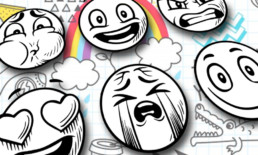
emoti-cons

Yusif is a talented writer. He’s completed one novel. He’s several drafts into another novel and has two more in the works.
I know Yusif personally. I’ve read his work. We’ve brainstormed together often. He’s creative and his ideas are truly unique, never derivative. What’s more, I’m certain that Yusif’s stories have mass-market appeal.
I was hanging out with Yusif at a museum one day two summers ago. He was looking at a blurry, black-and-white photo from the early 1920s, depicting a nondescript teacher and her students standing outside a one-room schoolhouse in the Florida Everglades when, out of the blue, he spun around and announced, “I want to write a story about this!” Before the day was out, he had completed a full chapter outline for what would be a middle-grade novel. And over the next two weeks, if memory serves me correctly, he was writing a chapter a day.
Upon completing each chapter, Yusif would read it aloud to me, sometimes in person and sometimes over the phone. His descriptions were masterful without being overwrought. I cared about his characters. His dialog was fresh and authentic.
He was passionate about researching details. He read every book he could get his hands on about the early settlement of the Everglades: the people, their background, customs, housing, transportation, religion, food, relationships with the Native Americans of the area. We made several more trips to area museums, churches, schools and Everglade City itself. We walked together through the actual setting of his story, studying the buildings, the photos on the walls. Eating alligator.
Within a year, the novel was completely written, thoroughly edited and ready to be submitted.
It was an exciting time.
Except when it wasn’t.
You see, there were many, many days during that year when Yusif read his work… and hated it.
The enthusiasm and positive attitude with which he went into querying the manuscript fizzled. As sure as he’d ever been that this book could fly—maybe even become a favorite book for many readers—he was now equally convinced that no agent would want the book. That readers wouldn’t get through chapter one without putting it down, never to pick it up again.
“Be honest with me. It’s awful isn’t it? No one’s going to want to read this,” he moped.
How is it that the very same story and ideas that had thrilled him now felt lackluster? That the characters he’d grown to love—that he’d brought into being, and rooted for and cried over—now seemed like cardboard cutouts? And that the same configurations of words that he’d painstakingly crafted and tweaked, and which he’d read aloud to me with pride only weeks earlier, now sounded bland and trite, even embarrassingly bad?
To quote the Bee Gees:
It's just emotion that's taken me over
Tied up in sorrow, lost in my soul
Interestingly enough, while Yusif was working on his second novel (with all of the wide-eyed wonder and hope with which he’d begun the first), we watched a video series where prolific author Judy Blume talks about her process. Her unassuming nature, candor and vulnerability struck me. Here was one of the all-time bestselling children’s writers, whose books have sold over 82 million copies and earned her more than 90 literary awards (including three lifetime achievement awards) saying, “So often, I’ve doubted myself. I’ve cried when my work has been rejected. My feelings still get hurt when people don’t understand who I am and what I’m about. Honestly, there are many days when I just hate writing, hate my stories.”
And yet, like Yusif, there are many other days about which Judy exclaims, “Writing is in me. It is me. These characters and stories in my head just have to come out. It’s my love. It’s my life.” She pauses to read a short excerpt from a book she published decades ago, and she genuinely chokes up, her eyes filling with tears. “I just feel so deeply for this character here,” she explains.
Keep in mind... she herself had created that character.
Whether it’s writing, a relationship, a career, a project or a dream—we all have times, for whatever reasons, when those things which once had us feeling so energized that we were bouncing on our tiptoes just feel… dead. Dumb. Worthless. Hopeless.
Emotions are a wonderful thing. They help us to connect with others. To empathize. To a large degree, they are what sets us apart as human.
They can also be unreliable reflections of reality.
They shift often, sometimes quickly.
They're influenced by a thousand factors, many of which are outside our awareness.
They can deceive us. Overpower our reason, overturn conviction and smudge the lines of what we once knew without a doubt to be true.
Think of emotions like a steak knife: a useful thing when handled properly… yet potentially deadly if we aren’t careful. And to extend the analogy, the problem is not the knife itself, but what we choose to do with it.
One of the best ways I’ve found for outsmarting the “emoti-con” is pinning down moments of clarity in some concrete way that you can return to later as needed.

For instance, write down what you know to be true about that project (or that resolve, or that person, or yourself) during times when you are sure of its value. What is going right? Why is it important? What impact is it having on you currently, or what fresh insights are you having about it? What are your hopes for it? Why do you believe those hopes are achievable and valuable?
Some people journal, and this is a great tool for pinning down such moments of clarity. Still, to some, “journaling” sounds like something ongoing, permanent—something you just don’t do or wouldn’t be good at. If that’s you, change the word. Don’t call it “journaling.” Just think of it as “writing something down.” It doesn’t have to be in a special diary or notebook. Often, when I have these moments of clarity, I just jot them down in the Notes app on my phone. In fact, much of my writing, both in my books and on this blog, is my “journaling”—my captured moments of clarity, of those things that result in positivity. My cork board of what works. Believe me, I reread my own stuff regularly—not as critic or editor, but just as a reader like you who needs the reminders as much as anyone else.
Another powerful “pin” is recording. Most phones have a voice recording app. Use it. Then, when moments of high emotion or doubt come—when you forget the good—play it back. Hearing your own enthusiasm and conviction speaking to you can work wonders, given that extra sensory element.
You could also capture those moments of clarity visually. Take a picture or video of yourself holding that work-in-progress when you’re feeling genuinely inspired and proud and purposeful. It’ll show on your face. Words optional.
Or why not combine several of these?
Then revisit these moments of clarity. And do it regularly, not just when emotions have you down for the count. Try it and see what happens. Building a “clarity scrapbook” in this way can help you stay more positive and focused, leaving less chance that you’ll be duped (at least not for long) by the “emoti-con.”
if i can do it today

I was a skinny kid with a big butt.
Just calling it like it is.
By skinny, I mean that I’ve been five-foot-nine since eight grade—haven’t grown an inch—and yet, when I graduated high school, I had a 26-inch waist and weighed 105 lbs.
Alas, a disproportionate amount of that sleight weight was carried in the caboose.
For a too-long stretch growing up, I ripped the tags off all my pants, picking the threads apart stitch by stitch with my teeth if need be, just to get rid of the blasted thing. Why, you ask? Well, regular clothes never fit me. And we didn’t have money for alterations. So my mother wound up getting me a “special” brand of “slacks” that, to my recollection, seemed to only make wide-wale corduroys in burnt orange or puce green. But the tag and slogan were the real kick in the pants:
HIMALAYAS
For Full-Seated Boys
Feel free to cringe aloud as a show of solidarity at the awkwardness and indignity of it all.
(And doesn’t it just figure that burnt orange wide-wale cords are now considered fashionable, all these years later?)
In the 80’s, I discovered the magical properties of mouse and a hair dryer. So at least my hair was big enough to balance out top and bottom.
Still, the voluminous do did nothing to stem the comments and “nicknames” people attributed to me on account of my backside. Basketball Buns. Rhino Rear. Or the more straightforward Big Butt.
The nicest thing anyone ever said to me about it was “Don’t worry about your big butt. Everyone likes them in New York.”
Alas, the closest I would come to New York for many years was driving through on my way to college—where the coach for my freshman gym class wouldn’t allow me to do the one-mile timed run, because my body fat percentage was less than 3% and he feared a law suit.
Bobby was one of my early college roommates. Bobby had a feathered mullet like Don Johnson. He was also the first person I’d ever met who was a serious “weight lifter.” I remember lying on my bunk one day when Bobby came back from the gym. He peeled off his string tank top and started “making muscles” in the mirror.
Turn. Flex. Make tough face. Shrug. Turn. Flex.
I liked Bobby, but this peacocking irked me. (In retrospect, I wonder if it was mostly due to the fact that I was the skinny big-butted kid and he was the movie star.) Rather than scoff, I simply asked him about it. “Hey, Bobby, I’ve seen guys flex at themselves mirrors before but never known any of them well enough to ask why. So… why?”
I’ll never forget Bobby’s response. He didn’t stop his flexing. He didn’t seem the least bit irritated, just took it in stride. “Well,” he said matter-of-factly, “you write music and compose it on your keyboard, right?”
“Right…”
“And I’ve seen you work and work on a song that sounds fine to me. But you keep tweaking it. Listening to it again. Changing this one note or volume or sound or drum hit. Because it’s your song and so you know it best. You know what you want it to sound like in every detail. Well, my body and muscles are my song. I might look fine to you. But I know what I’m looking for, whether everything is even or not, proportioned, weird looking or whatever. So I’m ‘listening’ to my body in the mirror and then I know what needs fixing when I ‘compose’ my workouts.”
It was one of the first times I remember being aware that I’d judged someone unfairly. Bobby was no “dumb jock.” He knew what he was doing and expressed it eloquently.
In fact, the way he answered that question caused me to follow up with, “Would you mind if I… went to the gym with you sometime and tried it out?”
And so, at the age of 18, I swallowed my pride and shuffled my skinny-big-butt self behind Bobby into a gym full of clanging metal and grunting and sweaty socks smell and people I wanted to be. And I picked up a dumbbell and put it down again.
Bobby was unbelievably patient with me. A good teacher. Protective even. He introduced me to people I never would have thought were like me at all. And I made many friends who all seemed to make it their personal project to get the big-butt beginner buff.
I went irregularly at first, but I stuck with it. And by the time I graduated two-and-some years later, I thought I’d really arrived when I tipped the scale at…
… 112 lbs soaking wet.
But it was a different 112 lbs somehow. My butt didn’t look quite so much like the Himalayas in context of the rest of me.
I was sold. And ever since, I’ve continued to hit the gym, pick stuff up and put it down. It’s more than a hobby; it’s a way of life. And while I still haven’t grown an inch in height, I’m now generally in a weight range considered “borderline obese” on the BMI chart, even though my body fat is still quite low.
Yay, me.
Before I lose anyone who isn’t a gym-goer, this post isn’t about working out. I use that only as an example.
There are things each of us enjoys doing, things we’ve worked hard at, invested time in, grown to love and depend on.
For me, in addition to working out, I’ve studied languages for a lifetime.
I’ve played the piano, sung, composed music and recorded original songs.
I’ve mentored hundreds of teens and young people.
I write (obviously).
Your “thing” might be gardening. Or painting. Or dance.
Playing chess. Jogging. Surfing.
I’m talking about pursuits that take time. Skill. Endurance. Dedication. Brain space.
Things we get good at. Take pride in. Things we become known for.
Maybe even things that have become integral to our identity, a core part of who we perceive ourselves to be.
Are you with me now?
Keep your “thing” in mind as you continue.
*****
When I was 25, I seemed to have all the time and energy in the world for my many “things.” All of them, all the time.
I’m no longer 25. And let’s just say… things change.
Life changes.
We change.
In my case, aside from merely adding more revolutions around the sun, I’ve also had serious accidents, injuries, illnesses—events that can knock you down hard and keep you there for a while. Still, youth and the tenacity that comes with it were on my side through many of these setbacks. And so, each time, the day would come when I fought through the mental arguments with myself, steeled my will and faced that first miserable, glorious day back.
Nonetheless, over time, each setback—and each day back—have gotten harder.
And I find certain thoughts creeping in more and more often:
How long before I can’t effectively mentor anymore because teens just see me as “some old guy”?
How long can my brain continue to learn, store and use additional information?
How long until I just can’t find the words and focus and creativity to keep writing?
How old will I be when I just physically can’t work out anymore?
How long can I realistically keep this up?
Now, I’m a positive person. This—as much as any others among “my things”—is a core part of my identity. Moreover, at the center of everything I believe, write, speak about and pass on to others is the truth that “You always have a choice.”
An actionable part of this mind-set in my own life was the adoption of a certain mantra years ago, one which I’ve repeated to myself and others countless times, whenever those inner voices begin to whisper How long…?
“If I can do it today, I can do it tomorrow.”
Here’s how it plays out with a few of “my things”:
If I can mentor someone today, I can mentor them tomorrow.
If I can learn more Russian today, I can learn more Russian tomorrow.
If I can get through my gym workout today, I can get through it tomorrow.
In fact, if you don’t mind my getting more personal here, I even have a checklist of smaller, more specific daily tasks to which I actively apply this thinking:
If I can sing a quality high G today, I can sing it tomorrow.
If I can put on socks or shorts from standing position today, I can do it tomorrow.
If I can move from a standing position to sitting cross-legged on the floor and back to standing again without using my hands or putting my knees on the floor (I’m not kidding—I really do this every day), I can do it tomorrow.
Sounds simple, right? What’s more, it’s completely logical.
And so, by this accounting, I should still be able to do anything at 85 that I could do at 25. The only quid pro quo is that I commit to perpetually doing each thing “today.”
I suppose there are some hype motivational gurus out there who would leave it at that. Get the crowd chanting the magic words together louder and louder—If I can do it today… I can do it tomorrow!—until the arena is whipped into a frenzy. People would roar and laugh in the face of time and feel invincible.
There’s just one tiny flaw in this powerhouse prescription: none of us actually is invincible.
You see, I left out one caveat that I sort of try to slip in fast enough that maybe I won’t notice it too awfully much:
“Barring illness or injury, if I can do it today, I can do it tomorrow.”
Ah. You won’t see that addition in the social media memes or hear it at the $500-per-person seminar. It just doesn’t sing quite as well, does it? Sort of kills the vibe.
But it’s reality.
Now, if you ask me, even with the exception, it’s still a pretty powerful mind-set. But that little side note is an important one all the same.
I’m coming up on another birthday in August. And somehow—surely due to some kind of space-time-singularity-wormhole-eats-wormhole absurdity—when that day arrives, I will turn 50. Five-zero.
As I say, I’m a positive person who’s practiced certain habits—both physical and mental—for a lifetime. Anyone who knows me will tell you that I am also an independent, self-motivated guy who works hard and strives for excellence. Yet for all of that, there is still no barring illness and injury.
In fact, it’s not just illness and injury that can throw a monkey wrench into things where the “if I can do it today, I can do it tomorrow” philosophy is concerned. Life’s just not that linear. And so there are countless circumstances that could also follow that word “barring”:
Wedding planning
Pregnancy and birth
Intense study
Job transition
Death of a loved one
Breakup or divorce
The list could go on and on. Hence the famous saying:
“The best-laid plans of mice and men often go awry.”
I’m here to tell you, that’s all the more true for fifty-year-old mice. (And while I can’t yet speak from experience about older mice, I’m pretty sure they’d back me up on this line of thinking.)
So illness, injury and a host of other interruptions derail us from our “things” we once loved and were able to do with endless energy and passion.
What are we to do?
Get mad?
Sink into depression?
Reminisce in maudlin tones about “the good old days”?
Or simply relent, shrug and say, “Oh well”?
I’m not talking down to anyone. As recently as last month, as I slogged through yet another major health issue—one which preventing me from meaningfully taking part in most of “my things” for more than eight months—I found myself mired down in moments and days of each of those responses above. It’s a reality that prompted one statement from my last post, “what if”:
“For each of us—even if we live a charmed life—at a certain age, our bodies will begin to break down, leaving us less able to do the things we enjoy as time goes by.”
But each time, at some point, I’ve begun the journey out.
Out of anger.
Out of frustration.
Out of teary nostalgia.
I’ve scrounged around for the one little “something” I could start with, and with all the resolve I could muster, urged myself to move forward again. As Dylan Thomas put it:
“Do not go gentle into that good night.
Rage, rage against the dying of the light.”
As I offer some suggestions below for getting beyond the “barring” and back to “if I can do it today, I can do it tomorrow,” please know that they’re not just platitudes. They’re lifelines that I’ve relied upon myself too many times to count. In fact, even as I write this, I’m just beginning once again to apply them in several areas where my “things” have fallen by the wayside.
For those who are only newly acquainted with me, this blog and my book, The Best Advice So Far, the advice I share as “the best… so far” isn’t some claim of how awesome and clever I am to have come up with ways to fix people. This is the best advice I myself have collected over decades, advice that has worked consistently for me in living what I find to be a happy, peaceful and purposeful life.
Before wrapping things up with my central points, I want to share with you three pieces of advice from the book, all of which came to me from my best friend’s mom, Carlotta, to whom the book is dedicated. I cover each of these in their own chapters within the book; but for now, I’m just going to drop them on you and then refer back to them further on:
The sooner you accept that life is not fair, the happier you will be.
If you're expecting someone else to make you happy, you never will be.
You have to start from where you are, not from where you wish you were.
With Carlotta’s advice in mind, let’s get to specifics.
Do Something
We waste so much time wishing things were different. Wishing doesn’t change anything.
Being angry at unfairness doesn’t change anything.
Blaming someone else or circumstances or God doesn’t change anything.
The only thing that changes anything is embracing your power of choice and taking action.
It almost doesn’t matter what you do, as long as you do something, however small it may seem.
The opening of Carlotta’s third piece of advice above could stand on its own: “You have to start.”
Do It Now
Extending that last bit, “You have to start where you are.”
So often, we try to frame our wish as a goal by picking some future date after which we’re going to start.
New Year’s Day.
Our birthday.
The day after vacation.
But it seems to me that these postponements are often little more than license to feel good about ourselves in the short term. In fact, quite often, they are a license to do even less (or to glut ourselves with something we say we’re going to cut) up until that future date.
If something is really worth doing, it’s worth doing now.
The first step to finding the power in “If I can do it today, I can do it tomorrow”… is doing it today.
And the best day to start marking your “today” is today.

Do It Simply
There’s this childish part of each of us, I think, that subconsciously tries to demand that life / God / the universe let us start “where we wish we were” or else we’ll boycott. But this mental sulking about the fact that you can’t do what you used to do at the level you used to do it accomplishes nothing. The only person it hurts is you.
And unless my basic math skills fail me, any percentage of something… is more than zero percent of everything.
With that in mind, think about something you want to get back to doing (or start doing in the first place).
Then pick something you know without a doubt you can do right now—and do it.
If you used to work out and be able to bench press 315 lbs, I’ll tell you right now… that is a stupid goal to set for yourself if you want to succeed in getting back to the gym.
If you played the piano when you were younger and are remembering how good it felt to play at your senior recital, ordering the sheet music for Rachmaninoff’s Prelude in C# Minor is setting you up for failure before your purchase even arrives.
Instead, by way of example, if I want to get back to writing after a dry spell, I might open a Word doc, title it (even if that title is “new post” or “next chapter”) and save it on my desktop where I can see it.
In May of last year, I was bemoaning the fact that I hadn’t had any time to study world languages—something I used to do regularly and in depth for decades. Not liking the feeling of kvetching, I downloaded a free app called DuoLingo and set it up to do five mini-lessons in Russian and French daily. This made me feel a little embarrased, to be honest. The part of me that wanted to demand being able to start “where I wish I were” longed to crack open the 1000-page grammars. But at least the app and its mini-lessons were something—something I knew I could do in 10 or 12 minutes a day. I didn’t try to test out of rudimentary skills I probably already knew. I started from the beginning.
In May of this year, the little green Duo owl congratulated me for having done my lessons every single day without fail for an entire year.

That’s over 4200 minutes of regular language study.
Seventy hours.
The equivalent of more than two university semesters’ worth of language study.
All accomplished in easy, progressive, 10-minute bursts.
However, that was only the start. Within a month of consistently using the app, I found myself adding three more language apps which I now also use with consistency. And my floor and night stand are once again littered with those 1000-page grammars.
I started simply. And before I knew it, it had naturally built upon itself. Now, just a year later, I’m officially back on track.
Allow me to tell you one more quick story here.
You may have heard of Rosalie Bradford. Up until 2013, she held the World Record as the heaviest woman, weighing over 1200 lbs at one point. She was immobile, able only to lie in her bed for more than eight years. Depressed. Suicidal.
Then, one day, Richard Simmons sent her an encouraging note, some free exercise videos and a diet plan. But what could she do with those things?
“I clapped my hands along with the videos,” Rosalie explained. “It was the only movement I could do.”
Wonder of wonders, Rosalie also holds the current World Record for most weight loss: over 950 lbs in all.
The important things were that she started. She started “today.” And she started simply.
Very simply.
Do It Daily
“If I can do it today, I can do it tomorrow” implies that success is based on doing a thing every “today.” In other words, it stands to reason that in order for something to become a new habit, it needs to be done habitually.
The little green owl from my DuoLingo app shows up daily, both in the app itself and via a friendly email, to hoot at me and remind me to do my lessons. I think this is a large part of why, no matter what else was going on in life (including sickness), I’ve managed to turn that goal into an unbroken streak for over a year now.
Just a week ago, I found myself thinking more about why I’d stuck with the language lessons when there were a host of other little things I’ve been wanting to get back to doing but hadn’t. I concluded that it was that daily reminder and record of my progress (as much as it irked me to have to admit that I’m human and needed it). So I did a quick search for a general goal-tracking app and came up with HabitHub. It allows you to set up three daily goals absolutely free, or unlimited goals for a one-time fee of $2.99. It also allows you to set how often you want to be nagged (i.e., “Did you do it yet? Huh? HUH?”) each day and the period during which you want those reminders—anywhere from one reminder a day to hourly notices until you mark the task as “DONE.”
Day one, I added doing a certain number of push-ups and a short abs routine. Lo and behold, that reminder—and the fact that I knew it was going to keep track of my streak—had me on the floor within minutes of setting up the app.
The push-ups took me 90 seconds. The abs routine took about six minutes. So seven-and-a-half minutes total. All I could think was, Why didn’t I do this sooner?
Since then, I figured I’d ad my DuoLingo to the HabitHub app (something I knew I was already succeeding with) as well as daily writing (just 250 words) and using my forearm grips (25 each hand).

In each case, the "dumb" little reminder has been enough to get me to do these things daily since. And within a few days, I’m already meeting or exceeding these daily goals.
Do It On Record
Nearly any habit expert will agree that telling someone about your goals helps you stick with them. So tell someone. Post it on social media. It’s good pressure.
Second, while modern technology allows us to set daily reminders for ourselves, I absolutely believe that the fact that my apps force me to mark things as “DONE” (or to have it marked as “NOT DONE” if I don’t)—and that they keep track of what I did or didn’t do—has played a huge part in my success rate. It’s almost silly, because the only person who really knows whether I did a thing or not is me. But it’s still enough for me, somehow, to see my success or failure in a tangible way.
Maybe you’re not an app person. Doesn’t matter. The concept is an old one. Try making a list and crossing things off as you complete them. Or write shorthand on every block of your calendar and check off each day’s goal with a colored marker when you’ve accomplished it. We all like rewards. Even something as tiny as a cross-out or checked box can go a long way to bolstering our pride and sense of achievement.
*****
Again, we can’t “bar illness or injury.” We can’t stop life or age from happening. But we can continue to make small choices that lead to happier and more purposeful living.

Why not make today your next “today”?
Now, if you'll excuse me, Duo the Owl is hooting at me that it's time for French...