

two and five
My brain has been in a perpetual fog for the latter half of this week. Any semblance of a regular sleep schedule has been obliterated since Wednesday, when I made the choice to stay up all night. I had my reasons. They seemed good reasons at the time. But the result was that I wound up going about 36 hours without sleep. Since then, I’ve been wide awake when I should be sleeping — and tired only when I can’t be.
Being this off kilter when it comes to sleep makes me feel “buzzy,” like my skin has a low-level electrical current passing through it. It’s particularly annoying in my head and face. This is paired with the sensation that the world is what I call “slidey” — that things in my peripheral vision are sneaking around, dashing back to where they were only when I look directly at them.
Some people think writing — particularly writing a blog post — is easy. I can only say … it’s not. I would estimate that each blog post takes an average of three-and-a-half hours to complete, and that’s only from the time I start typing. It doesn’t account for all of the mental planning that goes on during the week about what to say and how, an ongoing process that takes considerable time and energy all on its own.

Last night was another largely sleepless night. I went to bed at 11:00 (quite early for me), with the hopes of getting at least a solid six hours. But not even three hours in, I woke up with a start and was wired. My mom admonished me to just stay in bed when this happens. I tried. I really did. But it was just not going to happen. So I got up, threw on some shorts and a tank, and headed to the gym for a workout.
I thought about what I would write today while I drove to the gym.
During my workout.
On the drive back.
I have had a lot happen in the last week — things that would make for interesting, fun and even sensational(istic?) blog posts. I had images created for three such ideas. But in my current state, I just couldn’t find the wellspring from which to write any of them.
My writer friends will understand what I’m about to say. But writing — particularly writing of the kind I do — requires being in a certain state of mind and creativity. It’s not like going to the gym and working out, which can generally be done with sheer discipline if need be. While there certainly is an element of discipline to writing, if you aren’t in the right brain space, you just can’t write. At least not anything good. Sure, discipline will get words on a page. But it’s flat. Lifeless. You don’t even want to publish it.
People have suggested that I consider starting a file with blog posts written ahead of schedule, when I do have plenty of energy and focus, and then drawing from those at times when I’m not feeling it. But this wouldn’t work very well for me. It could be all in my head, but I believe that I have to be connected in the moment to what I’m writing or it just won’t connect deeply with readers. If it’s not coming from a place of … urgency, for lack of a better word … I just don’t feel it would reach its goal.
These were the thoughts going round and round in my head as I drove away from the gym about 6:30 this morning. What to write … what to write … c’mon, man … THINK!
I rehashed the blog ideas I had started, but I just couldn’t “find that place” with them. Think of something you love to do and that you’re good at. Now consider how it might be trying to make yourself do it within a half hour of awaking from anesthesia. That’s the closest I can come to describing how I was feeling. I still knew what I knew. I had ideas and could think of words or phrases. I just couldn’t pull it all together into anything.
I decided to grab breakfast on my way home. I stopped at a place about 10 minutes from the gym. There was one other car in the lot, but the people were still inside the vehicle. I hopped out and checked the sign on the door for hours. Sure enough, they didn’t open until 7:00. It was 6:42.
Funny — even in my upside-down frame of mind, I found my own advice popping into my head, as it often does:
“You always have a choice.”
“Patience is still a virtue.”
“Cultivate silence.”
I’d just finished exercising my body. I figured this was a good time to exercise my patience, to keep it limber. And maybe, in this 20 minutes or so of silence, I’d find a meaningful and “alive” connection to a topic for this week’s post.
So I sat. I watched the sky change colors. I listened to the birds. It was really quite peaceful and enjoyable. But I was still hitting the wall as far as writing was concerned.
At 7:01, the lights came on inside the restaurant and a server came to unlock the door. I’d be the first customer of the morning.
I ordered an orange juice, an egg-white omelet with spinach, tomatoes and salsa, and a side of fruit. A healthy start to the day. But it wasn’t helping a lick with inspiration.
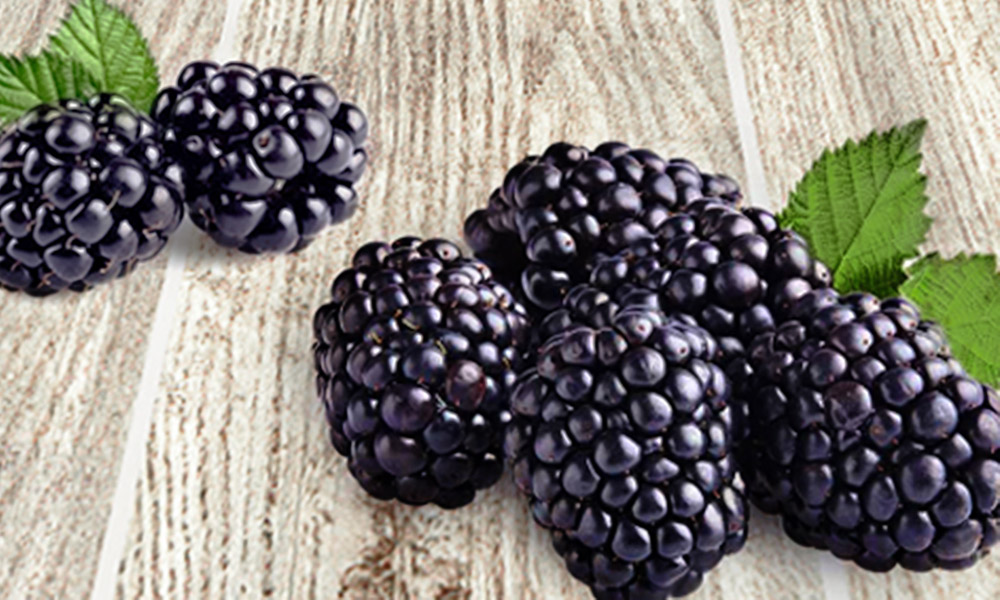
Soon, the older couple from the other vehicle that had been parked outside made their way in and were seated kitty-corner to me on the left. The same server I’d had took their order. I wasn’t eavesdropping, but I couldn’t help overhearing, seeing that we were the only people yet in the diner. The woman began to place her order first, holding up the “Specials” menu and pointing to the stack of blackberry pancakes that dominated the page. Before a word had ushered from her mouth, however, the server made an apologetic face and sucked air in through her teeth. “Oh, I’m sorry, we don’t have any blackberries …”
Though she continued to smile graciously, the elderly woman emitted a slow and mewling “Oooooh” of disappointment. Her husband patted her hand and then translated for the server: “That’s too bad. She was very excited. Blackberries are her favorite.”
The server offered other suggestions. “We have raspberries, strawberries, blueberries, bananas, peaches … can I interest you in any of those?”
The woman acquiesced, still visibly deflated. “I’ll just have … yes, blueberries will be fine, thank you.”
Her husband ordered and the server bustled around the corner to the kitchen, then back again to deliver my own spread.
I’d stopped thinking about what I would write for the blog. I was smiling despite myself. An idea for something else had taken over and I was working out the details of my plan.
At seventeen minutes past the hour, I was done eating and had paid my bill. The older couple’s plates were just being placed on their table. I wouldn’t have much time if I were going to be able to pull this off …
I thanked the server and walked out as quickly as I could without drawing attention. There was a supermarket just a stone’s throw away across the street. I hoped that they were open.
I hopped into my car, zigzagged over, and parked again. They were open. And wouldn’t you know it, the first thing I saw as I entered was a display, offering the very item I’d come for: blackberries. What’s more, they were on sale. Just $2.00 per container.
I snatched one up, adrenaline flowing and the adventure going swimmingly. There was no line at the register, and I was back in my car in no time.
At 7:22, I was parked back at the diner and making my way through the door. I smiled at the greeter, who didn’t stop me, most likely assuming I’d come to retrieve something I’d forgotten.
As I made my way over to the older couple’s table, they saw me coming and must’ve recognized me. Might’ve been the bright turquoise shirt. Both of them turned toward the booth I’d left five minutes earlier, eyes darting about to help me find whatever it was I’d left behind.
They looked a little confused when I stopped at their table. But a smile goes a long way to setting people at ease. And I was smiling. Big.
“Hi, I’m Erik,” I began. “I couldn’t help overhearing earlier when you ordered the blackberry pancake special and found that they didn’t have any. I love blackberries as well! And the thought of you not having some blackberries with your breakfast was just more than I could bear.” I brought my hand out from behind my back where I’d been holding it. “So I got you a little present.”
I placed the small container of blackberries on the table in front of her, as if I were a waiter in a five-star Parisian restaurant and she were the honored guest.
Both of their faces lit up. In that moment, they were both children again, wide-eyed and full of wonder.
“Oh!” the woman exclaimed, her eyes moist. She worked herself over to the edge of the bench and rose as quickly as she could, using the edge of the table for support. Then she spread her arms wide and give me a hug tight enough to surprise me, planting a big kiss on my cheek, as her husband patted my forearm affectionately, grinning.
“Thank you! Thank you so much! That is so sweet of you! Ohhh …” the woman gushed, as if I’d presented her with the winning lotto ticket rather than a two-dollar package of blackberries.
Goes to show you: Even the smallest of choices has the power to change the course of a day for the better.

I left with a bounce in my step, feeling wide awake. For the price of two dollars and five minutes of time, I’d taken part in a worthwhile and fun moment of human connection I won’t soon forget.
And … I had my next blog post.



chance

I’ve used the word “kismet” quite a few times lately. It’s the only word that seemed to fit several series of events that have had my head spinning in the very best of ways.
Let me tell you about one of them.
If you read my last post, then you’re familiar with Joe — the hard-working overnight crew member at my gym. Well, as diligent as he is, every so often, he does still take a break. It was during one of those breaks that I saw Joe reading a book.
Being an avid reader and writer myself, I asked, “What are you into there?”
Joe stuck his thumb between the pages to hold his place and flipped the book over to show me the cover. Some peaceful golden sunset colors. Maybe a beach. I think there was a bird flying across it as well. “It’s, like, a book of life wisdom. Just short quotes,” Joe explained. “You could open the book anywhere and read it and then just think about it for a while and get something.” He handed me the book as he said this, with the clear implication that I should put this last bit to the test. My own thumb became the new bookmark and I flipped a page or two forward.
I read a two-line entry at the top of the right-hand page. I don’t remember exactly what it said. Something about Fate. It had an Eastern feel. I remember that I had agreed with the central idea. But at the moment, I was focused on Joe, curious to know more about why he had chosen to read the book. “Why this book?” I asked as I passed it back. “Is it something you’ve chosen to read? Or maybe something for a class?”
“Oh, not for a class. I’m just interested in learning more about life and philosophy, stuff that makes you think, y’know?” Joe said.
“And what do you do with the thoughts you're pondering while reading this, after you’ve read them,” I asked.
Joe paused. “Ummm, I don’t know. Just kind of think about them and try to find the truth in them.”
Hmmm, I thought.
“Joe, if you’re into this kind of book, I have a recommendation for you. I’m not meaning to be the pushy salesman type, but … I’m actually a writer and author, and my current book is based on collective wisdom. It’s about living life in a way that matters. It’s called The Best Advice So Far.” I brought the Amazon page up on my phone to show him. “Each chapter has a central thought, just like the book you’re reading. And also like that book, you can skip around if you want; you don’t have to sit and read it straight through, cover to cover. Only my book is different because it doesn’t quite fit into philosophy or self-help or inspirational. It’s a lot of true stories, some of them pretty crazy, from my own experience, and the stories sort of illustrate the advice. Then it gets into how you can actually put the advice to good use in your own life, starting immediately.”
Joe squinted at the phone screen, seeming genuinely interested. “I’ll have to check it out. That’s really cool.”
Then an idea hit me. It occurred to me that I had one spare copy somewhere in my car.
I excused myself briefly and then returned with the book, presenting it to Joe. “If you really think you’ll read it, I’m happy to give you a copy.”
I continue to be amused and surprised whenever someone looks at the book, sees my name on it, then looks back at me incredulously like I’m famous or something. “Wow, you wrote this? That’s crazy.”
As I’m fond of saying, “I live with me, so I’m not that impressed.” But I didn’t say that aloud to Joe. Instead, I just smiled and said, “Yup. Think you’ll read it?”
“Oh, definitely,” Joe assured me, still ogling the cover.
We talked a few more moments about how the cover design had changed. I showed Joe the before-and-after shots. “Oh, yeah, the new one’s a lot better. Looks more … refreshing.”
I was happy to think of the revamped cover — and the content — as “refreshing.”
I told Joe I hoped he enjoyed it, then I jumped back into my workout.
When I left, Joe had set aside his first book and was a little ways into mine. Good feeling. I sincerely hoped he’d find something life-changing in its pages. “See you next time,” I said. And that was that.
Well, the next time came. And Joe stopped me as I came in.
“So … I’m about eight chapters into your book. But then my mom stole it from me. She’s the real reader. She read it in one day.”
“Wow,” I said. “Did she like it?”
“Well, it was funny. She did like it. And she also called me over and said, ‘I think I know some of the people in this book.’”
He definitely had me curious.
He continued. “She thought she knew that kid Chad you write about a couple of times, so she texted her friend to ask her if her son was the Chad in a book called The Best Advice So Far.”
Well, as it turns out … Joe’s mom’s friend was my friend Chad’s mom.
In fact, it turns out that Joe had attended the same high school as Chad, the year ahead of him, and Joe’s younger brother, John, was in Chad’s graduating class. They were all friends, and knew many of the same people I knew. Yet I’d never met Joe before he’d started at the gym two weeks prior.
I mean, what are the chances of Joe having been reading a book that was in line with my book …
and my having happened to have a spare copy in the car …
and Joe’s mother having happened to take an interest in the book …
and her having somehow pieced together the details about Chad without a last name …
and the kid I’d handed the book to having been fairly good friends with one of my closest friends who happened to be a featured character in my book?
Like I said — kismet.
Or was it?
I called Chad to tell him about the chain of coincidences that led back to him. And while we both marveled at it, Chad said, “Funny to think that all of those connections between people existed before you ever handed Joe the book. You just might never have known about them unless you had reached out, talked to Joe, asked about his book, and been willing to give away a copy of yours. It’s cool to think about how many similar ‘coincides’ are waiting to happen all around us, all the time — stuff we’ll only ever find out if we engage with people. If you hadn’t, Joe would still just be some nameless guy at the gym.”
And, of course, I hear in that “You always have a choice.”
Years ago, I mentioned in my post “guilty pleasures” (on shedding societal mores) that one of my favorite movies is Ever After. A memorable line from the movie seems apropos here. Says a spirited Leonardo da Vinci to Prince Henry of France:
“You cannot leave everything to Fate, boy. She’s got a lot to do. Sometimes you must give her a hand.”
It does seem to me that much of what we consider chance is really the result of choice.
At least a lot of the good stuff.


reverse

We’ve all seen those bumper stickers:
HOW’S MY DRIVING?
555-123-4567
Ever called the number to report that the driver is, in fact, currently driving respectfully and obeying all traffic laws?
After all, the sticker doesn’t say, “Call if I’m driving unsafely or otherwise annoying you.” Yet isn’t that how we tend to read it?
(Yes, I really do think about these things.)
“I want to speak to a manager.”
“Let me talk to your supervisor.”
“I’m going to email your teacher.”
In my experience, these statements are rarely followed by …
“… to let them know what a great job you (or they) are doing.”
It seems to me that perhaps many of us have become naturals when it comes to complaining, while becoming more and more uncomfortable with giving praise where praise is due.
In my last post, where I wrote about crying during a late workout, I mentioned incidentally that there was only one other person in the gym at the time: the overnight employee on duty.
Well, his name is Joe. Let me tell you a bit about him.
If you’ve ever worked the night shift, then you know … it’s no picnic. It takes an exponential toll on you. Yet Joe always smiles and says hello when I walk in. It’s genuine. You can just tell.
In talking with Joe here and there, I’ve learned that he’s an interesting guy with a lot of life behind him, despite his young age. He served in the military. He’s seen more of the world than most. Yet here he is, working a low-wage job without complaint.
And by “working,” I don’t mean simply doing his time and collecting his paycheck. Every time I drive in, I see Joe from a distance before he sees me:
Outside squeegeeing windows.
Inside toting a vacuum pack that makes him look like Dan Aykroyd in Ghostbusters.
Just emerging around the corner from the bathrooms, donning blue surgical gloves (best not to ask).
Keep in mind that this is all going down between 1:00 and 3:00 AM. There’s no manager on shift. Often, there’s not another soul around. Yet there’s Joe, hard at work when he could easily be spinning circles in a desk chair, staring at the ceiling.
No supervisor to keep him on his toes.
But that also means there is no supervisor to notice what an exceptional job Joe is doing, night after night — no one to give him an attaboy, even if only every once in a while.
I think many of us would have no problem picking up the phone and calling to speak to someone if we felt Joe was inattentive or dishonest, or if we felt he’d been rude. But who’s calling to applaud the jobs-well-done by the Joe’s of the world?
I am, that’s who.
And because griping is the norm, I’ve taken to calling this practice “reverse complaining.”
It’s a lot of fun. I highly recommend giving it a try.
*****
Here’s how reverse complaining might look at, say, a local coffee shop where an employee has greeted me with a smile and genuine enthusiasm, then prepared my order quickly and correctly:
Me: Is there a manager I could speak with?
Employee [terrified and tentative]: Yes … was there a problem?
Me: Nope. That’s why I need the manager.
Manager [looking serious and apologetic before I’ve even started]: Hello, sir. I’m the manager. Was there a problem with your order?
[NOTE: The wide eyes, bitten lips, tight jaws or held breath of employees and supervisors alike is further confirmation that complaints abound while compliments are a rarity.]
Me: No, no problem at all. I actually wanted to speak to you to reverse complain about Laura.
Manager [looks confused].
Me: I’ve noticed that Laura has greeted every single customer, including me, with a big smile and warm welcome. There have been some complicated orders, yet she’s somehow gotten them all made quickly and correctly. It’s people like her that make me want to come here rather than going to some other coffee shop.
At this point, the employee will typically beam, blush or gasp, while the manager will have trouble finding the next words.
Manager [after a few beats]: Yes, I agree. Laura is great! We love her. [Pause] Sorry for the delayed reaction there, it’s just so infrequently that anyone calls me over to say something positive.
Warm (and well-deserved) fuzzies ensue.

Back to Joe.
The night before last, as I was leaving the gym, I asked Joe who his manager was and if that manager had a card. Joe, like most, looked worried. I quickly assured him that I wanted the information in order to reverse complain about him. He grabbed a card off a nearby desk and passed it along to me.
There was no email address.
As fate would have it, I had previously contacted the owner of the gym for a different reason. So I looked up our last exchange and, using the format of her email address, created six versions using the manager’s name — one of which I hoped would work.
Then I sat down and wrote an email, reverse complaining at length about Joe.
Within a minute or two of sending, I got the dreaded “MAILER DAEMON” reply — six of them, in fact — tipping me off that Joe’s manager, Danny, must not have had a corporate email address after all.
OK, so reverse complaining isn’t always easy.
I then Forwarded the email to the gym owner, whose email address I was sure of, asking her to get the message to the location manager, Danny.
I’m not sure what will come of it. At least I know the gym owner will know who Joe is and that he’s doing a bang-up job. I’d like to think Joe’s manager will also get the message and share the positive feedback with Joe.
Just to be sure, I also called Joe over last night to tell him all the positive things I’d noticed about him.
If I’m not mistaken, there were more of those warm fuzzies on the scene.
*****
There’s an old saying:
“You’ll catch more flies with honey than with vinegar.”
I’m not quite sure about the fly analogy, but it doesn’t seem to be new news that praise works better than punishment toward fostering authentically positive behavior.
Think about it. Which motivates you more: acknowledgement of a job well done … or continual criticism?
What’s more, while reverse complaining certainly stands to encourage others, there’s also something in it for you. (And I don’t mean that others will think you’re a paragon of positivity, which is actually a precarious reason to do much of anything).
What I mean is that being intentional about building habits like reverse complaining helps us keep our own focus positive. Without a doubt, there are instances where speaking up is necessary. However, most complaining tends to be a symptom of a me-problem — essentially a declaration that I didn’t get what I wanted, precisely when and how I wanted it.
Reverse complaining, on the other hand, causing us to be more adept at noticing what is right with the world, with people and with our lives — instead of what’s wrong with them.
If you ask me, that’s a win-win practice worth pursuing.

no words

It was Wednesday, somewhere between 2:00 and 3:00 a.m. I was in the middle of a shoulder workout. Joe, the sole employee on duty, was parts unknown; so I essentially had the entire gym to myself. I had just finished up a set of lateral raises and was placing the dumbbells back on the rack.
That’s when I started crying.
*****
I received quite a bit of feedback with regard to last week’s atypical post. Responses ran the gamut, with people enthusiastically supporting or decrying in about equal proportions a wide range of things — some of which I never actually said or meant.
What I found even more curious, given the nature of the topic and its accompanying challenge, was that for all the disparate thoughts shared, not a single person asked a clarifying question toward being sure they understood my intent.
And that, of course, only further underlines what the post was actually about — our seemingly inescapable inclination as human beings to perceive through the lens of our own existing belief systems what others are saying, taking as a given that our interpretations are accurate.
As it turned out, that post was one of my longest to date. And yet, for all the words, clarity still had a tendency to remain elusive.
I’ve always felt that language grants us magical powers. Yet like any tool, I’ve found it to be a double-edged sword — capable of being used for both enormous good and dire ill.
Words allow us the ability to mitigate or to manipulate.
To clarify or to confuse.
To liberate or to label.
To draw people in — or to draw lines that keep them out.
I recall having seen a movie where an inmate at a high-security prison killed someone with a plastic spoon. It occurred to me that, much like words, the spoon was not the problem. The intent of the user was.
Still, this great capacity to help or to harm only accounts for willful uses of language and words.
Some years back, I read a memorably strange news article. A woman had waded out some distance from shore at a beach and was dunking herself under, perhaps seeing how long she could hold her breath. Suddenly, a pelican dove, apparently mistaking the bobbing hair on the surface of the water for an injured fish or squid. But instead of finding an easy dinner, it collided at high speed with the woman’s skull.
Both the woman and the bird died.
Neither of them meant the other any harm. Neither was good or evil, right or wrong. It was just bad timing. Faulty perception. Miscalculation. Nonetheless, great damage was done.
Words are sometimes like that, I’ve found.
*****
I visited Paris for the second time in October of 2012. I posted this to social media on October 11 of that year:
We entered through one of the back gates of the Louvre and into the central courtyard. The rain had stopped, but the square was virtually empty. From the shadowed archway of an alcove, a single cellist played "Ave Maria." As it echoed through the towering stonework and courtyard, a woman stood for a fashion shoot on the edge of one of the fountains in an exquisite couture dress, the diaphanous scarlet train of it billowing in the wind.
If I close my eyes even now, I’m right there again. Sitting astride a rented bicycle. Soaked through from the rain that had been relentless until then. My own heat causing mist to rise from my body as if I myself were evaporating into the moment that unfolded in that courtyard. Breath suspended. Throat tight. Trembling for more than the damp and cold. Turning to see the dearest friends of a lifetime smiling silently back at me with tears brimming. Knowing that we were a part of something almost sacred, something that would never be repeated again. Anywhere. For anyone.
Something we would never be able to convey to another soul as it truly was.
Even now, as I read the words I wrote in my best effort to try to capture the scene that unfolded there, I know full well that they don’t come close to actually explaining that window of time. What I felt. And whether I were to have spent another hour or another decade trying to perfect my written account — no words in any combination or volume could ever recreate the reality that existed for those few fleeting and precious moments.
As powerful and wonderful as words and language may be, they remain dim reflections of direct experience — shades of truth, but not truth itself. That is to say, for all intents and purposes, words may be true — spoken or penned with a goal of conveying truth — and yet another’s understanding of those words may very well be false. Unclear. Incomplete. Check the box marked “OTHER.”
Last week’s post was words about words. This week, I’m going to attempt to use words to talk about no words.
I’m aware of the conundrum I face here, as I set about using words to describe the depth of an experience that was devoid of them — one that had a profound effect on me, even without so much as an internal dialog.
All the same, I’m going to try. Because even if only some of you get some of the impact, I believe it will still be significant and worthwhile.
*****
So there I was, in shorts and a racer-back tank, crying alone in the middle of the gym’s weight area.
I wasn’t injured or in pain.
It wasn’t a reaction brought about by some melancholy musing.
So … what then?
Affixed at various places high up along the walls and ceiling of the gym are plasma television units, all tuned to different stations. Now, I stay pretty focused during my workouts, so I’m not the type to stand around watching shows. And each set is muted anyway, with no closed-captioning.
But for some reason that particular night, as I was pondering my last post and the seemingly paradoxical nature of words, I found myself hyper-aware of the silent scenes playing out around the room on those overhead screens.
Much as it had all those years ago in Paris, life was happening. And all without a single word.
To my right, a man in a lab coat spoke with exaggerated facial expressions, hands forming large symmetrical gestures, an ultra-white smile never leaving his face. I needed no words to inform me that he was selling something, though I couldn’t make out the product.
Diagonally to my left, a man in a plaid button-up shirt crouched between the driver’s and passenger’s seats of a tractor trailer. Two other men occupied those seats, wearing hardhats and reflective gear. The vehicle’s steering wheel was moving of its own accord. The man in the center looked back and forth between the workers, scrunching his eyebrows as his mouth moved. The others regularly looked or pointed toward the wheel as it self-adjusted.
Suddenly, the attention of all three men was drawn to the driver’s window. They squinted downward at someone in the neighboring lane. The truck’s driver looked at the man in the center with raised eyebrows and a smirk. The eyes of the man in the center got big as saucers as a broad smile split his face. He moved forward expectantly in a crouch, stretched his arm upward and pulled something.
Instantly, his mouth and fingers flew wide — a child’s reaction to what I could only assume was the sound of the truck’s horn blast, given in answer to what I imagined was a fist-pump request from the unseen commuter. The horn puller shout-laughed, his hands holding his head in exuberant disbelief, as if his team had just pulled the Hail Mary of a lifetime in the last five seconds of the SuperBowl.
I heard nothing. Not a word. Not a sound. But there I was, a big stupid smile on my own face as well, and something that felt like soda bubbles effervescing inside, to see this grown reporter’s joy at getting to live out a childhood fantasy of being the one to sound the whistle from inside a big rig.
I felt genuine happiness for him. No one used words to instruct me about how I “should” feel. And it didn’t occur to me to wonder about the man’s past or his political stands or his world view or anything else as prerequisites for my reaction. I just had what I’d like to think was a normal human response.
No words.
The television directly in front of me, overhead, frames a close-up of a swarthy young man with dark curly hair and a strong nose bridge. He is perhaps 30. He looks down, then tentatively glances at whoever is speaking to him off screen.
The shot cuts to a bomb blast. Pale bricks fly outward as a cloud of ochre dust fills the scene.
The camera zooms in slowly on a photograph of the curly-haired man emerging from the back seat of a car, eyes full of life, mouth quirked into an awkward smile. Two small children are asleep on his lap, a head on each shoulder. A boy and a girl.
The interviewer is a petite Caucasian woman with short brown hair. Her head is tilted to the side as her mouth moves.
The man draws a breath in through his nose and releases it. Teeth show briefly, moist eyes flashing upward. Then just as quickly, the corners of his mouth draw downward, tightening. His bottom lip begins to tremble.
The screen cuts to a metal platform in a dirt street. Hollow-eyed men and woman are moving slowly, bent at the waist, pulling back corners of filthy blankets. Bloody feet lie exposed at the other end of one of the makeshift shrouds. The curled fingers of a small hand are just visible from underneath another.
Cut to the same shot of the man in the car with the two toddlers in his lap.
Back to the curly-haired man, who continues to look down as his mouth works. Three large droplets fall from thick eyelashes to land on wringing hands.
The interviewer’s own hand appears in the shot, offering a handkerchief. The man takes it and presses it unceremoniously over his eyes. Then his whole body gives way and he doubles over, forehead to his knees, shaking.
The interviewer’s own eyes well up. She does not talk.
The curly-haired man has recovered a bit. The whites of his eyes are now red, his face blotchy and wet.
It appears time has passed. The man is waiting outside what looks like a New York hotel. A black car arrives. The curly-haired man weaves his head back and forth, attempting to get a glimpse inside the car. The car door opens. Shyly, another curly-haired young man, perhaps 20, emerges. He looks up. They see one another. Both men weep openly and run toward each other, embracing roughly, pulling apart only so that hands can feel one another’s face, hair. And then the embrace continues, as they rock slowly together, side to side.
The men are sitting on a couch in a lobby. The younger man has his face buried in the first man’s shoulder, hidden. His body shakes intermittently. The first man also continues to sob, but his eyes are grateful. He strokes the face of other over and over, drying the younger man’s tears with a tissue even as more continue to come.
I didn’t know the men’s names.
I didn’t know their nationality, their religion or their political views.
I didn’t know how they’d come to leave their country or to have arrived in ours.
I never considered their marital status or sexuality, income or intellect.
No words — no labels, no categories, no boxes were necessary.
I only knew that the man had lost his children. He was grieving to the core of his being.
He had been reunited with someone he’d thought was also lost. He was given hope.
No one instructed me on how I should feel. I just … felt.
And in those silent moments, as my own tears rose and spilled over, I was reminded of just how much we already know about life and what’s important, when we don’t allow ourselves to get hung up on the words.

beauty ... or the beast

At the ripe old age of 87, my Nana (now nearly 93), did something she’d never done before in her adult life.
She danced.
*****
Recently, I saw the new live-action film version of Disney’s Beauty and the Beast (OK, fine, maybe I’ve seen it twice already). And I’m finding my brain churning on several practical considerations posed by what many may have viewed as pure fantasy. So rather than wrestle my thoughts and forcing a post about something else, I figured I’d go with the flow and share one of those personal ponderings prompted by the movie (did you enjoy that alliteration?).
DISCLAIMER #1:
Though it’s hard to imagine anyone who hasn’t yet seen either the original version from 26 years ago or the current remake, and yet who may still be intending to do so, I should give fair warning that light spoilers may follow.
DISCLAIMER #2:
I’ve read and heard lots of others’ opinions and reviews of this film. So if you find yourself wondering, I’ll just tell you right now: No, I didn’t have you in mind while writing this. And if you disagree with what I say below — fantastic. That will, as it turns out, only further certain points, chiefly that agreement should not be necessary grounds for acceptance and community.
DISCLAIMER #3:
I’ve written a few posts in the past where I stated up front, “Some of you may get mad at this post.” And people have responded with the likes of “Oh brother. That was nothing. I thought you were going to dish out some real controversy.” Well, to those of you who are prone to offense, I warn you now … you might get mad. You might even stop reading my blog (though I hope you’re bigger than that). And for those who found my previous warnings to be unsubstantiated … perhaps this time around, you’ll feel satisfied.
NON-DISCLAIMER BUT WORTHY OF NOTE:
I’m also fully aware that many — I can only hope most — of my readers will not find anything that follows to be the least bit controversial or challenging. To you, I can only say, “I’m glad you’re here” (both at this site and in the world).
Finally, keep in mind that my goal here, as ever, is to challenge readers to remember that “you always have a choice” and to consider what new choices might await you, all within a context of kindness.
*****
In the opening vignette of Beauty and the Beast, we zoom in on the prince, in his days before the curse. He is primping for what seems to be yet another ball thrown in his own honor. So vain is he that he invites (or conscripts?) to his soirées only those he himself deigns both beautiful and worthy enough.
Suddenly, in the middle of the self-indulgent festivities, there is a knock at the door. Enter a stooped old woman who offers, to all appearances, all she has in the world — a single rose — in exchange for shelter from a brutal storm. The prince sneers loftily, rejecting her gift and her plea for help. She is not, in his estimation, beautiful nor influential. She offends his sense of what a person should be. And so he intends to exclude her from the ball, to put her back out into the storm.
Of course, upon his second refusal, the old woman transforms before his eyes, taking on the visage of her true self: an enchantress. It is only then — after the prince notes that she has both beauty and power — that he attempts to backpedal. But it is too late. He is twisted into a hideous beast and placed under a curse which leaves him bitter and isolated.
Viewers buy this. They accept the curse as reasonable. They see the enchantress as just and wise, the prince as selfish and foolish, deserving of his plight.
Yet so many people seem to see it all rather differently when it comes to their own attitudes and actions in real life.
In fact, ironically, among the many comments regarding the movie — made with sucking of teeth, wagging of heads, and even sneers of disgust — were expression of deep disapproval that the movie “felt the need to include gays.”
I try — I mean really, really try — not to get into religion and politics. And I’ve done well with that for six years. But this one seems inescapable on both accounts. It’s what’s on my mind. So “here goes.”
(Remember my disclaimer? There’s still time to turn back if you suspect you're likely to be irked by what I’m about to say.)
*****
Let me ask an odd question. Do you believe the Earth revolves around the sun? If it were 400 years ago, you’d have been imprisoned by the religious right of the day, your very life in peril unless you recanted publicly and said you believed the Earth to be the stationary center of the universe.
Do you support mass murder? From ancient times to the “removal” of the Native Americans, perpetrators have claimed with great conviction, “The Bible says …” that anyone who isn’t … well, us … isn’t on God’s side. They all managed to dig up scriptural support, of course, claiming “It says so right here,” plain as plain can be. And that means we can slaughter, abuse or mistreat others to get what we want. Give it a cool, spiritual-sounding name — “Holy Crusades,” “Manifest Destiny,” "Moral Majority," what have you — and we’re all good with it, right?
No? Well, how about slavery in America? Good “Christian” folk sat in their pews every Sunday, smiling beneficently during the sermons and shaking hands with the minister on the way out, only to return home and beat, rape or otherwise use their “property” — all of whom were acquired by kidnapping, of course.
Most of us look at slave owners, and we see as clearly as with the prince from Beauty and the Beast how self-centered and wrong they were “back then.” Yet we seem to lose sight of the fact that slavery, like so many backward practices and beliefs before it, was condoned as having been God’s will, supported by His Book as acceptable. Oh, yes. Didn’t you know? Being black was the “curse on Cain” or “the curse on Noah’s son Ham” — or whatever verse or reasoning suited their purpose to continue believing what they wanted to believe. Because you see “it says so right here” … and that makes it all peachy-keen in the eyes of the Almighty.
Really. Is that what “it says” … or isn’t it? Let’s make up our minds.
How about women’s rights? You do realize that women in all biblical cultures, much like slaves, were also property — bought and sold through arrangements between men and for their own purposes, don’t you? Women had no voice. In fact, I can show you verses that “prove” that women should never speak in public any time or for any reason, but that each should only ask her husband’s opinion (or her father’s if she is yet unbought … er, unmarried) in the privacy of their home, after which she should simply adopt his beliefs as her own. What “she thinks” was immaterial, not even a fleeting consideration.
Let’s go back even earlier than that, to when women had to leave town and head to “the red tent” during their periods each month. It’s all in there. I’ll show you if you like.
But don’t lose sight of the facts: those people, in their lifetimes, wholeheartedly believed that their interpretation of things was 100% right and reasonable, and moreover that “God was on their side” regarding these issues and practices.
Even in my lifetime, religious types have adamantly defended the views that hair length for both men (who must not grow their hair) and women (who must not cut it) determined their morality, all while pointing to the Bible and claiming with stern faces and loud voices, “It says so right here.”
Women should not wear pants — ever — and no one should wear denim, because it is “the devil’s material.”
Interracial dating or marriage — heck, even adoption of children from other countries — sorry, not allowed. Something about being “unequally yoked together” meant God was mad about it and we should be too.
And the Methodists, Presbyterians and Congregationalists (everyone except the Baptists) were going straight to hell.
In fact, having seen Beauty and the Beast at all would have been grounds for permanent expulsion from my school, on the basis that movie-going of any type all but guaranteed a wide assortment of lascivious shenanigans. And did you know that a portion of every ticket sale of every movie goes to support the adult film industry?
Yup. It’s true. Finger pointing: “It says so right here.”
You’re chuckling … but I’m not kidding. You may shake your head incredulously that anyone actually believed this stuff; but it was all taught as infallible truth, and anyone who saw it otherwise was punished or shunned accordingly.
From hemlines to hat wearing, beards to birth control, people throughout history and into modern times have gotten their dander up about all manner of lines that left “us” as right and holy, and “them” as sinners who should be converted, railed against or cast out.
You likely see these views and corresponding consequences as ridiculous, archaic. But are you willing to consider that some of your own stands regarding life and people right now — as well as the consequences you may be imposing on others because of them — might be just as silly, however firmly you may believe them to be true?
Do you find yourself feeling disappointed in me? Have I lost status in your estimation as a “good person”? Or are you perhaps angry at me? That’s OK — as long as you keep in mind that the very same “righteous indignation” you feel right now was mustered by those who’ve sought to defend their own beliefs and actions as they murdered the Native Americans and stole their land, kidnapped and enslaved the Africans, and repressed women’s voices throughout history. Perhaps you won't imprison me as they did Galileo; but will you label me a criminal henceforth in your mind for having asked you to question whether the universe really operates according the rules you've always thought it did? That you've been taught it does? That at this moment appear as plain as day to be so?
(Am I putting too fine a point on it? Remember, my goal is to challenge in love — but to challenge nonetheless. I’ll like you no matter what you choose to believe, and I trust you'll do the same for me. )
I can’t help but imagine — even as we look back on the slavers and the pre-suffrage crowd as terribly small-minded and ill-informed — that the people 100 years from now will be reading in their history books about us, about what some people right now today justify in the name of religion; and they’ll just shake their heads incredulously, saying, “Can you imagine that those people actually believed this stuff?”
Who’s right? Who’s wrong? Seems to me you can’t pick and choose. Either “it says so right here” for all people, for all time … or … there’s room for an ongoing element of personal interpretation in religion that suits whatever people want to believe toward achieving their own aims at any given point in time.
Mind you, I’m not making a statement about the veracity of the Bible itself, one way or the other. I’ve heard the pious recite often enough, “The Bible says it. I believe it. That settles it.” I just can’t help but be drawn to that central sentence — “I believe it” — as a condition that history has proven over and over to be nebulous, subject to change, terribly convenient and (at least according to my understanding and experience) extremely dangerous.
Of course, the anti-gay commentary regarding Beauty and the Beast is only one example. How many people today think nothing of an elitist mentality, prejudice, bigotry — general rejection of anyone who doesn’t match their own notions regarding how the world-according-to-me “should be”?
And religion — Christian or otherwise — certainly isn’t the only impetus behind the various forms of egocentrism and hatred in the world. Like watching Gaston in Beauty and the Beast, who believed that outward beauty is what makes a person valuable — or the villagers who simply followed the loudest voice (even if the reasons were as flimsy as “eating five dozen eggs” or being “especially good at expectorating”) — we seem to understand the smallness and wrongness of it all in a story, when we can point the finger at someone imaginary, someone … else. And yet we somehow continue to have a mighty hard time seeing the same in ourselves.
Good thing there’s not an enchantress on every doorstep, eh? How many of us would find ourselves bearing the burden of our own personal curse right now? How many beasts would be found lurking among us?
*****
Remember my Nana I mentioned, who’d never danced before she was 87? Let me tell you why that was.
I can’t help but recall the lyrics to the theme song from Beauty and the Beast:
Just a little change
Small to say the least …
You see, she’d been taught — and believed with the utmost conviction — that dancing was a sin. That “the Bible says so right here.” That a God she wanted to please would be angry with her if she did it, or if she stood by as anyone else did. So while you may think this is a quaint little tale, for my Nana, it was a serious moral dilemma.
The music started and, whereas in the past she’d have left the wedding in silent protest, she sat up as straight as her bent little frame would allow and declared, “You know, I think I might have been wrong about that dancing rule. It seems a little stupid.”
And so she got up and made her way over to that dance floor. And for the first time in a lifetime, she got down. She boogied. She played air guitar. She laughed aloud, surrounded by her grandchildren. We couldn’t pull her off the floor. I can still see her clearly in my mind: eyes sparkling and a gleeful smile on her face, waving her hands over her head without guilt, without a care.
Tale as old as time
Tune as old as song
Bitter sweet and strange
Finding you can change
Learning you were wrong
Funny thing is … she didn’t lose her faith. She didn’t reverse course, suddenly headed for hell in a hand basket. In fact, it was a burden off her shoulders that allowed her to let go of a lifetime of judgment, and to live with more joy and freedom.

And if my Nana can admit she might have gotten it wrong concerning something she’d firmly held onto as gospel truth for 87 years … good grief, can’t the rest of us at least consider, like those throughout history before us, that we might currently be understanding some things wrong?
*****
I don’t blame you if “learning you were wrong” sticks in your gullet. I used to feel the same. Remember, I grew up in the strictest regime of that old religious system. And yet, even in my short time alive, having really looked at and studied for myself what “it says right here” — I can tell you with certainty that it doesn’t say a lot of what I was told it did. The truth is that, for just about any religious view you want to put on the table, I can back the opposing argument from the same book — in Greek, Hebrew and Aramaic if you like.
But I won’t. That’s not my aim here, or in life. Rather, it’s to ask you to at least consider that there were lots of people throughout history who, however sincere, were sincerely wrong about what “it says right here” — and there are just as many people right now across the wide world who don’t believe “it says right here” quite what you believe it says.
Most of us can look across a lifetime and say, “I used to believe …” with regard to some things. Good gravy, I hope that is true about you. And yet we still seem to hold onto whatever we happen to still believe right now as flawless, despite the number of times we’ve changed our minds about other things in the past. But ask yourself: if you were wrong then, is it possible that you might likewise be wrong regarding some things now (things about which you may even change your mind in another 10 years)?
If you’re waiting for an angel (e.g., “enchantress”) to appear and spell it out for you, you’ll be waiting a long time. No magical rose or living candelabra is likely to convince you of the error of your ways. But you may very well find yourself a relic, living within the cobwebs and crumbling walls of your own making, shut off from some wonderful people and experiences out here in the real world.
I can’t help but see the prince at the end, finally transformed and wiser, with a new light in his eyes and a heartfelt welcome for all to join his dance.
I should probably mention that I know there are some who will counter with “Well, if you really believe everything you’ve said here, isn’t it possible that your own beliefs on some things are wrong, Erik?” And I can only say, regarding specifics, absolutely. But that doesn’t change the core of what I believe and have always believed:
Worry about addressing your own shortcomings instead of those you perceive others to have.
Don't judge.
Hate is wrong (however you want to pretty it up).
Love is good.
My faith has become pretty simple that way, whittled down to the few things that seem to matter.
And I'm not suggesting you abandon your faith. I'm simply urging you to stay open rather than rigidly insisting that you've got it all down. The deeper I dig, the more I'm sure I don't.
After it’s all said and done here, all I can do is invite you to at least entertain the possibility —perhaps through a new lens — that there is beauty to be found in places where you may have, until now, seen only beasts.
REMINDER: This is a moderated board. Keep that in mind as you think about what you'd like to post. Thanks.

the good old days

Ah, the good old days.
The simpler ways of bygone eras have become an indelible part of our collective consciousness, stirring a sense of wistfulness at their passing, whether we actually lived through them or not.
Neighbors leaned from open windows or across picket fences to chat, and thought nothing of asking to borrow an egg or a cup of sugar. Newcomers were welcomed with a jingle of the doorbell and a proffered platter of freshly made cookies or a Bundt cake. And it was assumed that all were invited to the backyard barbecue.
During trips to the local grocer or druggist, owners and customers greeted each other by name, never in too much of a hurry to ask about the children or that recent vacation. And partings were peppered with give-my-best-tos.
Young people helped the elderly across busy intersections, offered to carry their bag a few blocks, and climbed trees to rescue their kittens.
Sinewy men slung a tattooed arm around their buddy’s neck as they crowded together around diner booths — some sitting, some standing with one foot propped on the edge of a seat — swapping outrageous and animated stories with other guys from town.
People took leisurely strolls down shady streets, played chess in the park, had picnics on Saturdays and impromptu dance parties on the beach. No one dreamed of whizzing by a kid’s lemonade stand without stopping.
Friends threw dress-up dinner parties, and guests offered small gifts upon arrival, as well as following up with a thank-you card by mail a few days later. Just as likely might be a game night during which participants played Twister, eventually collapsing into a heap upon one another and laughing until their cheeks hurt.
Wholesome stories and images abound, combining to weave a sort of glorious fairy tale — one continuous happily-ever-after.
Of course, we tend to overlook the historical backdrops that fostered a sense of connection and interdependence: the Great Depression, two World Wars, the beginning of the Cold War era. And story lines played out on tube model televisions, between commercials for Pepsodent and Py-o-My, were unlikely to depict the less idyllic realities of those decades.
But be that as it may, I have to ask: Why must all things good, simple or wholesome be circumscribed to the realm of nostalgia? Why can’t the present be just as good … as ‘the good old days’?
Do windows no longer open through which to call out a hello to the neighbor as she works in the garden?
Do families moving in next door no longer enjoy baked goods or a friendly welcome?
Midway through writing this, I took a stroll uptown along shady streets. There were no newfangled signs forbidding me to do so.
I greeted people walking the opposite direction. They smiled and greeted me back.
As I entered the corner store and coffee shop in the center, I observed lines of anonymous people ordering. Checking out. Eye contact was fleeting at best. Names were not asked, offered or used. Clerks asks in rehearsed tones, “Will there be anything else?” to which they received various mumbled versions of “no” as patrons scrolled through cell phones.
When I approached the counter, I greeted Trish and then Brett by name. Eyebrows and cheeks immediately lifted, straight-line mouths forming into smiles as each in turn hailed me by name, asking how I’d been. At slower times, it’s not infrequent for workers to step out from behind the counter for a hug, as well. I joked and made good-natured conversation with the others waiting in line for coffee and donuts — an older woman, a father with a small boy riding his shoulders — each of whom smiled back and engaged all too happily.
What was it that transformed this otherwise mundane scene into something out of an episode of The Andy Griffith Show?
Had I stumbled upon some sort of temporal vortex back to ‘the good old days’?
Nope.
In fact, for the most part, living in a modern Mayberry is possible for anyone, of any age, at any time, and regardless of where you live.
Those of you who know me or have read much of my writing at all know exactly what’s coming next, don’t you?
That’s right. It all comes down to that magical little thing … called choice.
You see, there’s nothing about when you happen to have been born or where you happen to live that determines your ability to be welcoming or inviting to those around you each day.
Whether you can take a walk, plan a picnic lunch, or dance on the beach.
Whether you can speak to the cashier by name and offer your own, write a thank-you card, or help someone in need.
You needn’t be able to make aspic in order to have friends over for dinner.
And they even still make Twister.
Silent Generation to Gen Z.
Mayberry to Metropolis.
Scooter to subway.
None of it has a lick to do with whether or not you can smile or say hello.
The life we live and the world we live it in are largely products of our own creation, constructions built choice by choice over time.
So grab yourself a root beer float, wave to your neighbor — and decide what you want your ‘good old days’ to look like, starting today.


'tis a gift

A couple of weeks ago, I wrote about the seeming ever-presence of sea glass in my world, along with five ways that it reminds me of what’s important in life. Well, it occurred to me in the last few days that many of my pieces of sea glass were gifts. And that got me noticing anew the many other gifts that I see around me on a daily basis.
In this particular case, I’m not talking about “gifts” of the figurative or abstract sort, such as sunshine, our sense of taste, or the emerald sheen of a beetle’s wings. I’m talking about things that have actually been given to me by other people in my life.
Allow me to list just some of the gifts that lie within 10 feet of where I sit writing:
books, including:
One Man’s Meat by E. B. White
The Sweet Life in Paris by David Lebovitz
Esquire's Handbook of Style: A Man's Guide to Looking Good
Palindromania by Jon Agee
The MacMillan Dictionary of Quotations
issues of Highlights magazine, which I loved as a kid
a coaster hand-woven in the tradition of the Māori people of New Zealand, as well as several hand-made wicker stars
a glass jar filled with curled brown paper and labeled “Unconditional Love”
a scented candle warmer
assorted refrigerator magnets (including a set from the old Schoolhouse Rock learning songs, two from The Wizard of Oz, and one of the Route 66 road sign)
two jars of raspberry preserves (well, one and a quarter jars)
a large mug-cup, perfect for soup or oatmeal
a matchbook from Paris; a Paris calendar; a small metal replica of the Eiffel Tower; and a glass globe containing miniatures of the Eiffel, the Arc de Triomphe and the Pyramide du Louvre
a shallow glass bowl filled with "ring rocks" (smooth stones with an unbroken "ring" of secondary stone, collected along various New England beaches and given as symbols of enduring friendship)
a rope-lined scallop shell adorned with some dried sea grass; an original poem written on a watercolor of the ocean with a burlap backing
dozens of creative word-play-type games, including Balderdash, Visual Eyes, Apples to Apples, Backwords and Scrabble
a cobalt pottery jar stopped with a large cork and containing 30 squiggly-cut pieces of colored paper, each containing a handwritten description of something a friend likes about me
a detailed hand-drawn picture of one of my favorite movie characters … as a lizard (named Gila-bert Blythe) … given to me to cheer me up when my skin condition was just starting to take over my life
a picture of my friend Carlotta framed in wood along with three pieces of advice she passed along before she died (all three of which I quote often and each of which has its own chapter in The Best Advice So Far)
You may notice that most of these gifts involved only incidental costs, with none exceeding more than perhaps $20. And yet they have been treasured parts of my daily life and surroundings, some for twenty years of more.
Also interesting is that, as I look around me, I see no gifts representing expensive splurges on gadgets, clothing, jewelry or the like.
This is not to say that I haven’t received extremely generous gifts that have come at a cost:
My piano was able to accompany me to my new home — a second-story apartment with steep and narrow stairs — only due to the generous and seemingly impossible gift of a friend who had it craned in for me.
The car I drive and use for all of my mentoring ventures was given to me by my mother two years ago, when I finally got rid of my Nissan that had made it to 351K miles (only possible due to yet another ongoing gift bestowed upon me by a mechanic-friend whom I mentored 25 years ago).
The annual vacation I’ve taken to Naples, Florida each of the last five years — which has been a cherished and soul-renewing time — has been a gift, as have been not one but two all-expense-paid trips to Paris in the last five years.
And yet, even when I look at these unbelievable gifts, I see them as much more than “cars and vacations.” They are very personal, expressions of care and encouragement that say “Thank you” or “We believe in you; keep doing what you do.”
I guess I’ve just been struck in a new way lately by these many gifts that surround me.
They remind me of how fortunate I am.
They help make sense of the fact that I still get as excited to find eleven cents on the ground as I did when I was a kid.
I like what the gifts people have chosen for me collectively say about who I am and what I value.
I like what they say about the people I’ve invited into my life.
It seems to me that being able to truly enjoy simple gifts every bit as much as extravagant ones keeps gratitude and childlike wonder intact.
And I’ve found that honing an appreciation for the little things in life makes choosing happiness a whole lot easier.


walls

Today, I saw a snail
on the sidewalk in front of our house.
And I thought, I too am like that snail.
I build a defensive wall around myself, a "shell" if you will.
But my shell isn't made out of a hard, protective substance.
Mine is made out of tin foil and paper bags.
~Deep Thoughts by Jack Handy, SNL
Growing up with three siblings, all close in age, there were frequent and often ongoing sibling rivalries. As such, we learned tricks for being in close proximity while simultaneously erasing the offending party or parties from existence. And mind you, we didn’t have customized media to aid us. We had to be creative when it came to ignoring one another:
Holding an issue of TV Guide up to one side of our face like a blinder on a horse while watching television, so as to block out the person sitting beside us on the couch.
Placing three cereal boxes in half-hexagonal formation at breakfast time, to build a fortress around ourselves that would hide us from the enemy who sat kitty-corner from us at the table, arms-length away.
Car trips were the one time when shielding ourselves became almost impossible, especially as we got older and our bodies grew.
First, with four of us, your status during the trip was immediately determined by which seat you wound up managing to get for yourself. It was a fight to the death for a window seat. But eventually, a tight-lipped parent eventually threatened us with “that look” that meant just get in the car already (somehow oblivious to the obvious stakes); and whoever wound up getting the windows would turn and flash a smugly superior grin at whomever wound up squished into the middle two spaces, legs cramped by “the hump.”
My older brother would often add to this one of two peculiar gestures:
1. pinching his index finger and thumb together slowly in your face, as if squishing a grape, while derisively saying “smaaaallllll.” (Alternatively, he simply hissed: tssssssssss.)
2. touching his thumb to the fingertips of the remaining fingers and then exploding it suddenly outward in your direction while making an inward-sucking popping noise like opening a can of Pringles.
To this day, I haven’t quite figured out where he got those from; and I’ve never seen them used by anyone else in the world but him. But they served his purpose: to inciting humiliation, rage … or both.
Now the unspoken rule was that you should stare straight ahead, seething inwardly while doing your level best not to make eye contact with either of the beings pressing in on your ribs.
Of course on any ride, no matter the duration, someone would break formation with the usual finger-in-your-face accompanied by a vehemently whispered, “I’m not touching you … I’m not touching you ….”
But what was really annoying were the times the aforementioned older brother would force his legs apart slowly, pushing his knee against your knee with all his strength, lips between his teeth as if he were ready at any moment to blurt “Mother $#&*@!” You see, it wasn’t enough to have gotten the window seat. He also felt it necessary to assert his perceived dominance through having the most space. (Another unspoken rule: having your legs open was cool, while having your legs squished together meant you were lame.)
Then there was the tactic where, to further demonstrate both his notion of superiority and contempt for your existence, he would burp into his closed mouth, cheeks suddenly flaring like a pufferfish, and then crank his lips in your direction and slowly blow the rancid breath at you. (This was most effective after he’d eaten SpaghettiOs or canned ravioli.)
John Donne penned, "No man is an island.” But we weren’t men. We were kids. And so we frequently did our best to isolate ourselves from the others in our small world called “home” and live as though each of us were an only child.
I know: what rotten kids we were, right?
But isn’t that more or less the same mentality we can so easily slip into as we go about our days: pretending the other human beings all around us — the other very real people with whom we share this “home” called Earth — aren’t really there at all?
Sure, maybe we’ve gotten more sophisticated with it. We’ve traded our cereal-box walls for pulled-up hoodies, headphones and mobile phones. And magazine blinders have been replaced with … well, come to think of it, maybe those haven’t lost any popularity.
When we can’t ignore, we push our knees against the others around us, vying to enlarge our own sense of “me space.”
We bristle that we should have to wait in line (imagine!) behind all of those other bodies preventing us from getting what we want when we want it. Is that really so much to ask? Then, finding that teeth-clucking, sighing and ostentatious body shifting isn’t proving effective at moving things along, we exit in a loud huff, off to find somewhere that understands just how important we really are.
We edge our front bumper dangerously close to the one in front of ours, smirking (whether outwardly or inwardly) as we prove our status, making darned sure that the driver trying to exit the parking lot on our right won’t be taking our place. I mean, who does she think she is anyway? Is it my problem that traffic’s bad? Let her try with the bozo behind me.
Or we dominate conversation as if we were a ticketed event, uncomfortable when a voice other than our own cuts into our stage time.
OK, so maybe you’re not quite that obvious about it.
But let me ask you:
Does the bottled water you just picked up at the convenience store feel more important to you than the cashier who rung you up? (What if you took the extra moment to read his name tag and greet him by name?)
Are you choosing the book you’re reading or the work you brought home over your daughter’s pleas for you to play a game with her? (How might you be changing your relationship in the long run based on either of those choices?)
Are you holding up your invisible blinders while you ride the train, rather than perhaps introducing yourself to the older woman sitting beside you? (What might you learn from someone with her life experience if you chose that activity over your e-book this time?)
The thing about walls is that they block us in as much as they block anyone else out.
Walls obscure our view, replacing the color and beauty of the larger landscape with the same predictable shades of gray, day after day.
Walls make us feel safe — but they also keep us living small.

It’s easy when we read things like this — in a book, a blog or perhaps on a social-media meme — to nod our agreement. Yes, the world would be a better place if people didn’t have such walls with one another.
But agreeing is easy.
The hard thing — the thing that matters — is to stop and take the time to consider what we’ve read or heard, being honest about where we ourselves need to change, and then setting in motion a plan of action.
If you find yourself wanting some practical ways to deconstruct your walls and live a more connected life, I invite you to pick up a copy of The Best Advice So Far. There are also over five years’ worth of ideas and inspiration contained in this blog; so try using the “Search” function with some key words and see where it might lead you.
The important thing is to start somewhere. It doesn’t need to be by way of getting into deep conversations with strangers.
Look someone in the eye and smile.
Introduce yourself and ask someone’s name in return.
Listen with genuine interest, giving your full attention.
Intentionally bring cheer to a tense situation.
Write a short, unexpected thank-you card.
You don’t need a wrecking ball.
Walls come down all the same one brick at a time.

after the vote

Let me start by making this clear: just as I have never told anyone how I’ve voted, I am not going to talk politics here. But I do have something I believe is vital to say to each of us today (including myself).
*****
I played soccer for eight years in high school and college. I usually played fullback and was a grass-in-the-teeth kind of player. I remember once being pulled from a game after my leg got mangled. I needed help to even get up and hobble off the field. More than the considerable pain, though, I felt anger. I shouted over and over at the coach, “Don’t you pull me from this game! I can play!”
I loved soccer. But, as contradictory as it may seem, I hated (and still do hate) competition. You see, in every competition, there are winners and losers. And that was always a conflict for me, being the highly empathetic sort.
After each game, it was more or less required that each team line up facing one another in single file and then walk by each member of the other team. Typically, you’d low-five, saying, “Good game, good game, good game…” in rapid succession. But most of the time, you knew neither team meant it. It’s what passed for “good sportsmanship” and was supposed to teach some lesson or other.
For me, on the other hand, it was never quite that easy.
If we lost, I took it personally. I should’ve done better. At the same time, I wanted to encourage every downtrodden member of my team, or help talk others down from their adrenaline-fueled rage. And yet, I also truly wanted to congratulate individual members of the other team who had played well and won.
If we won, we would jump up and down in the close-knit huddle cheering, or smack one another on the back harder than we knew was necessary. However, I also felt keenly aware of the losing team members and knew how dejected and disappointed they felt. So I’d pull myself from the next teammate’s growling embrace and head on over to specific players on the other team, telling them what I admired about their game or a particular play they’d made.
*****
Last night, an important decision was made.
Upon learning the result of that decision, half of the people I love and care about began celebrating, filled with a sense of relief and hope for the future.
The other half of the people I love and care about were shocked, mourning, fearful — even visibly and uncontrollably shaking and weeping in panic.
Statistically, the above scenario more or less sums up our country today. About 50% are celebrating, and 50% are terrified.
Had the race gone the other way, we’d have exactly the same split and scenario. Half and half.
That means that, whichever camp you fall into, half of the people around you right now feel exactly the way you would have had the “swings” swung the other direction by mere percentage points.
*****
The central idea of The Best Advice So Far is this: “You always have a choice.” Yet I’m careful to immediately follow in Chapter One by saying this:
I'm not saying that we get to choose everything that happens to us in life … and we can at no time choose to undo those things which have happened to us in life …. We do, however, have the choice of how we will respond in every situation, even the hurtful ones. Instead, so often, we pour our frustration and anger into those things we cannot change, rather than investing that energy into the many choices that we can make from that point forward.
This is not just rhetoric for me. It’s my lifeline, my tether to peacefulness. Putting it into disciplined practice is the reason I’m able to stay focused and hopeful and positive when the surrounding circumstances are anything but.
Up through yesterday, we each had certain choices.
To be politically active for our candidate or not.
To vote or not.
And if you chose to vote, you also exercised your right to choose a candidate.
Today, those choices no longer exist. But new choices have moved in to take their place.
I think back to my soccer days, to that dilemma I faced every game between how to celebrate and yet encourage and empathize with the other team, or how to mourn a loss while still being kind to my opponent.
Here today, after the most embroiled and contentious election in my lifetime thus far, the choices feel much the same for me. But there are other choices we each must make, as well.
Will we gloat at the expense of others who are hurting — or be respectful and treat others as we would like to have been treated had the margin moved a hair the other way?
Will we live in fear and dread — or decide to live out our ideals on a personal level in renewed ways, rekindling our passion and our stand for what we believe in?
Will we magnify our differences — or seek to understand one another and build upon our commonalities?
What I’m sure of — regardless of how we each decided to cast our vote — is that hate is never right. And choosing to love is never wrong.
Let's choose to love each other with grass-in-the-teeth commitment today and in the days ahead.

riddles

I was driving recently with my cousin’s son, Seth. He’s 19, but having lived with a mentally and physically ill mother until her recent death, there are some areas in which Seth is still quite “young.” Until now, he’s never paid a bill and did not know how to write a check. It’s been a steep learning curve. Yet I find most aspects of Seth’s greenness refreshing, to be honest. It’s as if he’s seeing much of the world for the first time.
As we drove between offices, settling yet more paperwork in the wake of his mother’s passing, Seth was checking social media from his phone. Somehow, he wound up coming across a riddle and read it to me. You may have heard it:
A doctor and a boy went fishing. The boy is the doctor’s son, but the doctor is not the boy’s father. How can this be?
After a mere few moments, Seth quirked his mouth quizzically and said, “That doesn’t make sense. It’s impossible. Do you get it?”
Anyone who knows me knows that I’m more about teaching a man to fish than handing him a fish. In fact, Chapter 21 of The Best Advice So Far has this central advice:
THE BEST ADVICE SO FAR: Asking the right kind
of questions works better than making statements.
There are, of course, times when a straightforward reply is best. In this case, however, with a young man who suddenly finds himself needing to approach life’s problems with a new level of independence, it seemed the process of solving the riddle might be more beneficial than simply impressing him with my own ability to arrive at the answer.

I glanced quickly at him out of the corner of my eye as he waited in expectation of my reply.
“Seth, you just told me that ‘it’s impossible’; but you also asked if I could solve it. You can’t believe both of those things at the same time: that it’s impossible to solve and that I might be able to solve it.”
I let that sit for a few seconds. “I guess you’re right,” he conceded sheepishly. “But I don’t see how it could be true.”
“You only spent about 5 seconds before you decided your own idea was right and that the riddle must be wrong. But many times in life — most times, in fact — the first perspective we have on something isn’t the right one. At least it’s not entirely right.”
“How’d you get so smart?” he asked.
“I’ve lived a while and paid attention,” I said with a smirk and raised eyebrow, “which you can do just as well I can.” I wasn’t going to let him sidetrack me that easily. “So back to that riddle. First rule of problem-solving is this: assume you don’t have the whole picture at first. Second rule: assume there are other perspectives you haven’t yet considered.”
Seth nodded slowly, his lips and eyes narrowed in contemplation. Then about 10 seconds later, he blurted, “Yeah, I still don’t get it.”
We both laughed.
“Do you already know the answer?” he asked.
“No, or if I do, I’ve forgotten it. The only assumption I make when faced with a riddle is that I’ll be able to solve it if I give it enough time and thought. I consider every word individually. Why was that word chosen? What other meanings could it have other than the obvious one? Then I consider phrases and idioms. I form pictures for each different word or phrase or meaning. I switch those pictures around, even if they seem bizarre. But the fun of riddles is not knowing. I guess, in a way, you could say the fun of riddles is accepting that you’re likely wrong and will be wrong many times before stumbling by trial and error upon a perspective that finally works.”
Seth looked at me like a Floridian seeing snow for the first time. “I don’t think I know one other person who thinks the way you do,” he said with an incredulous shake of his head.
Well, through a process of “thinking out loud,” I showed Seth how I arrived at my answer (which I won’t tell you, if you’ve never heard it and want to figure it out yourself). This equally amazed Seth. Before I knew it, he’d hopped onto a riddle site on his phone and was peppering me with them, one after another. And in each case, I encouraged him to try solving them himself, reminding him of my “rules”:
1. Assume your first instincts aren’t right.
2. Remember that the fun of it all lies in accepting that you’ll likely be wrong for a while.
3. Go into it believing that there are other valid perspectives that will pay off in the end.
I mean, let’s face it: “Hey, the chicken crossed the road to get to the other side!” probably wouldn’t have caught on, you know?
Similarly, how much fun would a crossword be if the answers were provided and you just copied them into the boxes? Or how about a jigsaw puzzle with the backs of the pieces numbered in order, top left to bottom right?
Knowing everything isn’t fun at all in these cases. In fact, it would downright ruin the experience, the joy of finding out. There would be no sense of discovery, no “Aha!” moments — just rote exercises being completed.
Really, what would be the point?
So why is it that, when it comes to people instead of puzzles, we so often hold tightly to the mindset that we “already have them figured out”?
Why do we get so squirmy and defensive at the notion that we might not be right, or that there may be valid perspectives other than our own?
Why can’t we be comfortable with accepting that we’ll probably be wrong for a while — maybe even a long while — before we have the “Aha!” moments that allow us to see someone as they really are?
Why do we feel so threatened by the process of interpersonal discovery, choosing to trade it in for the rote exercise of piecing together our foregone conclusions in numbered little rows?
Not only in the world of riddles, but in all areas of modern problem solving — science, medicine, technology — it is not only acceptable but expected that one maintain an open mind, flexibility of thought, and a willingness to adapt. So how did changing one’s mind about people or ideas as we make our way through life come to be seen as a weakness instead of the strength it really is?

Let’s look at my “riddle rules” one more time:
1. Assume your first instincts aren’t right.
2. Remember that the fun of it all lies in accepting that you’ll likely be wrong for a while.
3. Go into it believing that there are other valid perspectives that will pay off in the end.
I can’t help but wonder what fun and wonderful surprises we might invite into our lives if we practiced these “rules,” not only with riddles but with relationships.